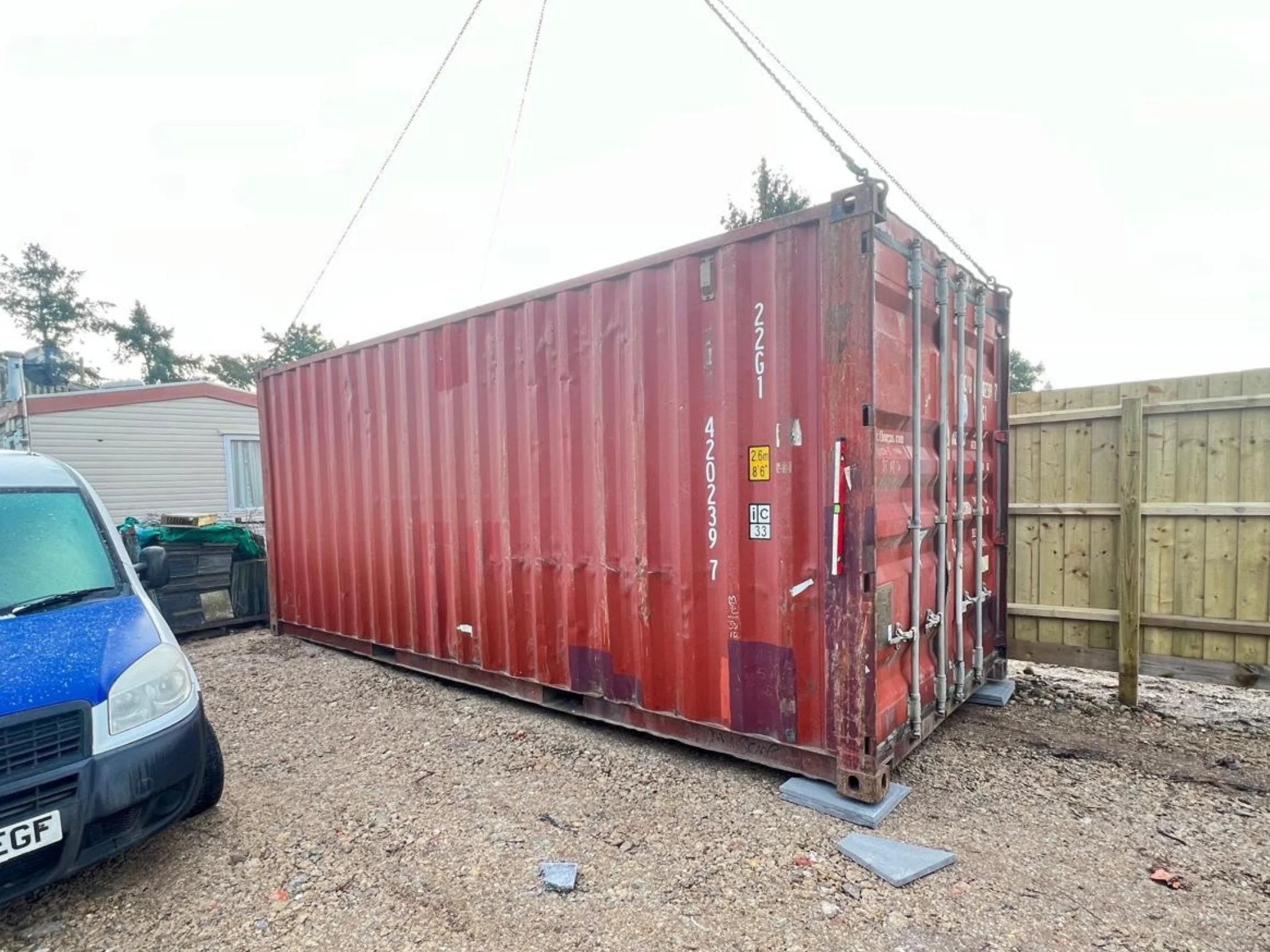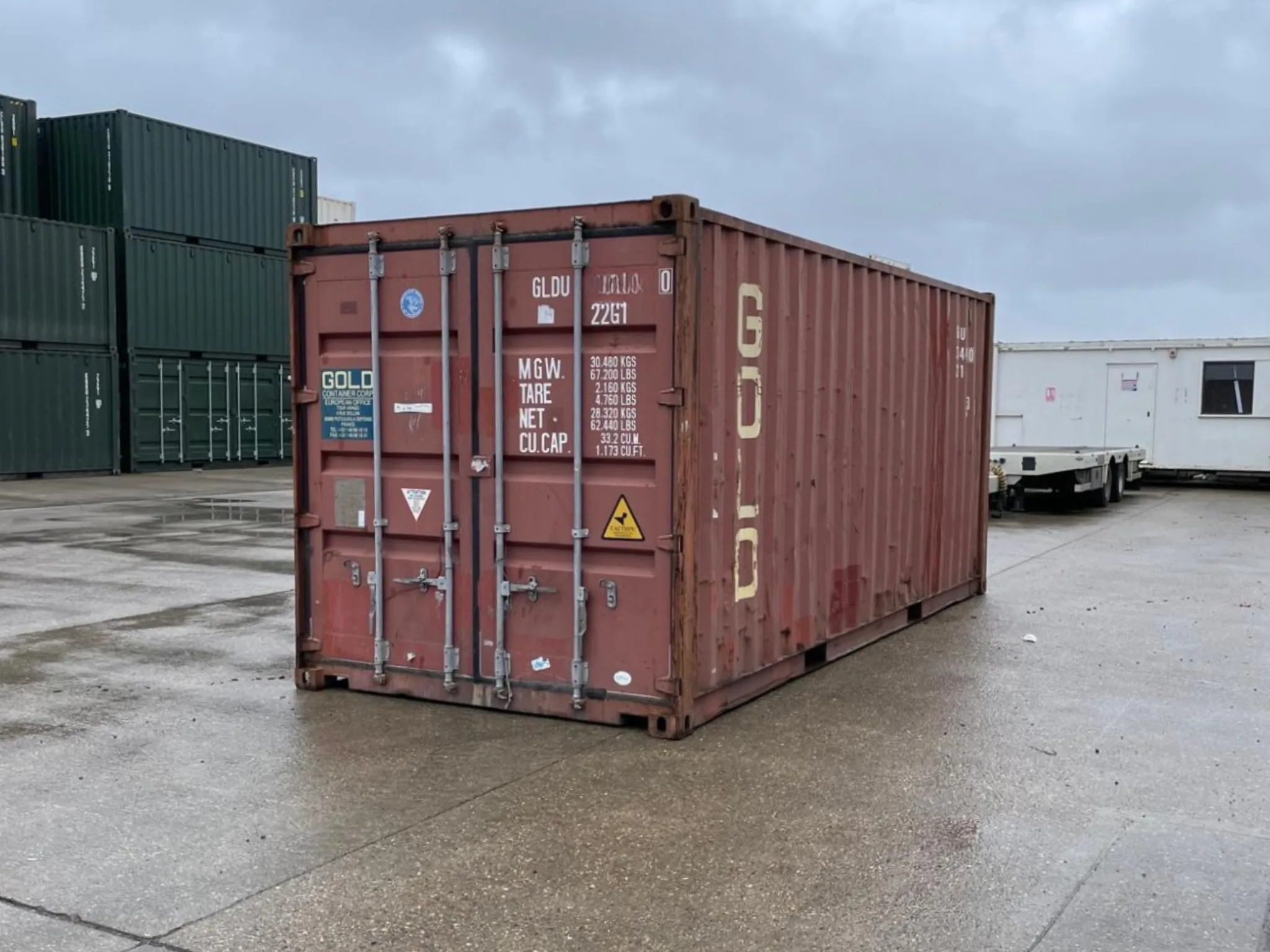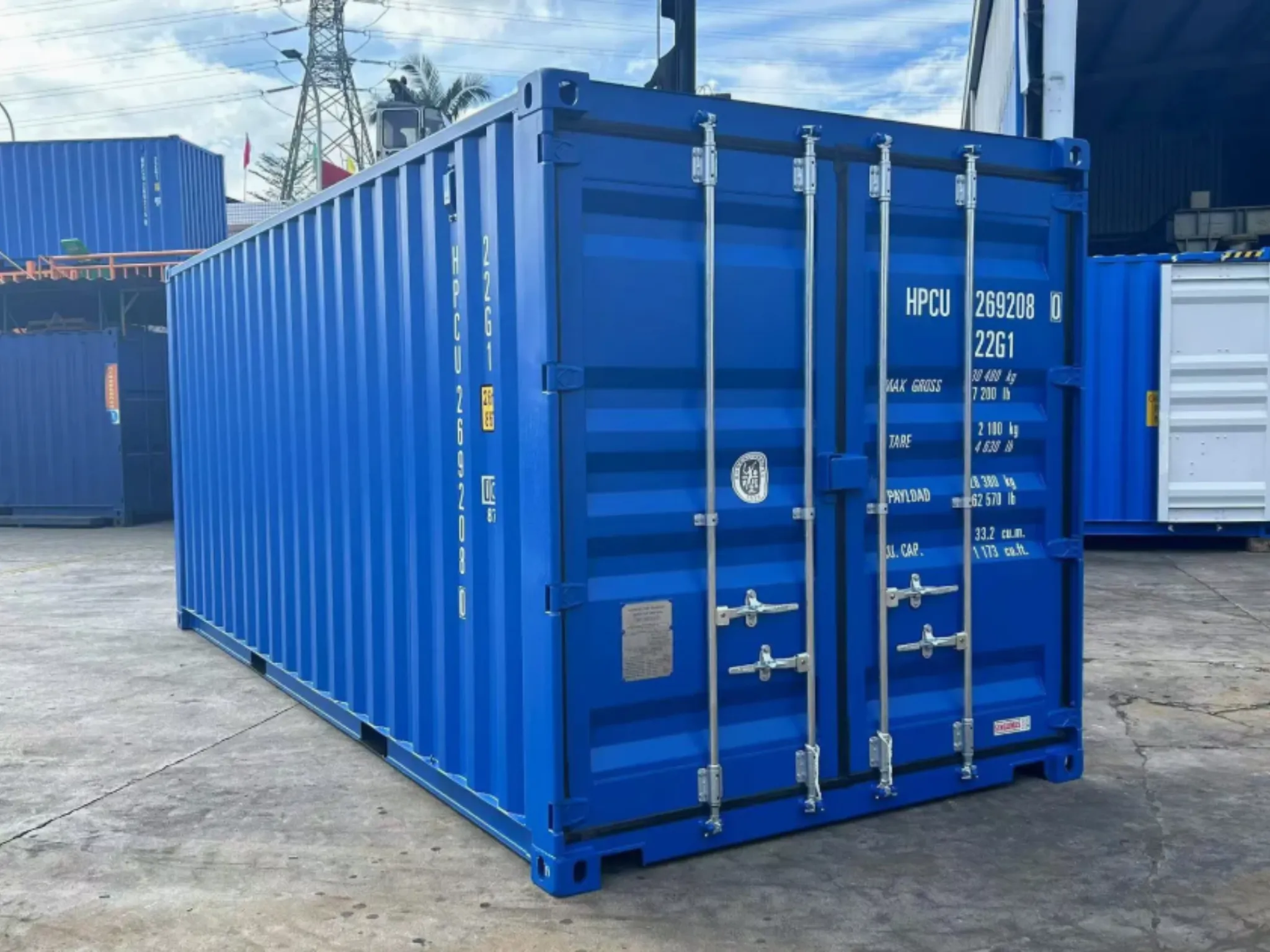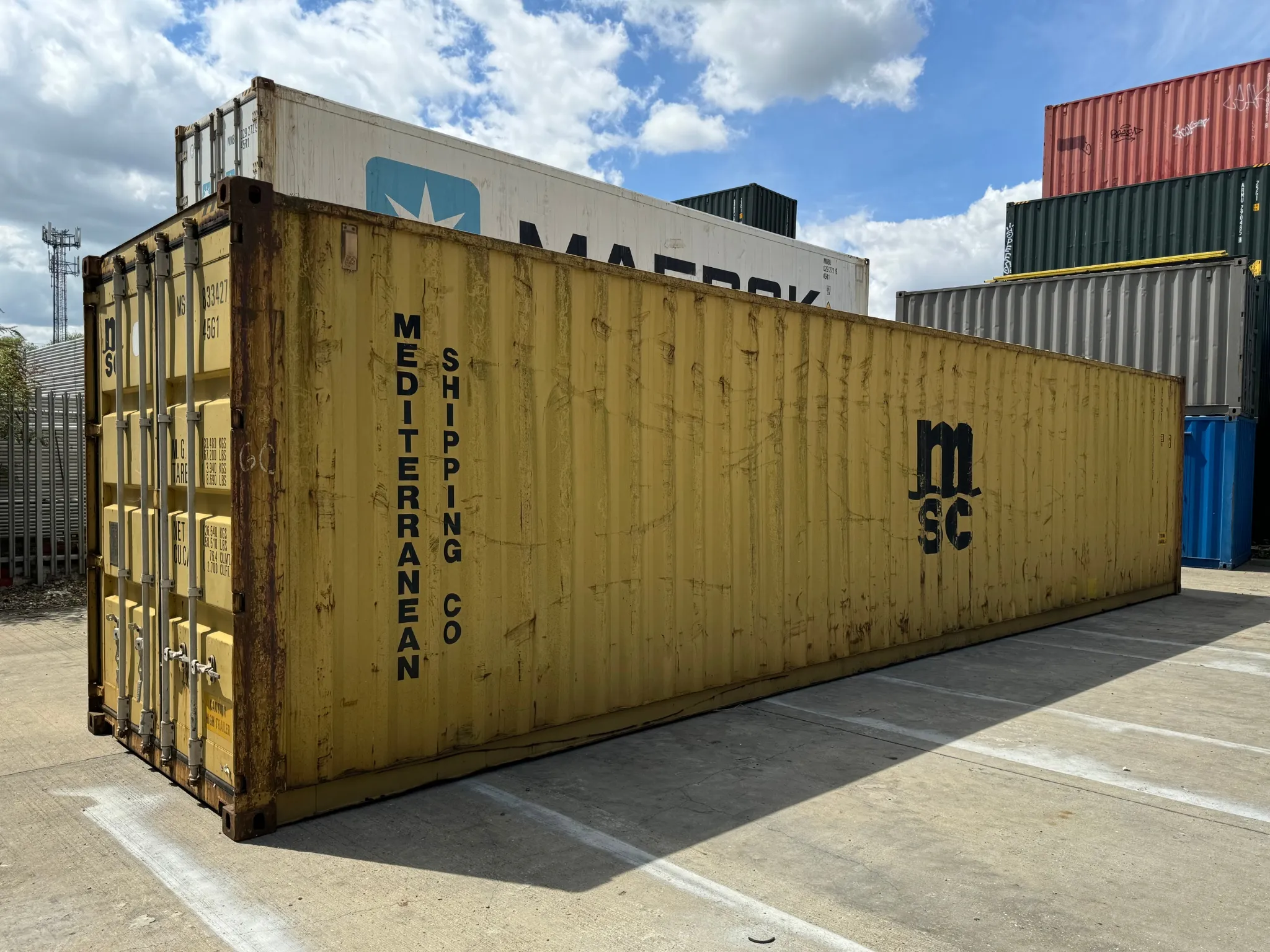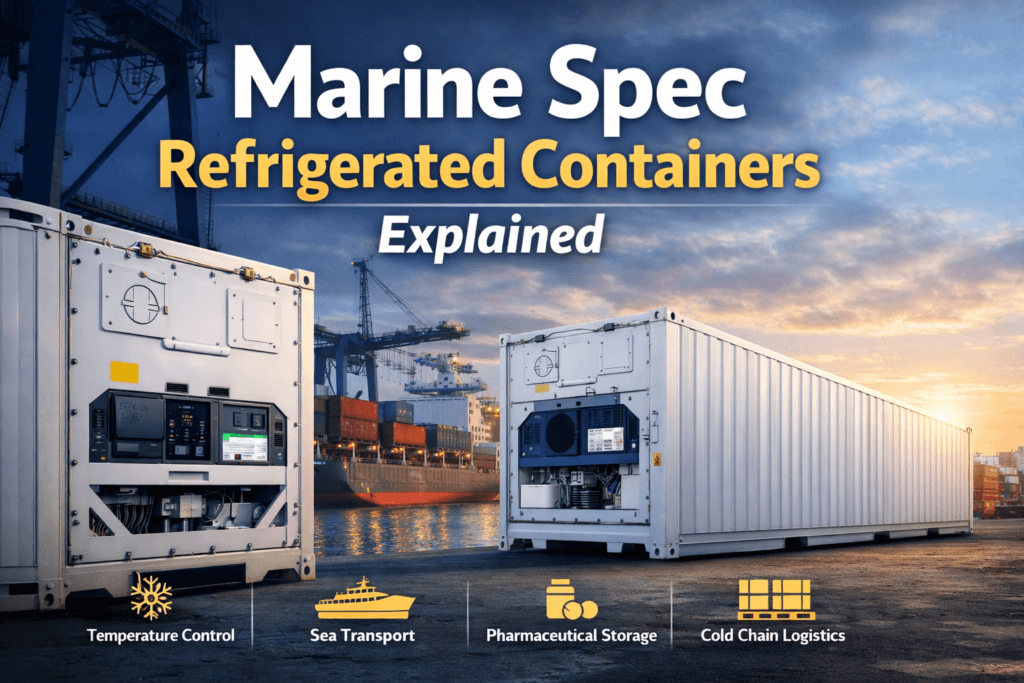
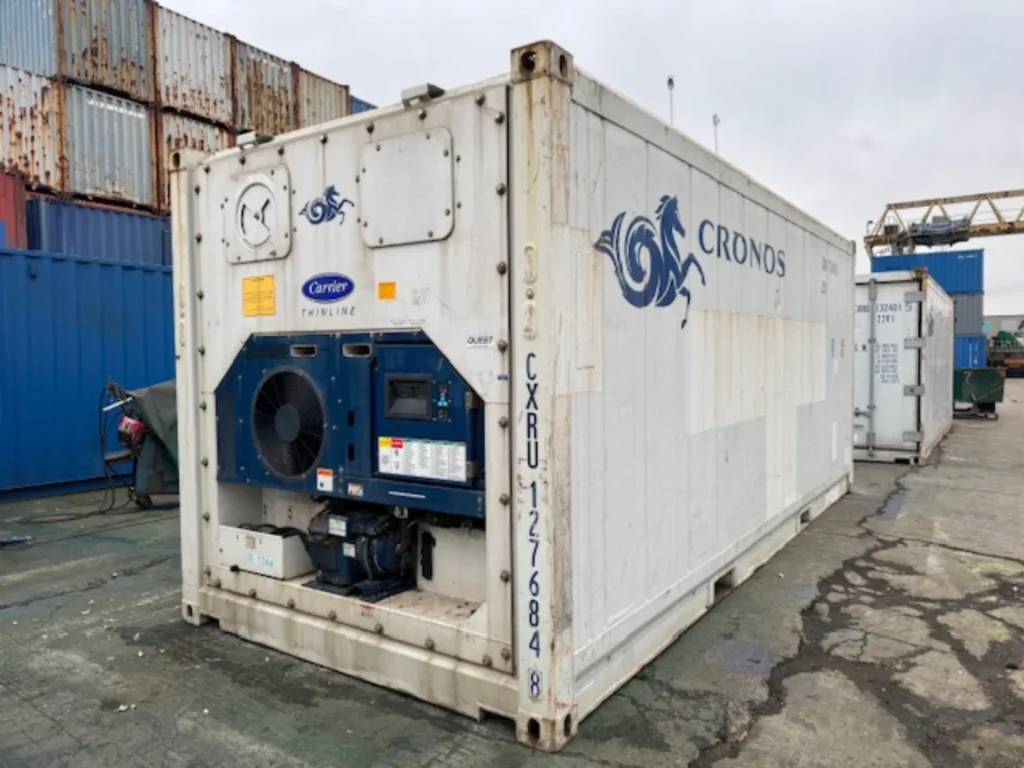
Quick answer: a marine-spec refrigerated container is an intermodal reefer originally designed for international transport, with ISO-standard handling points, an insulated cargo space, an integrated refrigeration system and bottom-air circulation through a T-floor. Many 20ft used refrigerated containers sold in the UK are ex-marine units, even when buyers simply call them cold-storage containers or used reefers. However, “marine spec” is not a legal condition grade and does not prove that a used unit is currently cargo-worthy, recently PTI-tested or accepted for export. Those points must be checked for the exact container.
Last reviewed: 10 August 2026.
What Does “Marine Spec” Mean for a Refrigerated Container?
In the container market, “marine spec” normally describes a reefer built as an ISO intermodal freight container rather than a cold room made only for static use. It is designed to be lifted by its corner castings, moved by container-handling equipment, secured for transport and stacked within its approved structural limits.
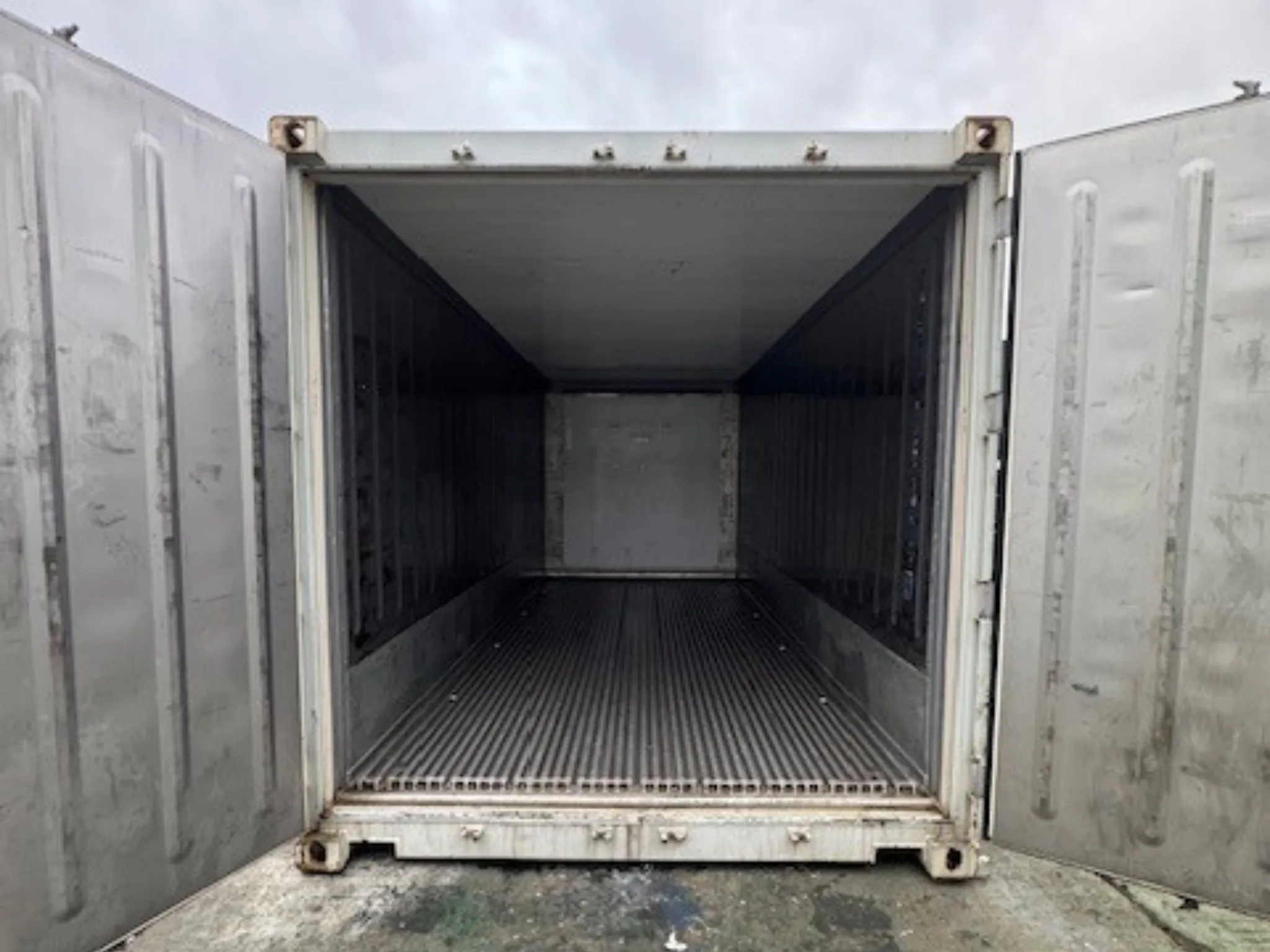
The usual construction includes an insulated steel or aluminium body, sealed cargo space, integrated refrigeration machinery, a controller, temperature sensors, drainage and an aluminium T-floor. The refrigeration unit is powered externally; it does not usually generate its own electricity. Exact electrical supply, plug type, operating range and optional equipment vary by machinery model and must be confirmed from the unit data plate and manual.
The phrase describes the container’s original design. It does not automatically confirm its present structural condition, refrigeration performance, cleanliness, remaining CSC validity or suitability for a particular cargo.
Why 20ft Used Refrigerated Containers Are Often Called Ex-Marine Reefers
A buyer may search for a 20ft used refrigerated container, a used cold-storage container or a second-hand reefer without using the words “marine spec”. In practice, many of these units began life in international shipping. “Ex-marine” means the container has left regular shipping-line service; it does not mean the insulated body or refrigeration machinery is automatically unusable.
The 20ft format is popular for static UK cold storage because it offers useful temperature-controlled capacity without the footprint and delivery-access demands of a 40ft high cube. Typical enquiries include food production, farms, catering, events, hospitality, wholesalers and businesses that need extra chilled or frozen storage.
Condition varies substantially between individual used units. Some are sold as tested operational reefers, some need repairs, and others are sold only as insulated stores with non-operational machinery. Buyers should therefore compare the exact machinery, PTI or running-test evidence, interior, seals, T-floor, drains, electrical requirements and warranty—not just the age, colour or phrase “ex-marine”.
View our current 20ft used ex-marine refrigerated containers for the commercial specification and availability. This guide explains the technical checks behind that buying decision.
Marine Reefer Versus a Static Cold-Storage Unit
A marine reefer is designed around intermodal transport and bottom-air circulation. A static cold room may be assembled from insulated panels, use different refrigeration equipment and have no need for container corner castings or a CSC safety approval plate.
For a UK site that will never ship the unit internationally, a used ex-marine reefer can still be a practical cold store. The buyer should prioritise machinery condition, insulation, door seals, floor and drain condition, electrical requirements, noise, access and service support. A current CSC examination may not be necessary for purely static use, but it becomes important if the container is to re-enter international transport.
How the T-Floor and Bottom-Air System Work
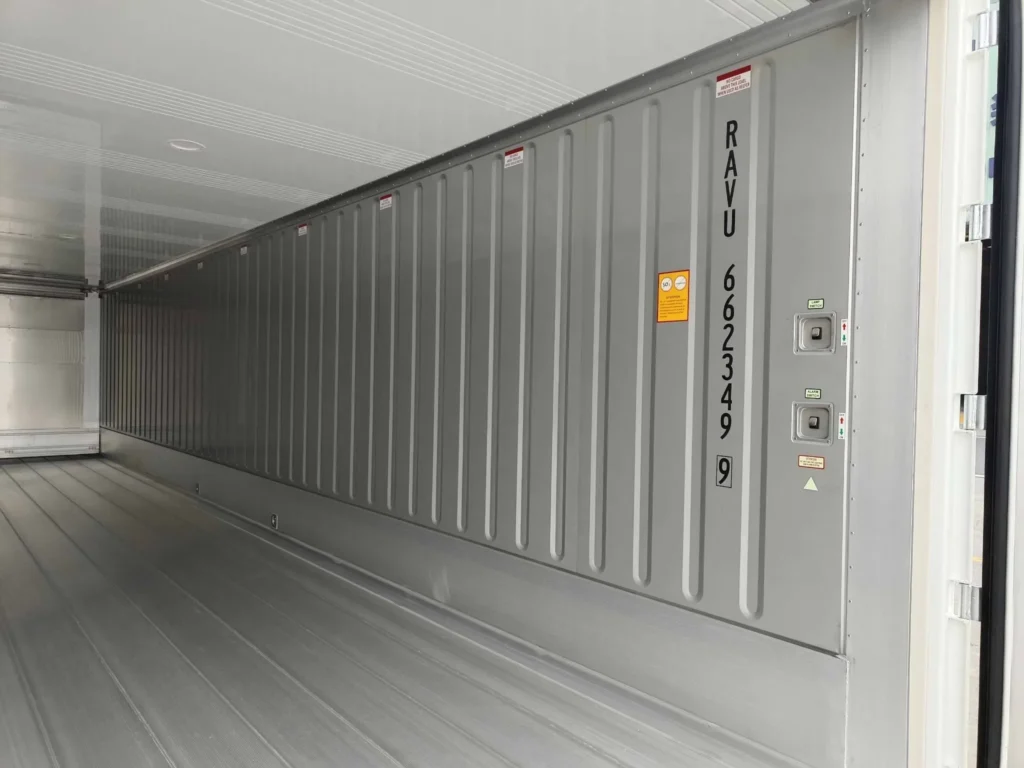
Marine reefers normally deliver conditioned air beneath the cargo through channels in the T-floor. Air rises through and around the load before returning to the refrigeration machinery near the ceiling. This circulation path is why loading practice matters as much as the temperature setpoint.
Stock should not block the floor channels, air-return area or marked load limits. Poor loading can create short cycling or warm zones even when the controller appears normal. For a fuller explanation of supply air, return air, sensors and defrost, read how refrigerated containers work.
What Is a Reefer PTI?
PTI means pre-trip inspection. It is a point-in-time inspection and diagnostic process carried out before a transport movement or when assessing the machinery. Carrier documentation describes controller-led automatic or manual test routines that can check selected refrigeration and electrical functions and report sub-test results.
The precise scope matters. A PTI may include a visual inspection, controller alarms, fans, compressor operation, sensors, defrost functions and a running test, but the work completed should be documented rather than assumed from the letters “PTI”.
What a PTI can tell you
- Whether the inspected functions passed at the time of testing.
- Whether obvious alarms or machinery faults were identified.
- Whether the unit could run and respond during the test conditions.
- What remedial work may be needed before use or transport.
What a PTI does not guarantee
- Future fault-free operation or an indefinite machinery warranty.
- That the container can pull warm or frozen cargo down to temperature within a particular time.
- Suitability for every food, pharmaceutical or regulated cargo.
- Current structural approval for international transport.
A buyer should ask for the PTI date, provider, test scope, result, recorded alarms and any repairs. A running video is useful supporting evidence, but it is not a substitute for a defined inspection.
What Is the CSC Plate?
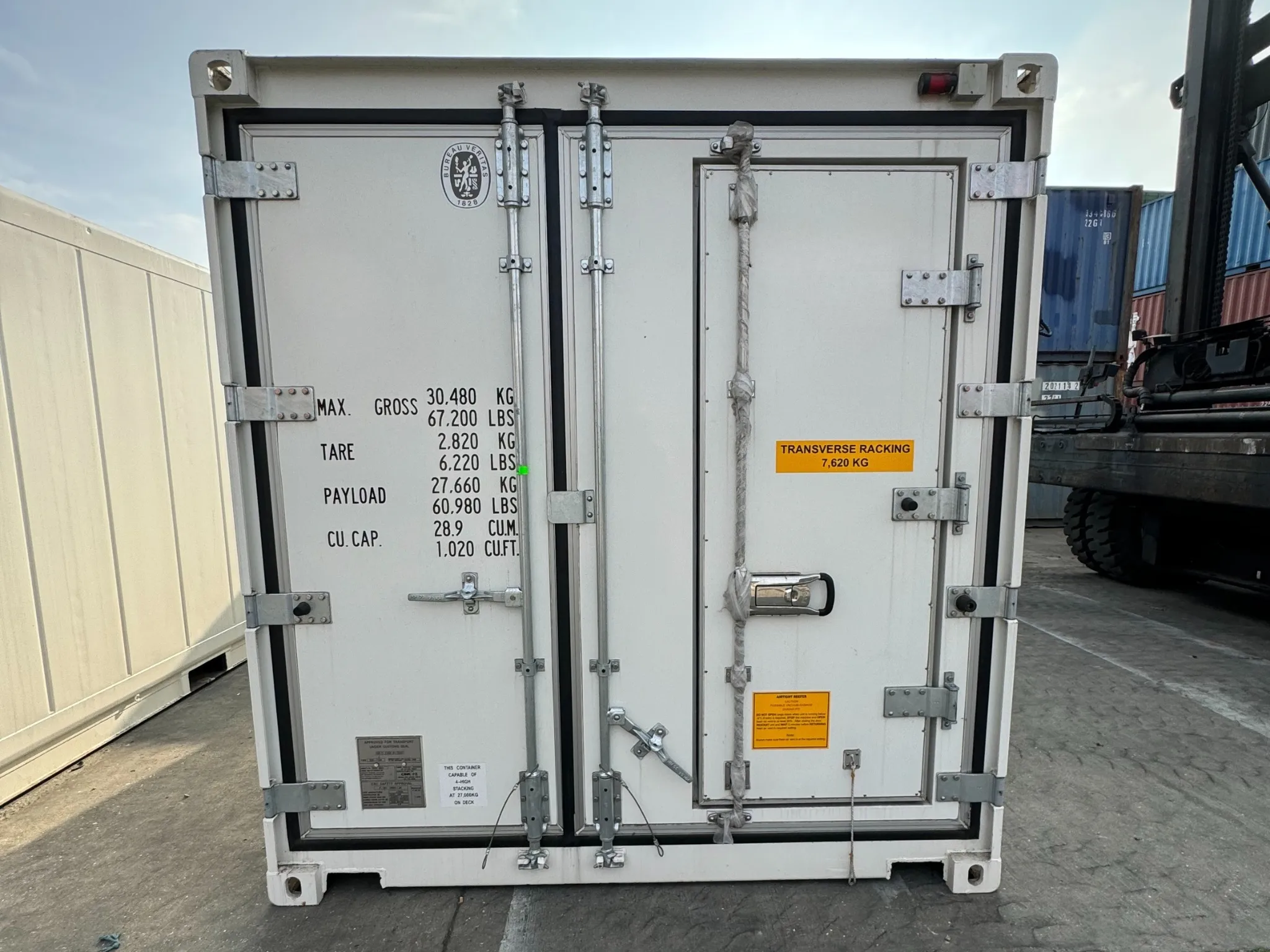
The International Convention for Safe Containers was created to protect life during container transport and handling while providing consistent international safety rules. An approved container carries a safety approval plate, normally on the rear doors, with structural and identification information.
CSC examination is concerned with the container’s structural safety for handling and transport. It is not a refrigeration performance certificate. Under the convention, the owner is responsible for maintaining the container and arranging periodic examinations. UNECE guidance explains that the first periodic examination is due no later than five years after manufacture and subsequent examinations at intervals of no more than 30 months, unless the unit operates under an approved continuous examination programme such as ACEP.
Details worth checking on the plate
- Approval reference and manufacturer identification.
- Date of manufacture and container identification.
- Maximum gross mass and allowable stacking load.
- Next examination date or valid ACEP marking.
- Whether the plate matches the exact container being offered.
PTI and CSC: The Difference at a Glance
| Check | What it addresses |
|---|---|
| PTI | Refrigeration machinery, controller diagnostics and selected operational functions at the time of inspection. |
| CSC examination or ACEP | Structural safety and examination status for international container transport and handling. |
| Cargo or site approval | Separate requirements for the commodity, carrier, destination, food or pharmaceutical process, electrical installation and site. |
A recent PTI does not replace CSC status, and a valid CSC plate does not prove the refrigeration system works. Export readiness requires both areas to be considered alongside carrier, route, destination and cargo requirements.
Can a Marine-Spec Reefer Be Used for Export?
Potentially, but the description alone is not enough. Before promising export suitability, the seller and buyer should confirm the exact unit’s structural condition, CSC examination or ACEP status, machinery readiness, carrier acceptance and any destination or commodity rules.
Export verification checklist
- Container number, data plates and ownership documentation match.
- CSC examination date or ACEP status is current and acceptable.
- No structural damage makes the unit unsafe or unacceptable to the carrier.
- A suitably scoped PTI or machinery inspection has been completed.
- The machinery model, refrigerant, electrical supply and operating range suit the journey.
- The carrier confirms acceptance for the route and equipment type.
- Cargo-specific, sanitary, customs and destination requirements are satisfied.
Carrier acceptance should be obtained before committing to a used unit. Requirements can vary by shipping line, port, destination and cargo.
What to Verify for Static UK Cold Storage
Static use changes the priority, but it does not remove the need for careful inspection. Ask for evidence relating to the exact unit rather than relying on a generic model description.
- Machinery manufacturer, model, serial number and approximate age.
- PTI or running-test date, test conditions, result and unresolved alarms.
- Setpoint reached during testing and the ambient conditions at the time.
- Door seals, insulation, interior lining, T-floor, drains and corrosion.
- Required voltage, phase, frequency, current protection, plug and cable arrangement.
- Access for delivery, level foundations, ventilation around the machinery end and drainage.
- Noise constraints, planning position and maintenance access.
- Warranty scope, exclusions, breakdown response and availability of parts.
Have a qualified electrician confirm the supply and protective equipment before delivery. Do not assume that a site described as having three-phase power automatically has the correct voltage, capacity, connector or protection for the selected reefer. Our reefer power guide explains how to estimate demand from measured data rather than a single generic figure.
New, Used and Non-Operational Reefers
New or one-trip marine reefers
These normally offer newer machinery, cleaner interiors and a longer potential service life, but the exact specification still needs checking. “New” should not replace confirmation of the machinery model, warranty, electrical supply and optional equipment.
Used ex-marine reefers
A used unit can provide strong value for static cold storage. Its condition depends on age, service history, corrosion, previous repairs, insulation and machinery hours. A condition grade should be supported by current photographs and inspection evidence.
Non-operational insulated reefers
Some retired reefers are sold only as insulated stores, with no promise that the refrigeration machinery operates. These should be advertised clearly as non-operational and must not be confused with tested temperature-controlled units.
For purchase costs, maintenance exposure and lifespan planning, see our guide to reefer electricity, maintenance and ownership costs.
Temperature Range and Cargo Suitability
There is no safe universal temperature range for every marine reefer. Capability depends on the machinery model, refrigerant, software configuration, ambient conditions, unit condition and optional equipment. Confirm the rated operating envelope in the manufacturer’s documentation for the exact machine.
Standard reefers are generally intended to maintain properly prepared cargo at a controlled temperature. They should not be assumed to perform as blast freezers or rapid pull-down rooms. Food, pharmaceutical and other regulated uses also require a validated process covering hygiene, calibration, monitoring, alarms, loading, contingency plans and record keeping. Marine specification alone does not provide that compliance.
Choosing 20ft or 40ft Marine Reefers
A 20ft unit may suit restricted sites and smaller stock volumes, while a 40ft high-cube reefer provides much greater capacity. The larger option is not automatically more efficient for every operation: access, stock turnover, air circulation, power demand and the cost of holding unused space all matter.
Use our 20ft versus 40ft reefer comparison to review capacity, site footprint and delivery considerations before choosing.
Frequently Asked Questions
Does marine spec mean the container is cargo-worthy?
No. It describes the original intermodal design. Current cargo-worthiness depends on the exact container’s structure, inspection status, condition and carrier acceptance.
Does a PTI prove there are no faults?
No. It records the result of the checks performed at that time. Ask what was tested, what passed, what failed and whether repairs were completed.
Does a CSC plate prove the refrigeration machinery works?
No. CSC relates to structural safety for transport and handling. Refrigeration performance needs a separate machinery inspection or PTI.
Can an ex-marine reefer be used only for static storage?
Yes. Many are used as static cold stores, but machinery, electrical supply, insulation, access, drainage, ventilation, noise and site requirements still need checking.
Is every marine reefer suitable for pharmaceuticals?
No. Pharmaceutical use normally requires qualification, calibrated monitoring, documented procedures, alarms and contingency controls appropriate to the product and regulatory framework.
Bottom Line
A marine-spec refrigerated container gives you an intermodal reefer design, not a blanket promise of condition, compliance or export acceptance. PTI addresses machinery at a point in time; CSC addresses structural transport safety. The strongest purchase decision is based on evidence for the exact unit, the intended cargo or static use, the site and the journey.
Compare our refrigerated containers available in the UK, including new and used options, or request a delivered reefer quote with your size, temperature, site and use requirements.