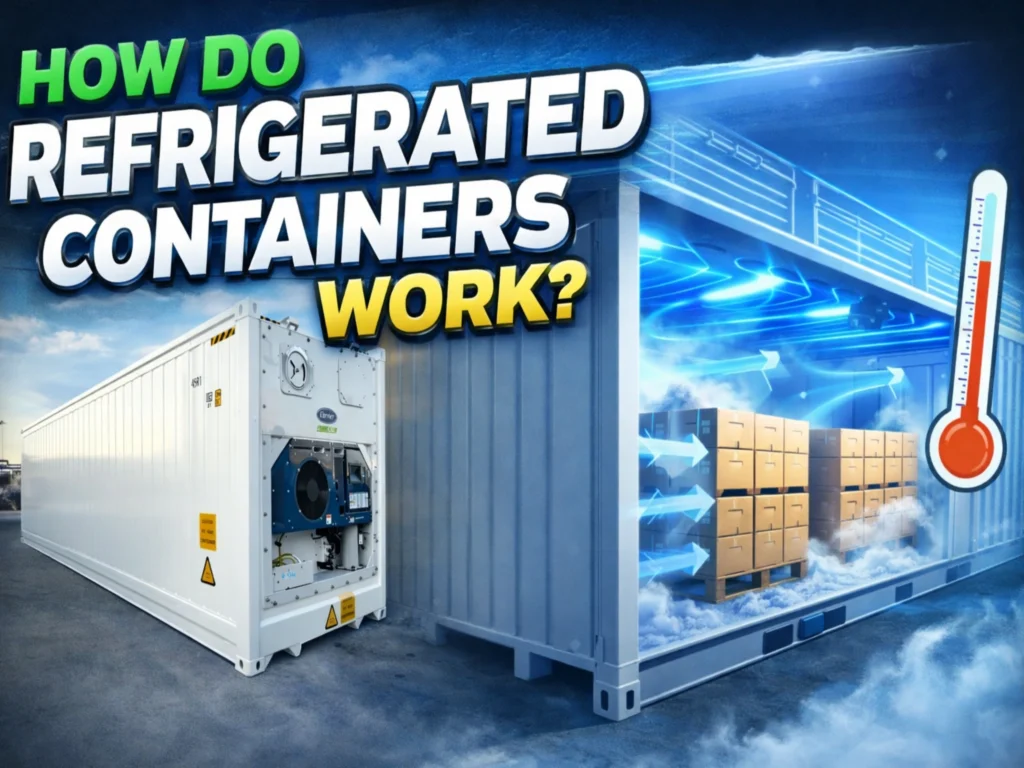
How do refrigerated containers work? A reefer uses an insulated box, an integrated refrigeration unit, a controller, temperature sensors and forced airflow to maintain a selected internal condition. Most marine reefers send conditioned air under the load through a T-floor, then draw the return air back to the machinery. They normally need continuous external power.
Important: a reefer is primarily designed to maintain cargo that has already reached its required carrying temperature. It should not be treated as a universal blast chiller or freezer. Performance depends on the exact machinery, setpoint, ambient conditions, cargo temperature, loading pattern, door openings and airflow.
Last reviewed: 7 August 2026.
What Is a Reefer Container?
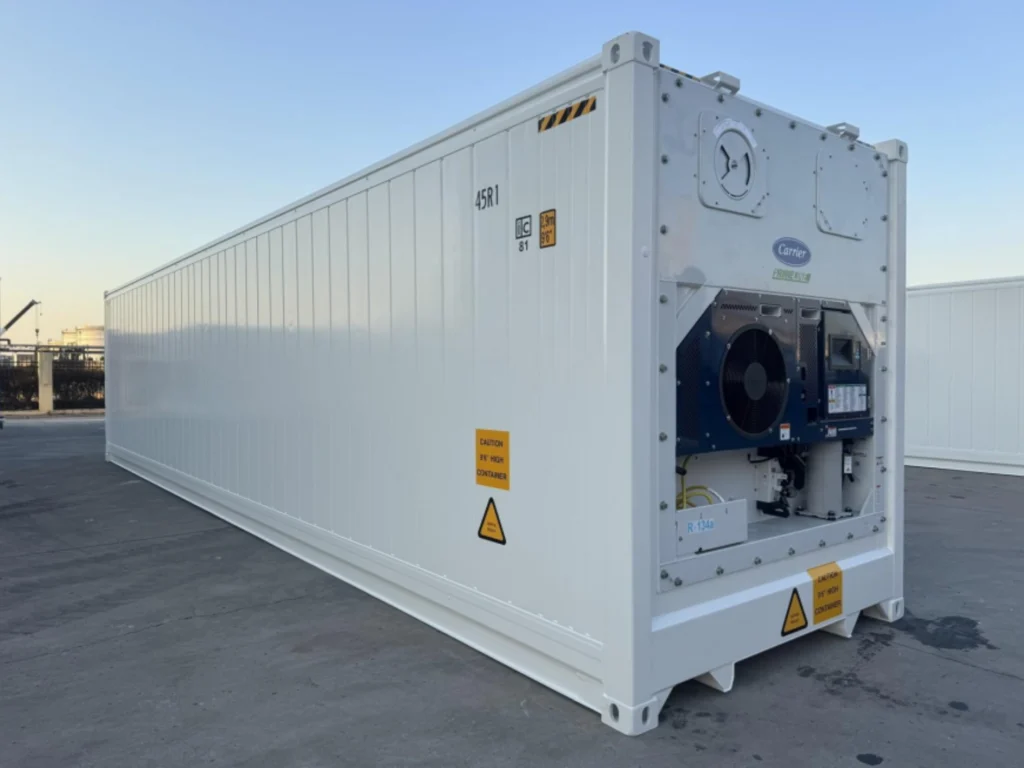
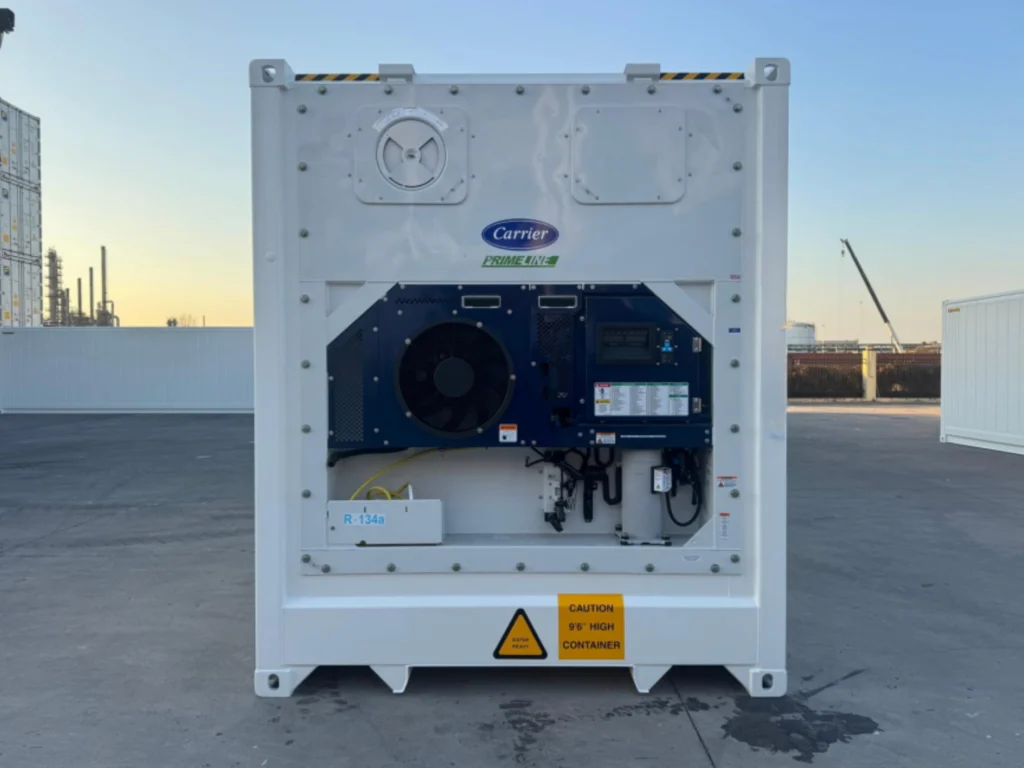
A refrigerated container, commonly called a reefer, is an insulated intermodal container with refrigeration machinery built into one end. The machinery can remove heat and, on many units, provide controlled heating when ambient conditions are colder than the setpoint.
Reefers are used for chilled and frozen food, flowers, plants and other temperature-sensitive stock. Some regulated goods, including pharmaceuticals, may also use validated cold-chain equipment, but an ordinary reefer is not automatically compliant with pharmaceutical GDP, calibration, mapping or monitoring requirements. Those controls must be specified for the product and operation.
For a broader buying overview, see our refrigerated shipping container guide or explore refrigerated containers for sale in the UK.
The Five Systems That Make a Reefer Work
| System | What it does |
|---|---|
| Insulated container | Reduces heat transfer through the walls, roof, floor and doors. |
| Refrigeration circuit | Moves heat from inside the container to the outside air. |
| Air circulation | Distributes conditioned air through the T-floor and around the load. |
| Controller and sensors | Compare measured temperatures with the setpoint and control the machinery. |
| External power | Supplies the refrigeration unit at the site, port or vessel; a genset may be used during some road movements. |
How the Refrigeration Cycle Removes Heat
Most reefers use a vapour-compression refrigeration cycle. The exact design varies by Carrier, Thermo King, Daikin, Star Cool and machinery generation, but the core sequence is similar:
- Compressor: raises the refrigerant pressure and temperature.
- Condenser: rejects heat to the outside air and condenses the refrigerant.
- Expansion device: reduces the refrigerant pressure before it reaches the evaporator.
- Evaporator: absorbs heat from the air returning from inside the container.
- Fans: move the conditioned air back through the container and across the cargo.
The controller cycles or modulates these components to keep the relevant control temperature near the chosen setpoint. The system may also initiate defrost cycles to remove ice from the evaporator. During defrost, normal cooling is interrupted, so the process should be understood rather than mistaken for an immediate fault.
Why the T-Floor and Airflow Matter
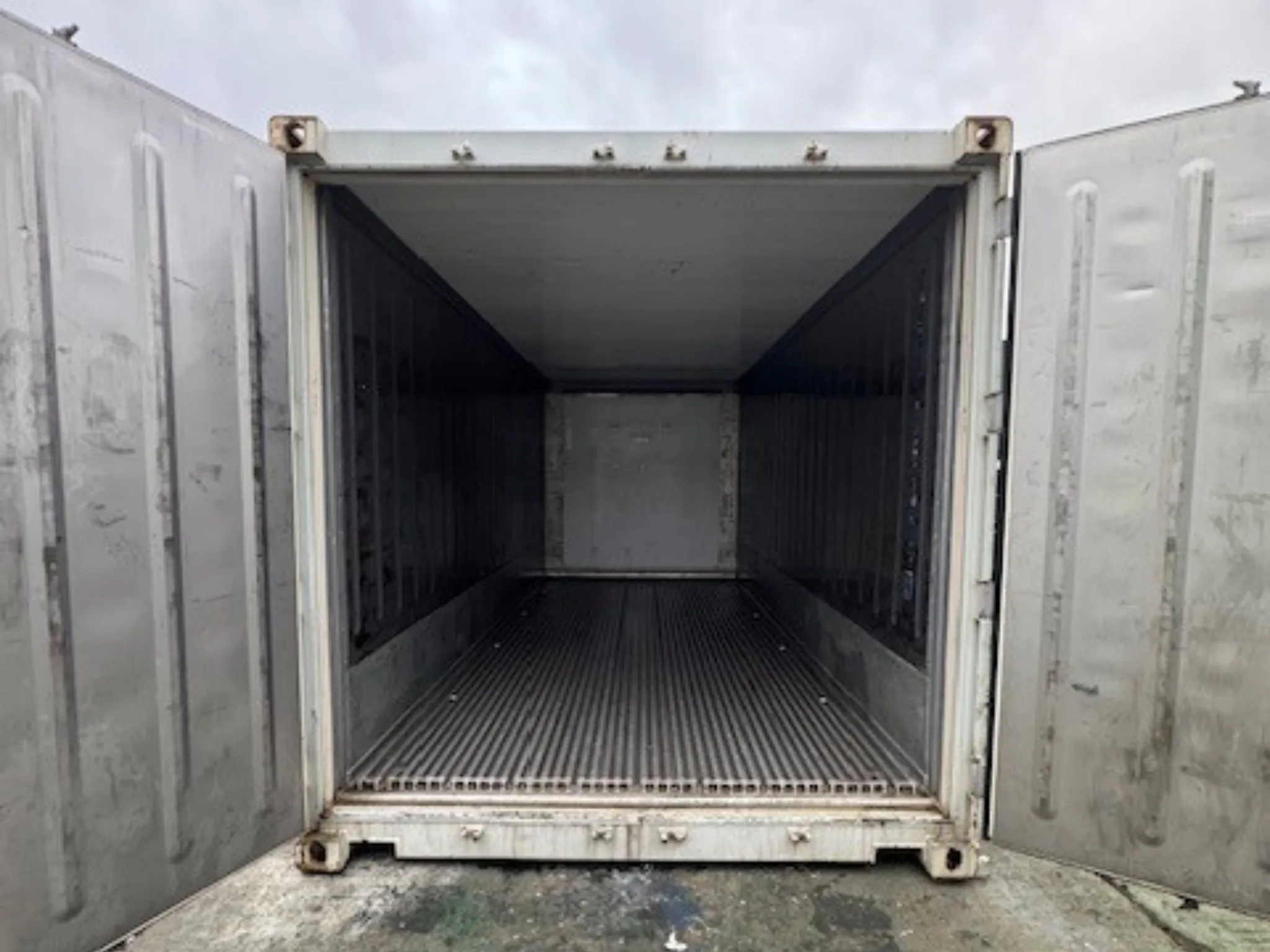
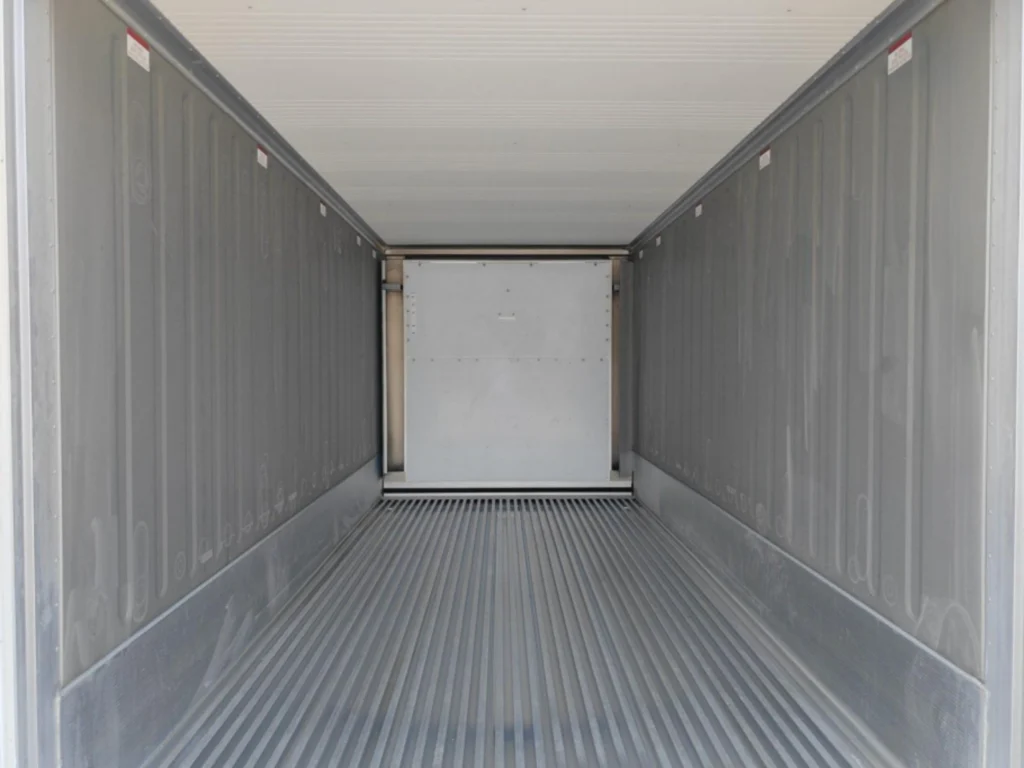
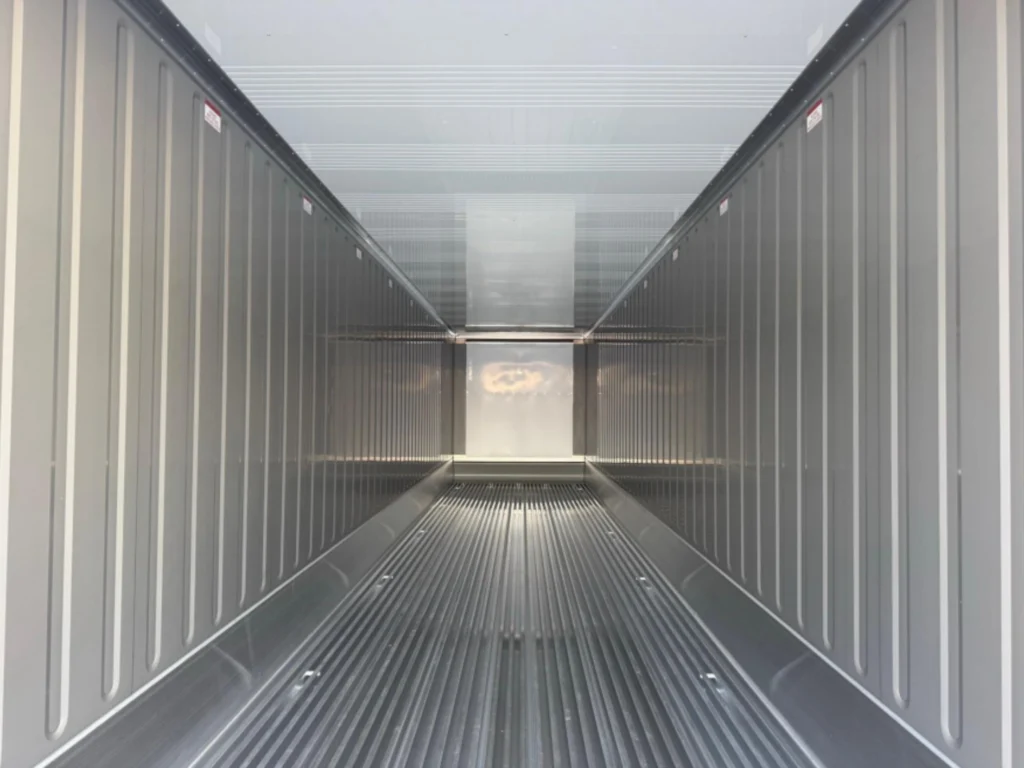
Cooling the air is only half the job. The air must reach the whole load and return to the machinery without being blocked or taking a short route. Most marine reefers use bottom-air delivery: conditioned air travels beneath the cargo through the T-shaped floor channels, rises through and around the load, then returns along the upper part of the container.
Poor stowage can produce warm areas even when the controller appears normal. Hapag-Lloyd advises keeping cargo below the load line, not loading beyond the T-floor, covering open floor areas appropriately and avoiding gaps or obstructions that damage the intended airflow pattern.
For static storage, keep clear space where the unit manufacturer or supplier requires it, do not block the air-distribution and return points, and avoid packing stock tightly against the ceiling or machinery end. The correct pattern depends on whether the load is chilled, frozen, palletised or loose.
Setpoint, Supply Air and Return Air Are Different
The setpoint is the target entered into the controller. Supply-air temperature is the temperature of air leaving the evaporator and entering the container. Return-air temperature is measured after the air has travelled around the load and returned to the machinery. Product temperature is another measurement again.
A display reading therefore does not automatically prove that every item is at exactly that temperature. Where stock is valuable, safety-critical or regulated, use a monitoring and verification plan appropriate to the goods, including calibrated probes, alarms, data logging and product-temperature checks where required.
Reefers Maintain Temperature Better Than They Pull It Down
A common mistake is loading warm product and expecting the reefer to cool it rapidly. Marine carriers generally require cargo to be brought to its correct carrying temperature before stuffing. A large warm load adds heat faster than the unit may be designed to remove it, while open doors introduce warm, humid air.
Pre-cooling the empty container is not always appropriate either. If a cold empty box is opened in warm humid conditions, condensation can form. The loading process and cargo preparation should follow the product, site and carrier procedure rather than a universal rule.
Power and Electrical Operation
A full-size marine reefer usually requires an industrial three-phase electrical supply, but the voltage, frequency, plug, neutral arrangement, protection and cable reach must be confirmed for the exact unit. A qualified commercial electrician should assess the site supply, isolator, protective devices, earthing and connection before delivery.
Power use is not one fixed number. Demand changes with machinery model, setpoint, ambient temperature, product load, insulation condition, door openings, airflow and operating mode. Use our reefer power requirements and running-cost guide to calculate consumption from an average measured demand instead of relying on a universal claim.
Temperature Range Depends on the Exact Unit
There is no single temperature range for every refrigerated container. Standard marine reefers, deep-freeze units and controlled-atmosphere models have different limits. Maersk, for example, publishes different ranges for standard, Magnum and super-freezer equipment. A used unit’s achievable performance also depends on its machinery and condition.
Before buying, confirm the model, requested setpoint, ambient design conditions and whether the requirement is chilled, frozen or heated operation. The reefer container temperature-range guide explains these distinctions in more detail.
Fresh-Air Ventilation, Humidity and Controlled Atmosphere
Some fresh produce releases heat and gases as it respires. Suitable reefers can introduce controlled fresh air, manage humidity or use controlled-atmosphere systems, but these are cargo-specific functions—not settings to apply to every load. Frozen cargo commonly uses closed fresh-air ventilation, while some chilled produce requires a defined exchange rate.
Do not assume every used reefer includes every sensor or atmosphere-control option. Confirm the controller, ventilation system and logging capabilities of the actual unit.
Monitoring, Alarms and Defrost
- Controller: manages the setpoint, operating mode, fans, refrigeration and defrost logic.
- Sensors: may monitor supply air, return air, ambient conditions and other unit parameters.
- Data logger: records temperatures, alarms and operating events on suitably equipped units.
- Alarms: indicate conditions requiring investigation; clearing an alarm does not fix its cause.
- Remote monitoring: may be available on supported machinery but is not standard on every used container.
For critical stock, agree who receives alarms, how quickly they respond, what backup power is available and where the goods can be moved if the machinery cannot hold temperature. The emergency plan matters as much as the setpoint.
Can a Reefer Be Used as a Static Cold Store?
Yes. Reefers are widely used as temporary, overflow and long-term static cold storage. The site still needs suitable power, ventilation around the machinery, level support, drainage, safe access, door clearance and a maintenance plan. Noise, planning and delivery constraints should be checked before installation.
If the unit is for static use, the best choice may differ from an export-ready marine unit. Decide whether you need operational refrigeration, an insulated non-operational reefer, controlled atmosphere, remote monitoring or simply secure dry storage.
Review our temporary cold-storage guide, container delivery requirements and updated reefer planning-permission guide before ordering.
20ft and 40ft Reefer Sizes
The operating principle is similar in 20ft and 40ft units, but usable internal space, access needs, electrical demand and total ownership cost differ. A 20ft unit suits tighter sites and smaller stock volumes. A 40ft high-cube reefer provides much more capacity but needs a longer delivery vehicle, a larger lifting area and a loading plan that protects airflow over the full length.
Compare available stock using our 20ft used marine reefers and 40ft used high-cube reefers.
Frequently Asked Questions
Does a reefer make warm products cold quickly?
Not necessarily. A marine reefer is primarily intended to maintain correctly prepared cargo at its carrying temperature. Pull-down ability depends on the product, load, machinery and conditions; use purpose-designed chilling or freezing equipment where rapid pull-down is required.
Does the controller show the product temperature?
Usually it shows selected unit readings such as supply or return air. Those readings are not automatically the core temperature of every product. Use suitable probes and monitoring for the goods and risk level.
Can every reefer control humidity and fresh air?
No. Features vary by model and specification. Confirm the ventilation, humidity, atmosphere and logging functions of the exact unit.
What happens if the power fails?
Active cooling stops. The insulation slows temperature change but does not maintain temperature indefinitely. Critical operations need alarm response, backup power and a stock-relocation plan.
Bottom Line
A refrigerated container works by combining insulation, a refrigeration circuit, controlled bottom-air circulation, sensors, a controller and continuous power. Its performance depends just as much on cargo preparation, loading, airflow and monitoring as it does on the cooling machinery.
Need help choosing the right unit? Tell Bosh Boxes what you are storing, the required temperature, site access, power supply and expected duration. We can match the requirement to current stock and provide a delivered reefer container quotation.
Primary technical references: Maersk’s reefer overview, Hapag-Lloyd’s cargo-handling guidance and Carrier container-refrigeration documentation.