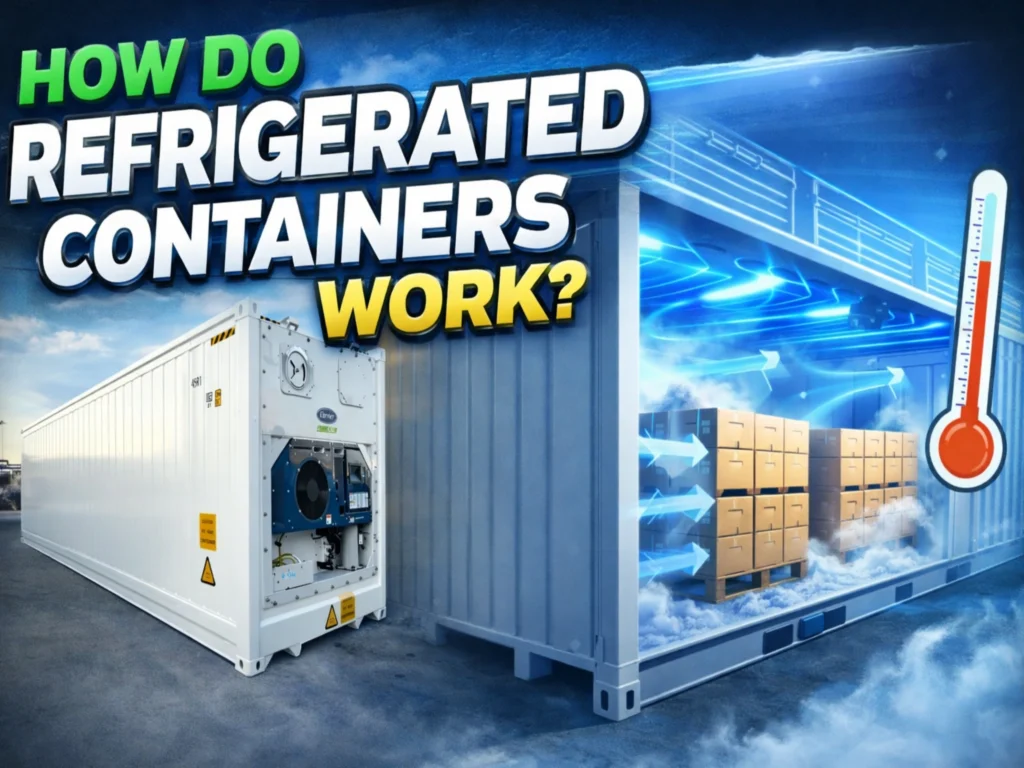
Refrigerated containers, also known as reefer containers, are temperature-controlled shipping containers designed to keep goods within a specific temperature range. They use built-in refrigeration systems, controlled airflow, and external power sources to maintain temperatures between approximately -25°C and +25°C, helping keep perishable goods stable during transport or on-site storage.
Reefer containers are very different from standard dry containers. Instead of simply holding cargo, they actively control the internal environment so food, pharmaceuticals, plants, and other temperature-sensitive products can be stored safely.
If you want a broader overview first, read our guide: Refrigerated Shipping Containers Explained
https://boshboxes.store/refrigerated-shipping-containers-explained/
What Is a Reefer Container?
A reefer container is a specialist shipping container with an integrated refrigeration unit.
Unlike a standard container, a reefer can cool or maintain a set temperature inside the unit. Some models can also manage humidity and fresh air exchange depending on the cargo being stored.
Reefers are commonly used for:
- food and drink
- pharmaceuticals
- flowers and plants
- chemicals
- temperature-sensitive equipment
If you are comparing reefer types, you can also read: Marine Spec Refrigerated Containers Explained
https://boshboxes.store/marine-spec-refrigerated-containers-explained/
How Do Refrigerated Containers Actually Work?
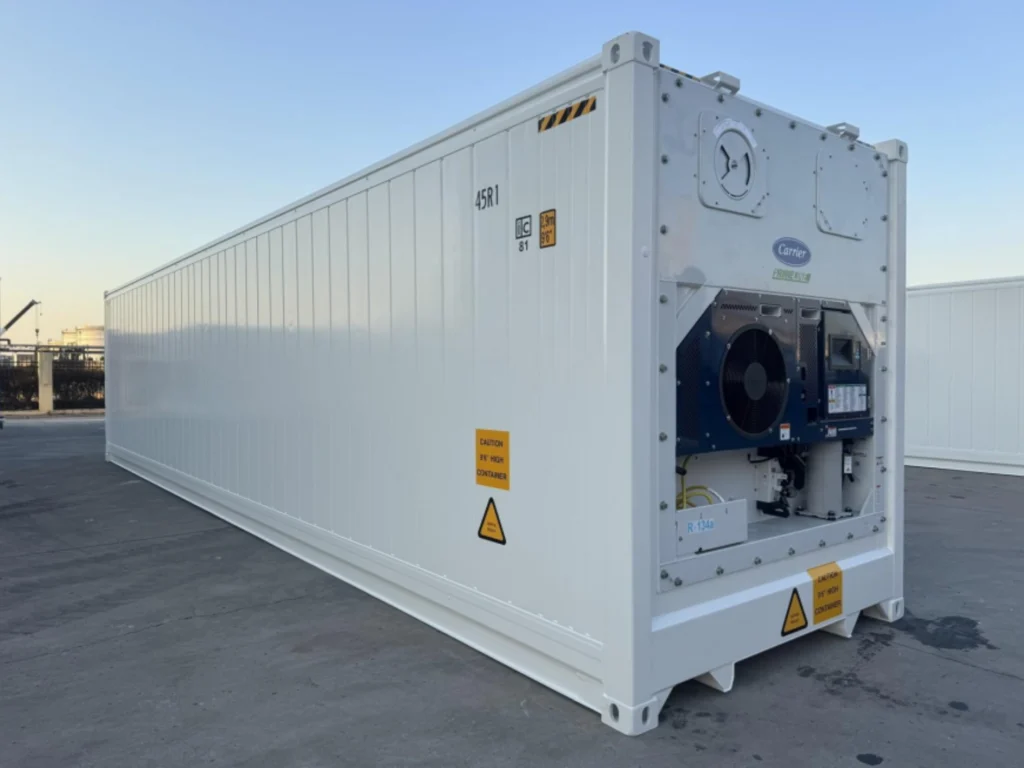
A refrigerated container works by removing heat from inside the unit and circulating conditioned air evenly around the cargo.
The refrigeration unit pulls warm air in, cools it, and pushes it back through the container. That process repeats continuously to maintain the target temperature.
This is why reefer containers rely on both refrigeration and airflow. Cooling the air is only half the job. The other half is making sure that cold air reaches every part of the load.
The Refrigeration Cycle
The main cooling system usually includes:
- compressor
- condenser
- evaporator
- internal fans
The compressor pressurises refrigerant gas. The condenser cools that gas into liquid form. The evaporator then absorbs heat from inside the container, cooling the air before it is circulated again.
This closed-loop cycle is what keeps the internal environment stable.
Why Airflow Matters So Much
Airflow is one of the most important parts of reefer performance.
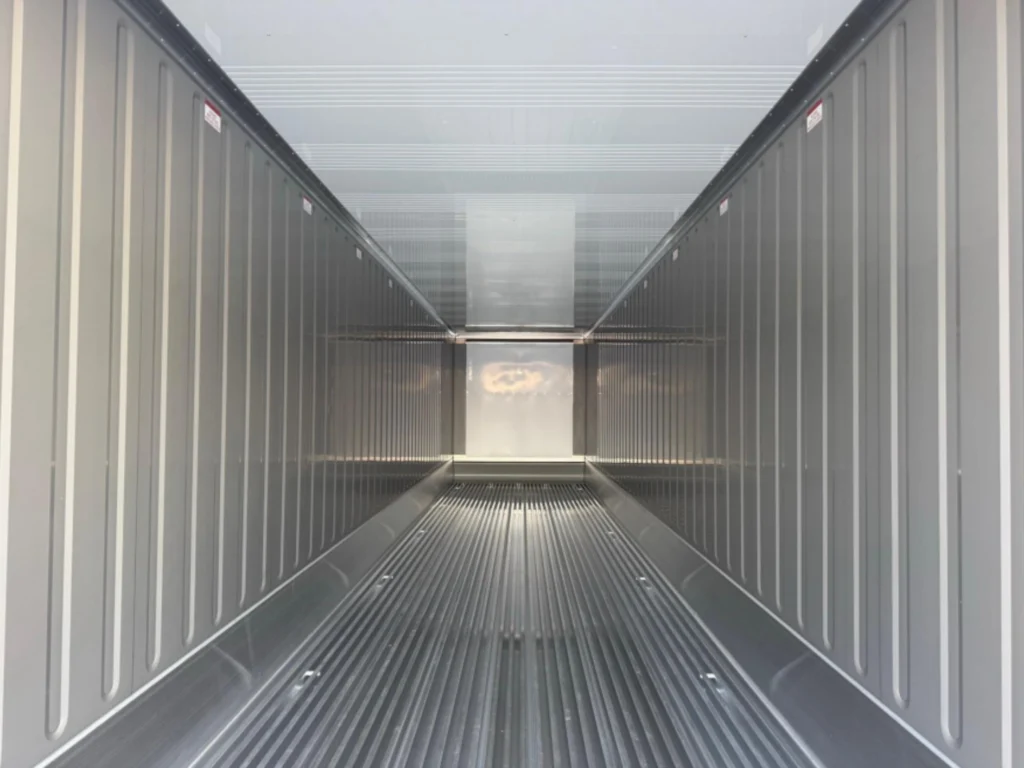
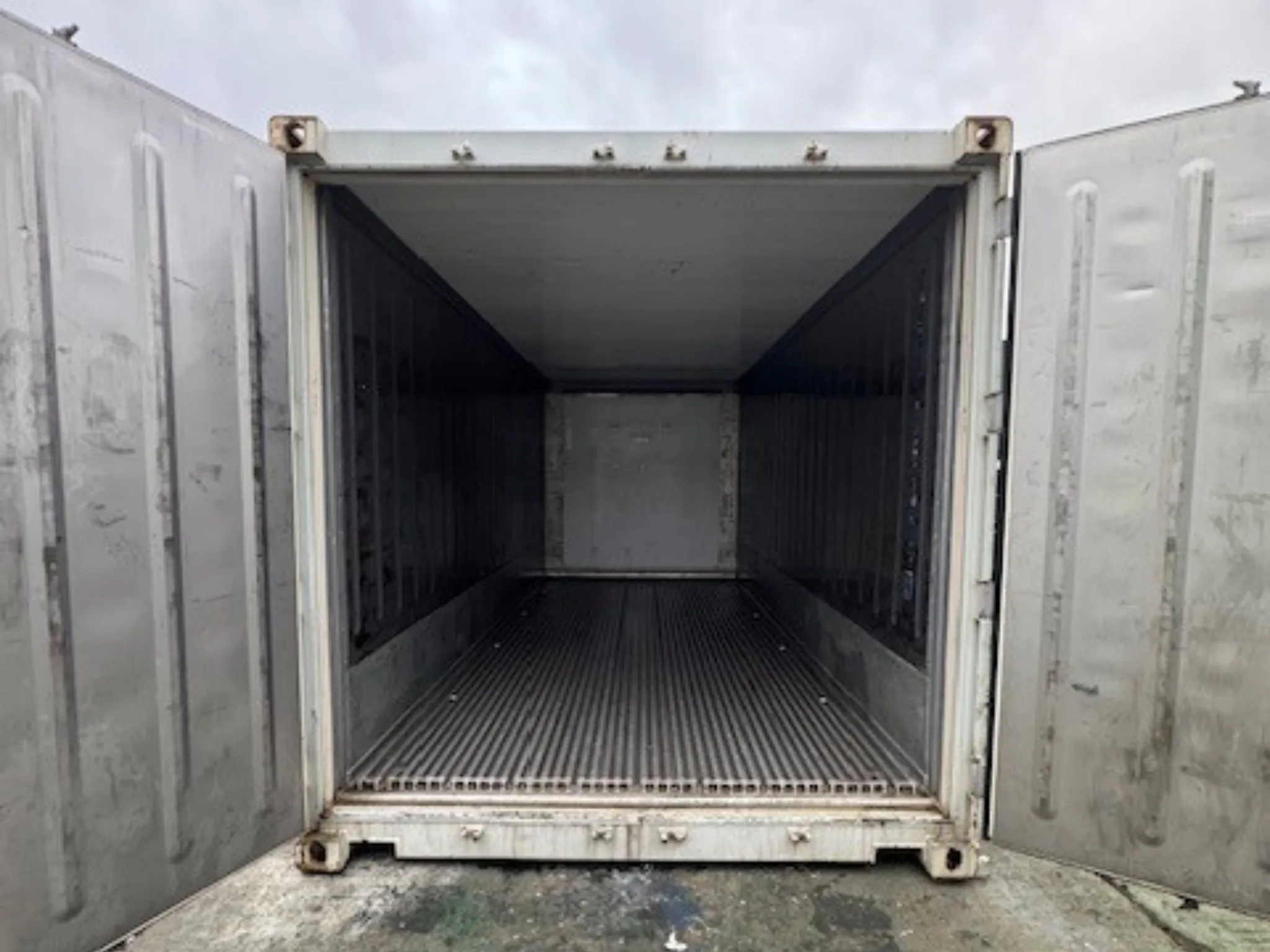
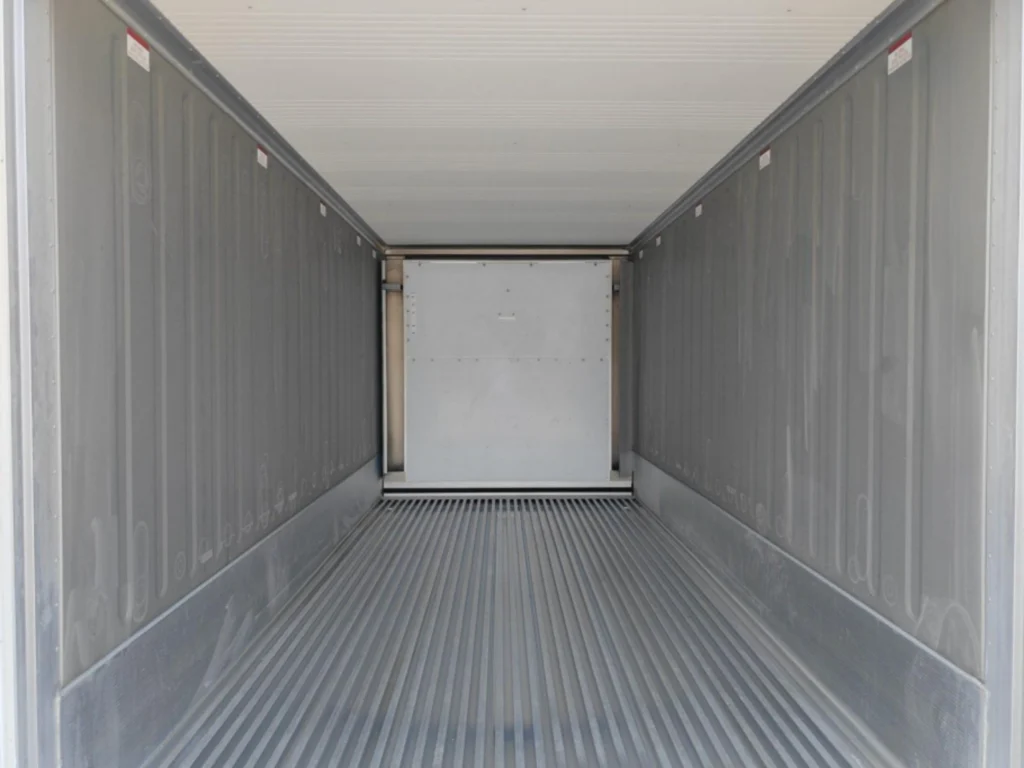
Cold air is pushed through the floor channels and circulated around the cargo before returning to the refrigeration unit. If that airflow is disrupted, some goods may stay too warm even though the refrigeration unit is running properly.
Good airflow helps prevent:
- hot spots
- uneven cooling
- spoiled cargo
- excess moisture build-up
This is one reason loading a reefer correctly matters just as much as setting the right temperature.
Why Loading Matters More Than Buyers Think
A reefer container should not be packed the same way as a standard storage container.
If goods are stacked too tightly, pushed above load lines, or block the floor channels, cold air cannot circulate correctly. That can create temperature inconsistency and increase spoilage risk.
Best practice usually includes:
- leaving space for air movement
- not blocking floor vents
- spreading the load evenly
- following reefer load line guidance
If you are planning pallet storage, see: How Many Pallets Fit in a Shipping Container?
https://boshboxes.store/how-many-pallets-fit-in-a-shipping-container/
How Reefer Containers Are Powered
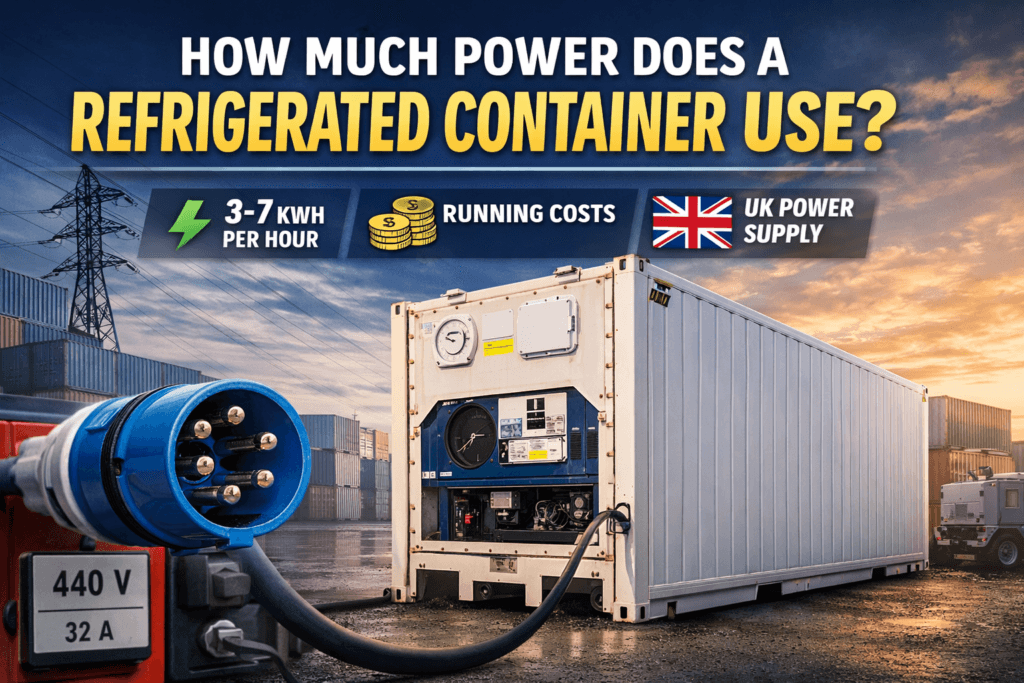
Refrigerated containers need a reliable external power source to keep the refrigeration unit running.
Most reefer containers operate on 3-phase electrical supply, which is standard in ports, depots, commercial sites, and industrial settings. This is one reason buyers should check site power before ordering a reefer for static storage.
Reefers can usually be powered by:
- mains electricity when stationary
- generator sets during road transport
- ship or port power connections
If you want a full breakdown, read: How Much Power Does a Refrigerated Container Use?
https://boshboxes.store/how-much-power-does-a-refrigerated-container-use/
What Temperature Range Can a Reefer Hold?
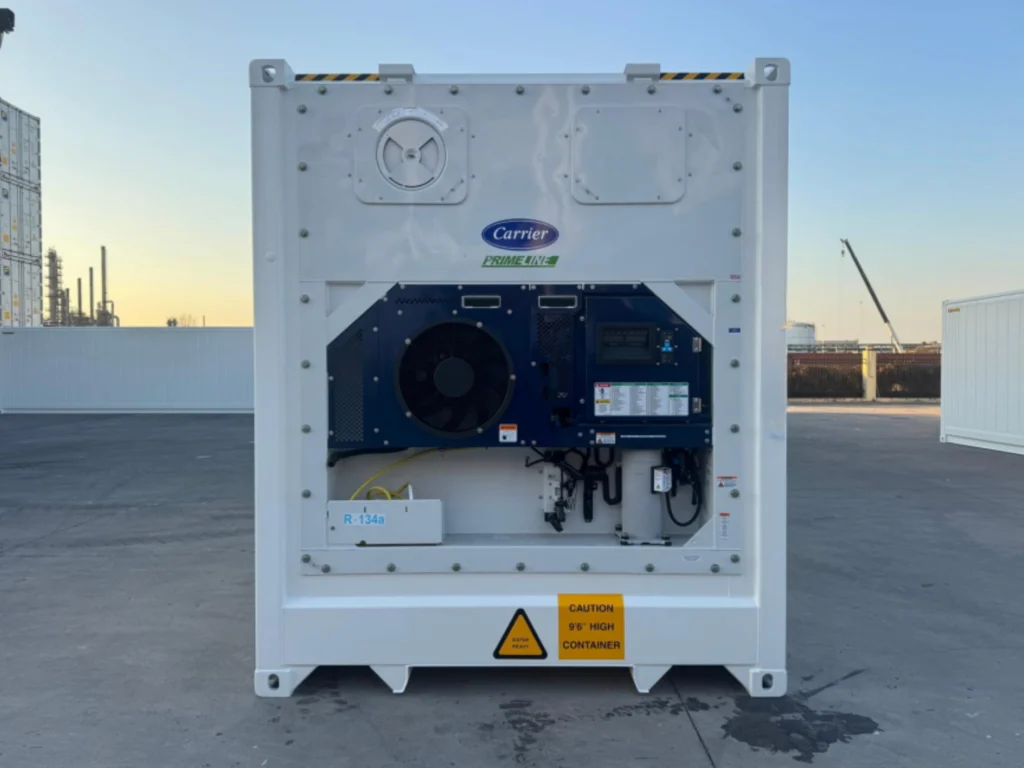
Most refrigerated containers can be set within a broad range, often from around -25°C to +25°C depending on the unit and its condition.
That makes them suitable for:
- frozen products
- chilled food
- controlled ambient storage
- temperature-sensitive medical stock
More advanced units may also include humidity control or fresh air vent settings for products like fruit, flowers, or plants.
Why Fresh Air and Humidity Matter
Not all reefer cargo simply needs cold air. Some goods also need controlled ventilation.
Fresh produce, for example, can release heat, moisture, and gases as it ripens. Reefer containers may need controlled fresh air exchange to avoid oxygen depletion and maintain product quality.
Humidity can also matter when storing:
- pharmaceuticals
- flowers
- plants
- fine art
- antiques
This is where a reefer becomes more than just a cold box. It becomes a controlled storage environment.
Why Condensation Can Still Be a Problem
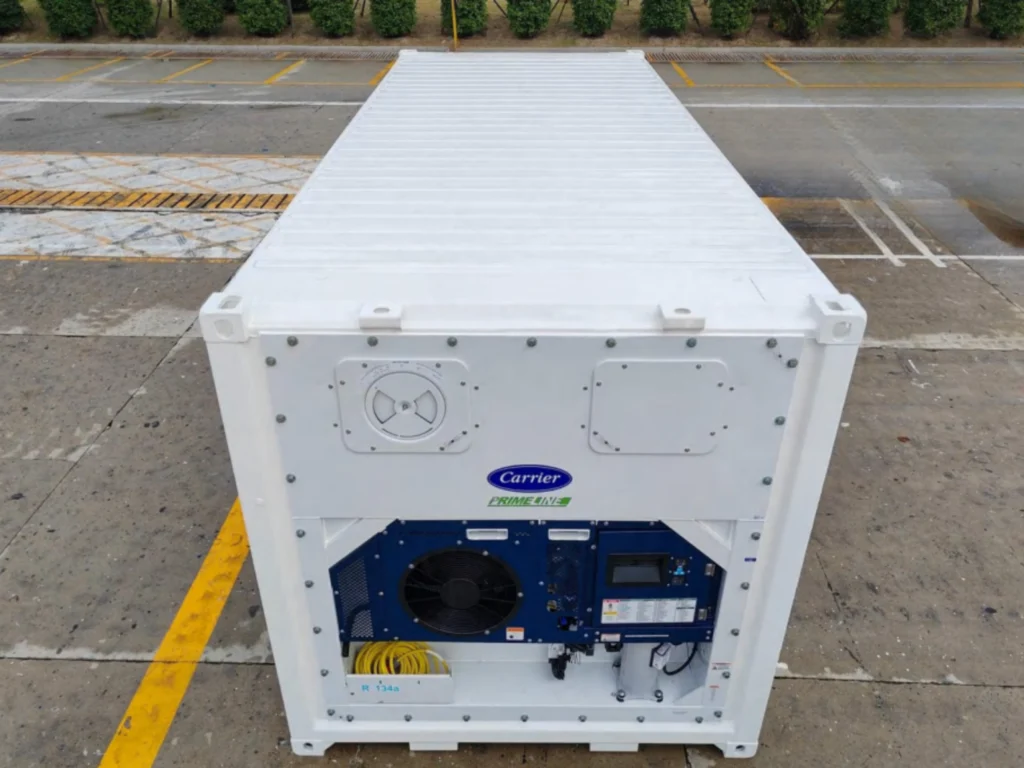
Even though reefer containers are sealed and temperature-controlled, moisture can still become an issue.
Condensation can form when warm moist air enters the unit, or when wet cargo and packaging introduce excess moisture into the container. Poor loading and frequent door openings can make this worse.
To reduce moisture problems:
- keep pallets and packaging dry
- avoid unnecessary door openings
- load correctly for airflow
- use the reefer at the correct set point
If condensation control is part of the job, read: Top 5 Natural Condensation Fixes
https://boshboxes.store/top-5-natural-condensation-fixes/
Which Industries Use Refrigerated Containers?
Reefer containers are used across many sectors where temperature stability matters.
Common industries include:
- food and beverage
- pharmaceuticals and medical
- agriculture
- floriculture
- chemicals
- electronics
- events and hospitality
This is why refrigerated containers are used both for transport and for temporary on-site cold storage.
If you need short-term cold storage, read: Temporary Cold Storage Solutions
https://boshboxes.store/temporary-cold-storage-solutions/
Are Reefer Containers Suitable For Static Storage?
Yes, refrigerated containers are widely used for static storage on commercial sites.
Businesses often use them for:
- event catering overflow
- seasonal stock
- emergency cold storage
- food preparation support
- construction site storage for sensitive goods
The main things to check are power supply, ventilation around the unit, running costs, and delivery access.
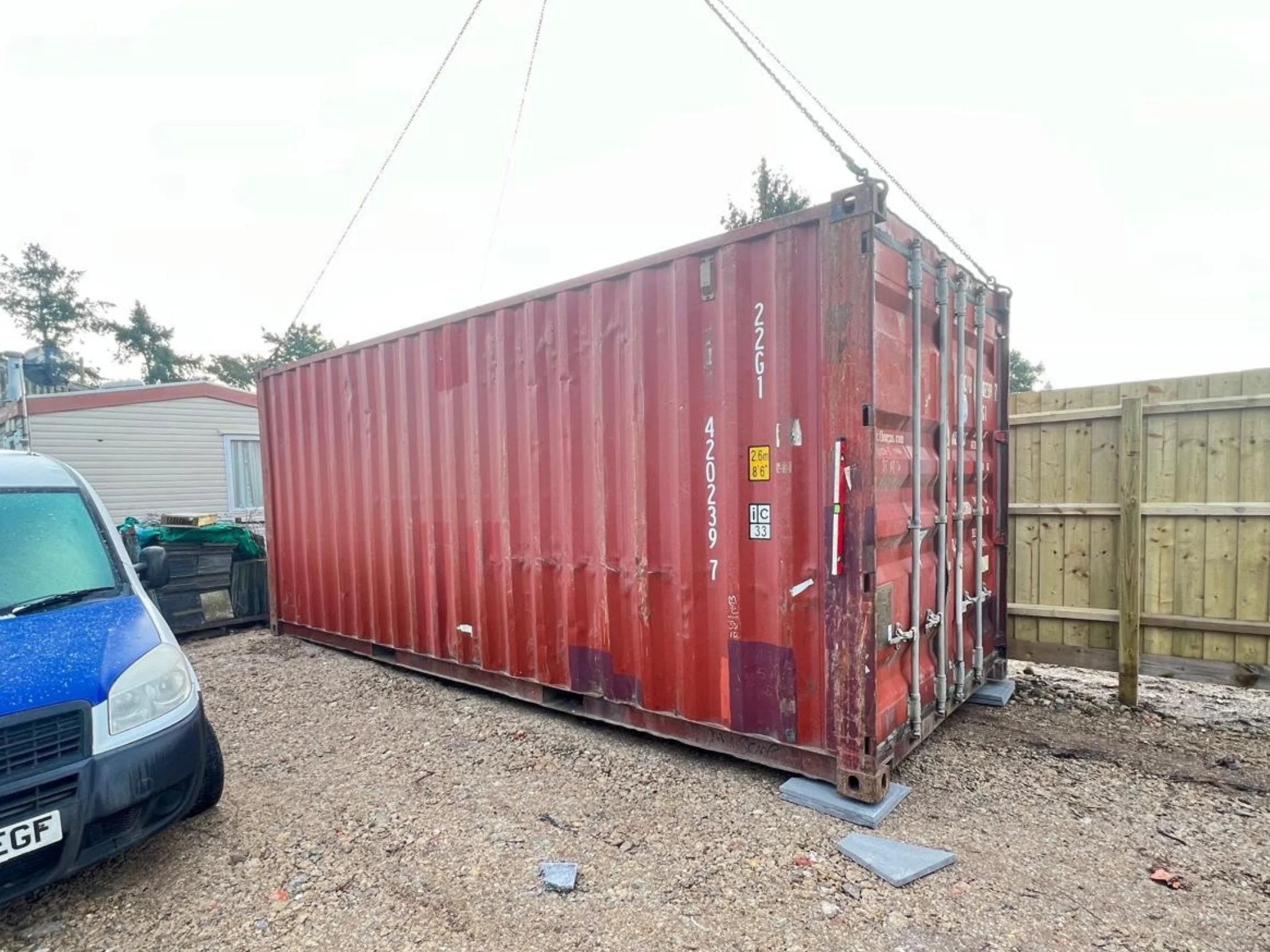
If you are planning site placement, see: Container Delivery UK: What Happens on Delivery Day?
https://boshboxes.store/container-delivery-uk-what-happens-on-delivery-day/
Common Reefer Sizes
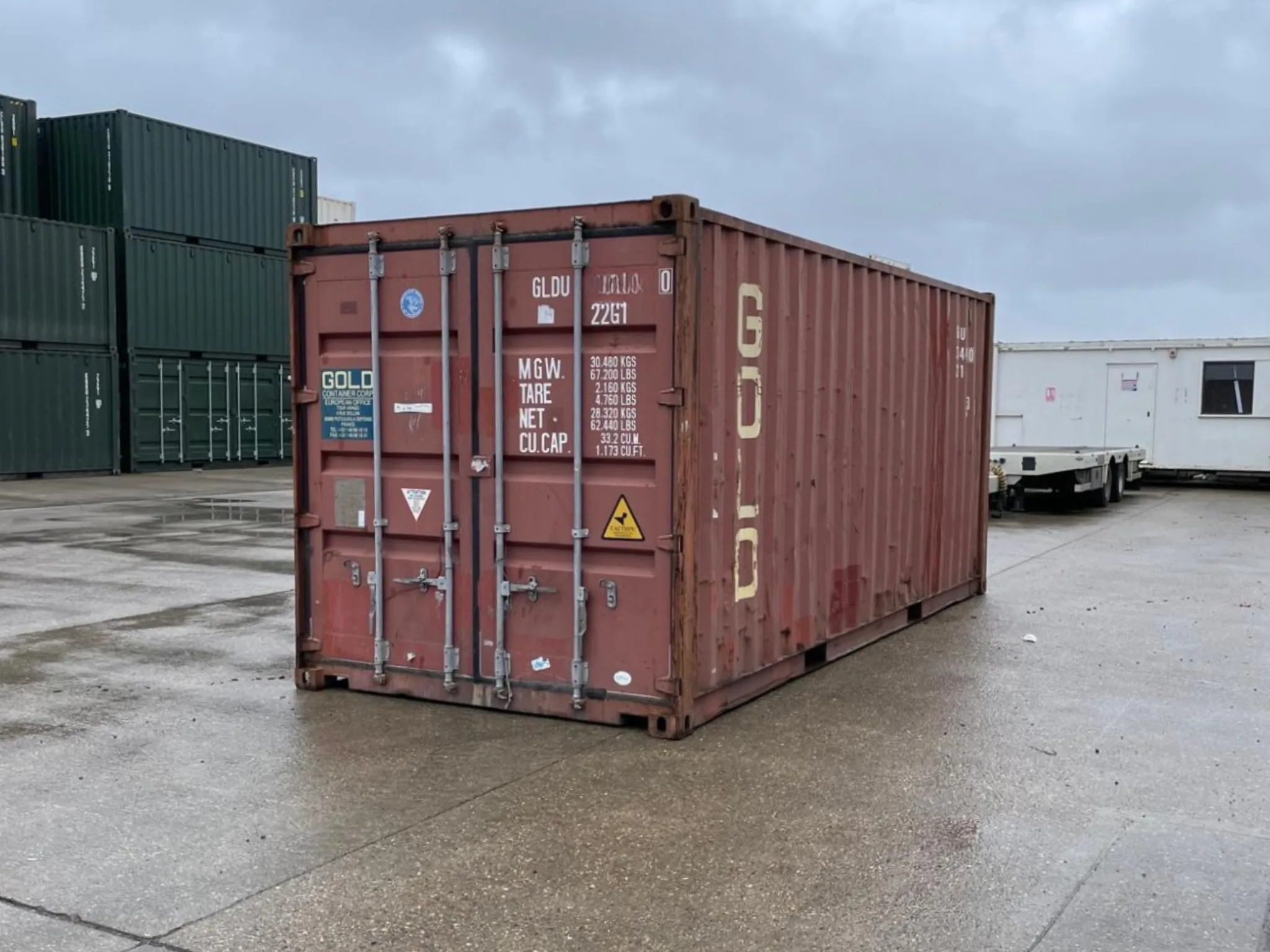
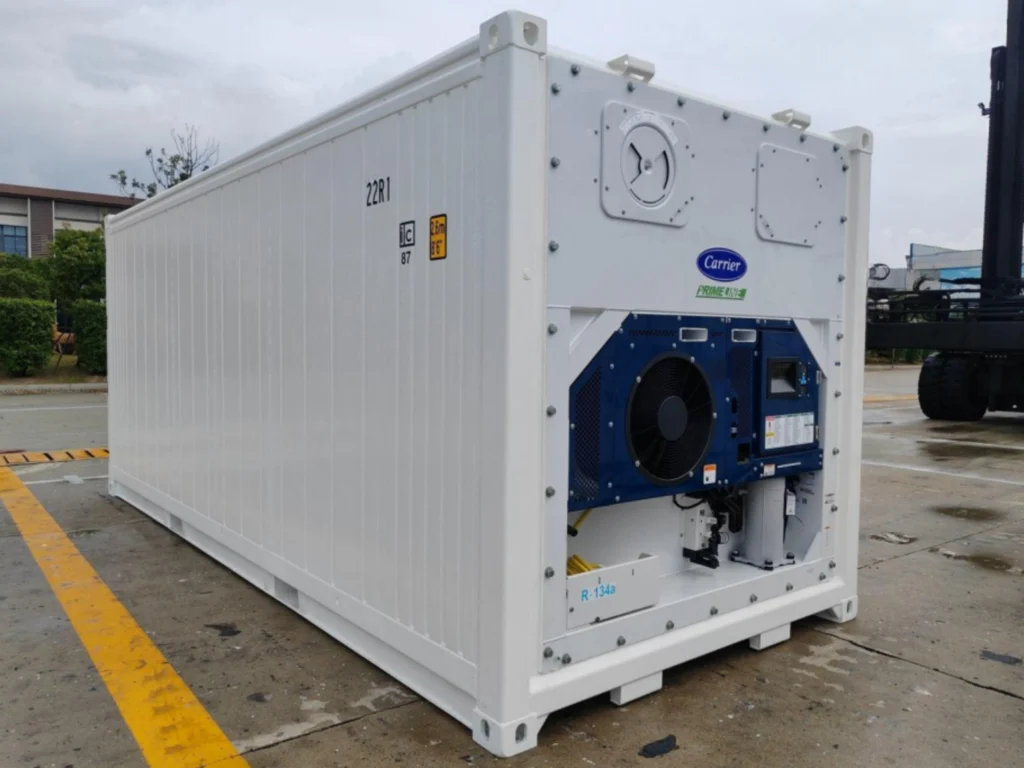
The most common reefer sizes in the UK are 20ft and 40ft units.
A 20ft reefer is often chosen where space is tighter or storage volumes are smaller. A 40ft high cube reefer is better suited to larger storage needs and higher-volume operations.
You can view examples here:
20ft Used Ex-Marine Refrigerated Containers
https://boshboxes.store/20ft-used-ex-marine-refrigerated-containers/
40ft Used High Cube Marine Refrigerated Containers
https://boshboxes.store/40ft-used-high-cube-marine-refrigerated-containers/
Planning and Practical Considerations
Some buyers focus on refrigeration performance and forget the practical side.
Before ordering a reefer, check:
- available power supply
- delivery access
- final unit position
- noise sensitivity of the site
- whether planning permission may apply
This is especially important for long-term commercial use.
Cost is also a key consideration when planning a refrigerated container setup.
See: How Much Does a 20ft Refrigerated Container Cost?
If that applies to your site, read: Do Refrigerated Containers Need Planning Permission in the UK?
https://boshboxes.store/refrigerated-containers-need-planning-permission/
The Bottom Line
Refrigerated containers work by combining a built-in refrigeration unit, controlled airflow, and a constant external power source to maintain a stable internal temperature. They are essential for storing and transporting goods that cannot tolerate temperature swings.
For UK buyers, understanding how reefer containers work helps avoid the most common mistakes around airflow, loading, condensation, power, and site setup.
Frequently Asked Questions
What is a reefer container?
A reefer container is a refrigerated shipping container with a built-in cooling unit. It is designed to maintain a controlled internal temperature for perishable or temperature-sensitive cargo.
How do refrigerated containers stay cold?
Refrigerated containers stay cold by using a compressor, condenser, evaporator, and internal fans to remove heat from inside the unit and circulate cooled air evenly around the cargo.
Do reefer containers need constant power?
Yes. A reefer container normally needs a continuous external power source such as mains electricity, ship power, port power, or a generator set to keep the refrigeration unit running.
What temperature can a refrigerated container hold?
Most refrigerated containers can operate from around -25°C to +25°C depending on the unit, its condition, and the application. Some can also help manage humidity and airflow.
Can refrigerated containers be used for static storage?
Yes. Reefer containers are commonly used for static cold storage on commercial sites, at events, in hospitality, and for temporary overflow stock where a fixed cold room is not available.