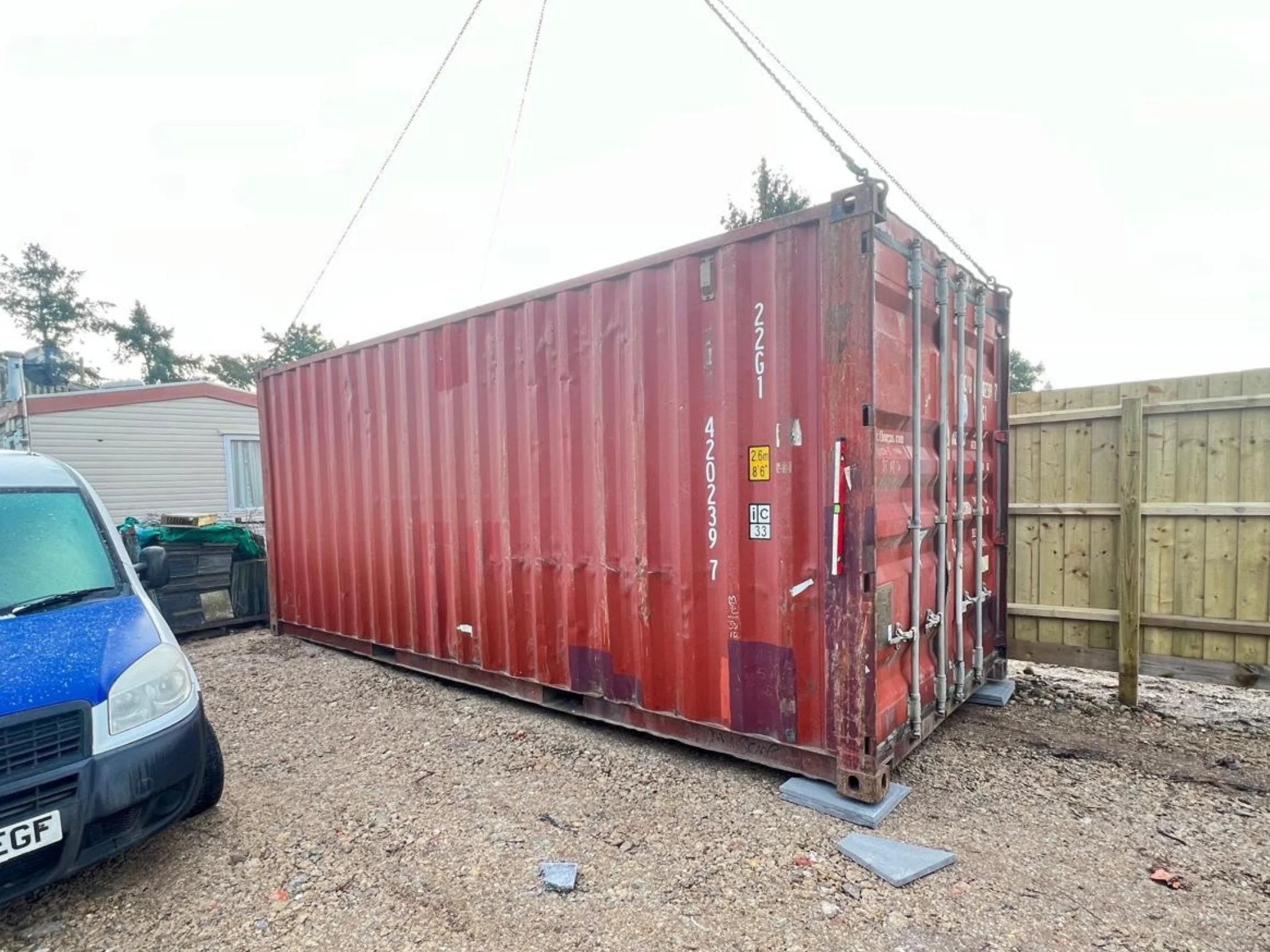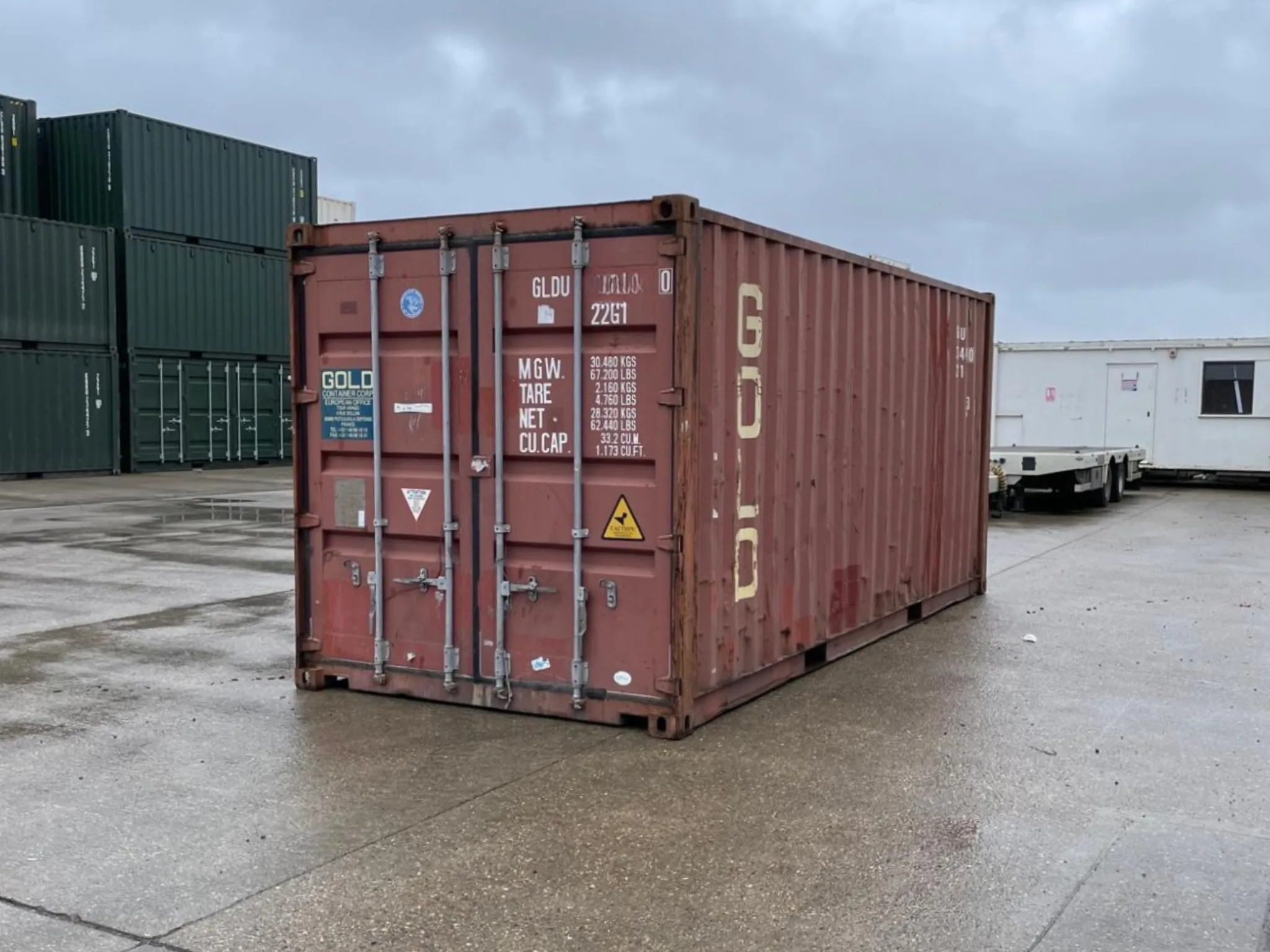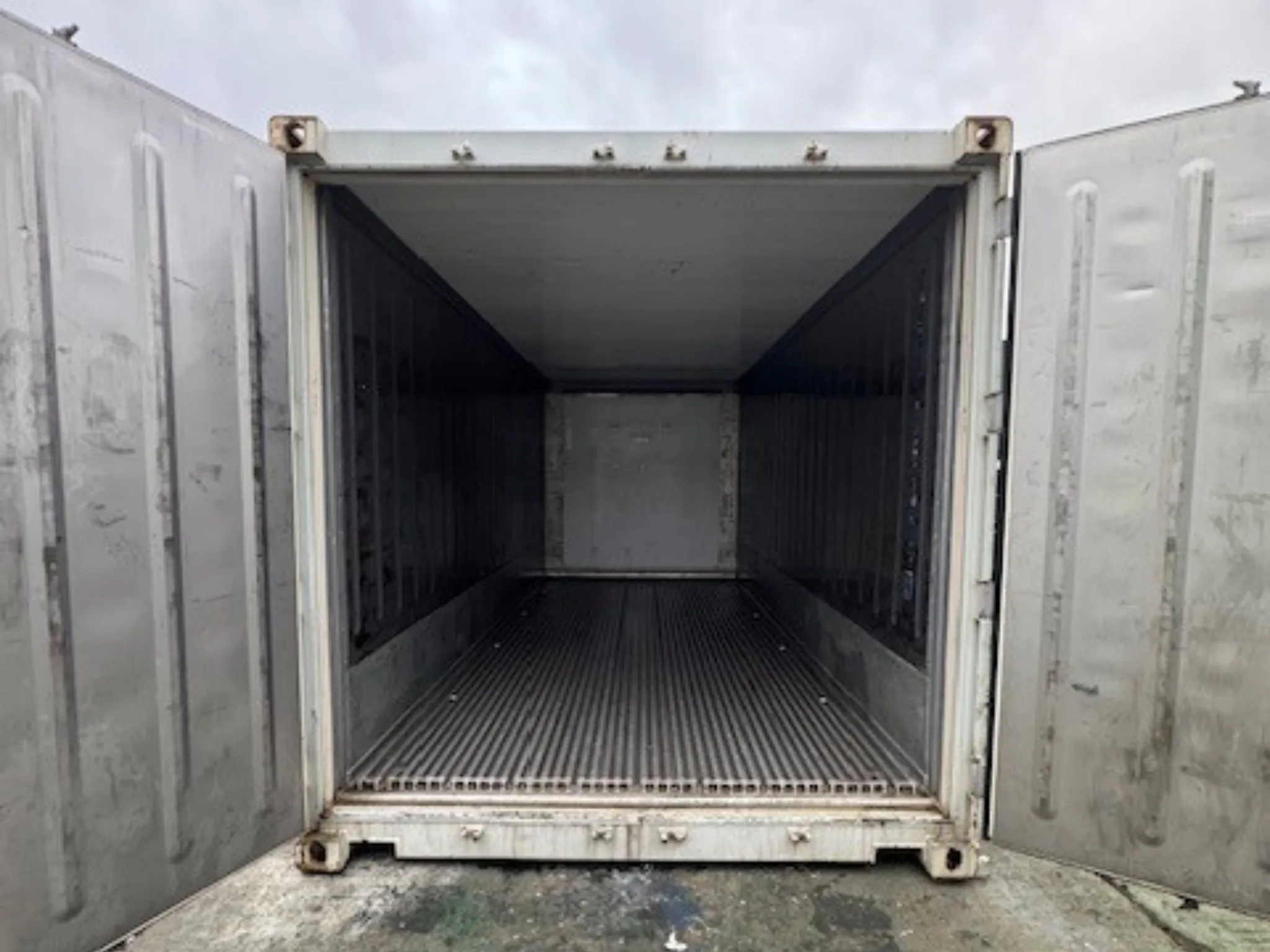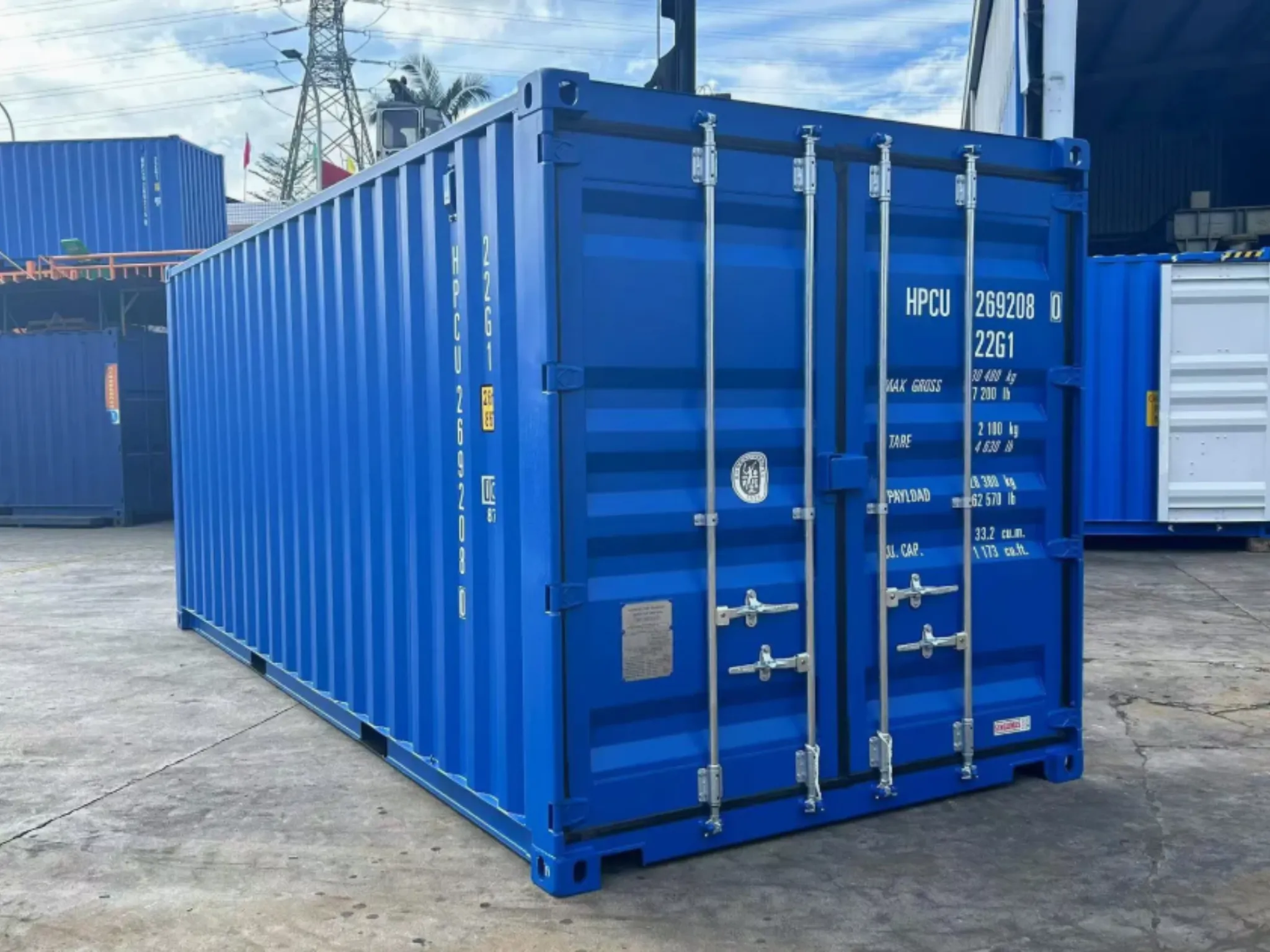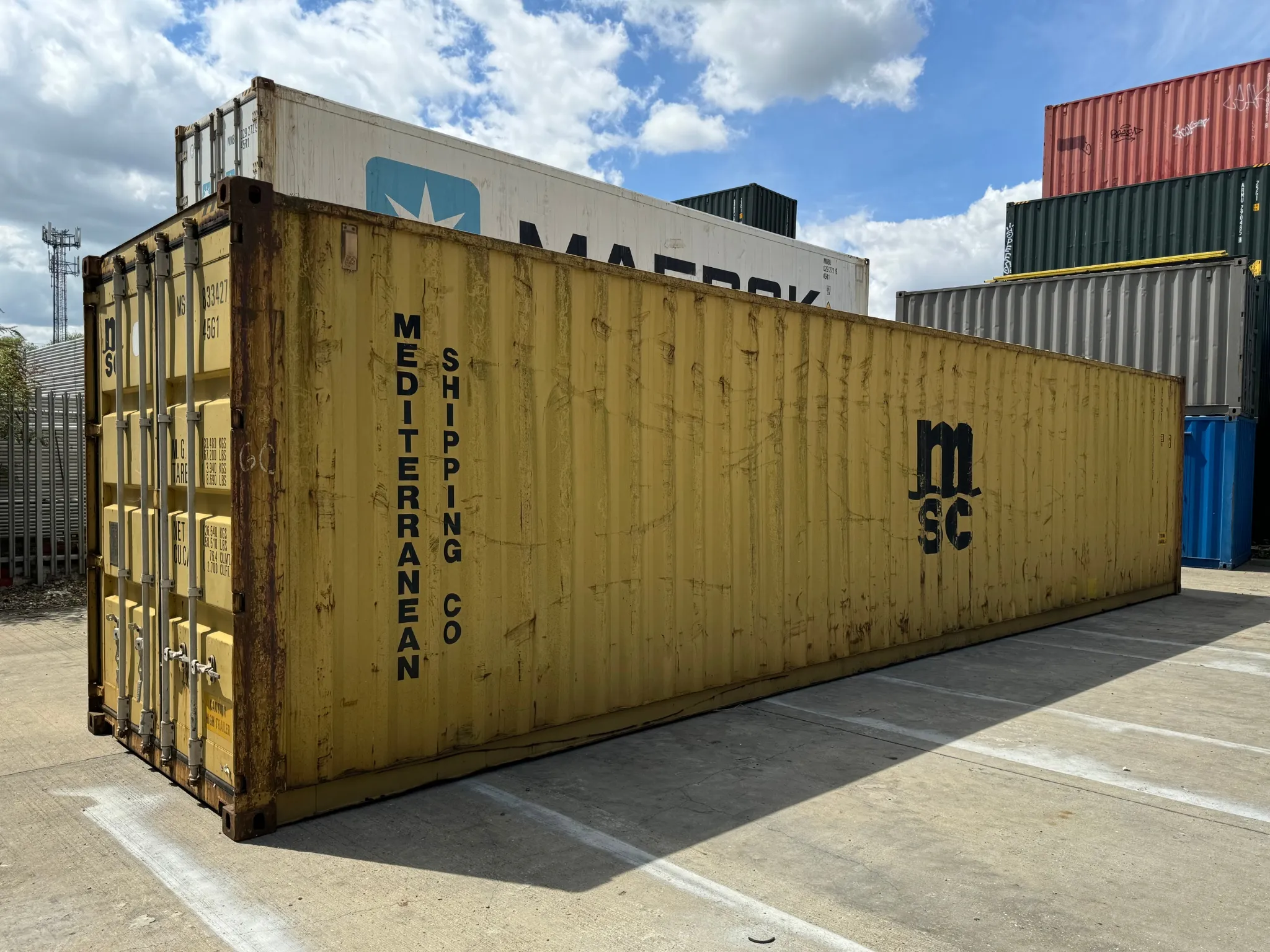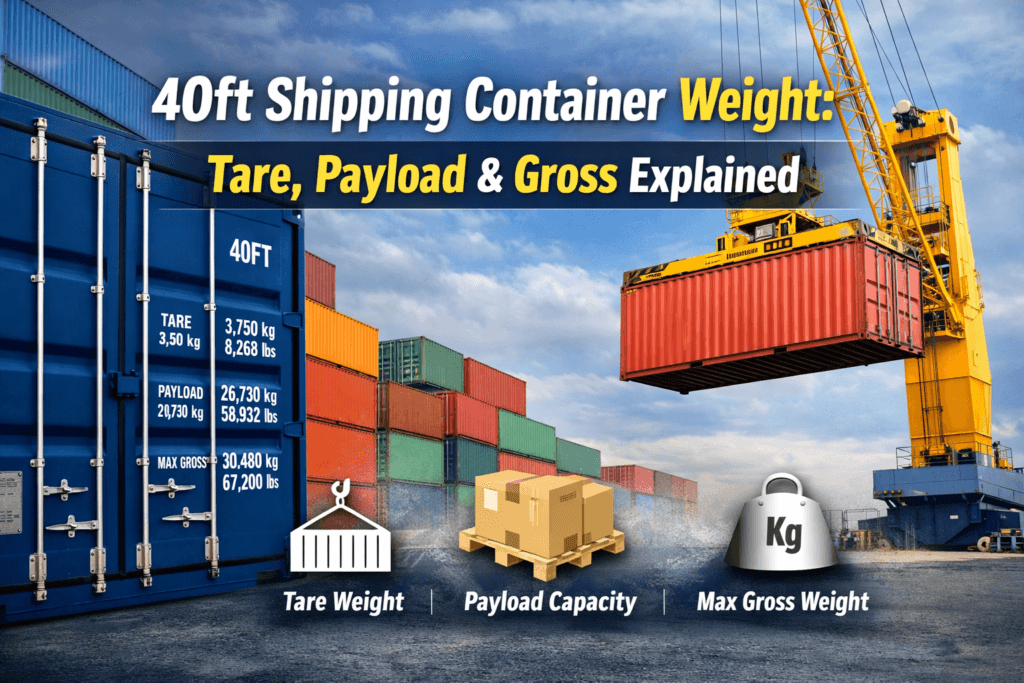
Quick answer: a 40ft shipping container typically weighs around 3,700–3,950 kg empty (3.7–3.95 tonnes). The exact tare, payload and maximum gross weight depend on the manufacturer and the individual container’s rating. Many 40ft units are rated to a maximum gross weight of either 30,480 kg or 32,500 kg, so always use the CSC plate on the actual container for loading and transport decisions.
| 40ft container type | Typical tare weight | Common payload range | Common max gross rating |
|---|---|---|---|
| Standard 40ft | 3,700–3,750 kg | Approx. 26,730–28,750 kg | 30,480–32,500 kg |
| 40ft high cube | 3,850–3,950 kg | Approx. 26,530–28,650 kg | 30,480–32,500 kg |
Figures vary between builds and fleets. The CSC plate is the authority for the individual unit. Representative manufacturer data: 40ft standard specification and 40ft high-cube specification.
Need the delivered price and correct lifting method for a 40ft unit? Tell us your postcode and requirements for a delivered quote.
Getting these numbers right matters. Exceed the payload and you risk floor damage, an unsafe lift or a rejected transport movement. Underestimate access or delivery-vehicle requirements and the container may not be placeable on arrival.
This guide explains standard and high-cube 40ft container weights, what tare, payload and gross weight mean, how the figures affect UK delivery, and where to confirm the rating on the individual unit.
The Three Weight Measurements You Need to Know
All ISO-certified shipping containers use three standardised weight measurements. These figures appear on every container’s CSC plate and shipping documentation.
Tare Weight
Tare weight is the weight of the empty container with no cargo inside. For a standard 40ft container this is approximately 3,750 kg. This covers the Corten steel frame, timber flooring, locking bars, corner castings, and all hardware. Tare weight is what you are lifting when placing or moving an empty container.
Payload Capacity
Payload capacity is the maximum cargo weight the container can safely carry. For a representative 30,480 kg-rated standard 40ft container, this is approximately 26,730 kg. Higher-rated builds can carry more. Payload is calculated as maximum gross weight minus tare weight. Exceeding payload capacity risks structural damage to the floor and frame.
Maximum Gross Weight
Maximum gross weight is the total allowable weight when the container is fully loaded: container plus cargo combined. A common standard 40ft rating is 30,480 kg (67,200 lbs), while some builds are rated to 32,500 kg. The applicable limit is stamped on the CSC plate and must not be exceeded during transport, lifting or stacking.
Standard 40ft Shipping Container Weight: Example Specification
The table below shows a representative 30,480 kg-rated standard 40ft shipping container. Individual units vary, so verify the CSC plate before loading or transport.
| Measurement | Kilograms (kg) | Pounds (lbs) | Metric Tonnes |
|---|---|---|---|
| Tare Weight (empty) | 3,750 kg | 8,267 lbs | 3.75 t |
| Maximum Payload (cargo) | 26,730 kg | 58,930 lbs | 26.7 t |
| Maximum Gross Weight | 30,480 kg | 67,200 lbs | 30.4 t |
Minor variations exist between manufacturers. Containers built to different ISO specifications, or those with replacement flooring and structural repairs, may vary slightly from these standard figures. Always check the CSC plate on the individual unit for confirmed weights.
40ft High Cube Container Weight Specifications
A 40ft high cube container is slightly heavier than a standard 40ft due to the extra structural material required for the additional height (9ft 6in instead of 8ft 6in). The weight difference is small but worth noting for crane and lifting calculations.
| Measurement | Kilograms (kg) | Pounds (lbs) | Metric Tonnes |
|---|---|---|---|
| Tare Weight (empty) | 3,900 kg | 8,598 lbs | 3.9 t |
| Maximum Payload (cargo) | 28,600 kg | 63,052 lbs | 28.6 t |
| Maximum Gross Weight | 32,500 kg | 71,650 lbs | 32.5 t |
High cube containers are often chosen for conversion projects, racking installations, or tall cargo. The extra 300mm of internal height comes with a marginally higher tare weight. Gross and payload ratings still depend on the individual build and must be checked on its CSC plate. For a full comparison of the practical differences, see our guide on High Cube vs Standard Containers: What’s the Difference?
Weight Comparison: All Common Container Sizes
If you are deciding between container sizes, weight and payload capacity are two of the most important factors. The table below compares all common UK container sizes side by side.
| Container Type | Tare Weight | Max Payload | Max Gross Weight |
|---|---|---|---|
| 20ft Standard | 2,350 kg | 28,130 kg | 30,480 kg |
| 40ft Standard | 3,750 kg | 26,730 kg | 30,480 kg |
| 40ft High Cube | 3,900 kg | 28,600 kg | 32,500 kg |
These are representative fleet specifications rather than universal values. A longer container does not automatically have twice the payload because tare weight and certified gross rating vary by design. Compare the CSC plate and the usable internal volume—not length alone—before choosing a unit. For a full size comparison, see our guide on 20ft vs 40ft Shipping Container: Which Size Should You Choose? For the equivalent weight breakdown on a smaller unit, see our 20ft Shipping Container Weight: Tare, Payload and Gross Guide.
What the CSC Plate Tells You About Container Weight
Every ISO-certified shipping container carries a CSC plate (Convention for Safe Containers). This metal plate, usually fixed near the container doors, confirms:
- The maximum gross weight
- The stacking load the container can bear
- The racking load tolerance
- The date of manufacture and next inspection
The tare weight stated on the CSC plate is the manufacturer’s figure for that specific unit. Where containers have been repaired, re-floored, or structurally modified, the actual tare may differ slightly from the plate figure. For static storage use in the UK, this is rarely a practical issue. For international freight, always verify the current tare using certified weighing equipment.
Why Container Weight Matters for UK Delivery
Understanding 40ft container weight is not just a technical exercise. It directly affects how your container can be delivered, placed, and used on site.
Crane and HIAB Lifting Limits
Most HIAB crane lorries used for UK container delivery have lifting capacities between 10 and 20 tonnes at their safe working radius. An empty 40ft container weighing 3,750 kg is well within these limits. A fully loaded container approaching 30,480 kg requires specialist lifting equipment and careful site assessment. Your supplier should confirm lifting method and equipment specification before delivery.
Ground Pressure and Site Conditions
A fully loaded 40ft container exerts significant ground pressure across its four corner feet. On soft ground, clay soil, or areas near drainage runs, this can cause subsidence or damage. Even an empty container places roughly 940 kg per corner foot on the ground beneath it. Proper site preparation, timber bearers, or concrete pads are the standard approach for permanent or semi-permanent installations.
UK Road Transport Regulations
UK road transport regulations limit most standard articulated vehicles to 44 tonnes maximum gross vehicle weight. A fully loaded 40ft container can leave little or no legal payload margin once the tractor and trailer are included. Loaded-container road movements therefore need vehicle-specific weight checks and planning by a competent haulier before booking. For a full walkthrough of the delivery process, see our guide on What Happens on Shipping Container Delivery Day?
40ft Container Weight and Pallet Capacity
Many UK businesses use 40ft containers for palletised storage. Payload capacity and floor area together determine how much stock the container can hold.
A standard 40ft container floor measures approximately 12m x 2.35m internally. This allows:
- Around 20 UK standard pallets (1,200mm x 1,000mm) in a single layer
- Around 18 to 20 Euro pallets (1,200mm x 800mm) in a single layer
- Double-stacked loads where cargo height and weight allow
A fully loaded 40ft container with 20 pallets carrying 1,000 kg each would total 20,000 kg of cargo. This is well within the 26,730 kg payload limit, meaning most palletised goods can be stored without approaching weight constraints. For a full breakdown of pallet layouts and stacking options, see our guide on How Many Pallets Fit in a Shipping Container?
How Weight Relates to Container Condition
Container weight can be a useful indicator of condition when buying a used unit.
Original Flooring
Marine-grade plywood flooring contributes to tare weight. A container with original flooring intact will typically weigh slightly more than one with a partial or replacement floor. Replacement floors using thinner ply or alternative materials may reduce tare slightly.
Structural Repairs
Welded repairs to corner posts, side panels, or the roof add material and therefore weight. While minor repairs are normal in used containers, significant additional weight may indicate extensive structural work. Always ask for a condition report alongside the weight specification when buying used.
Corrosion
Severe corrosion reduces the effective structural weight of the steel. A container that feels unusually light may have lost material through rust rather than being a newer, lighter-spec unit. Wind and watertight condition certification is the key benchmark when buying used containers in the UK.
For a full explanation of what to check when inspecting a used container, see our guide on How to Inspect a Used Shipping Container Before Buying.
Buying a 40ft Shipping Container in the UK
When buying a 40ft container, understanding weight specifications helps with:
- Selecting the right delivery vehicle and lifting method
- Confirming ground suitability at your site
- Planning maximum cargo loads for storage use
- Ensuring compliance with UK transport regulations if the container will be moved loaded
Bosh Boxes supplies both new and used 40ft containers across the UK, with full weight specifications confirmed before delivery. View available stock, condition grades, and current pricing on our 40ft shipping containers page.
For those comparing new and used options, our guide on New vs Used Shipping Containers: Which Should You Buy? explains the full cost and condition trade-offs.
Stacking Strength and Vertical Load Capacity
Shipping containers are engineered to be stacked up to nine units high when fully loaded on container ships. This demands extraordinary structural strength concentrated through the four corner posts and corner castings.
The stacking load specification for a standard 40ft container is typically 192,000 kg (192 tonnes) applied evenly across all four corner castings. This means a single corner post must be able to bear over 48 tonnes of vertical load from containers stacked above it.
In UK land-based use, stacking is far less extreme. Most static storage sites stack no more than two containers high, which places roughly 7,500 kg (two empty 40ft units) on the bottom container corners. This is well within structural limits.
What to Check Before Stacking Containers on Site
Before stacking two 40ft containers, confirm the following:
- Bottom container is in sound structural condition with undamaged corner posts
- Ground beneath can support the combined weight, ideally on concrete or compacted hardcore
- Containers are aligned so corner castings transfer load correctly
- Access for lifting equipment is confirmed before the bottom container is placed
- Local planning rules are checked if the stacked height becomes a material change
Never stack containers on uneven ground without timber bearers or pads. Tipping risk increases significantly if one corner is unsupported.
Weight Considerations for Container Conversions
If you are planning a shipping container conversion, weight becomes relevant at several stages of the project.
Additional Weight from Conversion Work
A typical container conversion adds significant weight to the tare figure. Common additions include:
- Insulation (spray foam or rigid board): 200 to 600 kg depending on coverage
- Internal cladding (plywood or steel lining): 150 to 400 kg
- Windows and doors (steel or composite): 50 to 200 kg per opening
- Electrical wiring, consumer units, and fixtures: 50 to 150 kg
- Partition walls and internal fitout: 100 to 500 kg or more
- HVAC, ventilation units, and extract fans: 50 to 200 kg
A fully converted office or workshop unit can easily weigh 5,500 to 7,000 kg before any furniture or equipment is added. This has two practical implications: delivery vehicles must account for the higher tare, and site ground conditions must be assessed for the increased load at each corner.
Weight and Crane Lifting for Conversions
A converted 40ft unit being lifted by crane onto a permanent base may weigh significantly more than an empty container. Always confirm the final converted weight with your conversion supplier before booking a crane. Crane hire is typically priced and permitted based on maximum lift weight, so underestimating can result in an unsafe lift or a cancelled delivery.
For a full overview of what container conversion projects involve, see our guide on Shipping Container Conversions UK: Ideas, Types and Planning.
Weight and the 20ft vs 40ft Decision
For buyers comparing 20ft and 40ft containers, weight is rarely the deciding factor. Both sizes are well within the limits of standard UK delivery vehicles when empty. However, there are a few weight-related points worth noting:
- A 20ft container at 2,200 kg tare can be placed by a smaller HIAB crane than a 40ft at 3,750 kg, which can reduce delivery cost in tight-access locations
- A 20ft container loaded to capacity reaches 24,000 kg gross, which is lower than the 40ft maximum, making it more practical where vehicle payload limits are a concern
- Two 20ft containers placed end to end occupy roughly the same footprint as one 40ft but give two separately lockable units, each with their own lower individual weight
For most buyers, internal volume and site footprint are the primary decision drivers. Weight becomes a more active concern only where site access is tight, ground conditions are poor, or the container will be moved frequently once placed.
Frequently Asked Questions
How much does an empty 40ft shipping container weigh?
A standard empty 40ft shipping container weighs approximately 3,750 kg (8,267 lbs / 3.75 tonnes). A 40ft high cube container weighs slightly more at around 3,900 kg due to its additional structural height.
What is the maximum weight a 40ft container can hold?
The maximum cargo payload for a standard 40ft container is approximately 26,730 kg (58,930 lbs / 26.7 tonnes). The maximum gross weight including the container itself is 30,480 kg (67,200 lbs / 30.4 tonnes).
What is the tare weight of a 40ft shipping container?
Tare weight is the weight of the empty container. For a standard 40ft ISO container, tare weight is typically 3,750 kg. This figure is stamped on the CSC plate fixed near the container doors.
Does a 40ft high cube weigh more than a standard 40ft?
Yes. A 40ft high cube container has a tare weight of approximately 3,900 kg, compared to 3,750 kg for a standard 40ft. The extra 150 kg comes from the additional steel used to build the taller frame. The high cube also has a higher maximum gross weight of 32,500 kg versus 30,480 kg for a standard unit.
How much does a loaded 40ft container weigh?
A fully loaded standard 40ft container can weigh up to 30,480 kg (67,200 lbs). In practice, most commercial loads reach between 18,000 and 24,000 kg total gross weight depending on cargo type and pallet count.
Does container weight affect delivery costs?
Empty container weight is rarely the primary delivery cost factor. Access, distance, and lifting method have more influence on pricing. However, fully loaded containers may require specialist vehicles or permits, which increases delivery cost. Always confirm load weight with your haulier at the time of booking.
Where is the weight specification on a shipping container?
Container weight is displayed on the CSC plate, which is a metal certification plate usually fixed to the door end of the container near the locking bars. It shows the maximum gross weight, stacking load, and racking strength alongside manufacture and inspection dates.
Bottom Line
A standard 40ft shipping container has a tare weight of 3,750 kg, a maximum payload of 26,730 kg, and a maximum gross weight of 30,480 kg. High cube variants weigh slightly more at 3,900 kg tare, with a higher gross weight allowance of 32,500 kg.
These figures determine which delivery vehicle and lifting equipment are needed, how much cargo can be loaded safely, and whether site ground conditions are suitable. For static storage, palletised goods, or heavy equipment, a standard 40ft container provides more than enough payload capacity for almost any commercial application.
For a fast quote on 40ft container supply and delivery anywhere in the UK, contact Bosh Boxes today and experience The Bosh Boxes Way.