
How to insulate a shipping container conversion properly depends on controlling condensation as well as temperature. In the UK, the best approach is usually closed-cell spray foam or a flash-and-batt system, because steel containers trap moisture and create thermal bridging. Poor insulation choices can leave wall cavities damp, reduce usable lifespan, and make a conversion
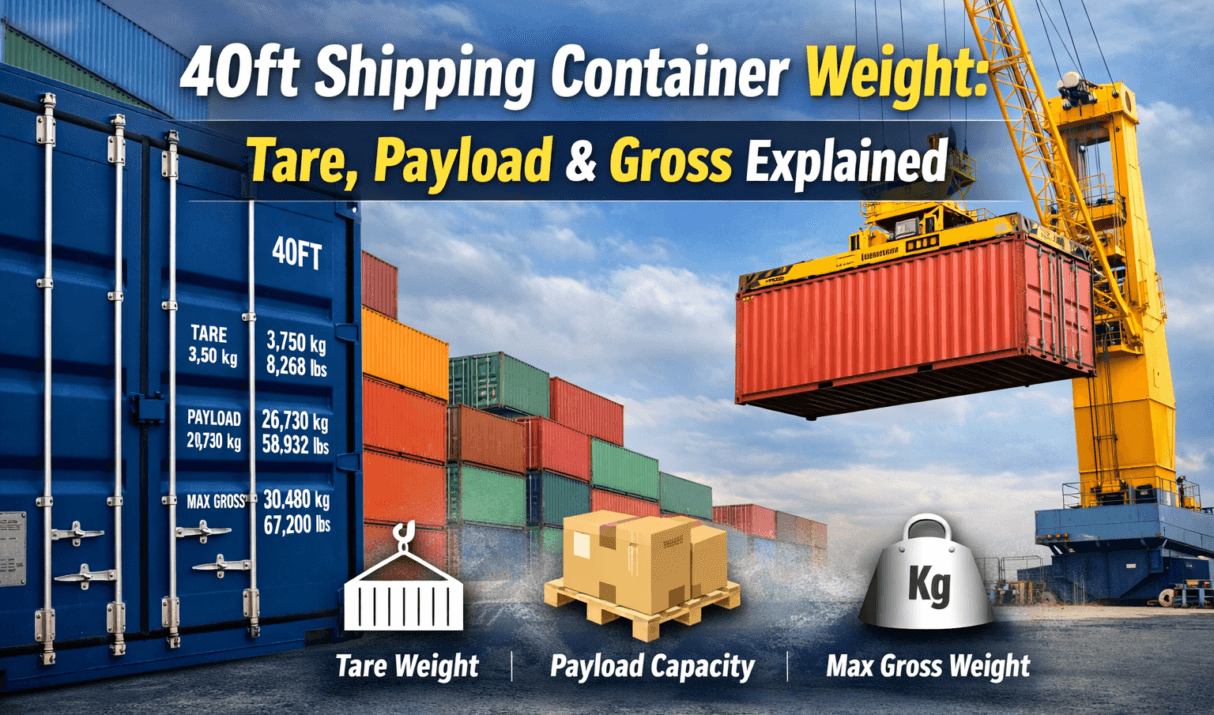
Quick answer: a 40ft shipping container typically weighs around 3,700–3,950 kg empty (3.7–3.95 tonnes). The exact tare, payload and maximum gross weight depend on the manufacturer and the individual container’s rating. Many 40ft units are rated to a maximum gross weight of either 30,480 kg or 32,500 kg, so always use the CSC plate on

Shipping container conversion ideas for UK businesses include coffee shops, pop-up retail stores, offices, gyms, bars, workshops, and self-storage facilities. These businesses use converted shipping containers because they are cheaper than traditional premises, faster to set up, and flexible enough to relocate. Many UK startups now launch from container conversions before committing to permanent buildings.