Quick answer: a refrigerated container does not have one fixed monthly running cost. A useful total-cost forecast combines purchase or hire, delivery, electrical preparation, electricity, planned servicing, repair and downtime risk, then subtracts any residual value at the end of ownership. Electricity should be calculated from the actual unit’s average demand in kW and your contracted tariff—not from container length alone.
Last reviewed: 7 August 2026. The worked electricity examples below use £0.25/kWh for illustration only. Replace that figure with the rate on your own electricity bill or supplier contract.
What Makes Up the Real Cost of a Reefer Container?
The purchase price is only the first line of the budget. For a realistic comparison, include every cost required to deliver, power, operate and protect the unit.
- Purchase or hire: the unit price, rental payments and any deposit or minimum term.
- Delivery and offload: transport, HIAB or flatbed arrangements and any aborted-delivery risk.
- Site and electrical preparation: groundworks, a suitable three-phase supply, protection, isolation and connection work.
- Energy: measured average demand multiplied by operating hours and tariff.
- Maintenance and repairs: inspections, cleaning, servicing, parts and qualified refrigerant work where required.
- Operational risk: monitoring, alarms, backup storage, stock loss and downtime.
- End value: resale, machinery replacement or continued use as an insulated container.
Total cost of ownership = acquisition + delivery + site preparation + energy + servicing + repairs and downtime − residual value. Use the same period when comparing options, such as 12, 36 or 60 months.
How to Calculate Reefer Electricity Cost
This page covers the cost calculation rather than repeating every technical detail. For supply voltages, machinery variables and safe electrical preparation, use our refrigerated container power requirements guide.
Use Measured Average Demand
Average demand in kW × operating hours = energy used in kWh. Multiply the kWh result by your electricity tariff. A reefer cycles as it maintains temperature, so its nameplate or peak electrical load is not automatically its continuous consumption.
| Illustrative average demand | Energy over 24 hours | Daily cost at £0.25/kWh | 30-day cost |
|---|---|---|---|
| 3 kW | 72 kWh | £18 | £540 |
| 5 kW | 120 kWh | £30 | £900 |
| 7 kW | 168 kWh | £42 | £1,260 |
These are calculation examples, not promised consumption figures. Ask for the machinery make and model and, where available, meter or controller data from the actual unit. Use your own operating hours and tariff before approving the budget.
What Changes Electricity Consumption?
Two reefers of the same length can produce different bills. The main variables are:
- The refrigeration machinery model, condition and controller settings.
- The temperature setpoint and the temperature of the goods when loaded.
- Ambient temperature, direct sun and ventilation around the machinery end.
- Door-opening frequency and how long doors remain open.
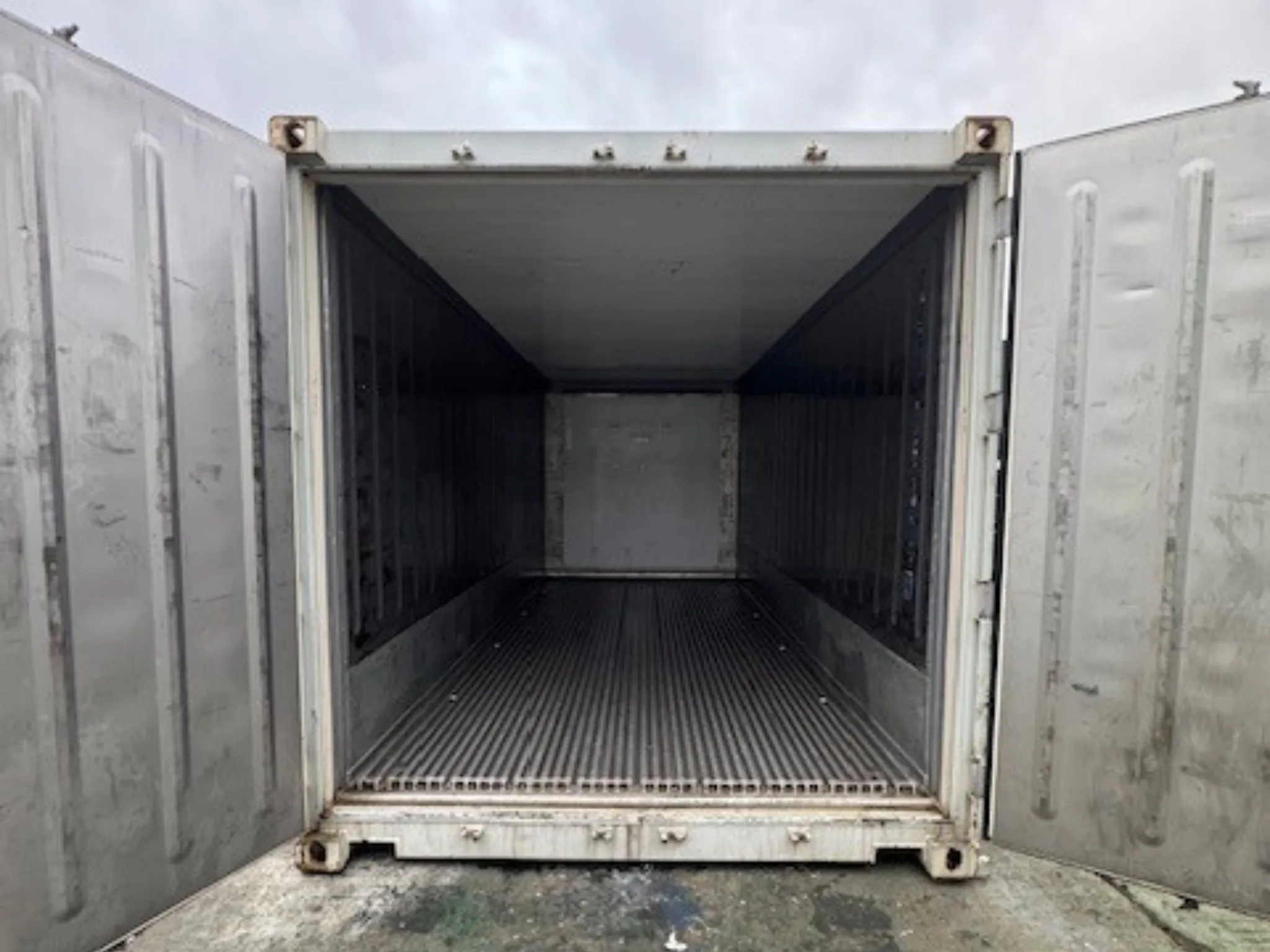
- Blocked T-floor airflow, overloading or poor product spacing.
- Door-seal condition, ice build-up, dirty coils and defrost behaviour.
- Internal lighting, monitoring equipment and other fitted accessories.
Do not assume a 40ft unit automatically draws twice the electricity of a 20ft unit. Capacity, machinery, load pattern and operating conditions matter more than length on its own.
Maintenance and Servicing Costs
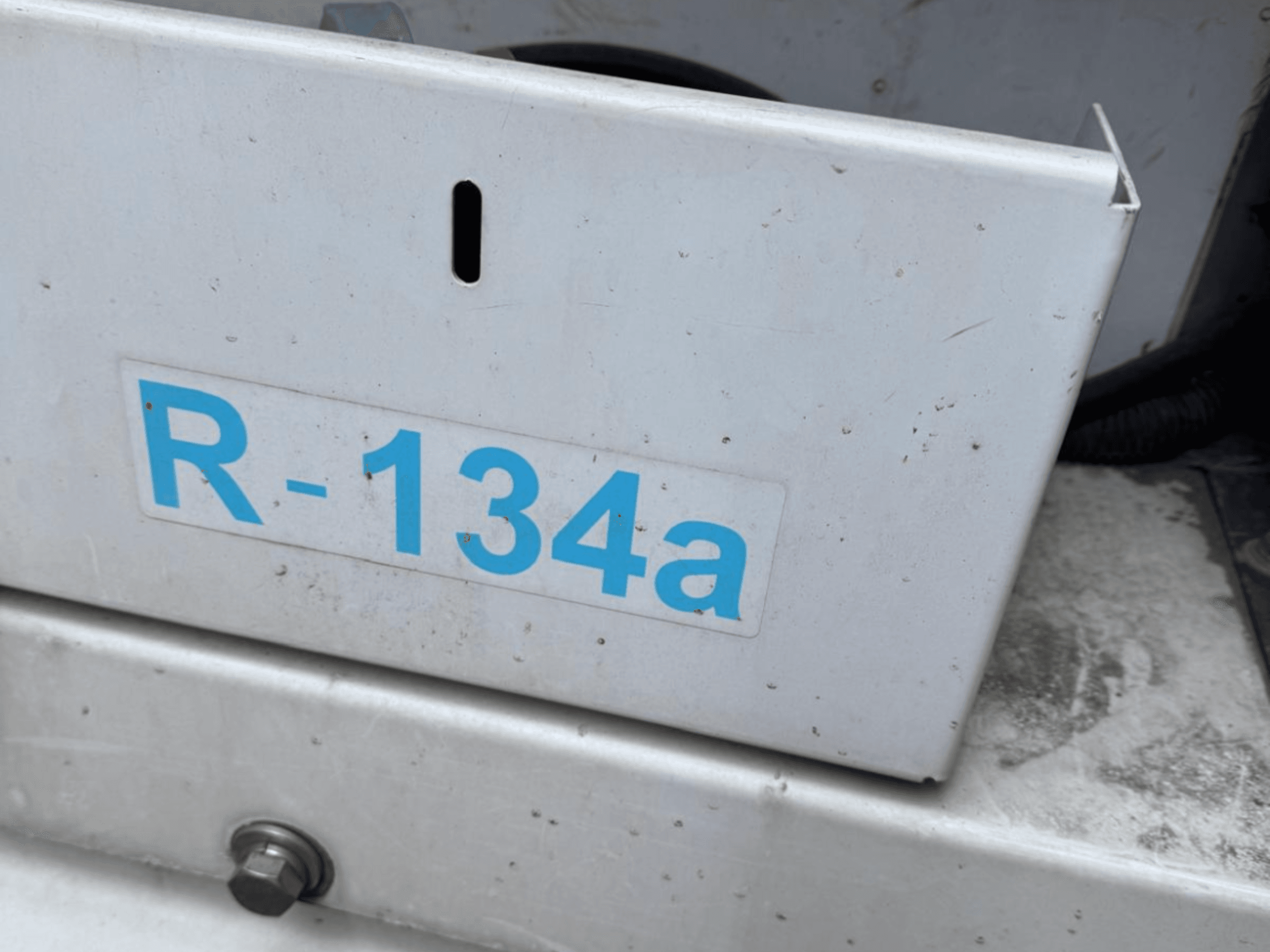
A reefer is an active refrigeration system, not passive storage. Maintenance protects temperature control, energy performance and stock, but there is no responsible universal annual service price. The correct budget depends on machinery, age, operating hours, site conditions, travel, parts and service coverage.
Routine Operator Checks
- Keep the condenser air path and machinery area clear.
- Inspect door seals, hinges, cables and plugs for visible damage.
- Keep T-floor channels and return-air paths unobstructed.
- Review controller alarms and temperature records.
- Remove ice only by the approved process for the supplied machinery.
- Report abnormal noise, repeated alarms or slow temperature recovery early.
Professional Maintenance
Follow the service instructions for the fitted machinery and agree a written schedule with a competent refrigeration engineer. Carrier publishes annual maintenance guidance for relevant container refrigeration equipment, but the exact task list must match the unit supplied. Work that involves regulated refrigerants must be completed by appropriately qualified personnel.
Useful references: Carrier container refrigeration annual maintenance guidance and GOV.UK qualifications required for work on equipment containing F gas.
For budgeting, request separate prices for planned servicing, call-outs, labour, travel, common parts and out-of-hours support. That prevents a cheap headline service rate from hiding the costs that matter during a failure.
Repairs, Downtime and Stock-Loss Risk
A repair invoice is only one part of a breakdown. If the unit protects high-value or time-sensitive stock, the larger exposure may be product loss, labour disruption, emergency transport and temporary replacement storage.
- Use independent temperature monitoring and alarm escalation where the stock risk justifies it.
- Know who will respond out of hours and the expected call-out area.
- Have a documented plan for moving stock if temperature cannot be maintained.
- Clarify what the seller, hirer, warranty and service contractor each cover.
- Do not treat a PTI result as a lifetime guarantee; it records a test at a point in time.
Preventative work will often reduce failure risk, but it cannot eliminate every breakdown. Budget according to the value and sensitivity of the goods, not only the cost of the container.
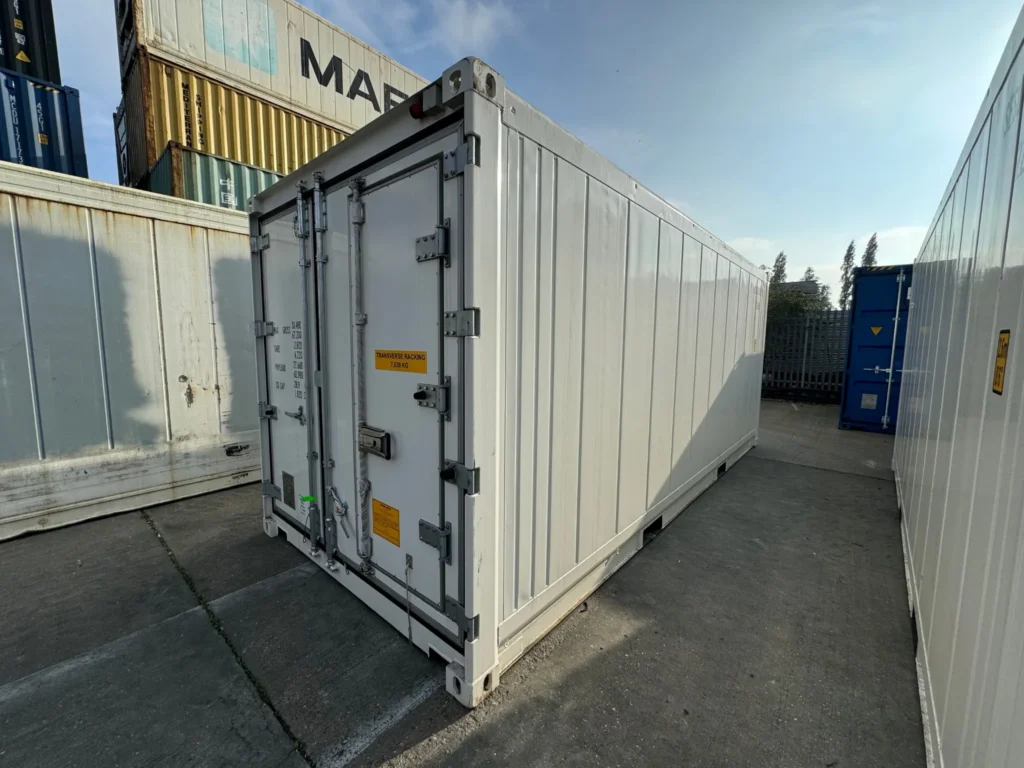
Lifespan, Depreciation and Residual Value
A refrigerated container has several systems that age differently: the steel shell, insulation, doors and seals, electrical components and refrigeration machinery. There is no single lifespan that applies to every reefer.
- Shell: affected by corrosion, repairs, water traps, handling damage and site exposure.
- Insulation and seals: affected by impact, moisture ingress, door alignment and repeated use.
- Machinery: affected by operating hours, maintenance history, refrigerant circuit condition, controller age and parts availability.
- Residual use: a unit may remain useful as insulated storage even if active refrigeration later becomes uneconomic.
Assess the actual unit, not its age alone. Machinery hours, alarm history, corrosion, insulation condition and availability of support can matter more than the build year. See our detailed guide to how long refrigerated containers last.
Hire vs Buy: Which Produces the Better Total Cost?
The answer depends on the term, service package and risk—not simply whether the monthly hire payment looks lower than the purchase price. If hire is available from your chosen supplier, compare both routes over the same operating period.
| Decision factor | Hire may suit | Buy may suit |
|---|---|---|
| Duration | Short, seasonal or uncertain requirement | Long-term or recurring requirement |
| Maintenance | A service-inclusive contract transfers defined risks | You want control of service provider and schedule |
| Capital | Preserving upfront cash is important | Asset ownership and residual value matter |
| Flexibility | Capacity may need to change quickly | Specification and site use are stable |
| Risk | Contract response and replacement terms are strong | You can manage repairs, monitoring and backup |
Read the exclusions. Hire terms may still charge for damage, misuse, electricity, delivery or aborted access. Ownership may be economical over a long period, but only after servicing, repair risk and residual value are included.
Site Costs That Buyers Commonly Miss
- Ground preparation and drainage.
- Electrical design, installation, testing and any distribution-board upgrade.
- Safe access for delivery, offload and future service vehicles.
- Ventilation clearance around the refrigeration machinery.
- Noise assessment where neighbours, staff or overnight operation may be affected.
- Lighting, ramps, strip curtains, shelving, monitoring or security upgrades.
- Planning or local-authority advice where the use, duration or location creates uncertainty.
Planning rules and local circumstances vary. Check our UK reefer-container planning guide, then obtain site-specific advice from the relevant planning authority when needed.
Reefer Total-Cost Checklist Before Ordering
- What exact unit, machinery model and condition are being quoted?
- Is the price purchase or hire, and what are the VAT and payment terms?
- What delivery, offload, access and waiting charges can apply?
- What electrical supply and connection must be ready before arrival?
- What does commissioning include, and who signs it off?
- What service history, test information and operating data are available?
- What warranty, call-out and replacement provisions are written into the quote?
- What monitoring, alarm and stock-contingency plan is required?
- What is the likely resale or alternative-use value at the end of the chosen term?
Ask Bosh Boxes for a delivered quote tied to your postcode, access, required temperature and intended use. That produces a more useful decision than comparing headline container prices without the operating context.
Related Refrigerated Container Guides
- Reefer container power requirements and electricity calculation
- 20ft vs 40ft refrigerated containers
- Reefer shell, insulation and machinery lifespan
- New and used refrigerated containers for sale UK
Bottom Line
The correct reefer budget is a total-cost model, not one monthly electricity number. Measure average demand, use your real tariff, obtain written service and call-out terms, plan for stock risk and compare hire or purchase over the same period.
Bosh Boxes can help match the unit size, condition, delivery method and operating requirements to your site. Request a delivered refrigerated-container quote with your postcode, required temperature, access details and intended use.