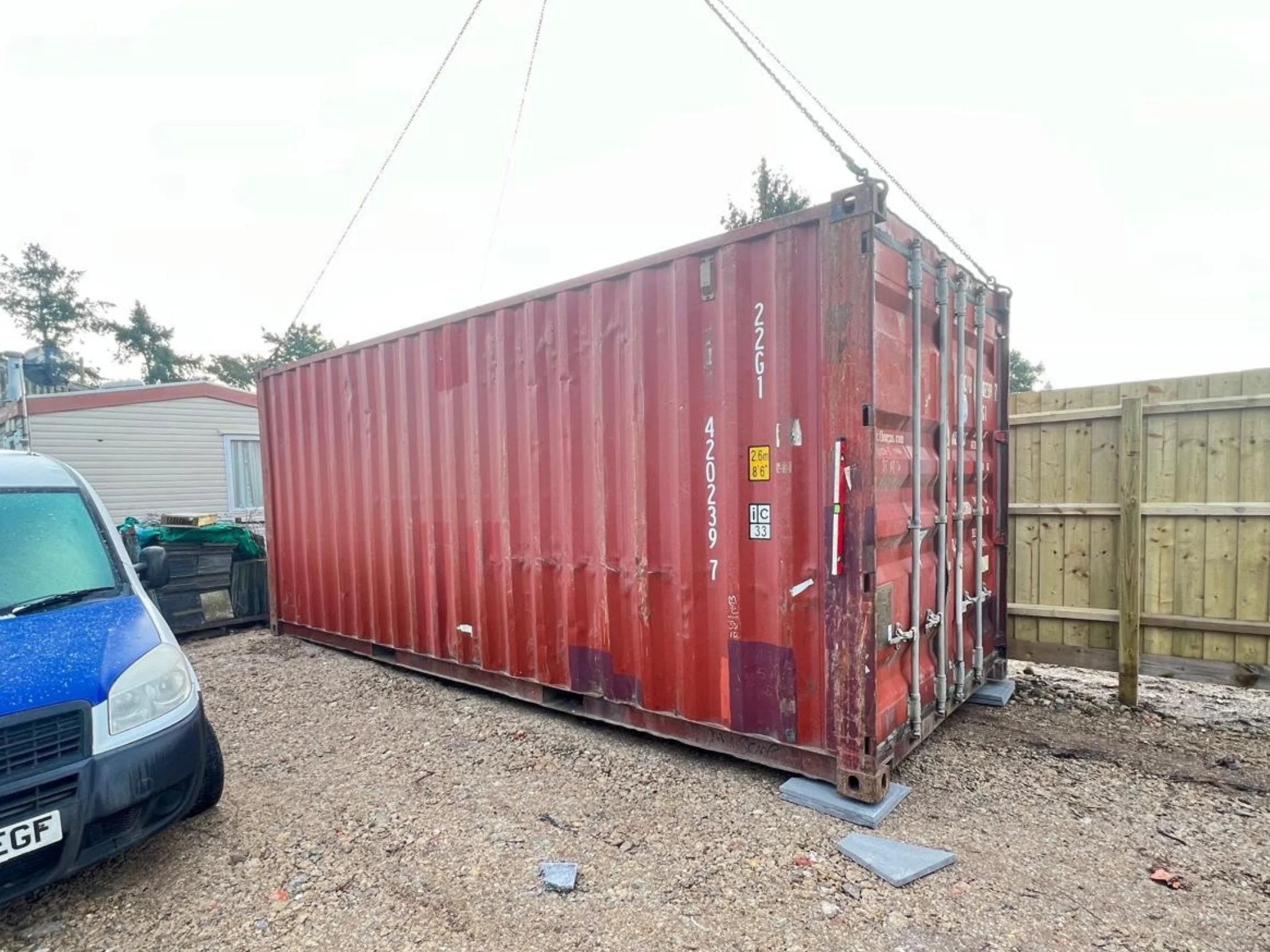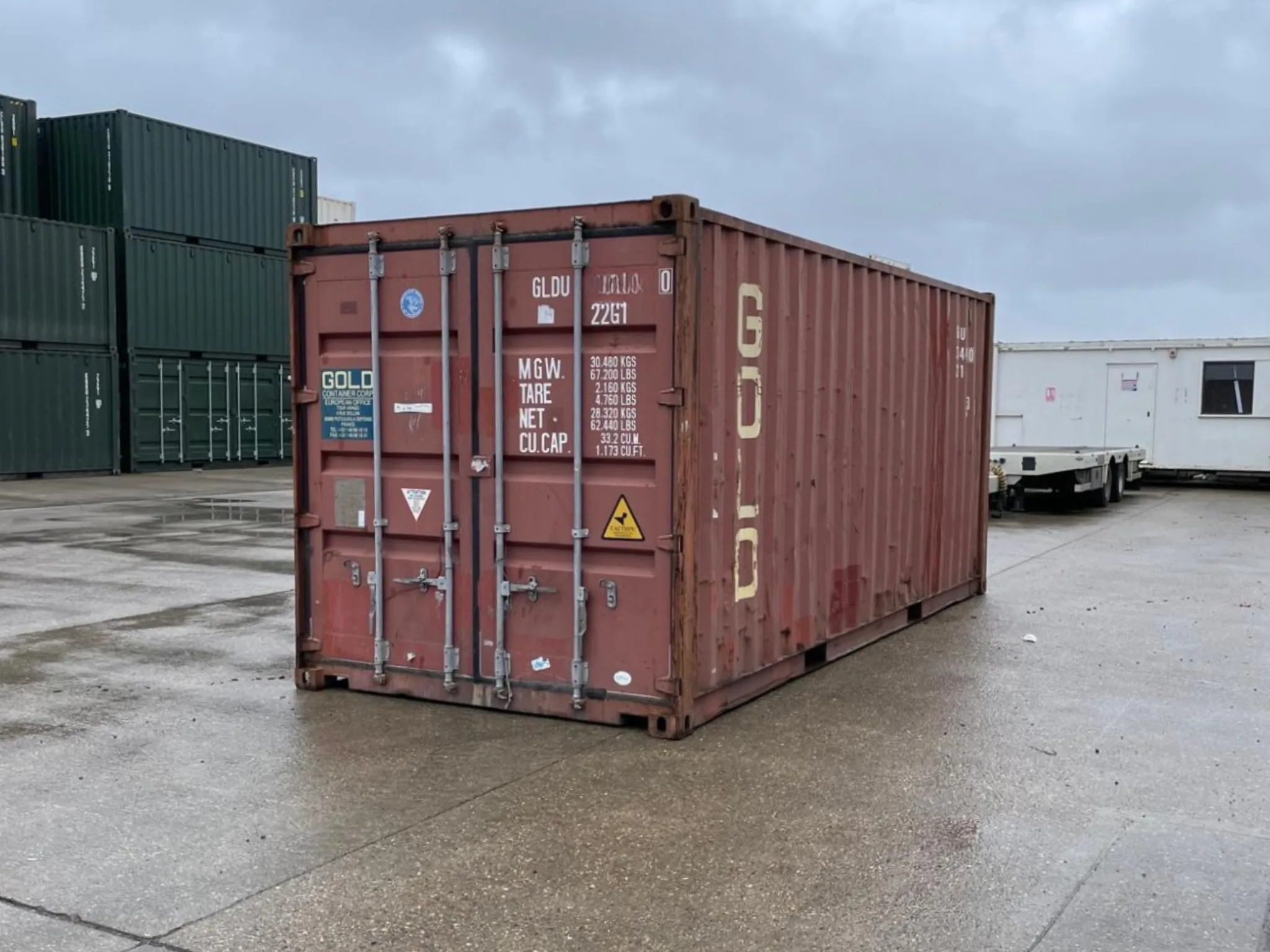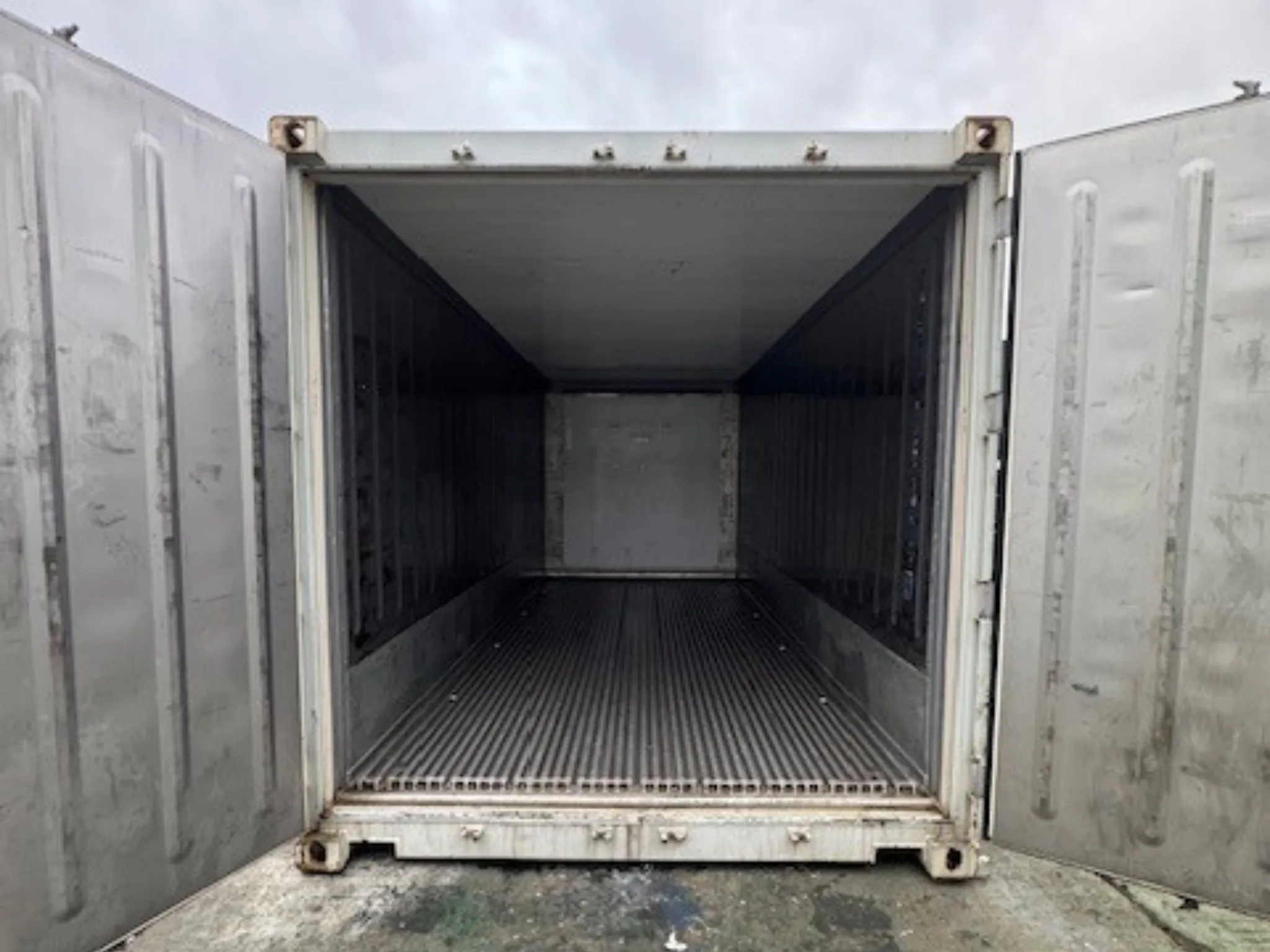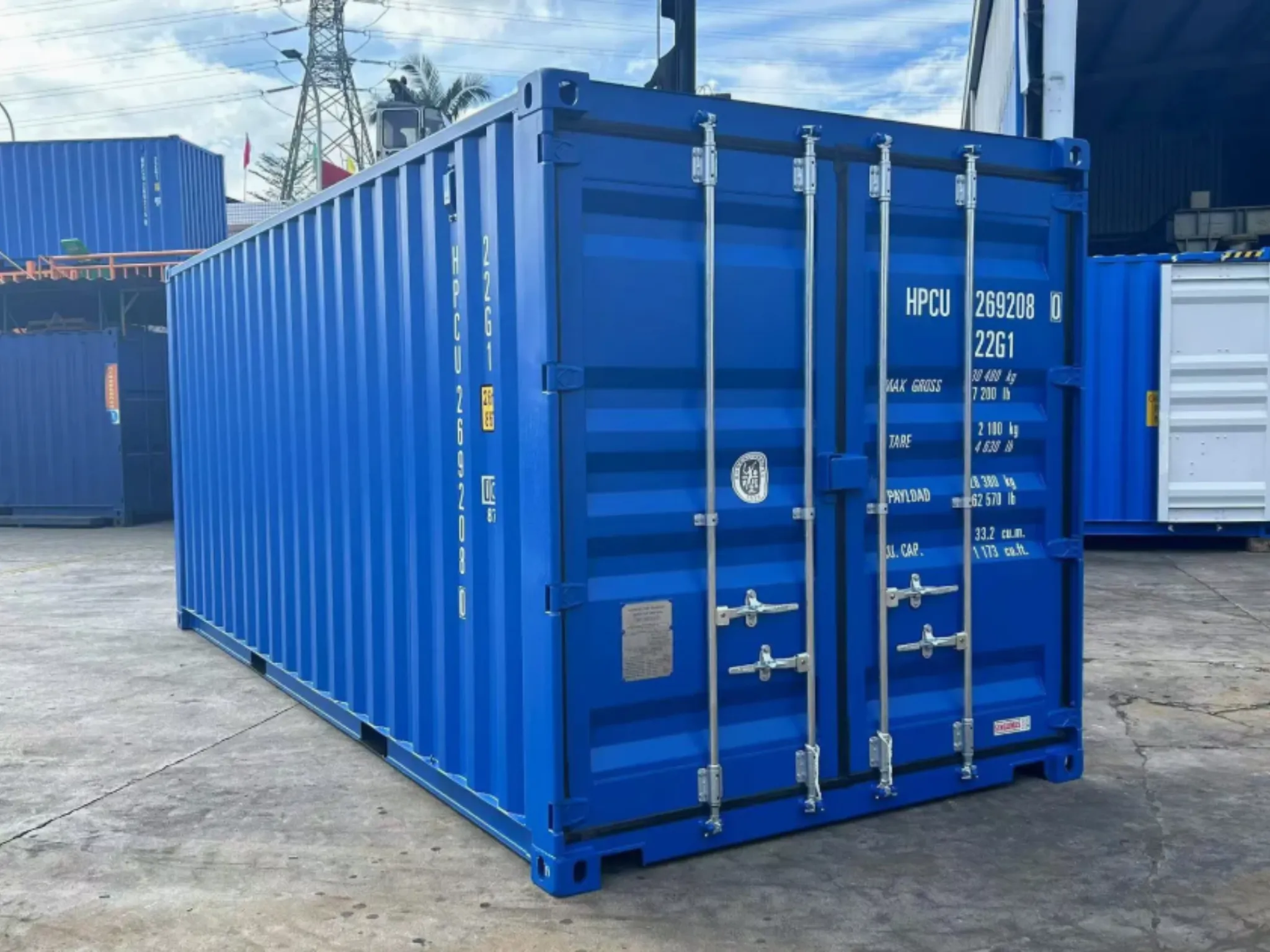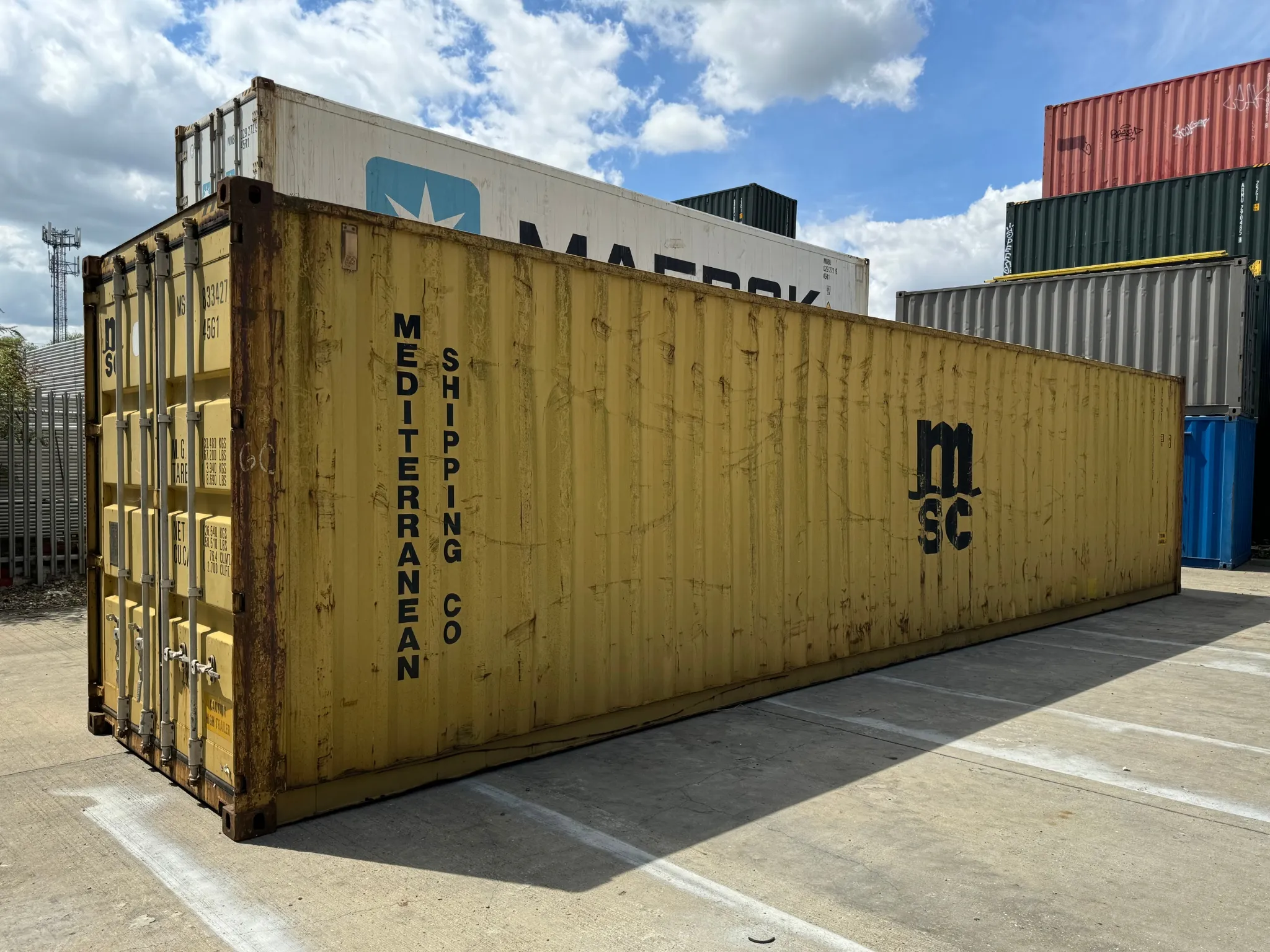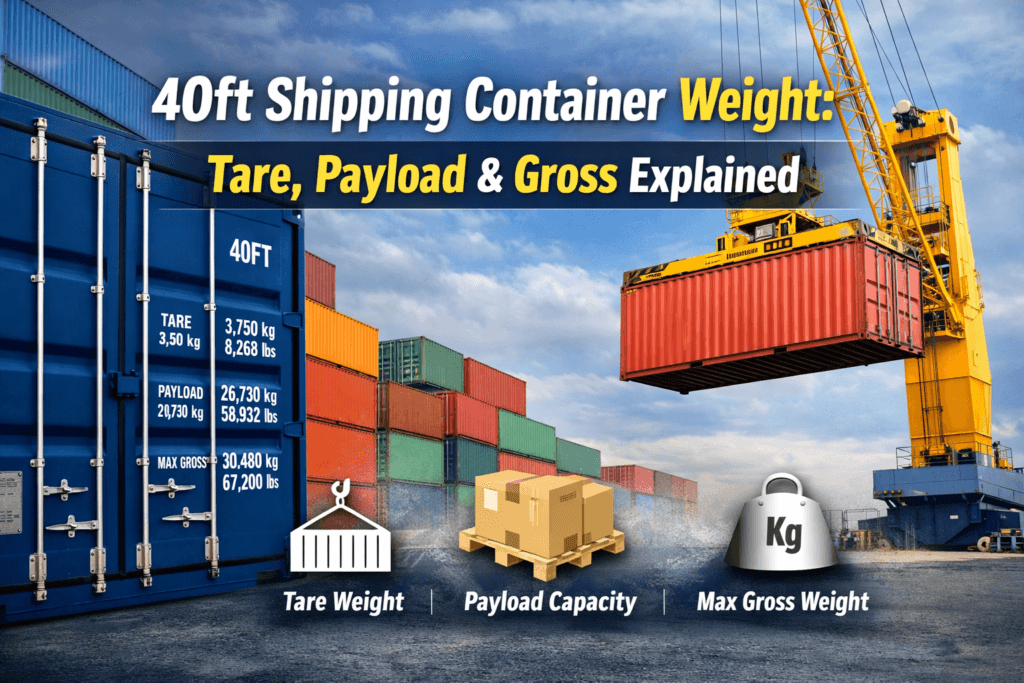
A 40ft shipping container weight is typically broken into three measurements: tare weight, payload capacity, and maximum gross weight. A standard 40ft container usually has a tare weight of around 3,750 kg (8,268 lbs / 3.75 tonnes) and a maximum gross weight of 30,480 kg (67,200 lbs / 30.48 tonnes), meaning the payload capacity is roughly 26,730 kg (58,932 lbs / 26.73 tonnes) depending on the container specification.
Understanding these figures is essential before transporting, loading, or buying a container because weight limits affect lifting equipment, delivery vehicles, and how much cargo the container can safely carry.
What Does Shipping Container Weight Mean?
Shipping container weight refers to three different measurements that describe how much the container itself weighs and how much it can safely carry.
The three key figures used in container specifications are:
- Tare weight
- Payload
- Maximum gross weight
These measurements are standardised across ISO-certified shipping containers, which ensures compatibility with global transport systems, container ships, cranes, and lorries.
For buyers comparing different container specifications, weight should always be considered alongside container size and internal capacity. A full breakdown of measurements can be found in 40ft Shipping Container Dimensions UK (Internal & External Specs Guide).
How Much Does a 40ft Shipping Container Weigh?
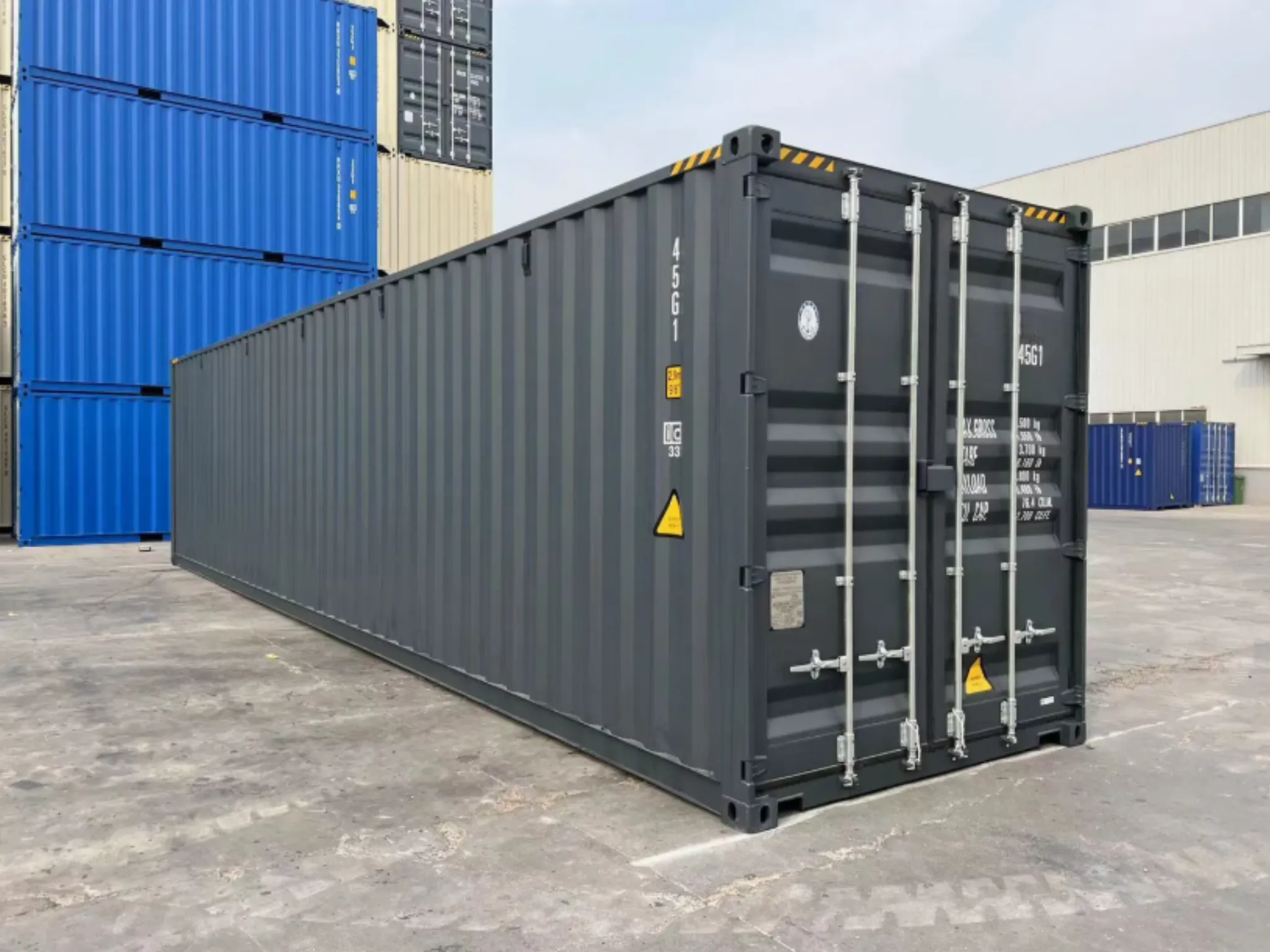
Below are the typical weight specifications for a standard 40ft container used in the UK.
| Measurement | Kilograms (kg) | Pounds (lbs) | Metric Tonnes |
|---|---|---|---|
| Tare Weight (Empty Container) | 3,750 kg | 8,268 lbs | 3.75 t |
| Maximum Payload (Cargo Capacity) | 26,730 kg | 58,932 lbs | 26.73 t |
| Maximum Gross Weight (Total Allowed) | 30,480 kg | 67,200 lbs | 30.48 t |
These limits are set by international shipping regulations and structural engineering standards.
Most containers follow ISO 668 international container standards, which define weight limits and structural specifications used worldwide.
The gross weight represents the combined weight of the container and its contents. Exceeding this limit can damage the container floor, compromise stacking safety, or breach transport regulations.
What Is Tare Weight?
Tare weight is the weight of the empty container with no cargo inside.
For a standard 40ft container, this is typically:
- 3,750 kg
- 8,268 lbs
- 3.75 metric tonnes
This weight includes the container structure itself, which is usually constructed from Corten steel, along with the timber floor, locking bars, and corner castings.
Tare weight is important because it determines how much cargo can be added before reaching the maximum gross weight limit.
Over time, minor variations can occur depending on repairs, floor replacements, or structural reinforcements. Buyers comparing condition differences often explore New vs Used 40ft Shipping Containers: Price, Lifespan & Which Is Better to understand how container condition affects overall specification.
What Is Payload Capacity?
Payload capacity is the maximum weight of cargo that can be loaded inside the container.
For most standard 40ft containers, payload capacity is approximately:
- 26,730 kg
- 58,932 lbs
- 26.73 tonnes
These payload figures represent the typical 40ft container weight limits used in international transport and logistics operations.
This is calculated by subtracting the tare weight from the maximum gross weight.
Payload limits are important for several reasons:
- Prevents structural damage to the container floor
- Ensures safe stacking on container ships
- Keeps lifting operations within crane limits
- Ensures compliance with road transport weight regulations
Businesses using containers for bulk storage often choose 40ft units specifically because of their high cargo capacity. The advantages of large containers for business storage are explained further in 40ft Shipping Containers for Storage: When Size Matters.
What Is Maximum Gross Weight?
The maximum gross weight is the total allowable weight of the container when fully loaded.
For a standard 40ft container this is typically:
- 30,480 kg
- 67,200 lbs
- 30.48 tonnes
Gross weight includes:
- Container structure (tare)
- Cargo
- Pallets, packaging, or equipment inside the container
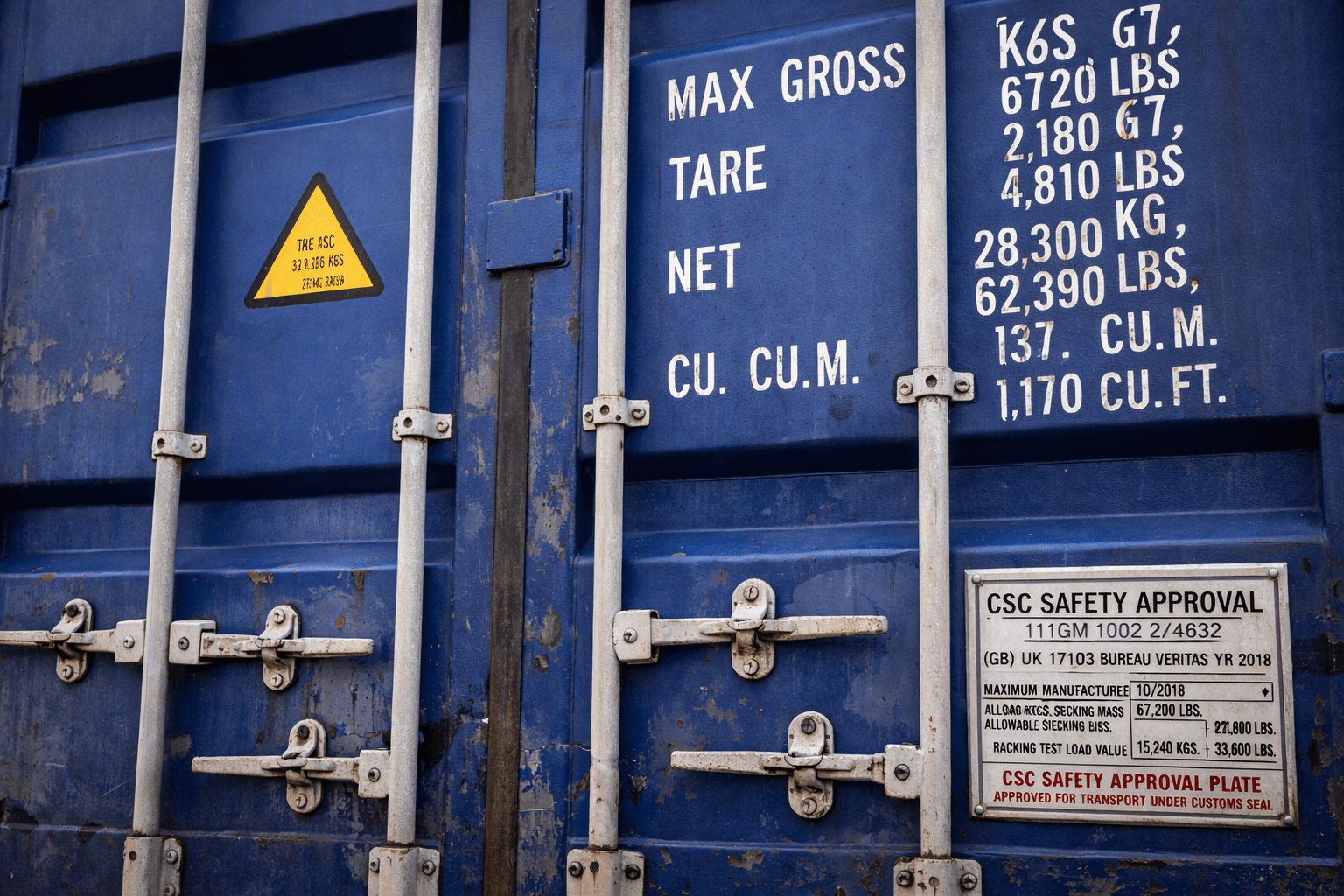
This limit is printed on the container’s CSC plate, which is the certification plate confirming that the container meets international safety standards.
Transport companies, shipping lines, and port operators use this figure to ensure containers remain within safe operating limits during lifting, stacking, and transport.
Do High Cube Containers Weigh More?
A 40ft high cube container is slightly heavier than a standard 40ft container because it has additional structural material to support the extra height.
Typical high cube weights are:
| Measurement | Kilograms (kg) | Pounds (lbs) | Metric Tonnes |
|---|---|---|---|
| Tare Weight | ~3,900 kg | ~8,598 lbs | ~3.9 t |
| Max Gross Weight | 30,480 kg | 67,200 lbs | 30.48 t |
| Payload | ~26,580 kg | ~58,602 lbs | ~26.58 t |
Despite the slightly higher tare weight, the overall capacity remains almost the same.
High cube containers are often chosen when additional internal height is required for tall cargo, racking systems, or conversion projects. Typical applications are explained in 40ft High Cube Containers: Best Business Use Cases.
Why Container Weight Matters for Delivery
Weight becomes particularly important when arranging container delivery.
Transport vehicles, cranes, and lifting equipment must all operate within safe limits when placing containers on site.
For example:
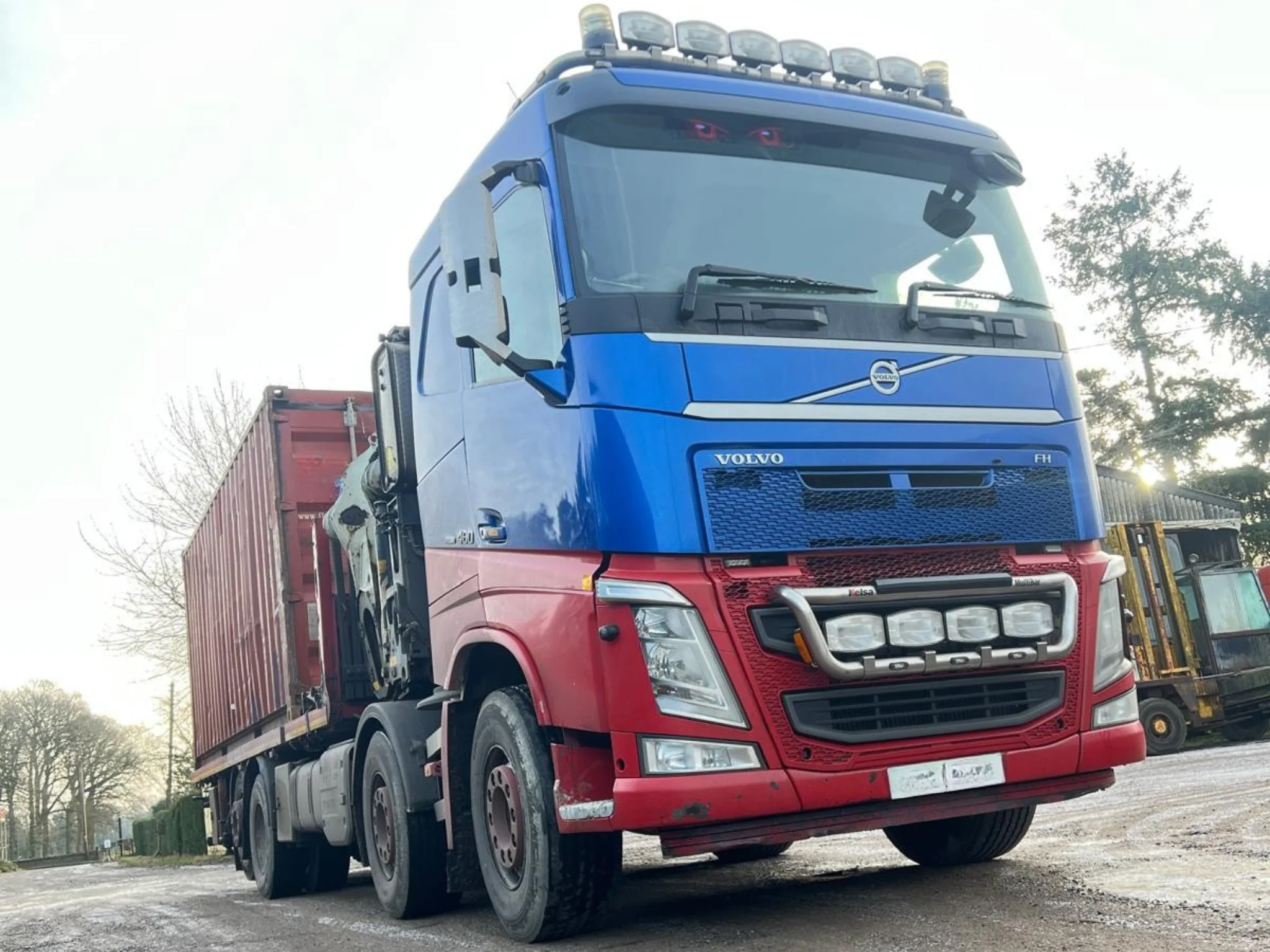
- HIAB crane lorries must remain within lifting capacity limits
- Sidelifter trailers are designed to handle full container loads
- Ground conditions must support the weight of the container and vehicle
A fully loaded 40ft container can weigh over 30 tonnes, which is similar to the maximum weight of a fully loaded articulated lorry.
UK road transport regulations and crane lifting limits are another reason container weight specifications must be understood before arranging delivery.
This is why delivery planning, access space, and ground preparation must always be considered before arranging transport.
Read our detailed blog about 40ft shipping container delivery UK.
Does Container Weight Affect Price?
While weight itself does not directly determine price, it is closely linked to container condition and structural integrity.
Heavier containers often indicate:
- Thicker original steel construction
- Fewer structural repairs
- Original flooring still in place
Buyers comparing different container types and price ranges often start with How Much Does a 40ft Shipping Container Cost in the UK?, which explains the main factors that influence container pricing across the UK market.
Condition and container type usually have a far greater influence on price than weight alone. For example, buyers choosing between new and used high cube units can compare specifications and availability on our 40ft used high cube shipping containers page or view factory-fresh stock on our 40ft new high cube shipping container page.
These listings help buyers understand how condition, lifespan, and structural quality affect overall value when purchasing a 40ft container.
How Weight Relates to Container Size and Capacity
Container weight is closely related to the structural design of the unit.
The frame, corner castings, flooring, and steel panels must all be strong enough to support cargo loads, stacking forces, and lifting stress.
Because of this, container weight is closely linked to its overall dimensions and structural layout. A full breakdown of internal space, door opening measurements, and capacity can be found in 40ft Shipping Container Dimensions UK (Internal & External Specs Guide).
Buying a 40ft Shipping Container in the UK
When buying a container, understanding weight specifications helps buyers make practical decisions about transport, storage capacity, and site suitability.
Many UK businesses choose 40ft containers because they offer:
- Large internal storage capacity
- Strong structural durability
- Cost efficiency per square metre
- Flexibility for storage or conversion use
Buyers comparing available stock, delivery options, and container condition can view current units on our 40ft shipping containers page.
FAQs
How much does a 40ft shipping container weigh empty?
A standard 40ft shipping container weighs around 3,750 kg (8,268 lbs / 3.75 tonnes) when empty.
What is the maximum weight of a 40ft shipping container?
The maximum gross weight is typically 30,480 kg (67,200 lbs / 30.48 tonnes) including cargo and the container itself.
How much weight can a 40ft container carry?
A typical payload capacity is 26,730 kg (58,932 lbs / 26.73 tonnes) depending on the container specification.
Bottom Line
A standard 40ft shipping container typically weighs 3,750 kg (8,268 lbs / 3.75 tonnes) empty, with a maximum payload of 26,730 kg (58,932 lbs / 26.73 tonnes) and a maximum gross weight of 30,480 kg (67,200 lbs / 30.48 tonnes).
Understanding these figures ensures containers are transported safely, loaded correctly, and used within their structural limits.
For buyers considering secure long-term storage or commercial use, 40ft containers remain one of the most practical and cost-effective steel storage solutions available in the UK.
For a fast quote and delivery options across the UK, contact Bosh Boxes today and discover The Bosh Boxes Way.