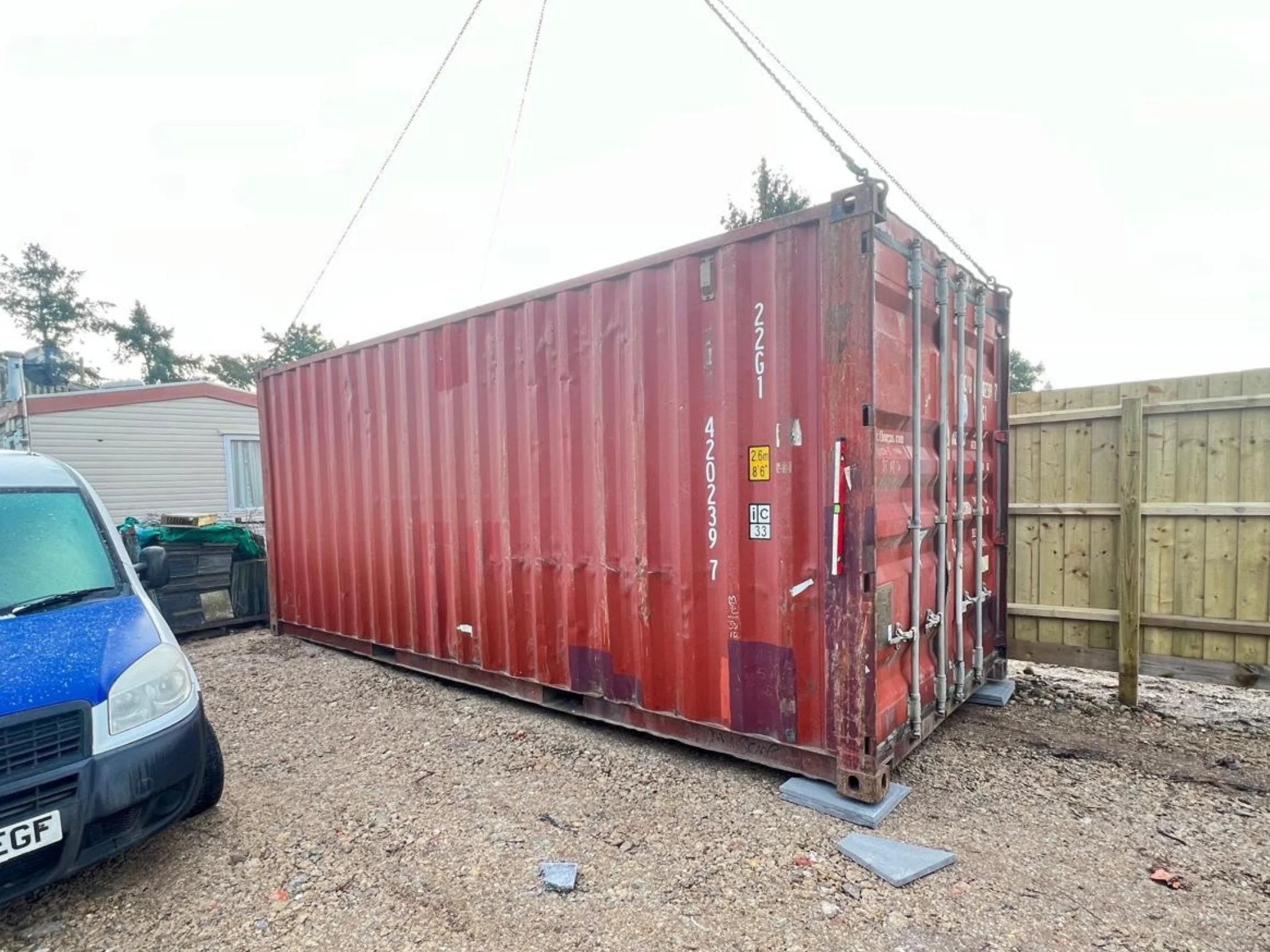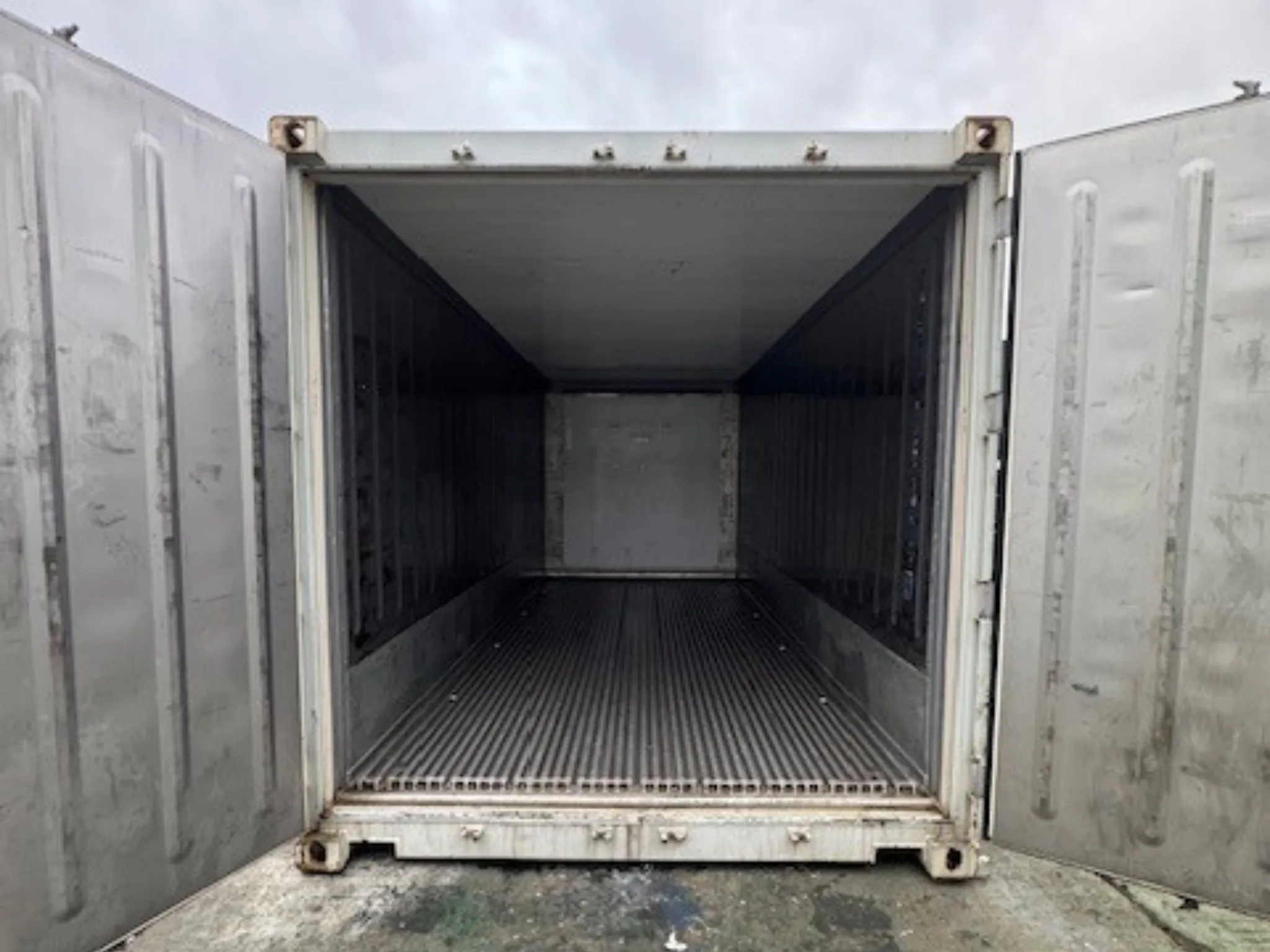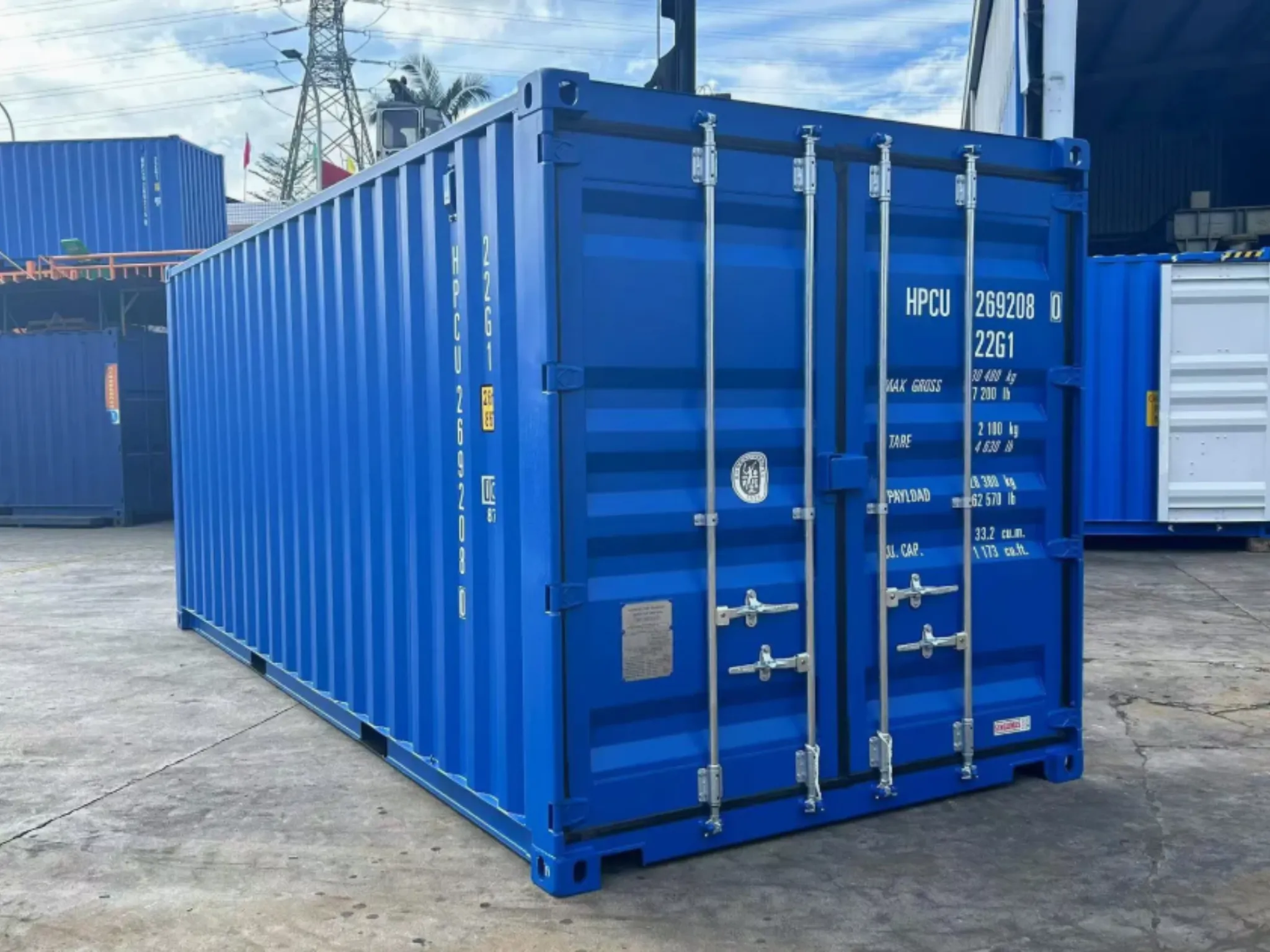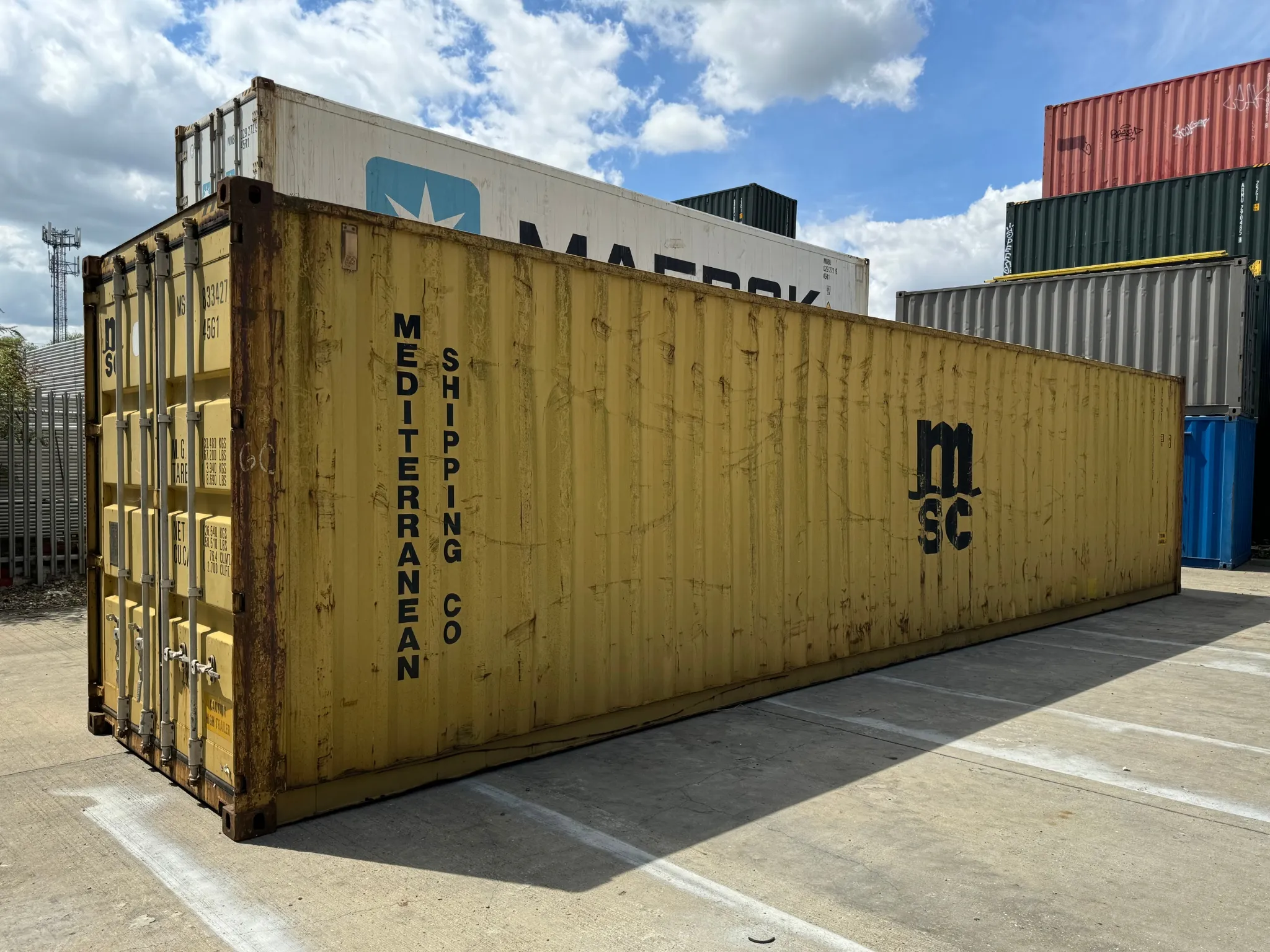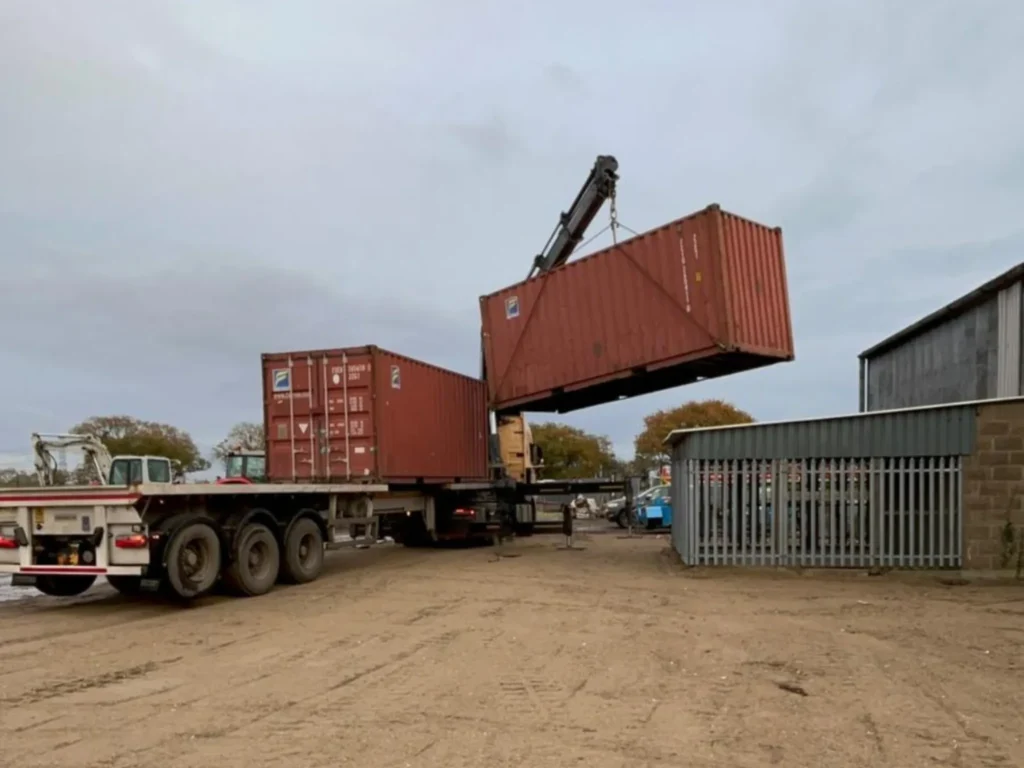
Used shipping containers offer outstanding value for money. They are built to withstand years of heavy cargo, rough handling, salt air, and global transport. As a result, they rarely look “perfect” on the outside. That is normal, expected, and does not mean the container is unfit for use.
If you are considering buying a used shipping container, understanding what cosmetic wear actually means can help you buy with confidence and avoid unnecessary upgrades.
How Old Are Used Shipping Containers?
Most used shipping containers on the UK market are typically 15 to 20 years old. During their working life, they will have:
- Been lifted multiple times at ports and depots
- Stacked on vessels in harsh marine environments
- Transported a wide range of cargo
- Been exposed to salt air, wind, rain, and impact handling
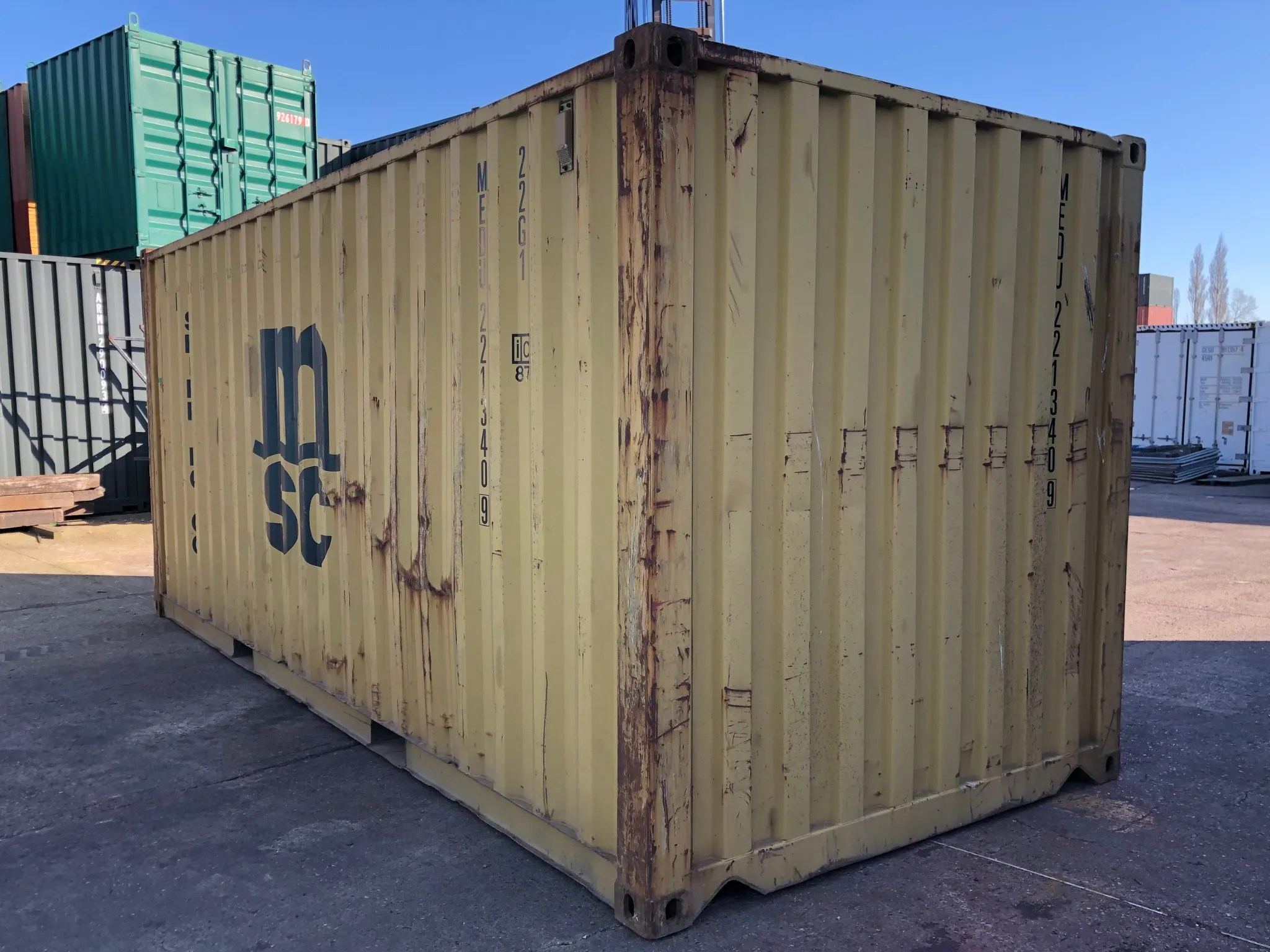
This working history explains the dents, scrapes, and surface rust commonly seen on used units.
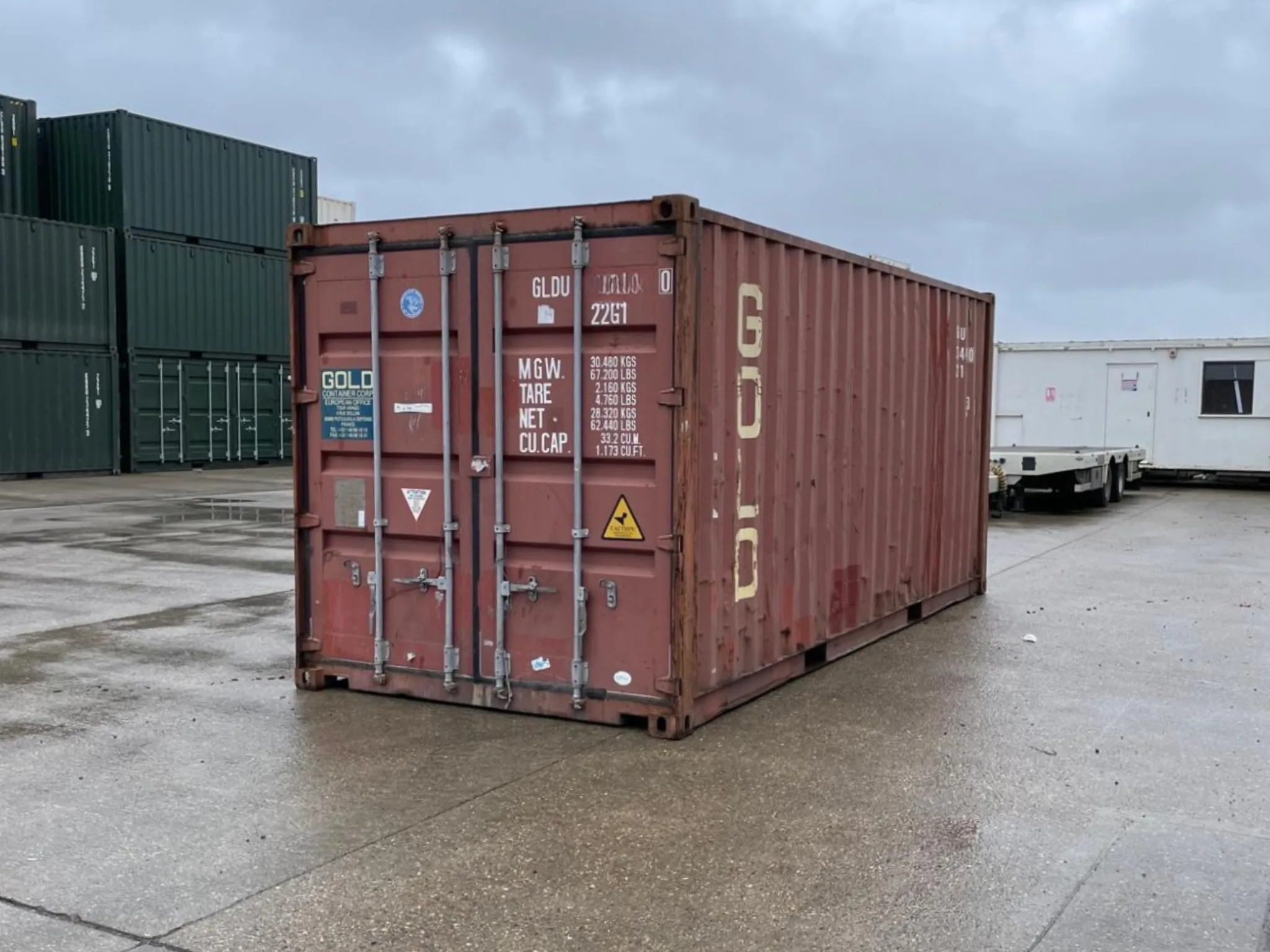
Cosmetic Wear vs Structural Condition
A key point many buyers misunderstand is the difference between appearance and performance.
Used containers will often show:
- Dents and knocks in the steel panels
- Scratches and faded paint
- Surface rust patches
- Previous repair plates
None of these automatically indicate a problem.
What actually matters is whether the container is:
- Structurally sound
- Wind and watertight
- Free from holes or light ingress
- Fitted with working doors and seals
At Bosh Boxes, all used containers are assessed for performance first, not looks.
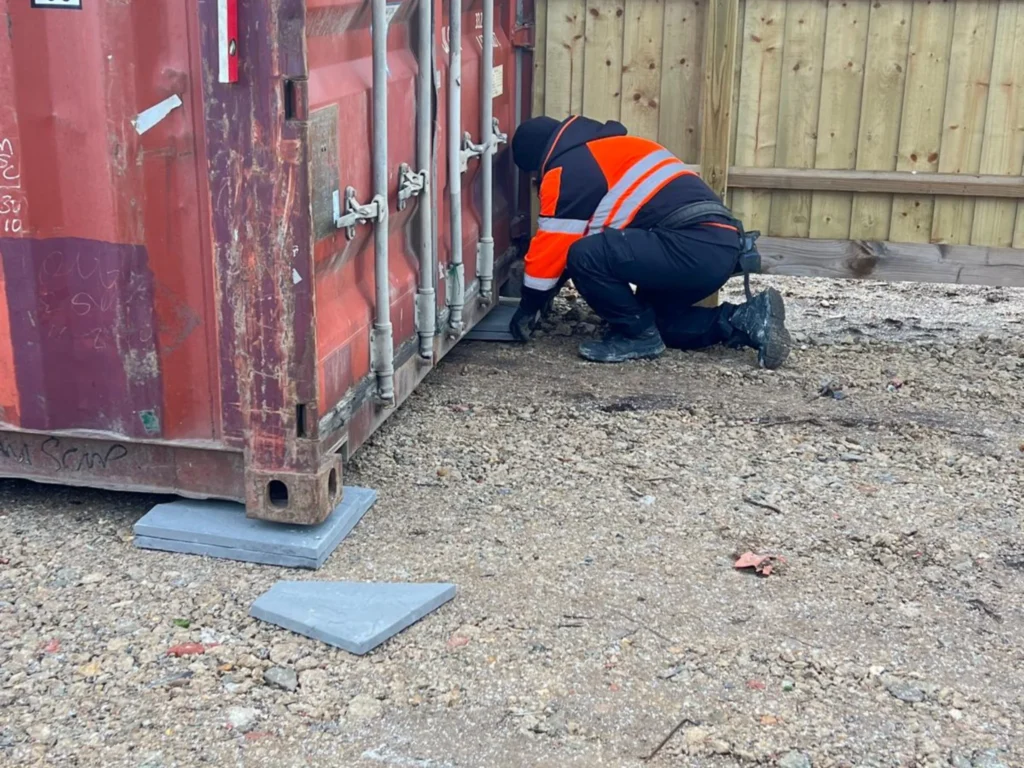
Should You Worry About Rust on a Shipping Container?
Short answer: surface rust is normal and expected.
Shipping containers are built from Corten steel, also known as weathering steel. This material is designed to form a protective rust layer on the surface, which slows deeper corrosion. Think of it as a natural protective skin.
When rust is not a problem
- Light surface rust
- Paint wear exposing steel
- Shallow corrosion with no perforation
When rust is repaired
If corrosion penetrates the steel, proper repairs are carried out before sale. This involves:
- Cutting out affected steel
- Welding in matching corrugated steel patches
- Fully sealing and weatherproofing the repair
A welded patch repair is a sign of maintenance, not failure.
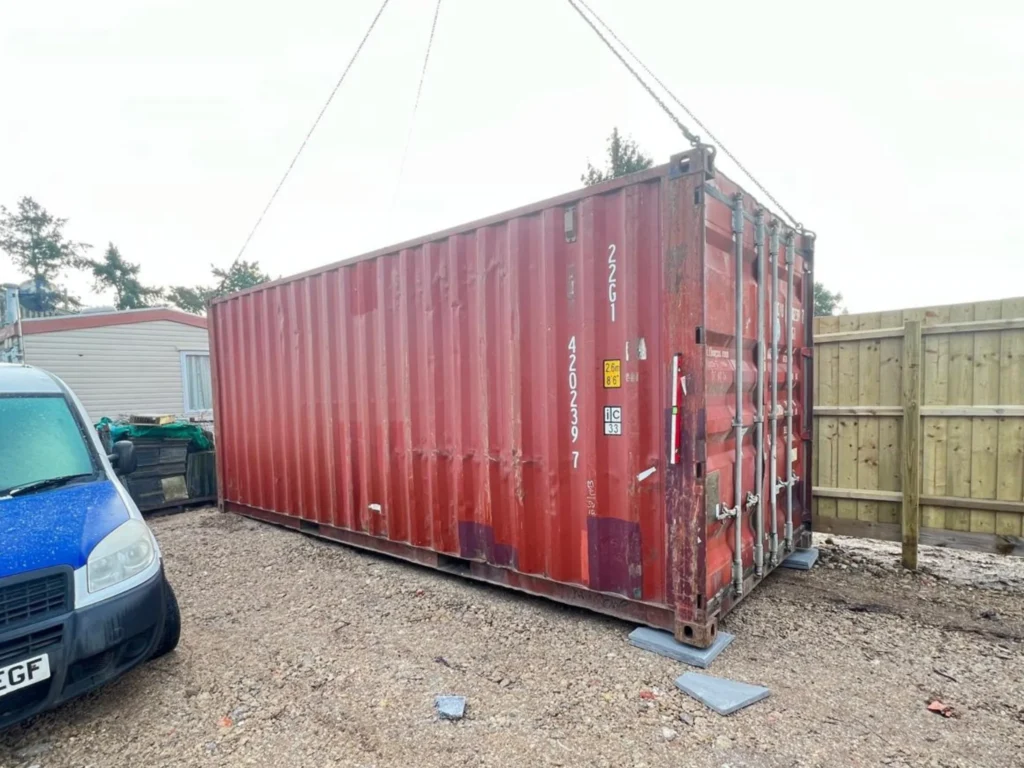
Patch Repairs Explained
Shipping containers are repaired throughout their working life. This is standard practice across the global shipping industry.
Good-quality repairs should be:
- Fully seam welded
- Flush with container corrugations
- Completely watertight
- Structurally sound
A repaired container is not a damaged container. It is a maintained one.
Doors, Seals, and Watertightness
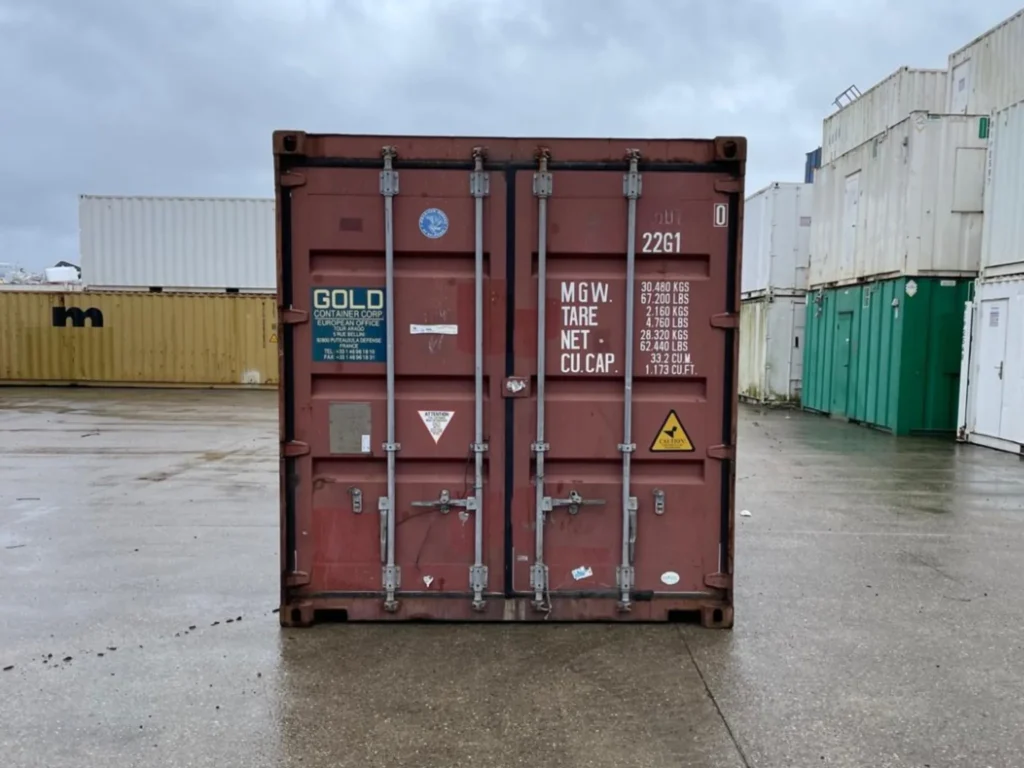
One of the most important checks on a used container is the doors.
You should expect:
- Doors that open and close freely
- Intact rubber seals
- Locking bars that engage properly
A simple inspection test is closing the doors and standing inside. If you see light, the container needs repair. Watertight containers should be completely dark inside.
What About the Floor?
Used container floors are made from marine-grade plywood supported by steel cross members.
You should expect:
- Scuffs, scratches, and marks
- Signs of previous cargo use
- Cosmetic staining
What you should not see:
- Soft or rotten boards
- Structural weakness
- Missing or broken sections
Used container floors are assessed for strength, not aesthetics.
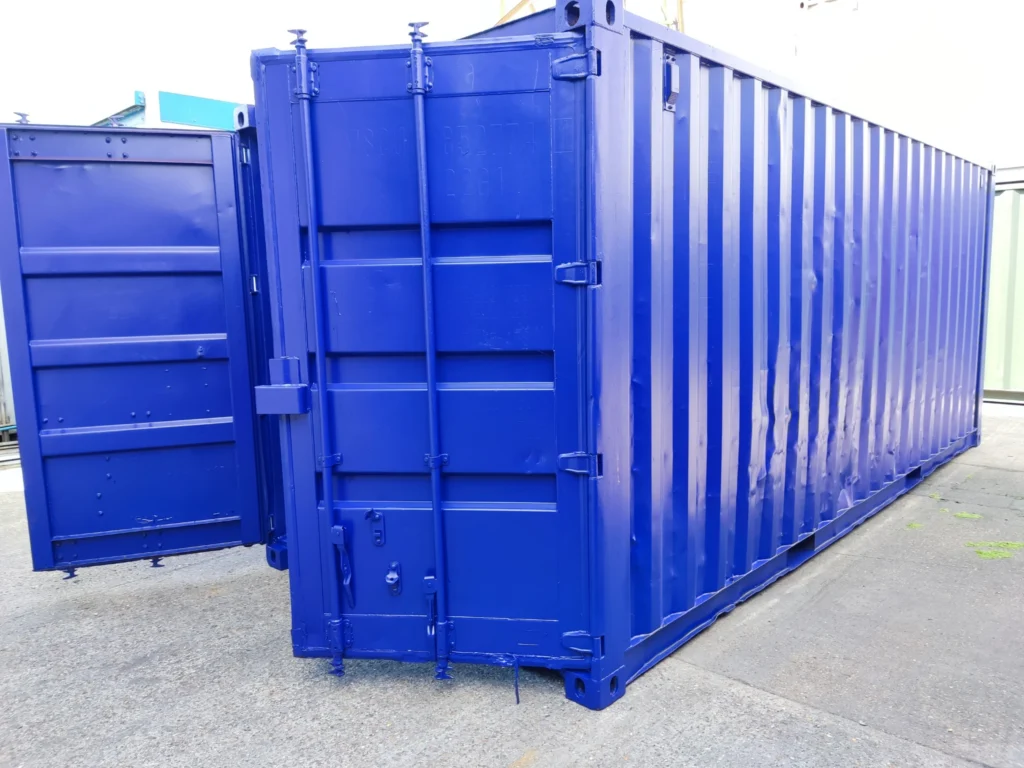
Repainting Used Shipping Containers
Some buyers want a container that looks tidy or blends into its surroundings.
Repainting a used container:
- Dramatically improves appearance
- Extends lifespan
- Protects steel from further corrosion
At Bosh Boxes, repainting is optional. Many customers choose repainting for visible locations, while others prioritise value over looks.
Used vs New Containers
If cosmetic appearance is critical, a new or one trip container may be more suitable.
If value and function matter more, used containers offer:
- Lower upfront cost
- Strong structural integrity
- Excellent lifespan when maintained
- Ideal performance for storage and conversion projects
This is why used containers remain one of the most popular options in the UK.
More information on New Vs Used Containers Can be found here!
What to Look for When Buying a Used Container
Before purchasing, consider:
Condition
Understand container grades and whether wind and watertight guarantees are included.
Placement
Check ground conditions and whether planning permission may apply depending on use.
Budget
Factor in delivery, repainting, and any modifications.
Size
Choose the right size for your needs. A 20ft container often offers the best balance of space and cost.
Supplier
Always use a reputable supplier who offers inspection, photos, and honest advice.
Are Used Containers Suitable for Long-Term Use?
Yes, when properly maintained, used containers can last many more years on land.
They are commonly used for:
- Long-term storage
- Workshops
- Site offices
- Conversion projects
You can read more here:
👉 Are 20ft used containers suitable for long-term use?
Why Many Buyers Choose 20ft Used Containers
20ft units are the most popular size due to:
- Ease of delivery
- Manageable footprint
- Strong resale value
- Excellent space efficiency
Explore available options:
Final Thoughts
Used shipping containers are not meant to look perfect. They are meant to work.
Dents, surface rust, and previous repairs are all normal signs of a container that has done its job. What matters is structural integrity, watertightness, and suitability for your intended use.
Buying used is a smart, cost-effective, and sustainable choice when done correctly.