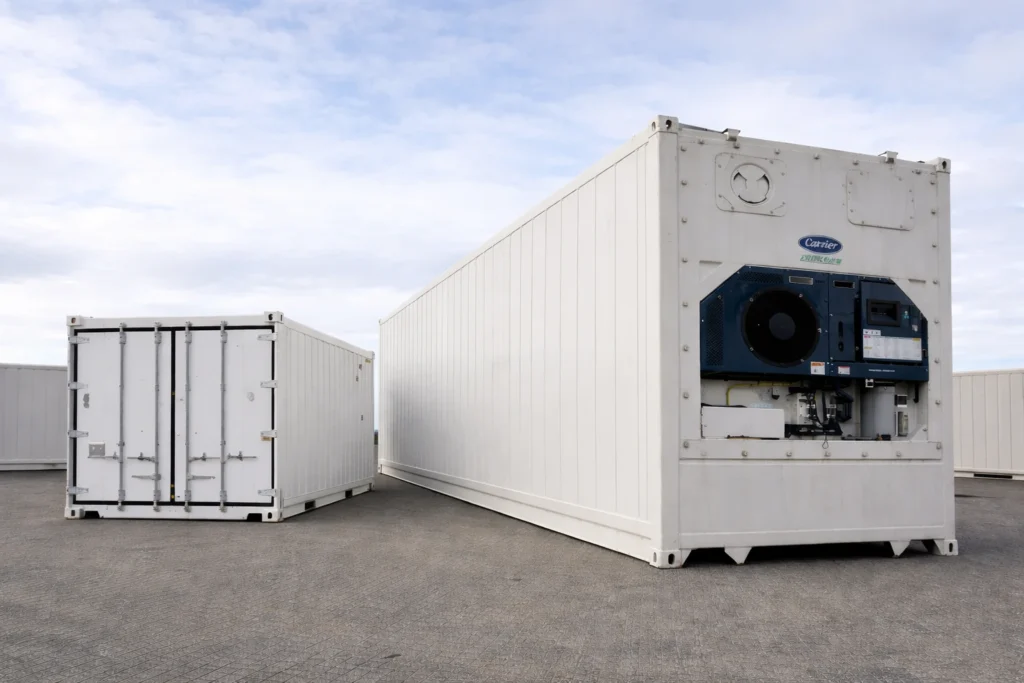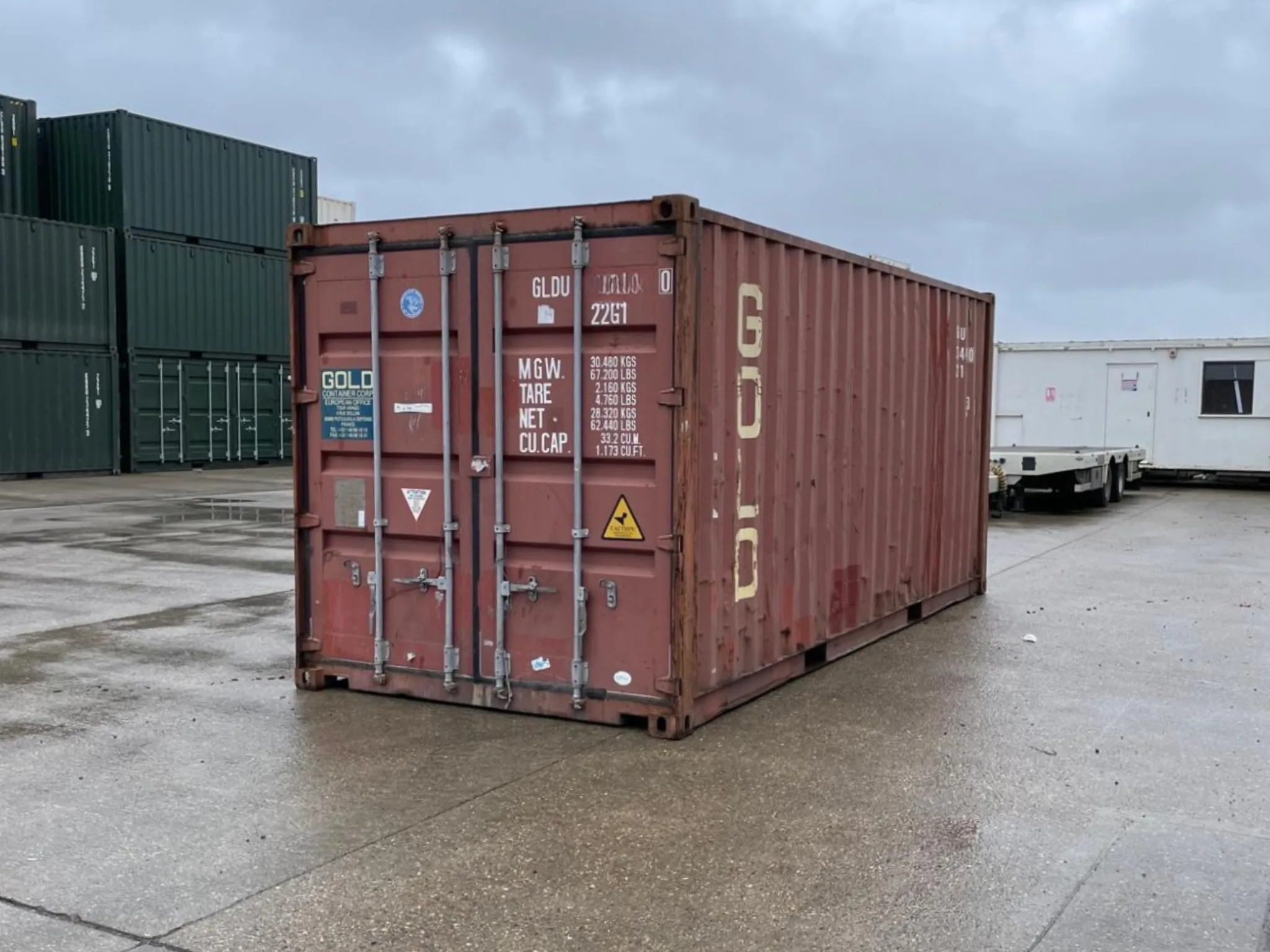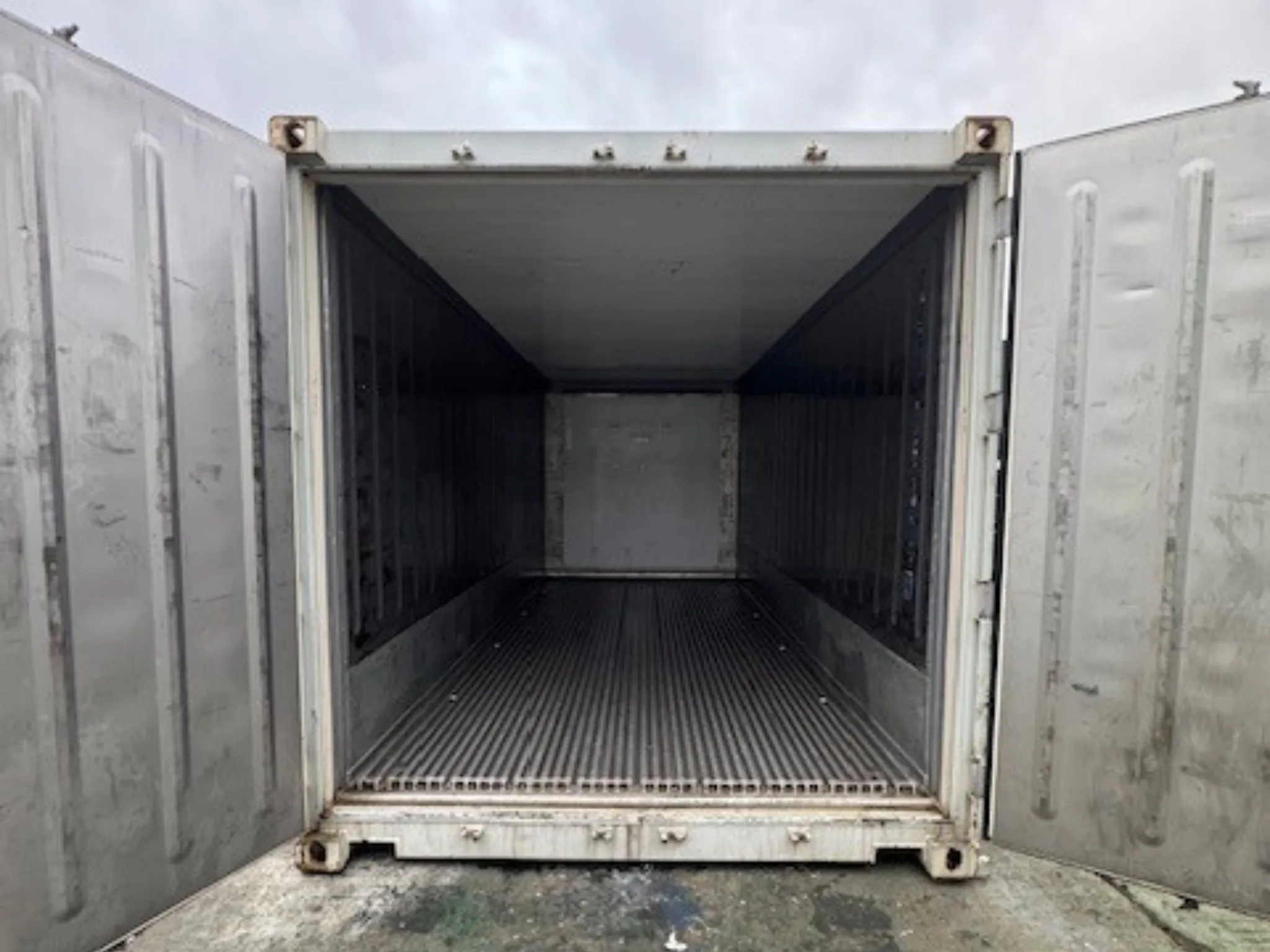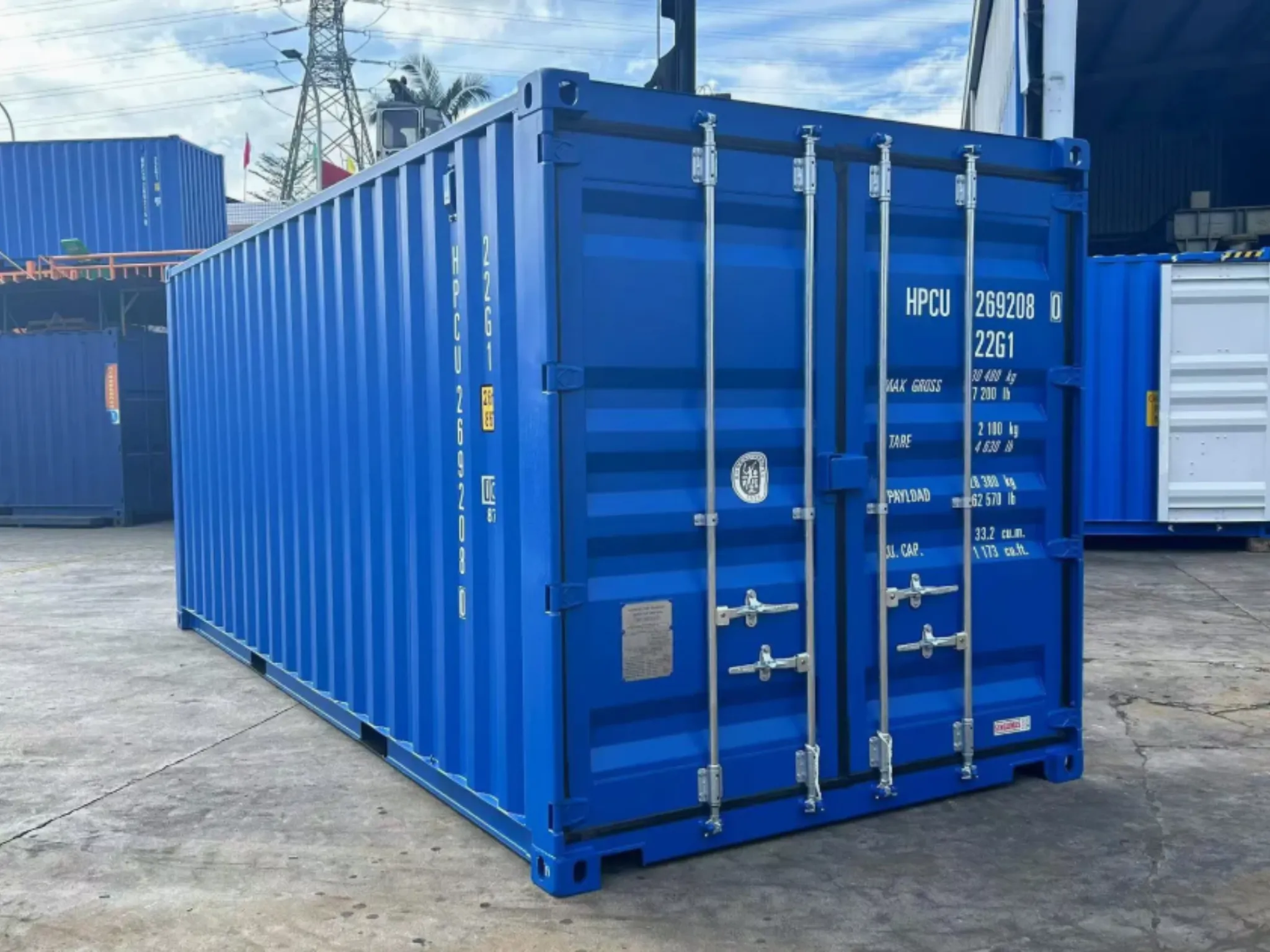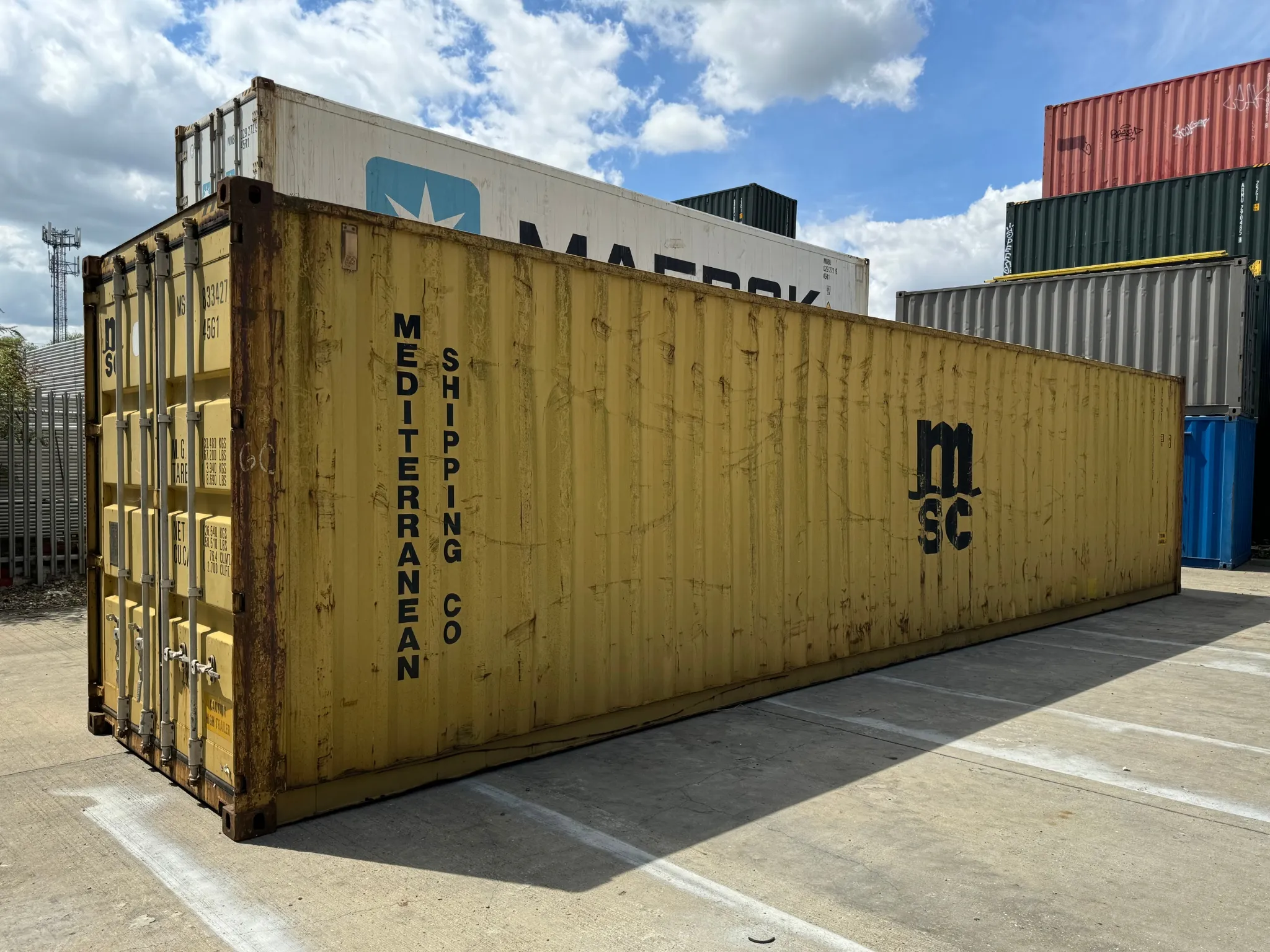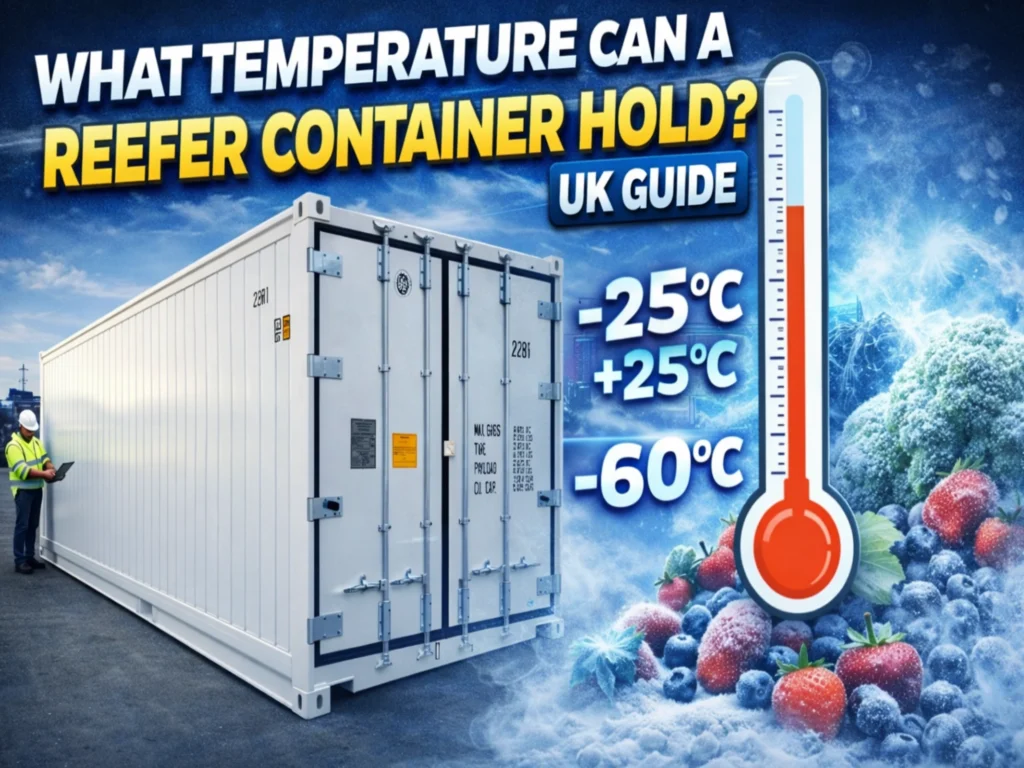
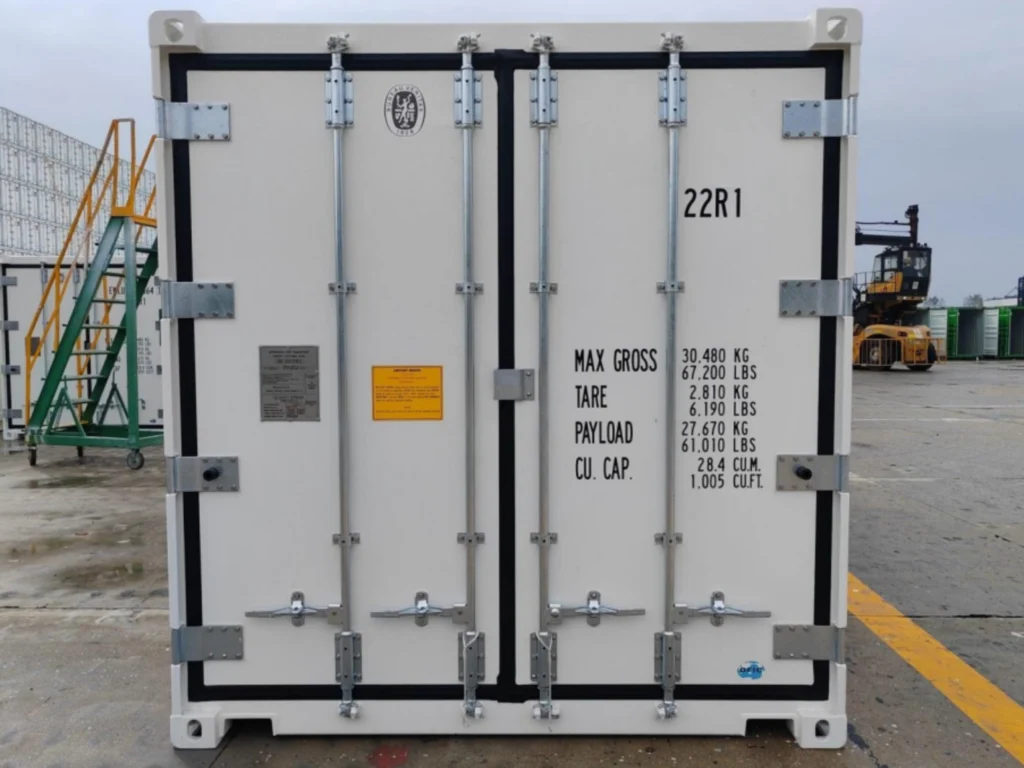
A refrigerated container can typically hold temperatures between -25°C and +25°C as standard, with some units reaching -30°C or lower. Specialist super freezer reefers can go as low as -60°C or even -70°C. The exact temperature depends on the unit type, power supply, and how the container is loaded and operated.
Reefer containers are widely used across the UK for cold storage, frozen goods, and temperature-sensitive materials.
What Temperature Can a Reefer Container Hold in Real Terms?
Reefer container temperature ranges vary depending on the specification of the unit.
Standard Reefer Containers
Most standard refrigerated containers operate between:
- -25°C to +25°C
- Some units extend to -30°C to +30°C
This covers the majority of chilled and frozen storage needs.
Super Freezer Reefer Containers
High-spec units can reach much lower temperatures:
- -35°C to -60°C
- In some specialist cases, down to -70°C
These are typically used for pharmaceuticals and high-value cargo.
Typical Temperature Settings by Use
- Fresh produce: 0°C to +5°C
- Dairy: +2°C to +5°C
- Frozen food: -18°C to -25°C
- Pharmaceuticals: tightly controlled depending on product
How Reefer Containers Maintain These Temperatures
A reefer container does not just cool air. It controls the entire internal environment.
Refrigeration System
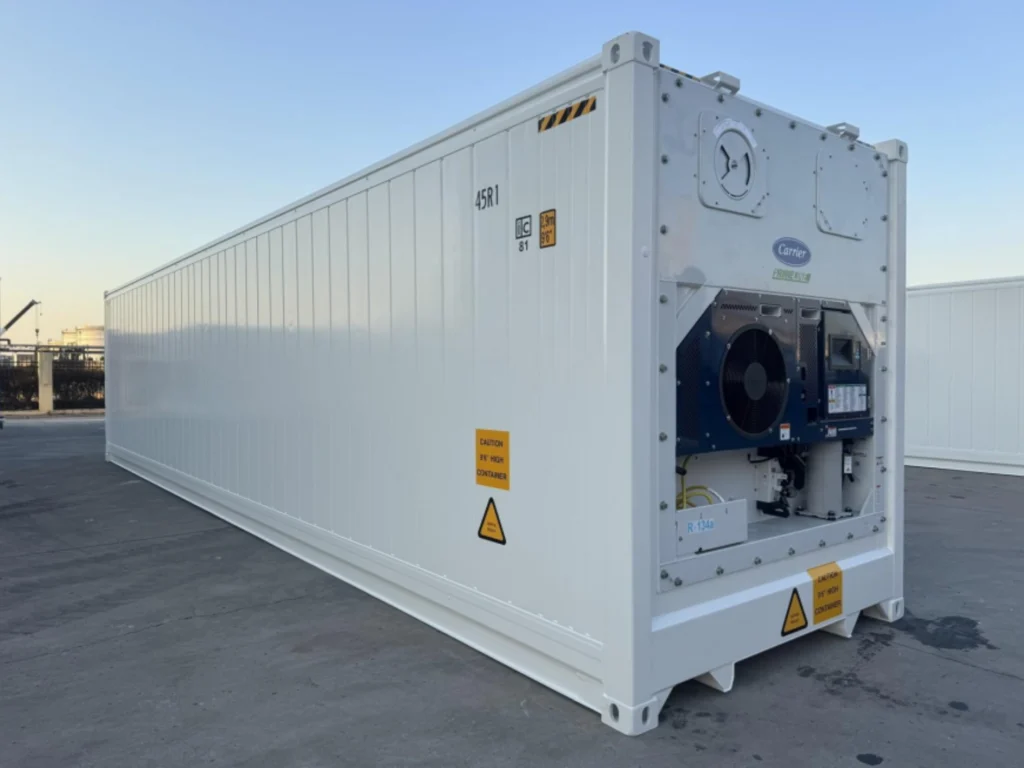
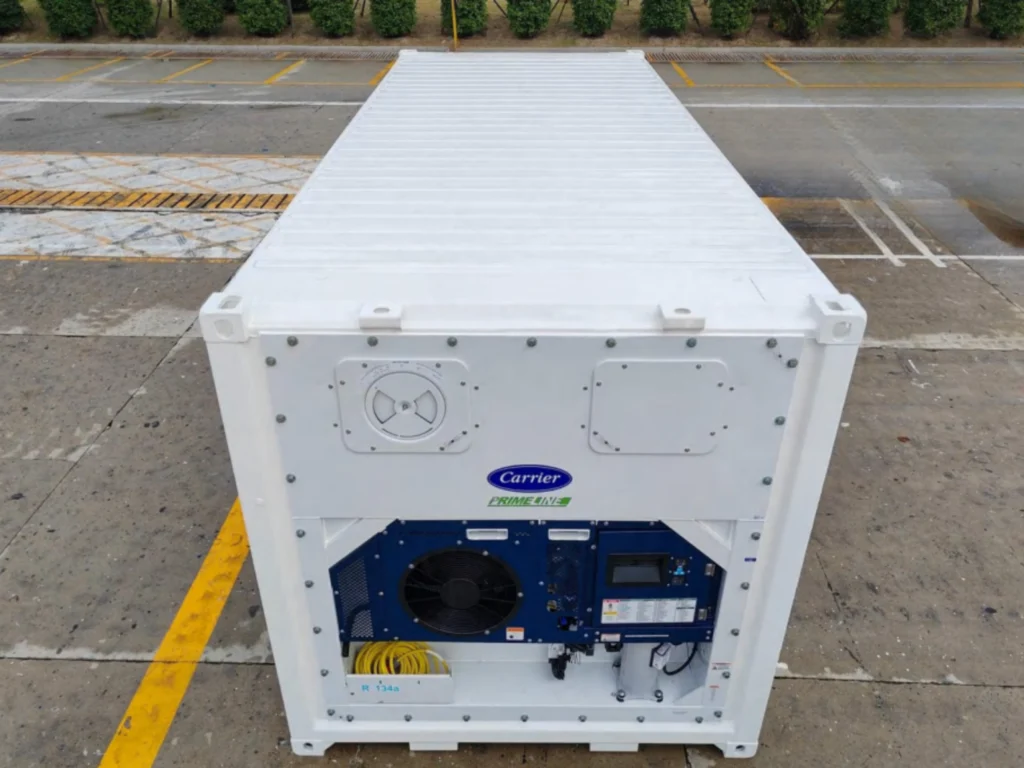
Each unit includes:
- Compressor
- Condenser
- Evaporator
These components remove heat from inside the container and maintain a stable temperature.
Continuous Air Circulation
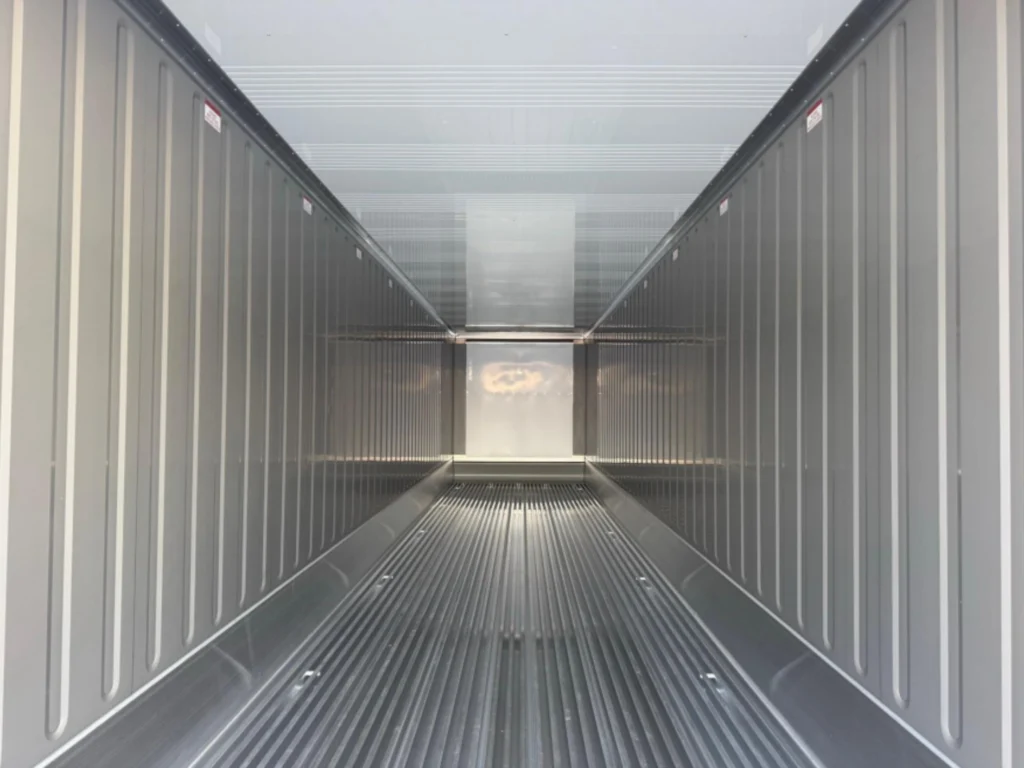
Cold air is pushed through the container floor and circulated around the cargo.
This ensures:
- Even temperature distribution
- No hot or cold spots
- Consistent storage conditions
Poor loading blocks airflow and reduces performance.
For storage planning, see:
How Many Pallets Fit in a Shipping Container?
https://boshboxes.store/how-many-pallets-fit-in-a-shipping-container/
Why Airflow Matters as Much as Temperature
Airflow is critical inside a refrigerated container.
Cold air is pushed under the cargo through the floor channels, then rises as it warms before being re-cooled.
If airflow is restricted:
- Some goods may not stay at the correct temperature
- Cold spots and warm zones develop
- Product quality can be affected
Overloading a reefer is one of the fastest ways to cause problems.
Power Requirements for Maintaining Temperature
Reefer containers rely on a constant power supply.
Standard Power Setup
- 3-phase electricity (380V to 460V)
- Required for continuous operation
Mobile Power Options
- Diesel generators (gensets)
- Used during transport
Important
A reefer container will not maintain temperature without power.
For delivery and setup guidance, see:
Container Delivery UK: What Happens on Delivery Day
https://boshboxes.store/container-delivery-uk-what-happens-on-delivery-day/
Do Reefer Containers Cool Products Down?
A reefer container maintains temperature rather than rapidly cooling goods.
Key Point
Goods should be pre-cooled before loading.
If warm products are loaded:
- The system works harder
- Cooling becomes inefficient
- Risk of spoilage increases
This is a common mistake with first-time buyers.
Temperature Monitoring Inside a Reefer Container
Modern refrigerated containers include advanced monitoring systems.
What Is Tracked
- Supply air temperature
- Return air temperature
- Setpoint changes
- Power usage
- Defrost cycles
Cargo Monitoring
Sensors can be placed inside goods to track internal temperature.
This is especially important for pharmaceuticals and frozen products.
What Can Be Stored at These Temperatures?
Reefer containers are used across multiple industries.
Common Uses
- Food and beverage storage
- Meat and seafood
- Dairy products
- Pharmaceuticals
- Flowers and plants
- Chemicals
For business storage applications, see:
Shipping Containers for Retail Stock Storage UK
https://boshboxes.store/shipping-containers-for-retail-stock-storage-uk/
Reefer Container Sizes and Capacity
Refrigerated containers come in standard sizes.
20ft Reefer
- Suitable for smaller loads
- Holds approx. 8 to 12 pallets
40ft Reefer
- Higher capacity
- Holds approx. 20 to 25 pallets
For sizing help, see:
Shipping Container Sizes UK
https://boshboxes.store/shipping-container-sizes-uk-10ft-20ft-40ft/
Common Buyer Questions
Is -25°C the lowest temperature a reefer can hold?
No. Standard units typically reach -25°C, but specialist reefers can go as low as -60°C or lower.
Can a reefer maintain temperature long-term?
Yes. As long as power is continuous, reefers can maintain stable temperatures indefinitely.
Can I run a reefer from a domestic power supply?
No. Most require 3-phase power. A qualified electrician is usually needed.
Does the container control humidity as well?
Yes. Many reefers allow control of ventilation and humidity depending on cargo.
What happens if the power stops?
The temperature will gradually rise. Backup power or monitoring is recommended.
Why Temperature Control Matters for UK Buyers
Reefer containers provide flexible cold storage without permanent buildings.
They are widely used for:
- Farms and agriculture
- Food businesses
- Events and catering
- Temporary cold storage
Reefer containers allow businesses to store goods safely without investing in fixed infrastructure.
How to Get Started
Choosing the right reefer depends on:
- Required temperature range
- Power availability
- Container size
- Storage duration
At Bosh Boxes, we supply new and used refrigerated containers across the UK, with clear advice on setup, delivery, and usage.
If you are unsure which unit suits your needs, get in touch and we will guide you through it The Bosh Boxes Way.