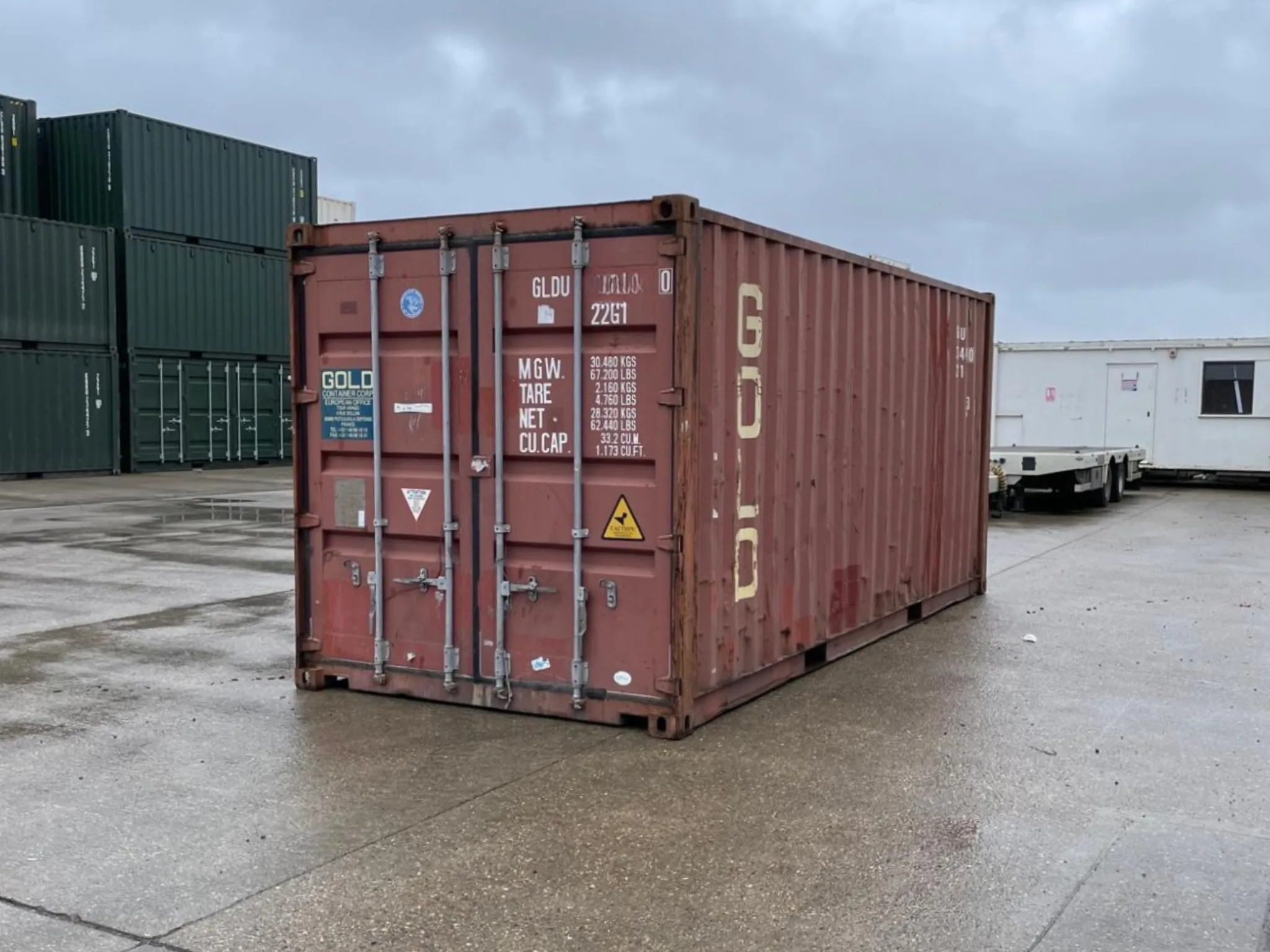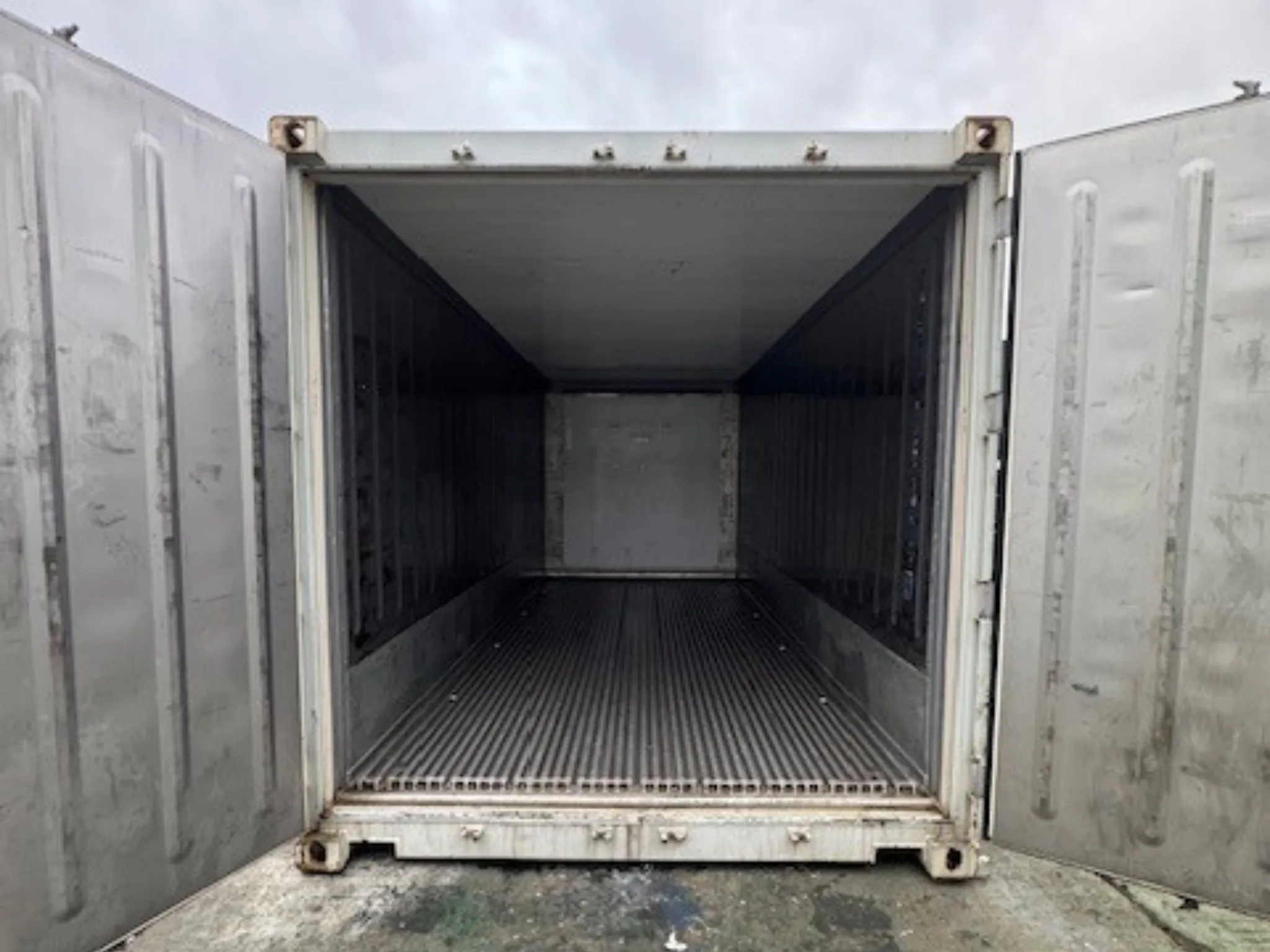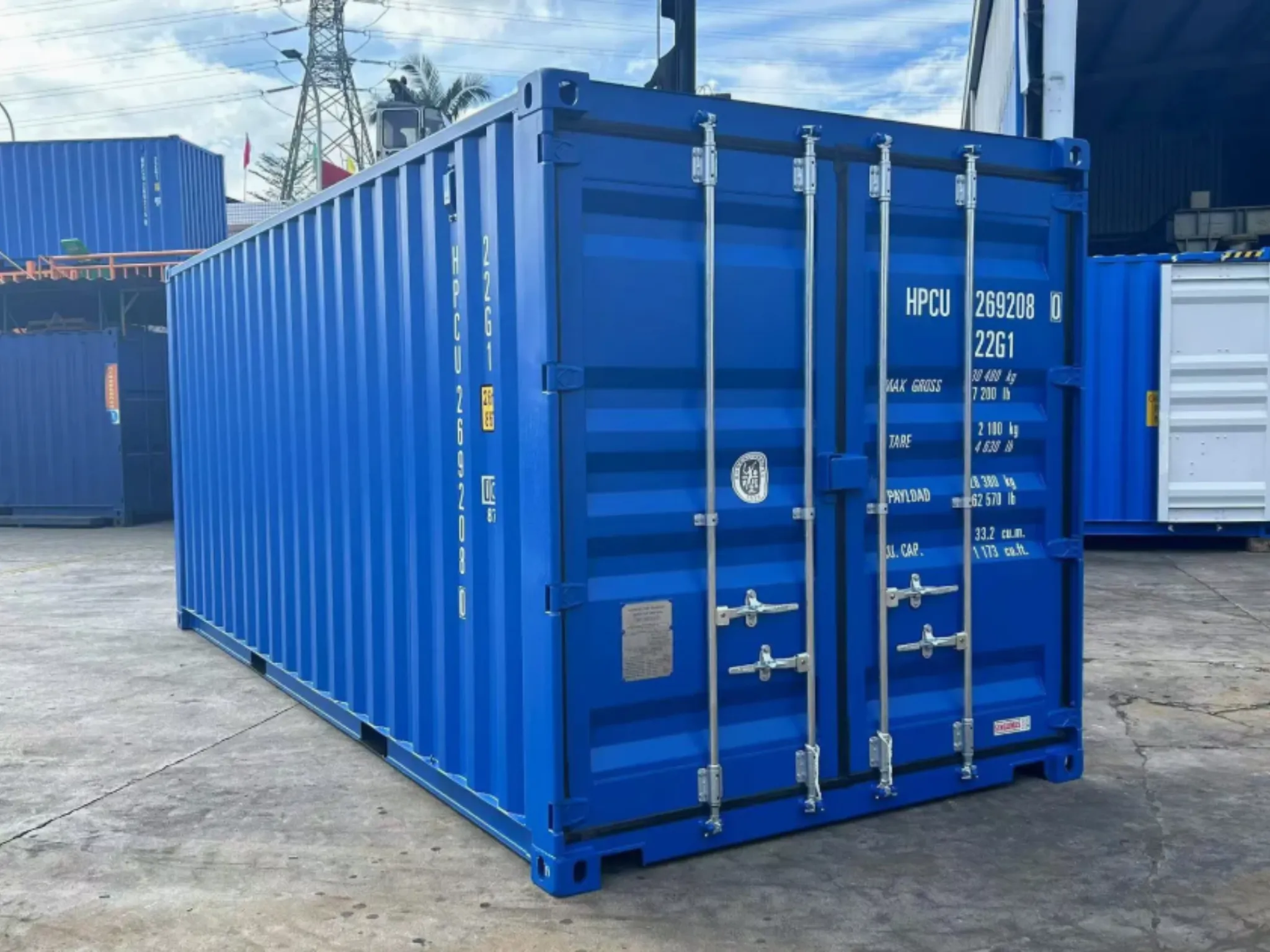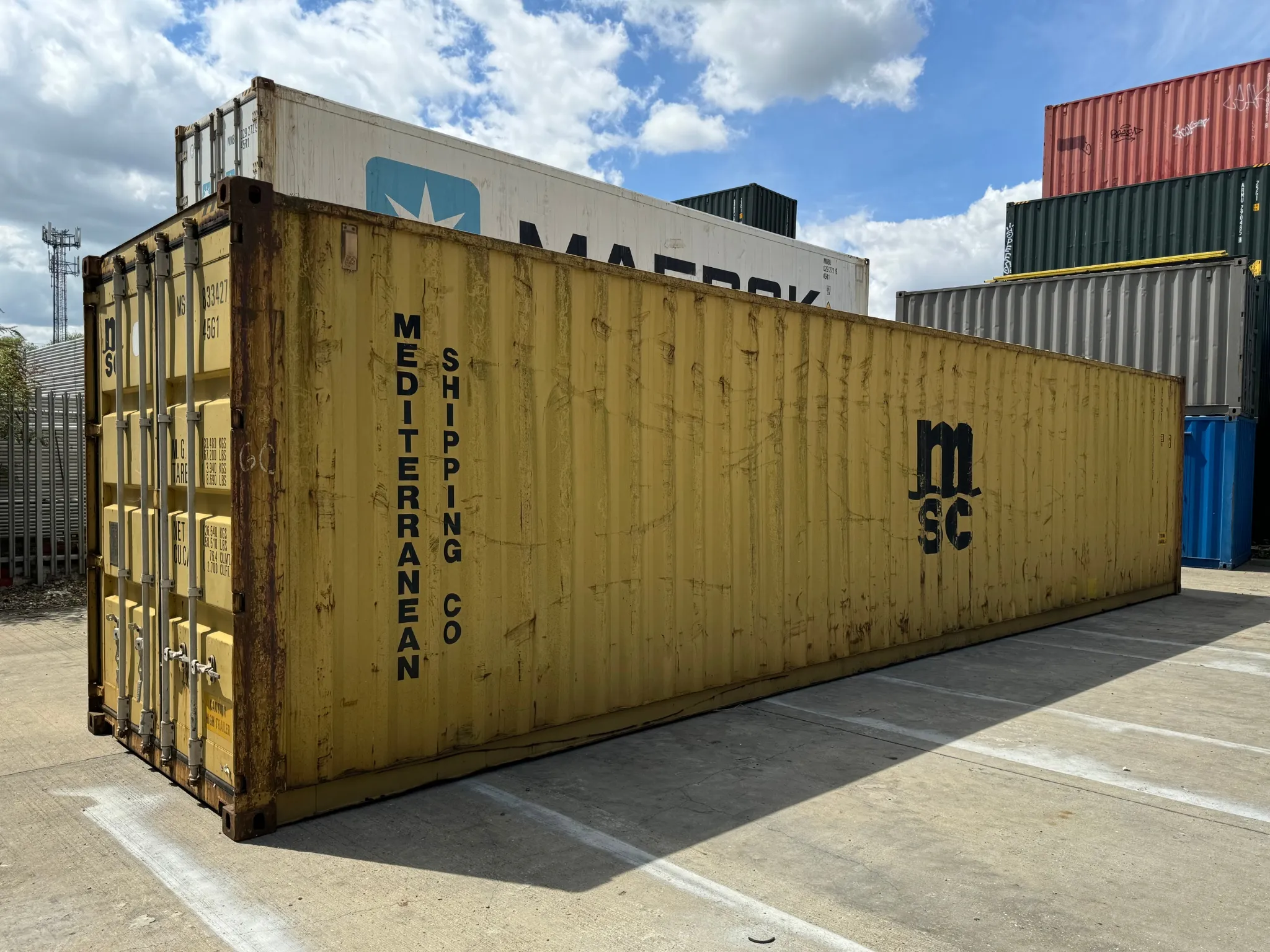
How much space is needed to deliver a shipping container? In most UK deliveries, you need clear vehicle access for a lorry up to 16.5 m long, around 3 m width for access, up to 18–20 ft of working width for stabilisers, and overhead clearance of 10 m or more when lifting. Exact space depends on container size, vehicle type, ground conditions, and nearby obstructions such as cables or trees.
Container delivery & siting guide — why this matters
Shipping container delivery is a heavy-lift operation. Once a container is set down, it cannot be moved without specialist equipment. Getting access, space, and ground preparation right before delivery prevents failed drops, extra charges, and long-term issues like door misalignment or premature corrosion.
What space is required to deliver a shipping container?
Vehicle access space
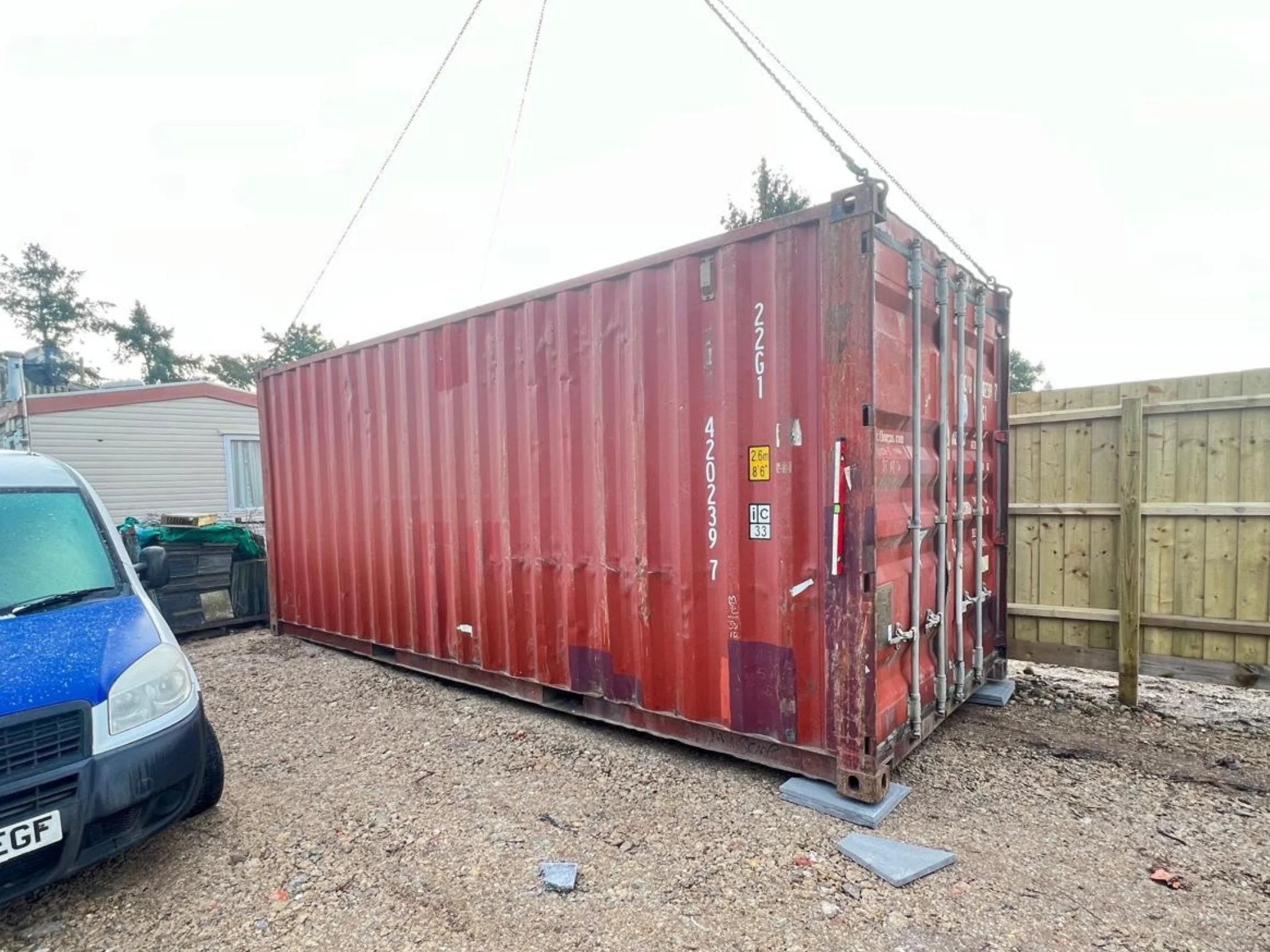
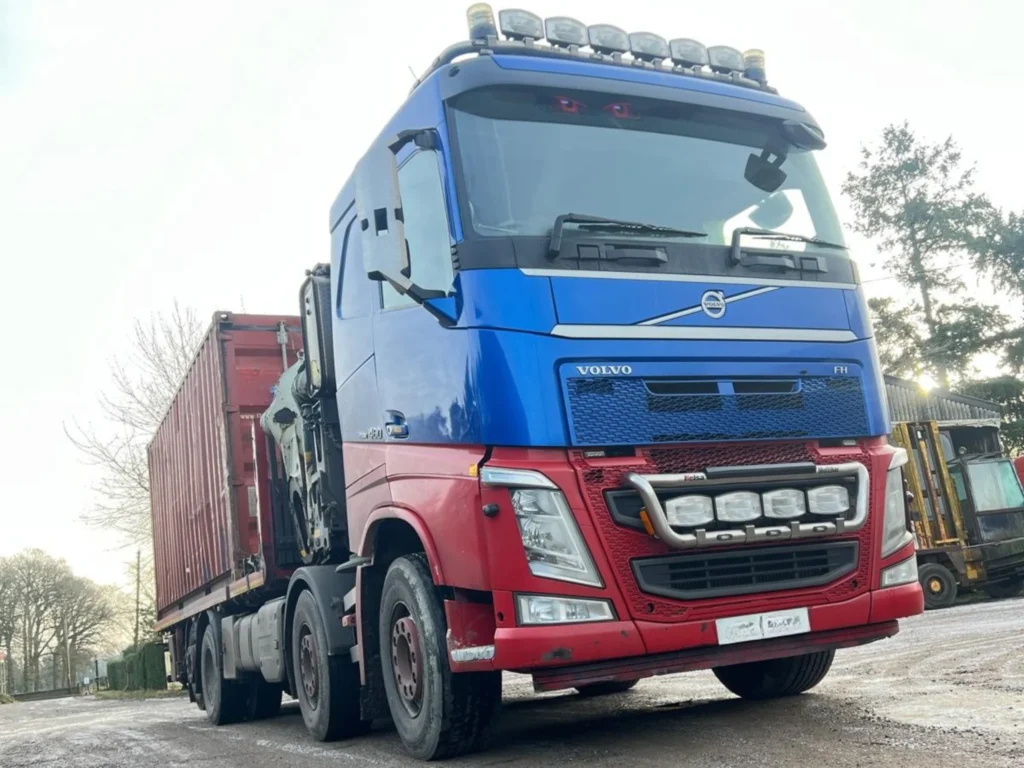
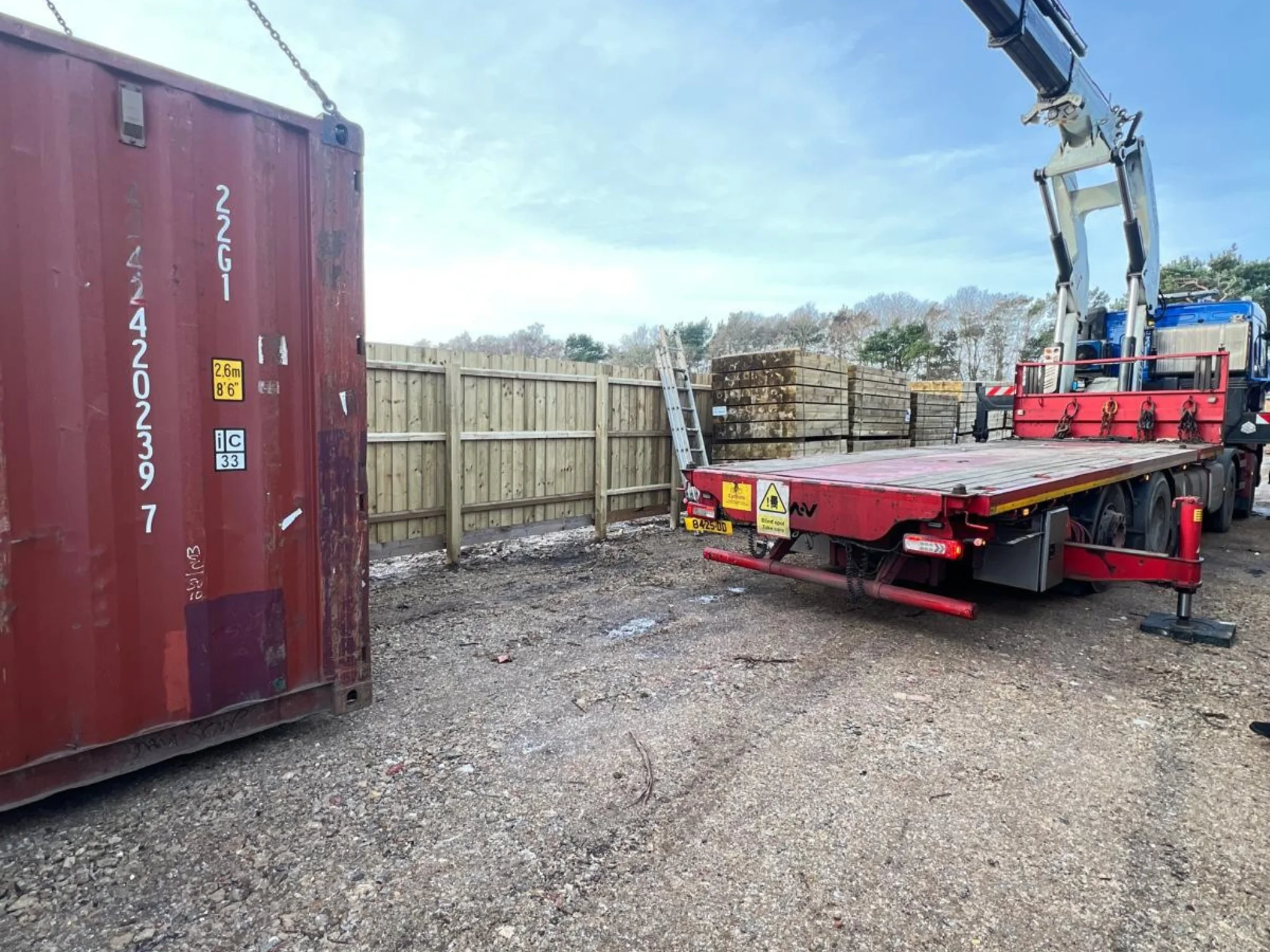
Most container deliveries in the UK are completed using crane-equipped lorries (Hiab vehicles).
Typical access requirements
- Vehicle length: up to 16.5 m (54 ft) for articulated vehicles, even for smaller containers
- Vehicle width: approx. 3 m including mirrors
- Turning space: required for straightening the vehicle before lifting
- Weight: up to 35 tonnes, depending on vehicle type
If your site cannot accept an articulated lorry, a rigid Hiab can usually be used for containers up to 30 ft, provided this is arranged in advance.
Working width on site
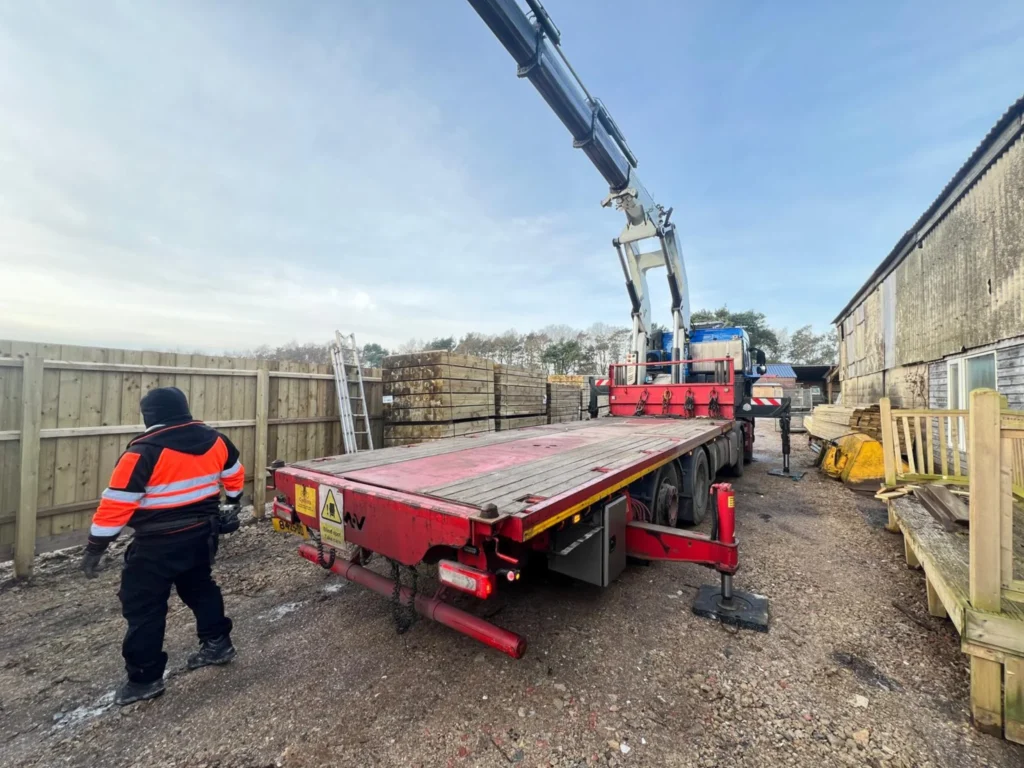
During offload, Hiab vehicles deploy stabiliser legs (outriggers) on both sides.
- Truck body: approx. 8 ft wide
- Outriggers: can extend 8 ft or more per side
- Total working width needed: typically 16–20 ft
This space must be completely clear of walls, vehicles, fencing, or stored materials.
Overhead clearance
Overhead clearance is one of the most common causes of failed deliveries.
- Vehicle height with standard container: approx. 14 ft 6 in
- High cube container: approx. 15 ft 6 in
- Crane lifting height: often 10–30 ft above ground level
Live power cables, telecom lines, low tree branches, roof overhangs, and warehouse ceilings must all be checked. Some hauliers will not lift within 20 m of live overhead power cables due to safety regulations.
How much space is needed by container size?
| Container size | Typical vehicle | Linear space needed | Working width |
|---|---|---|---|
| 10ft | Rigid Hiab | 40–45 ft | 16–18 ft |
| 20ft | Rigid Hiab | 45–50 ft | 18–20 ft |
| 30ft | Extended rigid Hiab | 50 ft+ | 18–20 ft |
| 40ft | Articulated Hiab | 60–65 ft | 20 ft+ |
Ground conditions and siting requirements
Can a container be delivered onto grass?
In most cases, no. Hiab vehicles concentrate weight at the front axle due to the crane and engine position. Grass, mud, or soft ground can quickly collapse under this load, risking vehicle recovery costs and surface damage.
Deliveries may only proceed if:
- The vehicle remains on hard-standing (tarmac or concrete)
- The container is lifted from the road or track onto the site
- Conditions have been assessed in advance
Can a container be delivered onto a driveway?
Generally not. Domestic driveways are rarely engineered to support a 25–35 tonne vehicle, and underground services such as water or gas may be at risk. Vehicles must usually remain on the public road.
Preparing the base
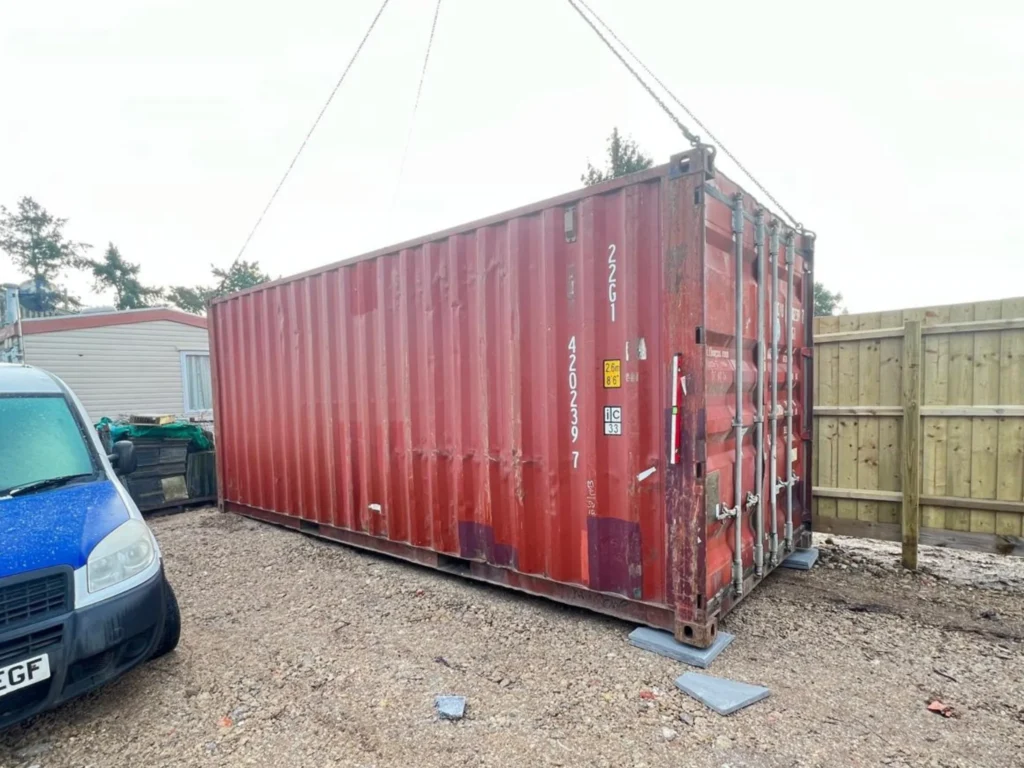
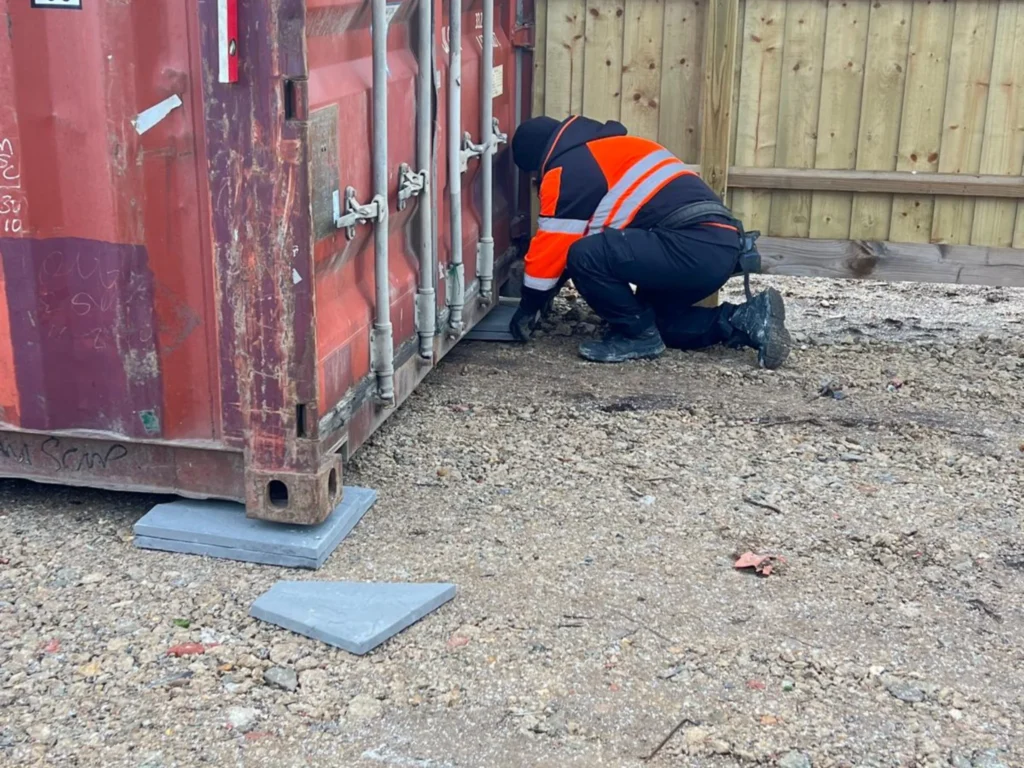
Containers should never sit directly on the ground.
Recommended supports:
- Concrete blocks
- Railway sleepers
- Heavy-duty paving slabs
Only the four corner points need supporting, but they must be level across length, width, and diagonals. Raising the container improves airflow underneath, reducing moisture build-up and extending lifespan.
Why containers must be perfectly level
Shipping containers are rigid steel structures. If not level, the frame twists slightly, a condition known as racking.
Effects of racking:
- Doors become stiff or impossible to open
- Locking bars may not align
- Long-term structural stress increases corrosion risk
On delivery, doors should be tested before the driver leaves. If adjustment is needed, the driver can lift the container briefly so shims can be inserted.
Common delivery mistakes to avoid
- Assuming “it’ll fit” without measuring
- Forgetting stabiliser leg space
- Ignoring overhead cables on private land
- Preparing soft or uneven ground
- Not notifying the supplier about access restrictions
Failed deliveries often result in return-to-depot fees and re-delivery charges that can run into hundreds of pounds.
Frequently asked questions
Can a container be lifted over a house?
No. Standard Hiab cranes do not have sufficient height or reach. A mobile crane would be required.
Can you lift a container over a fence or wall?
Usually yes, provided the container is close to the vehicle and overhead clearance is sufficient.
Do I need to be on site during delivery?
Yes. Someone must direct placement and confirm the container is level before sign-off.
Does weather affect delivery?
Heavy rain can soften ground conditions. If the surface becomes unsafe, delivery may be postponed.
Bottom line
If you are asking how much space is needed to deliver a shipping container, plan for more room than the container itself. Adequate vehicle access, clear working width, safe overhead clearance, and solid ground preparation are essential for a smooth, cost-effective delivery and long container life.
For buyers unsure about access, early discussion and site assessment reduce risk and prevent unnecessary charges.