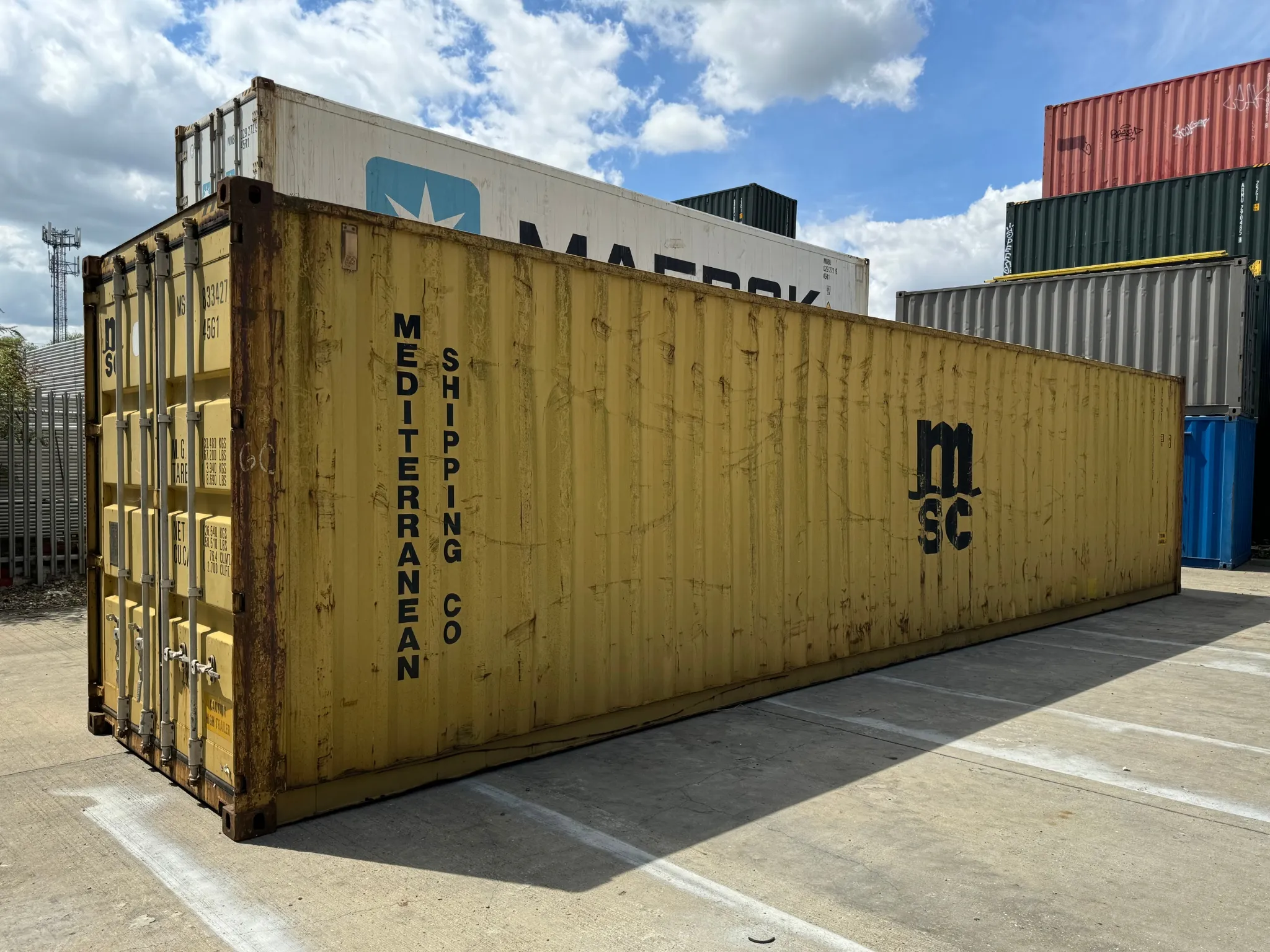
Sometimes… but usually no.
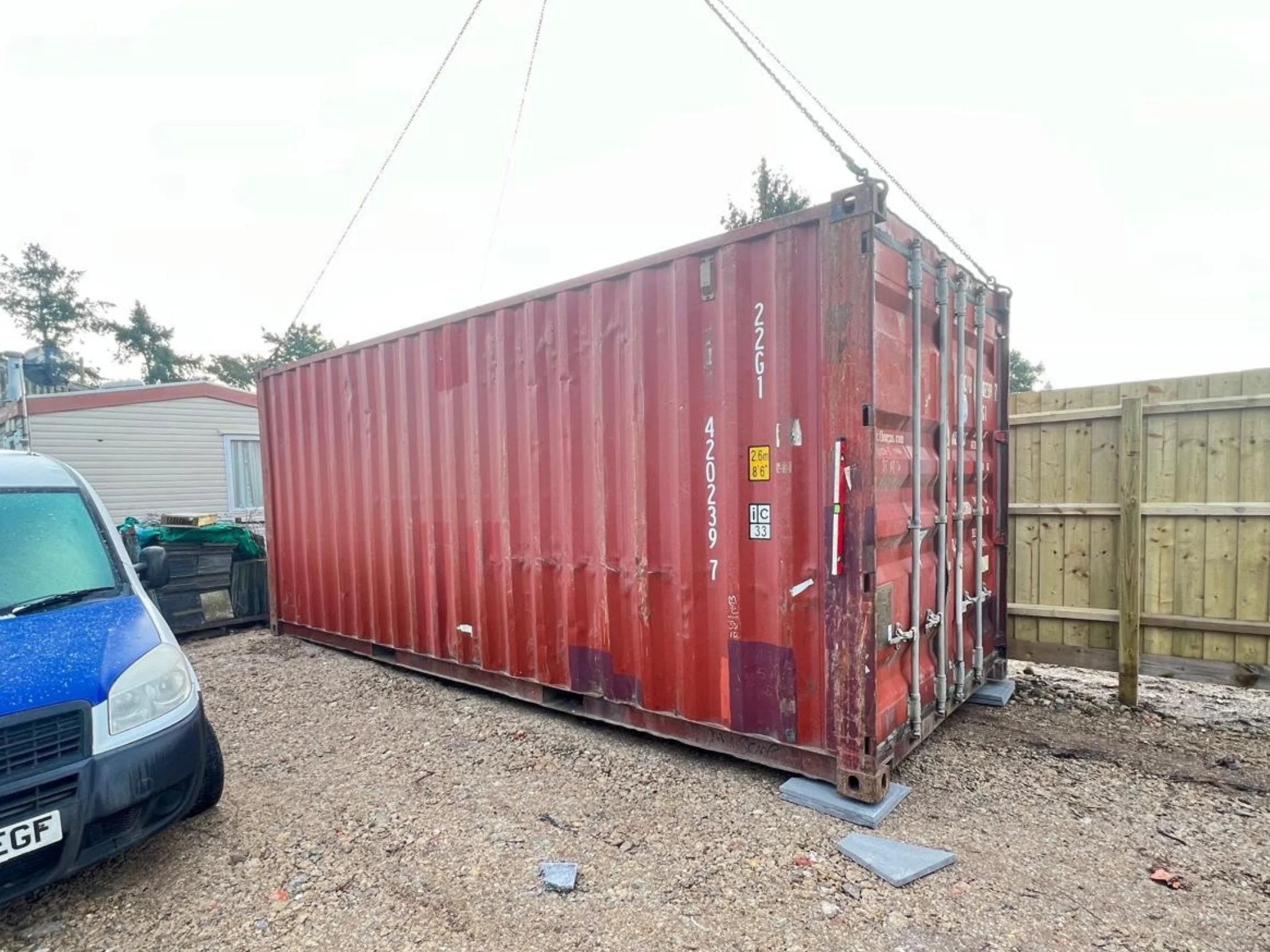
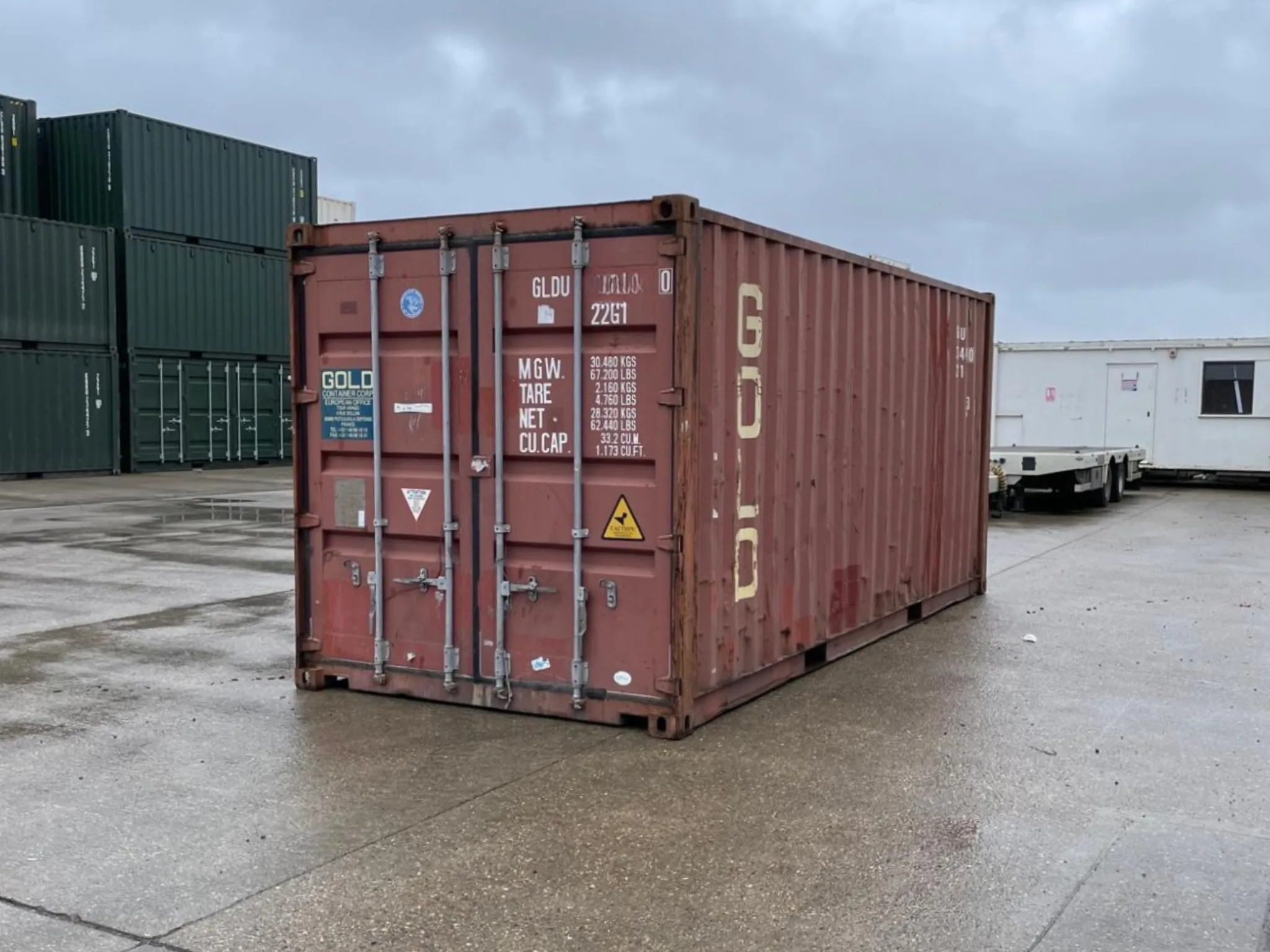
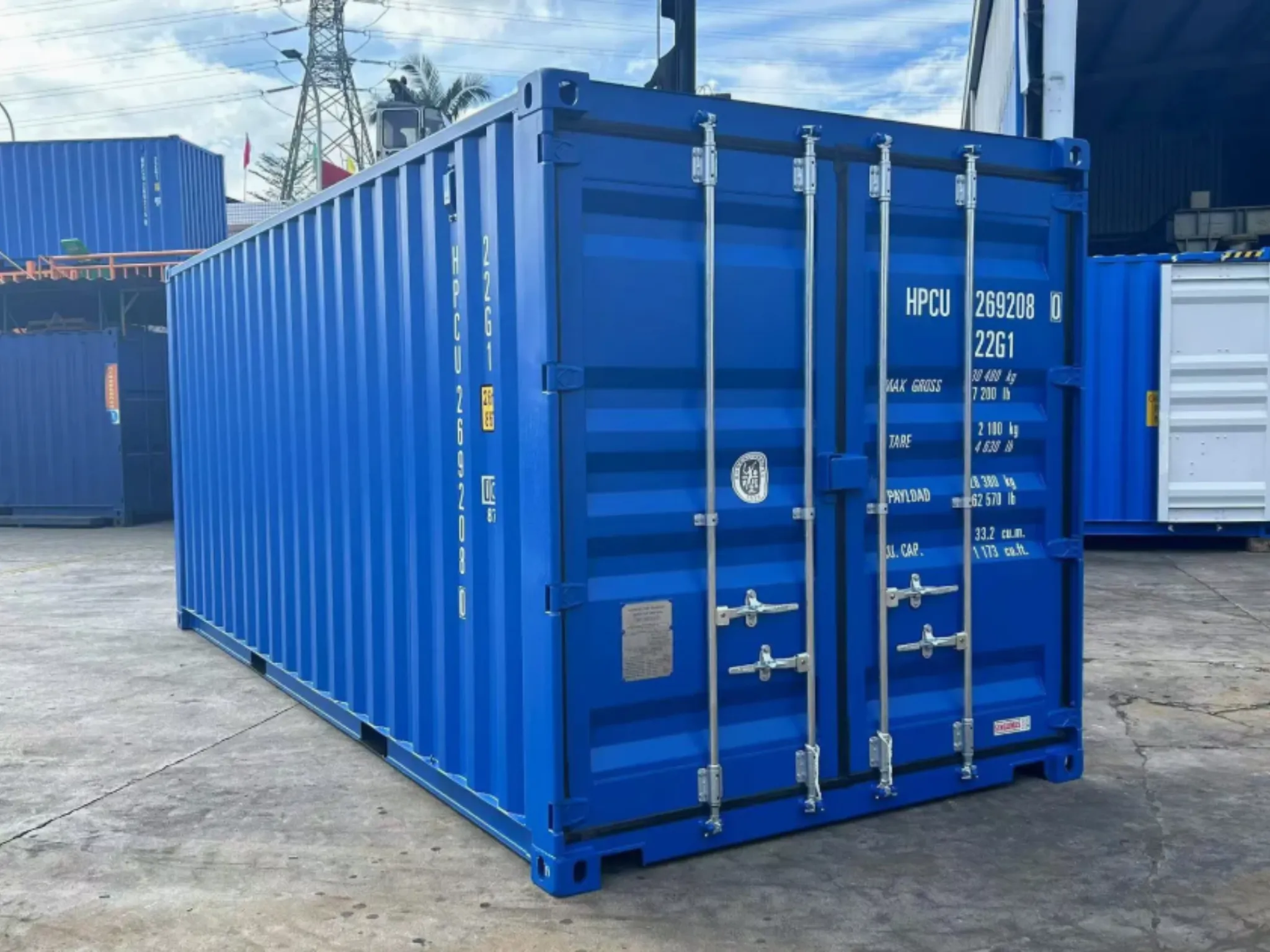
Shipping containers can be delivered onto grass or fields only in very specific conditions, and not all hauliers will attempt it. Ground condition, weather, container size, and delivery method all determine whether it’s safe or possible.
Why Grass and Fields Are Usually a Problem
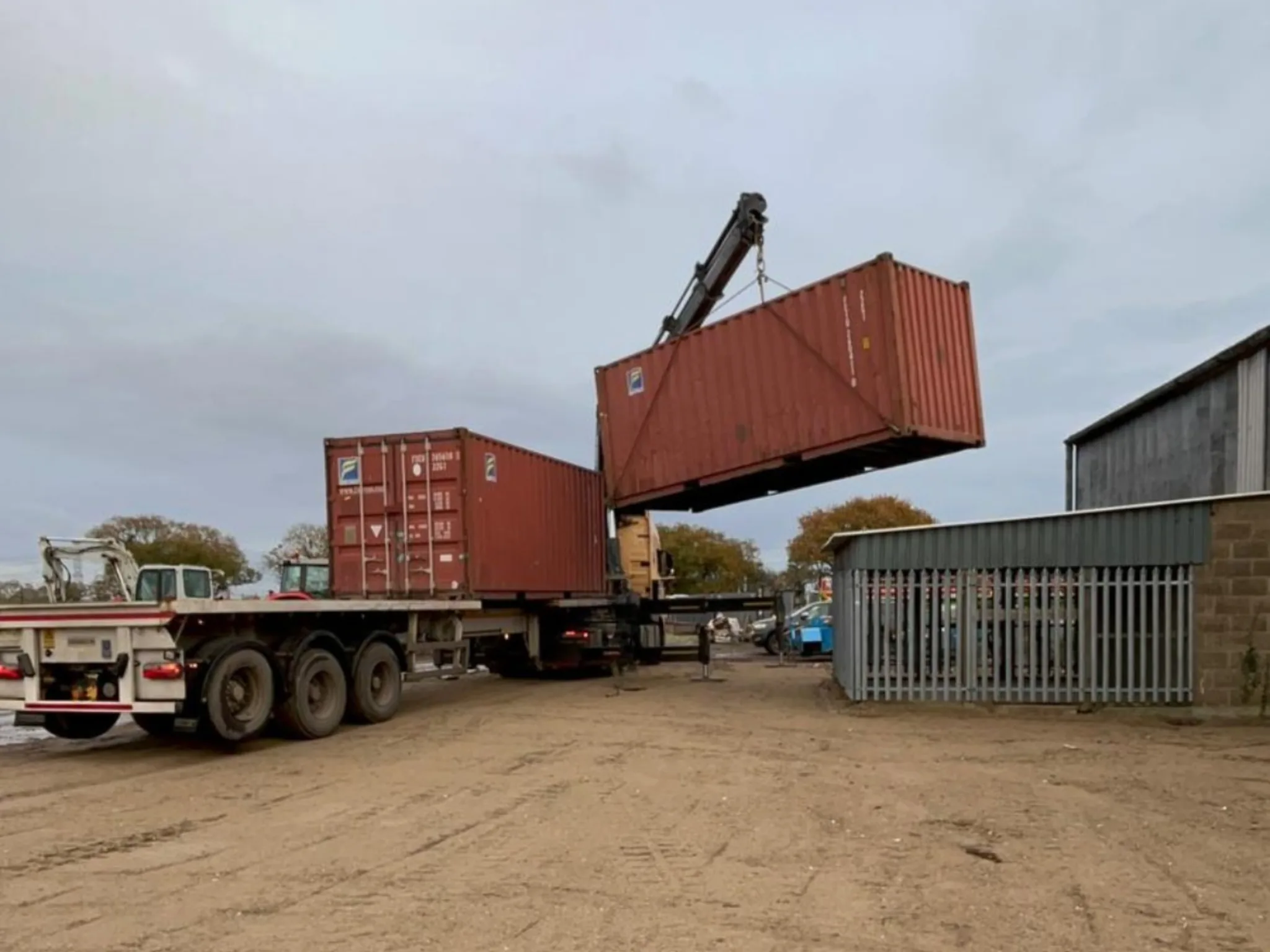
Shipping containers are delivered using HIAB crane lorries or articulated vehicles, not lightweight trucks.
Typical delivery vehicle weights (UK):
- 20ft container (HIAB rigid lorry): ~24–26 tonnes
- 40ft container (articulated lorry): ~32–36 tonnes
These vehicles:
- Rely on traction and ground stability
- Require firm ground to deploy stabilisers safely
Grass, soil, and fields are unpredictable, especially in the UK climate.
When Delivery onto Grass May Be Possible
Delivery onto grass or a field can sometimes work when all of the following apply:
- Prolonged dry weather (peak summer conditions)
- Ground is rock solid and well compacted
- Short travel distance across grass
- No slope, ruts, or soft patches
- 20ft container (40ft is far riskier)
- Experienced haulier willing to assess on arrival
⚠️ Even then, delivery is never guaranteed and may still be refused on the day.
Why Many Hauliers Say “No” (And Why That’s Sensible)
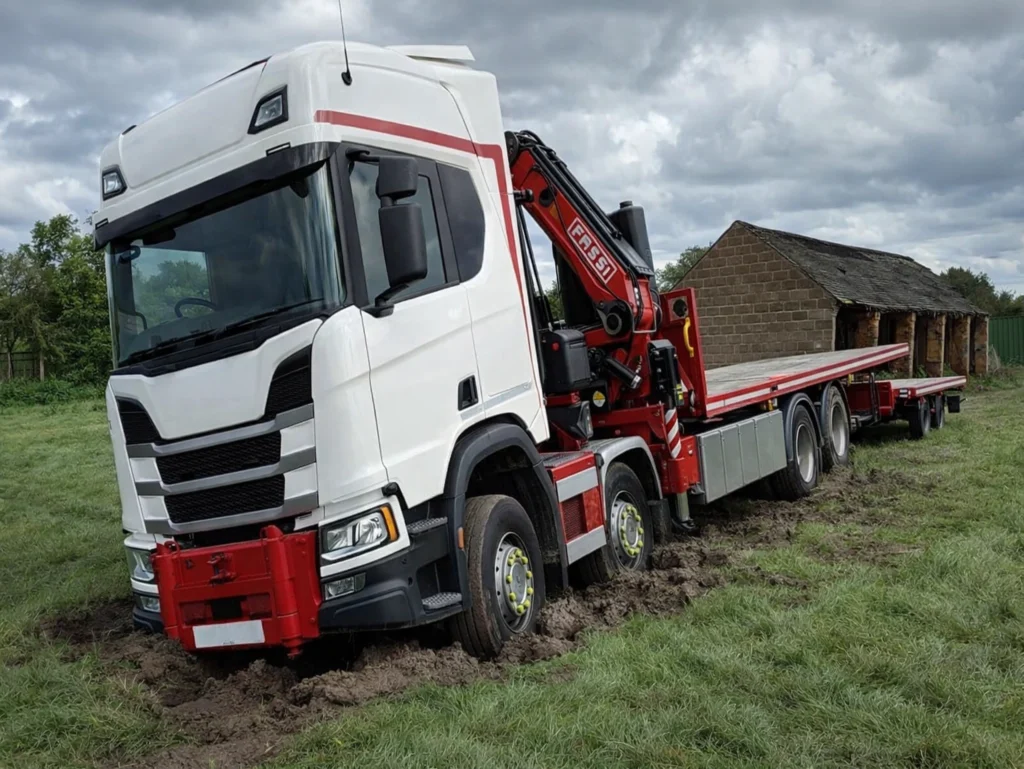
If a delivery vehicle becomes stuck:
- Recovery costs can be thousands of pounds
- Damage can occur to:
- The field or land
- The vehicle
- The container
- Liability usually falls on the customer
Because UK weather is unpredictable, most professional hauliers will not commit in advance to driving over grass or fields.
This is not risk-avoidance, it’s responsible delivery practice.
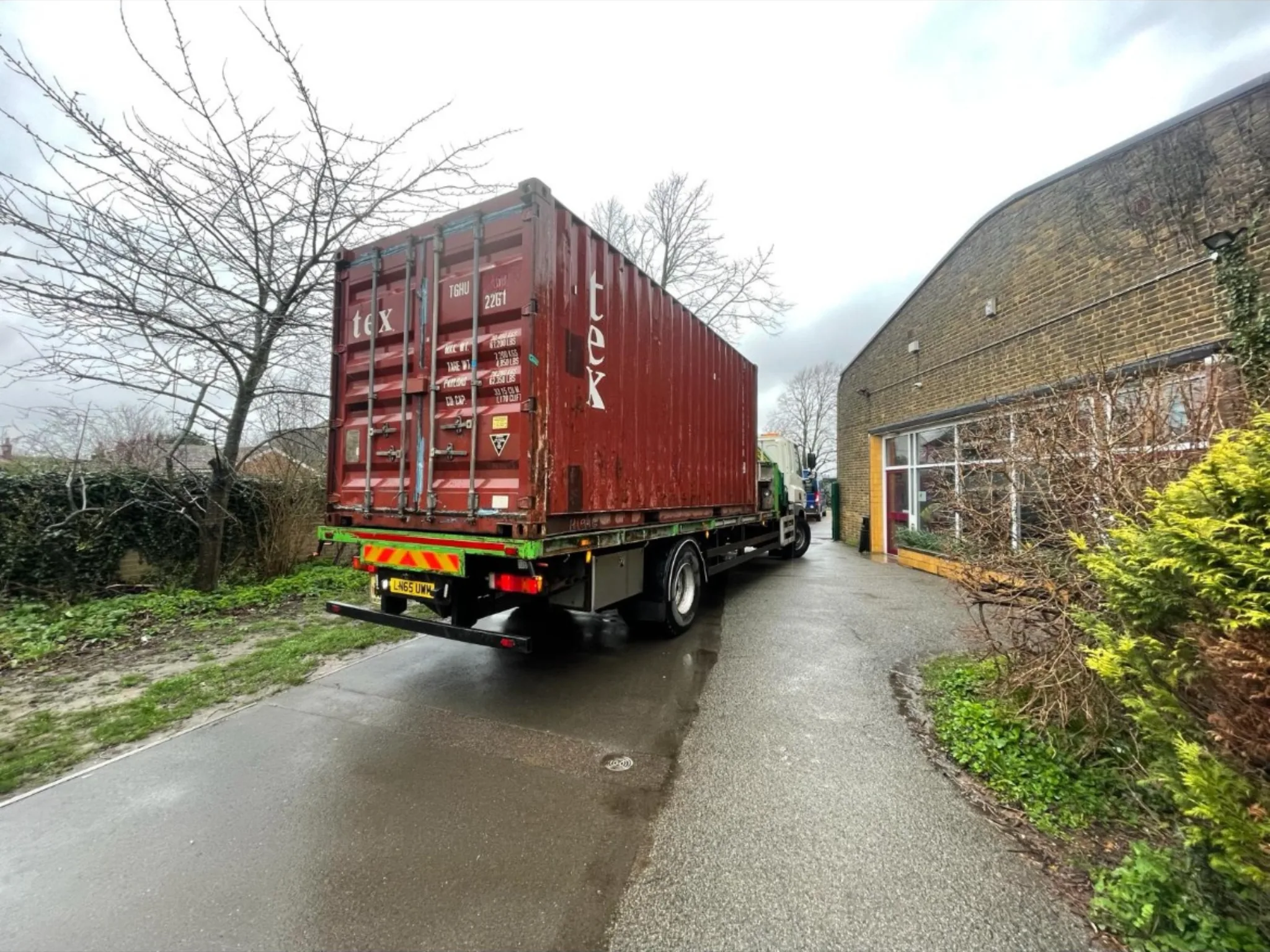
HIAB Delivery and Ground Conditions
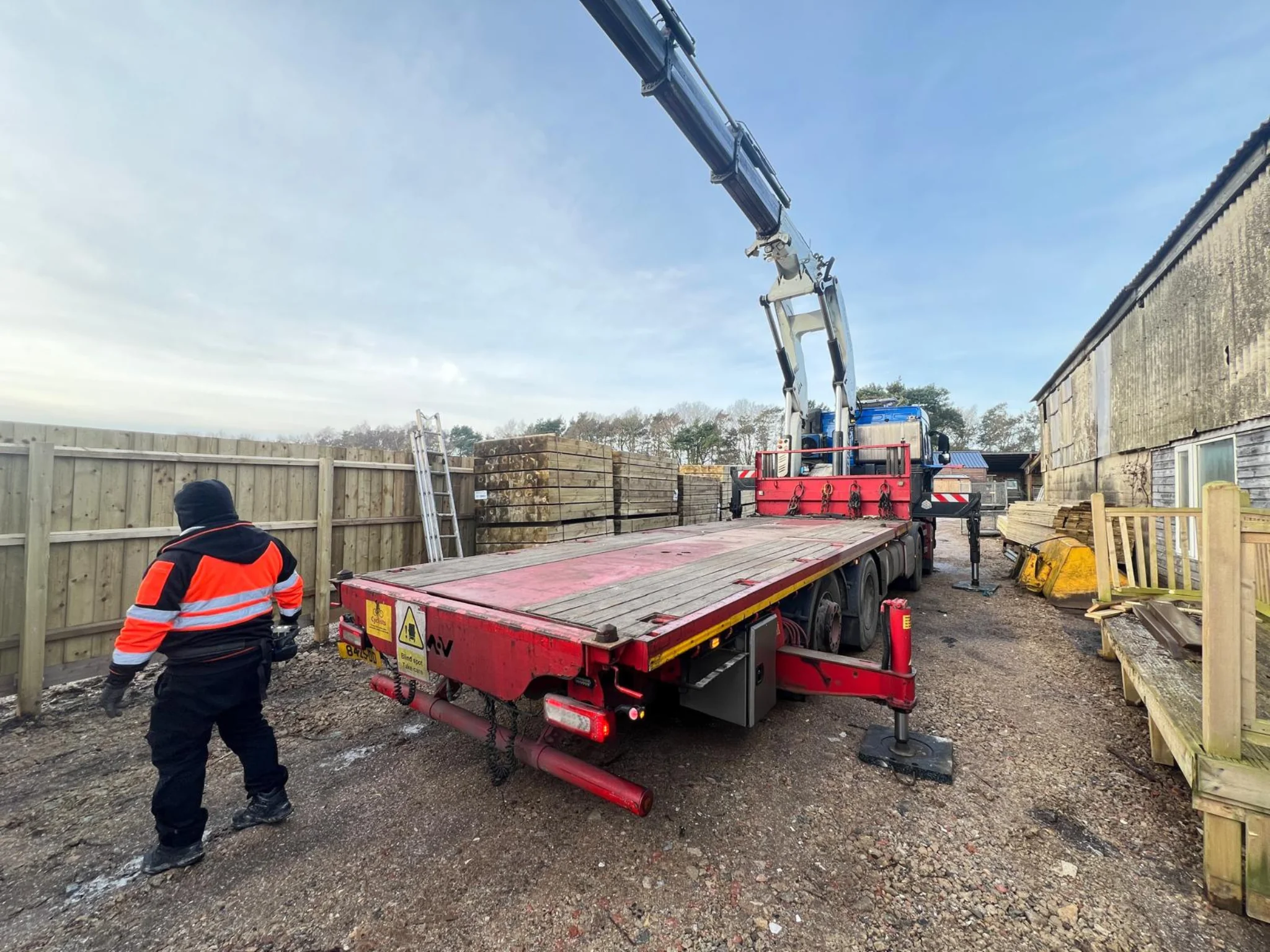
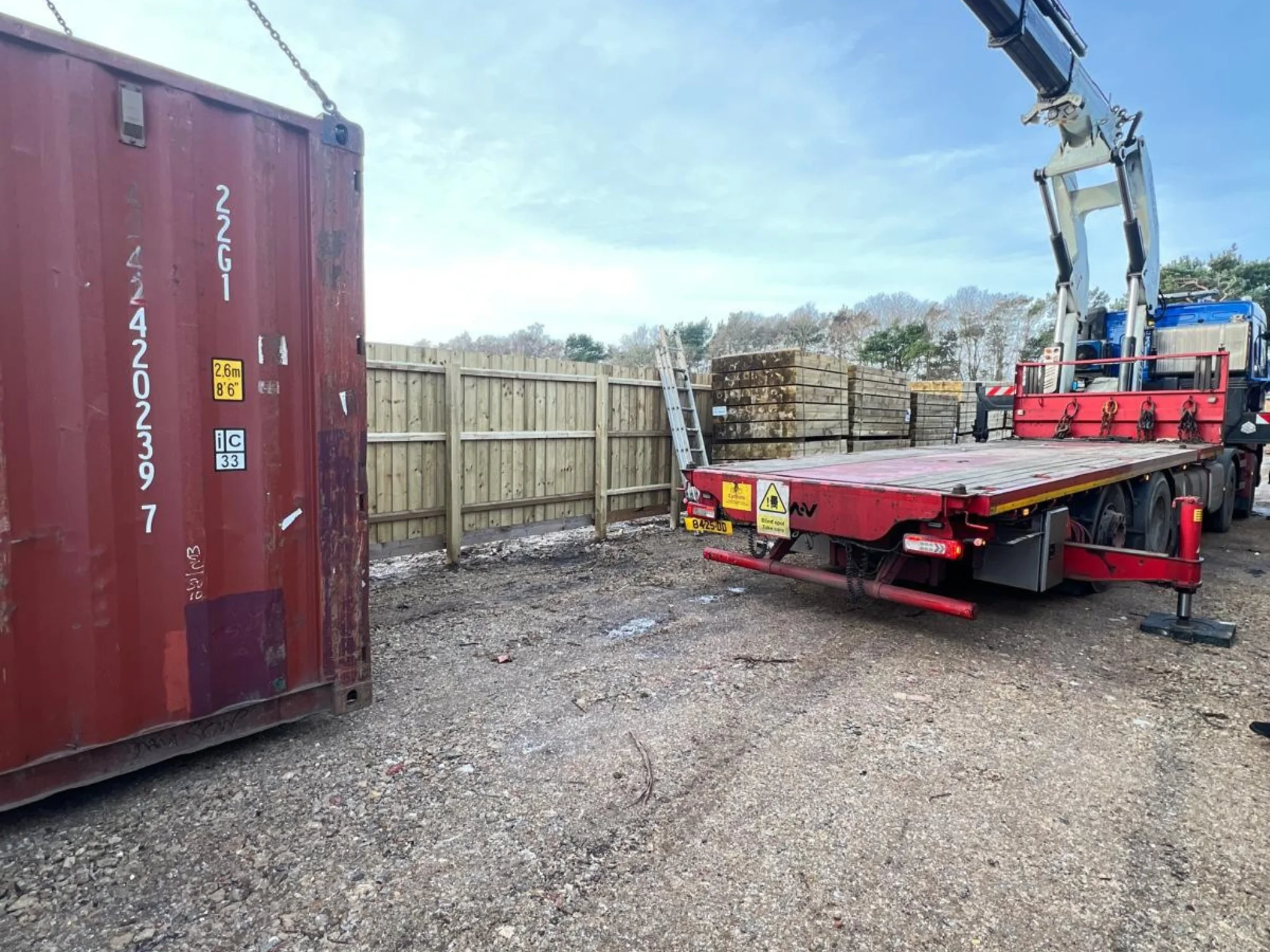
Most UK container deliveries use HIAB crane lorries, which require:
- Firm ground for outrigger deployment
- Space to lift safely
- Stable footing during the lift
Even if the lorry can reach the spot, the lift itself may be refused if the ground cannot safely support the stabilisers.
Better Alternatives to Delivering Directly onto Grass
If your container needs to sit on grass or farmland long-term, the safer approach is:
Prepare a Base First
Options include:
- Railway sleepers
- Concrete pads (under corner castings)
- Compacted hardcore with membrane
- Steel plates for temporary support
This also helps prevent:
- Container sinking
- Door racking
- Premature corrosion
(See our full guide: Planning Permission for a Shipping Container)
Containers on Agricultural Land
On farms and rural land, delivery is often possible to hardstanding, tracks, or prepared bases, not open pasture.
If placing a container on agricultural land:
- Ground prep matters more than location
- Long-term placement may trigger change-of-use considerations
- Commercial use increases scrutiny

What About Temporary Placement?
Short-term projects (events, harvest storage, site work) may allow more flexibility, but delivery risks remain the same.
Even temporary containers still require:
- Safe access
- Stable ground
- Clear lifting zones
What We Do at Bosh Boxes
At Bosh Boxes, we don’t guess — we advise properly.
We help customers:
- Assess access realistically
- Understand when grass delivery might work
- Avoid failed drops and wasted delivery costs
- Choose the right container size and delivery method
- Prepare sites correctly before container delivery UK-wide
We won’t promise what can’t be delivered safely — and that saves you money.
Bottom Line
- Grass and fields are not suitable by default
- Delivery may be possible in peak summer, solid ground conditions
- Not all hauliers offer or accept grass deliveries
- Preparing a proper base is almost always the smarter move
If in doubt, assume no, prepare the ground, and get advice before booking delivery.