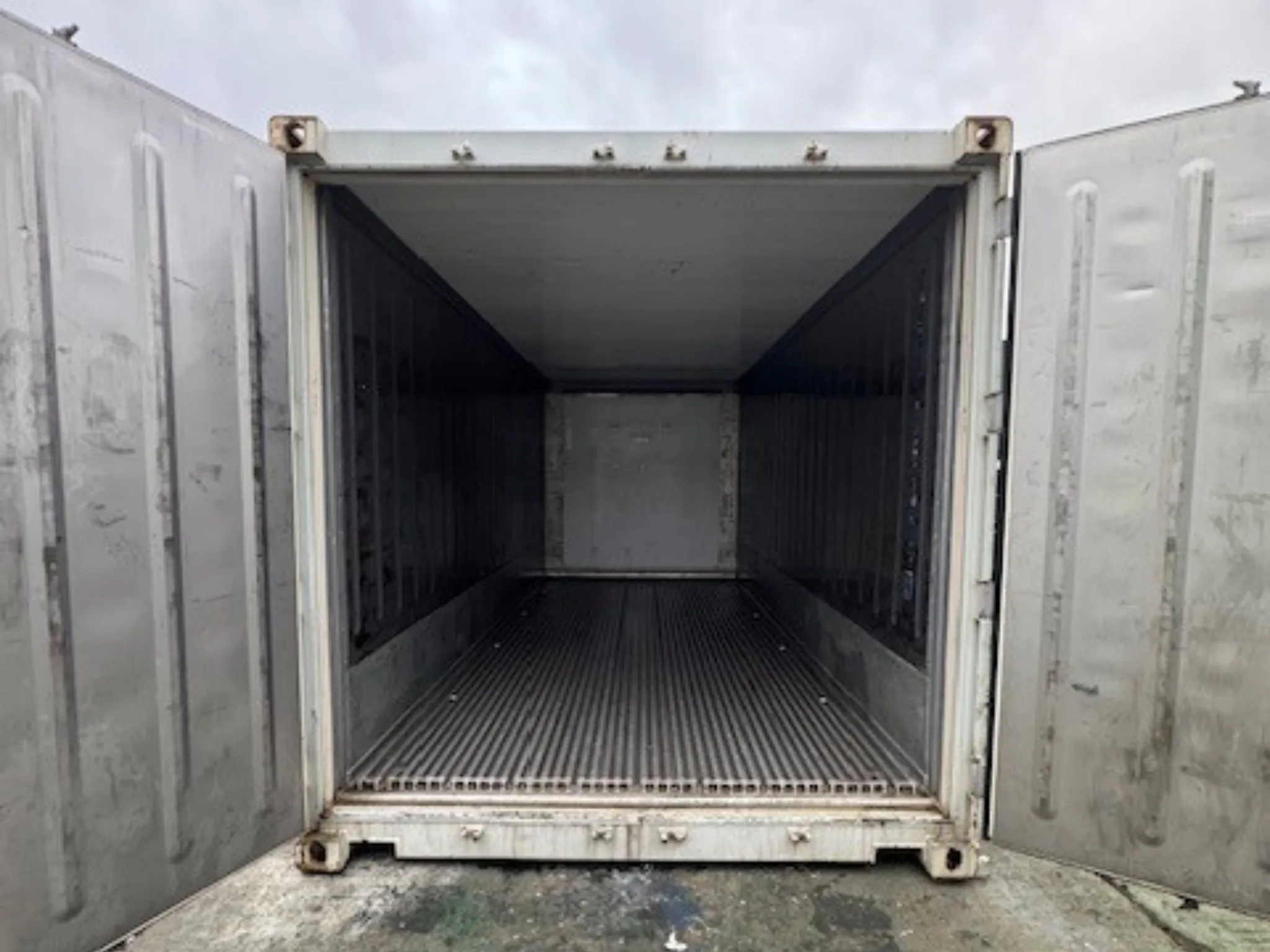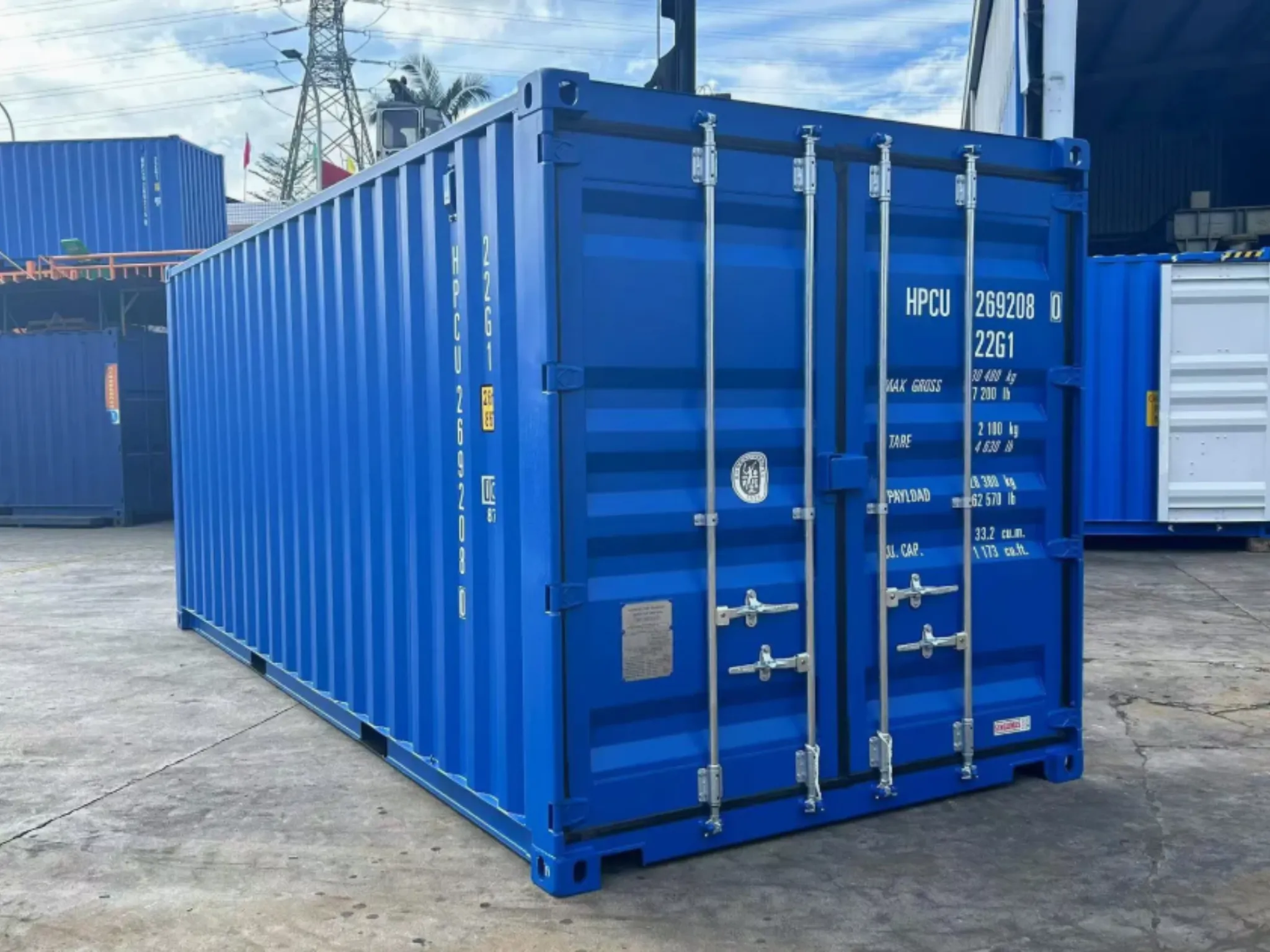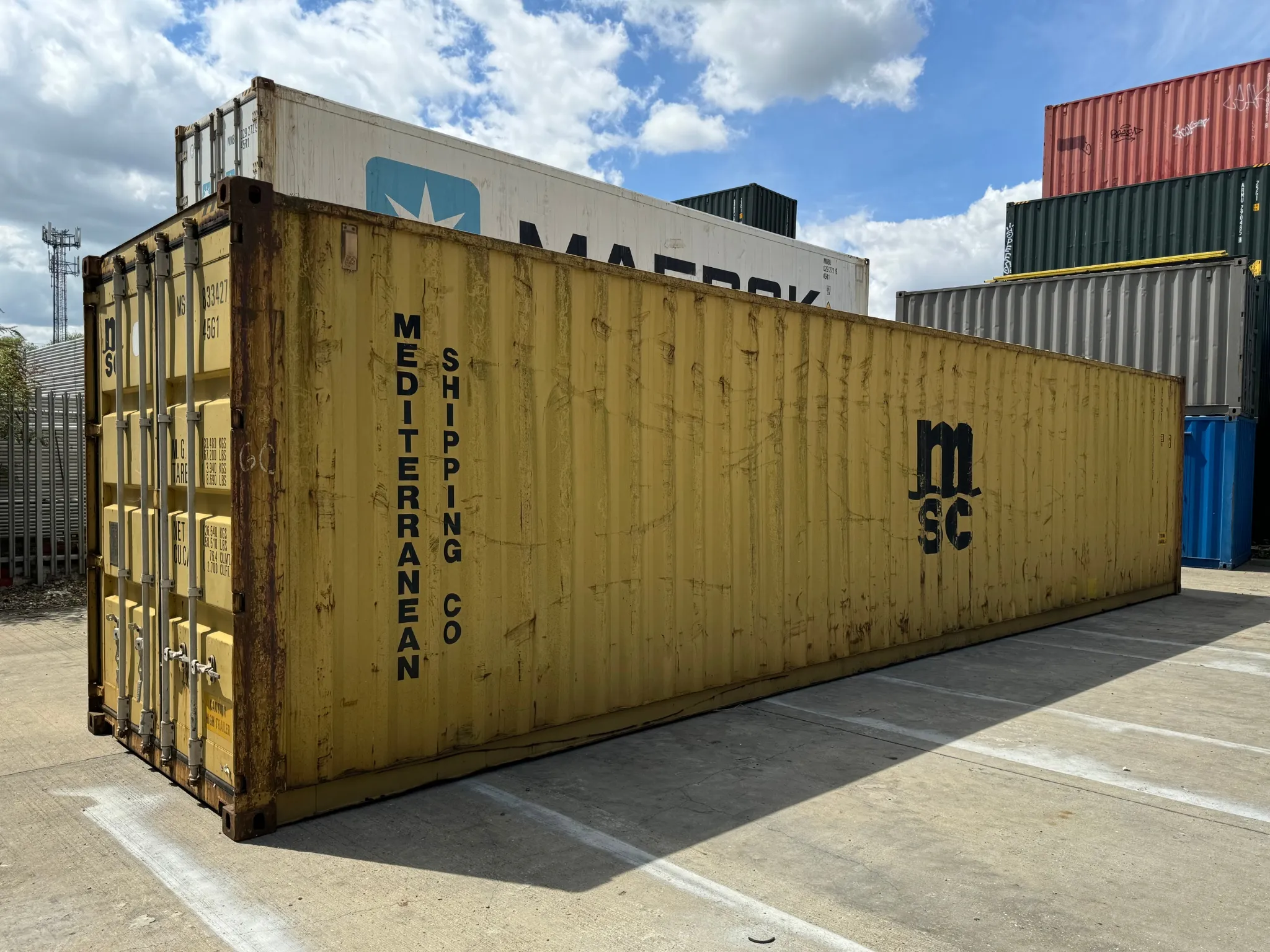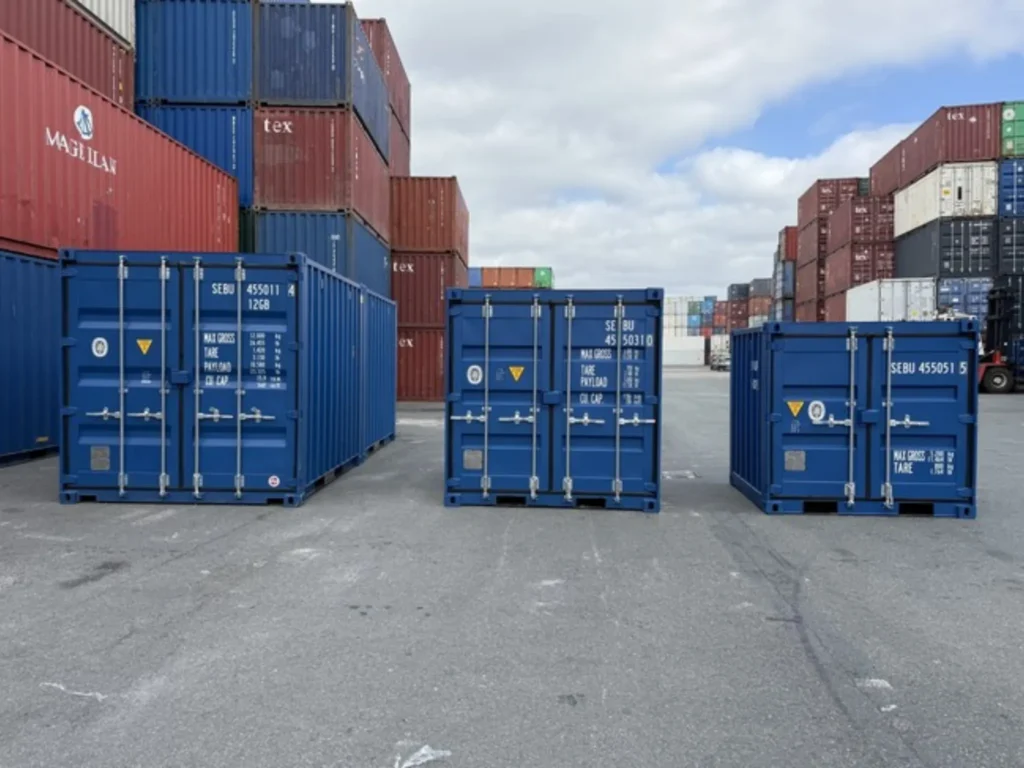
Which shipping container size do I need? The right shipping container size depends on how much you need to store, whether your site can accommodate delivery, and whether the container must be ISO-certified for transport. In the UK, the most common options are 10ft, 20ft and 40ft shipping containers, each offering different capacity, access requirements and cost per square metre.
Choosing correctly the first time avoids wasted space, failed deliveries and unnecessary cost.
Businesses searching for shipping containers for sale UK often compare 10ft, 20ft and 40ft units without fully understanding delivery constraints. Access is often the deciding factor.
What Shipping Container Sizes Are Available in the UK?
The three most common sizes are:
Standard width is 8ft.
Standard height is 8ft 6in.
High cube height is 9ft 6in.
All standard 20ft and 40ft containers are ISO-certified when supplied with a valid CSC plate. Most 10ft units are bespoke cut-down containers and are not ISO-certified for shipping.
10ft Shipping Containers: Dimensions, Uses & Benefits
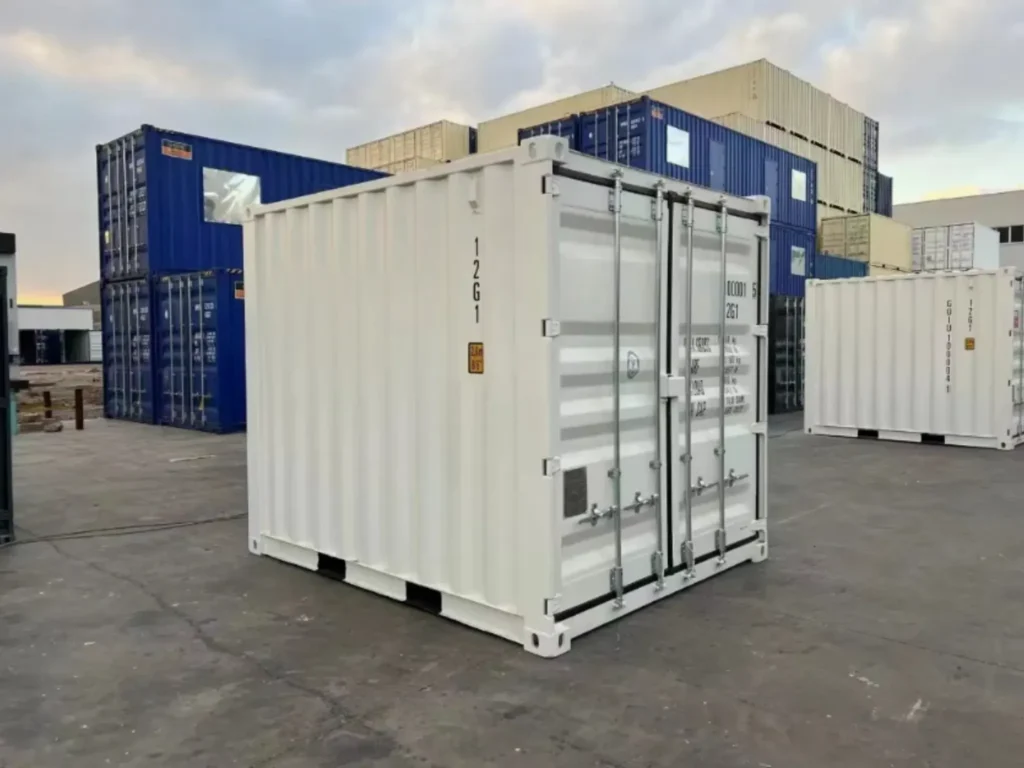
10ft shipping containers are shortened units created from larger containers. They are designed for secure, wind and watertight on-site storage rather than international shipping.
Because they are cut-down units:
- They are usually not ISO-certified
- They should not be lifted while loaded
- They are ideal for static storage use
Best suited for:
- Domestic driveways
- Small construction sites
- Workshops with limited yard space
- Tool and equipment storage
10ft Container Dimensions
| Size | External Dimensions (L × W × H) | Internal Dimensions (L × W × H) | Approx. Capacity | Weight |
|---|---|---|---|---|
| 10ft | 9ft 10in × 8ft × 8ft 6in (2991 × 2438 × 2591mm) | 9ft 2in × 7ft 8in × 7ft 10in (2794 × 2330 × 2390mm) | 15.9m³ | 1,250kg |
A 10ft container is ideal where access is tight and a full-length 20ft container would not fit.
However, the cost per square metre is typically higher than larger containers because 10ft units are bespoke modifications.
20ft Shipping Containers: The UK’s Most Popular Size
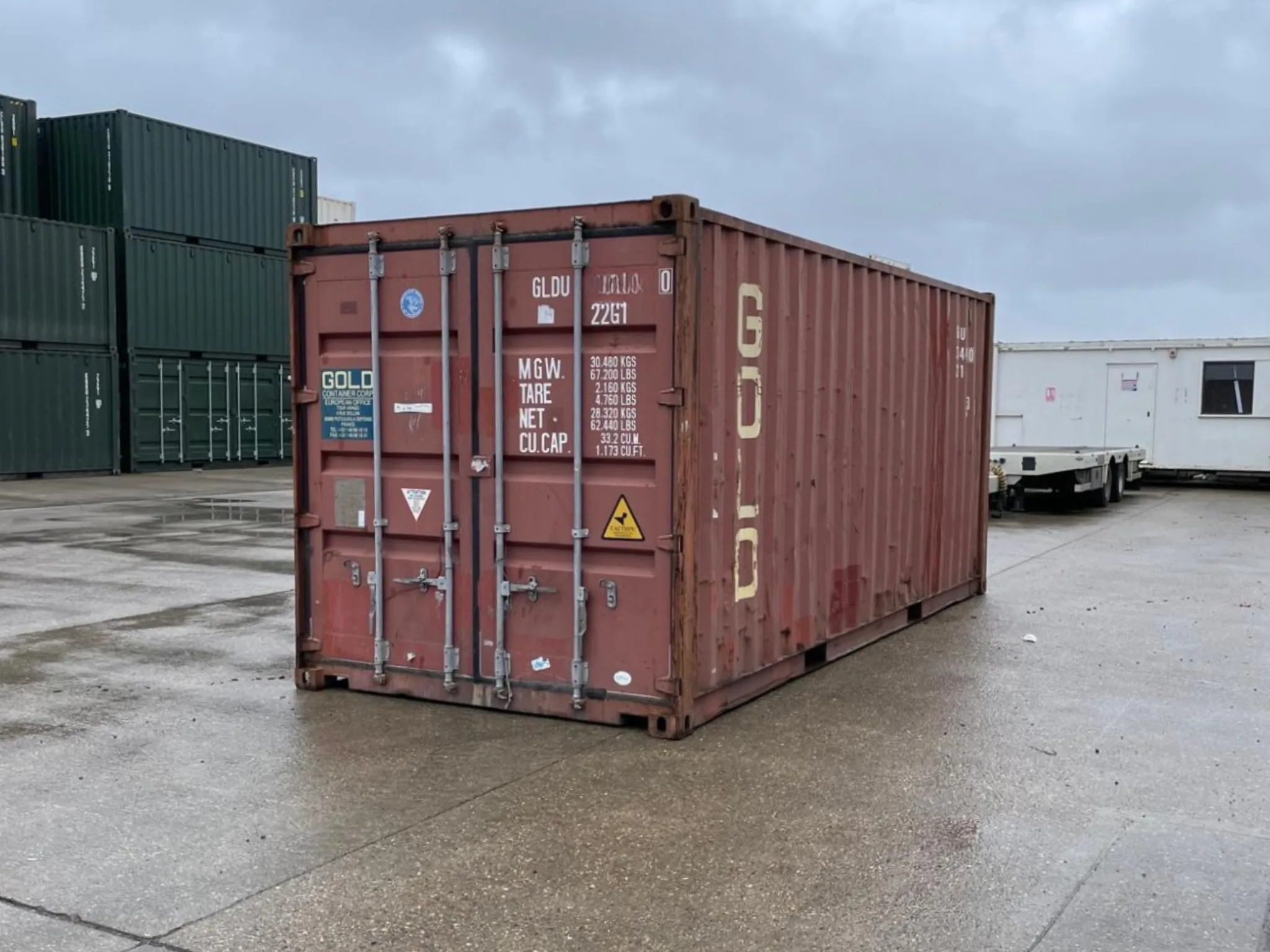
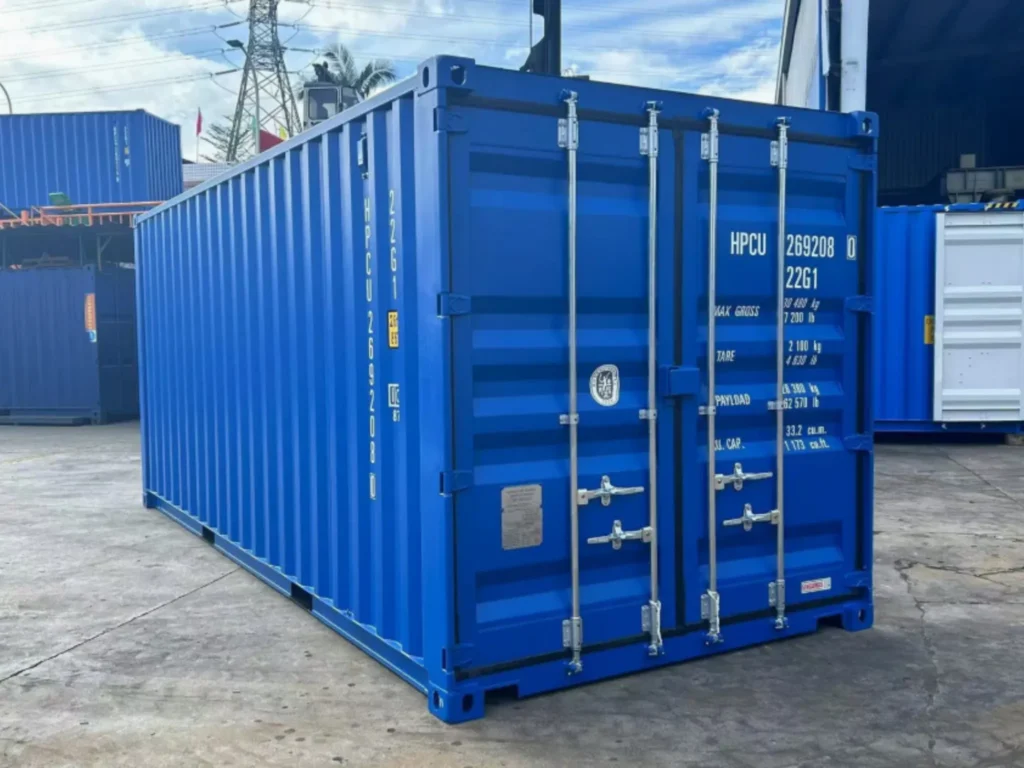
20ft shipping containers are the most commonly purchased size in the UK. They offer the best balance between capacity, delivery flexibility and cost.
Detailed 20ft specifications are covered in our 20ft Shipping Container Dimensions UK guide.
These units:
- Are ISO-certified when supplied cargo worthy
- Retain original corner castings for lifting and stacking
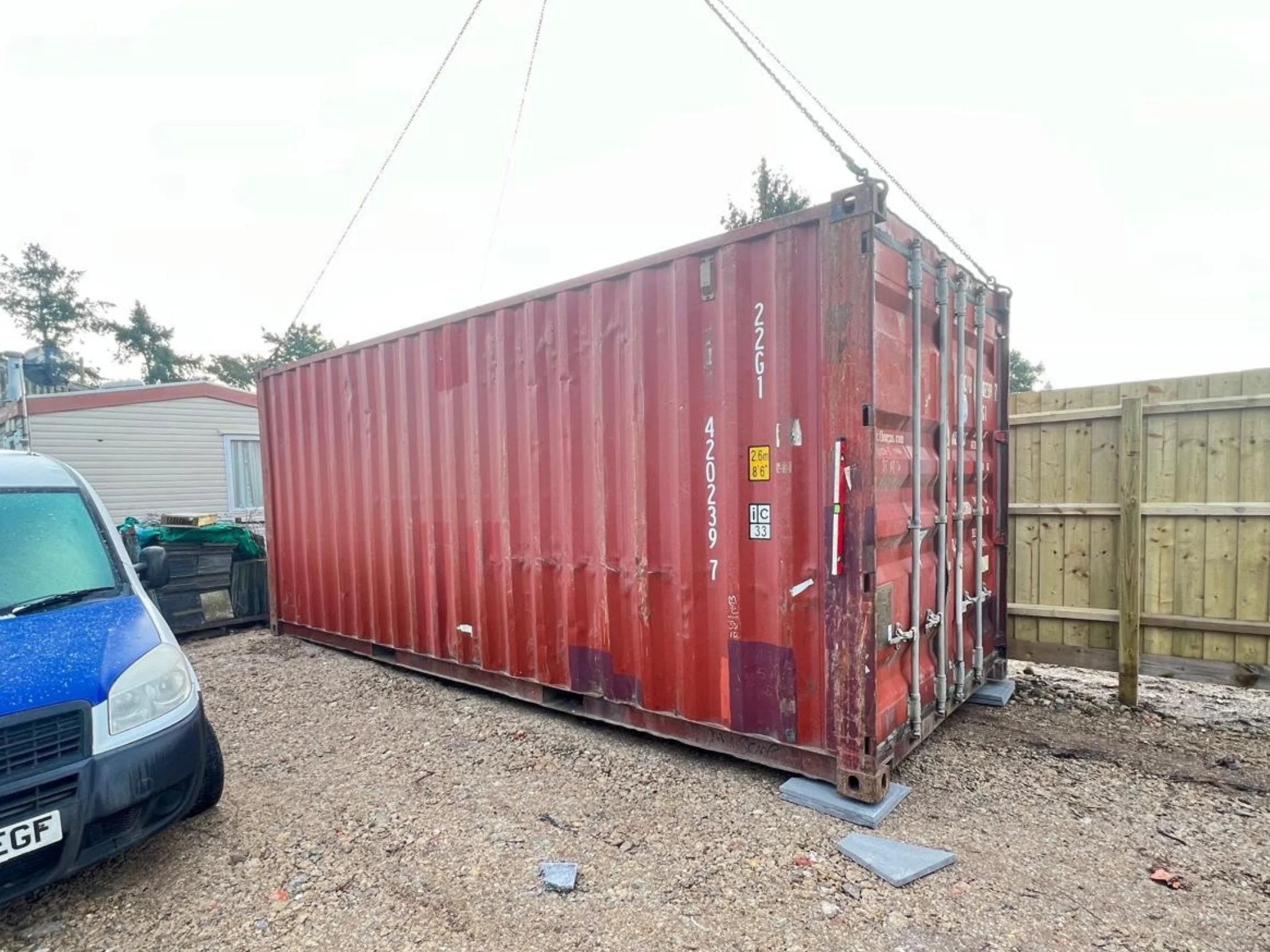
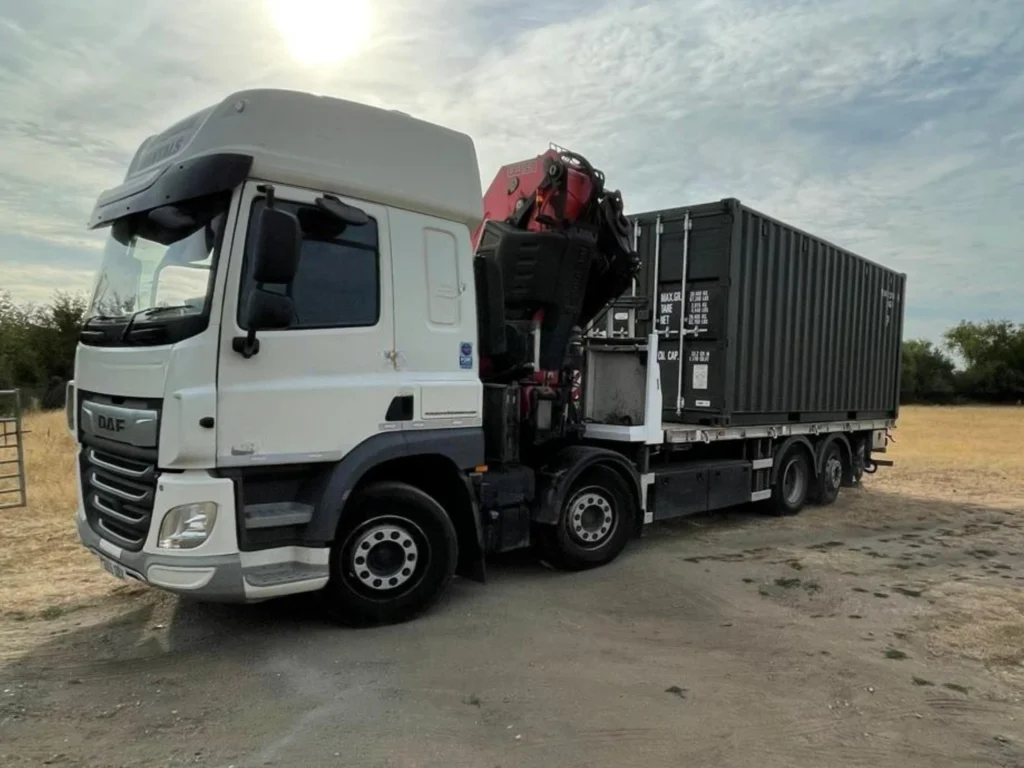
- Can be delivered using a rigid HIAB vehicle
- Are suitable for storage, workshops and container conversions
Many businesses searching buy shipping container UK end up choosing a 20ft unit due to its versatility.
20ft Container Dimensions
| Size | External Dimensions (L × W × H) | Internal Dimensions (L × W × H) | Approx. Capacity | Weight |
|---|---|---|---|---|
| 20ft | 20ft × 8ft × 8ft 6in (6058 × 2438 × 2590mm) | 19ft 4in × 7ft 8in × 7ft 10in (5900 × 2330 × 2390mm) | 33.2m³ | 2,200kg |
| 20ft High Cube | 20ft × 8ft × 9ft 6in (6058 × 2438 × 2896mm) | 19ft 4in × 7ft 8in × 8ft 10in (5900 × 2330 × 2690mm) | 37.2m³ | 2,300kg |
20ft High Cube Option
A 20ft high cube container is useful for taller machinery, racking systems or improved airflow.
For most UK buyers, a 20ft container provides sufficient storage without creating delivery complications.
40ft Shipping Containers: Maximum Capacity
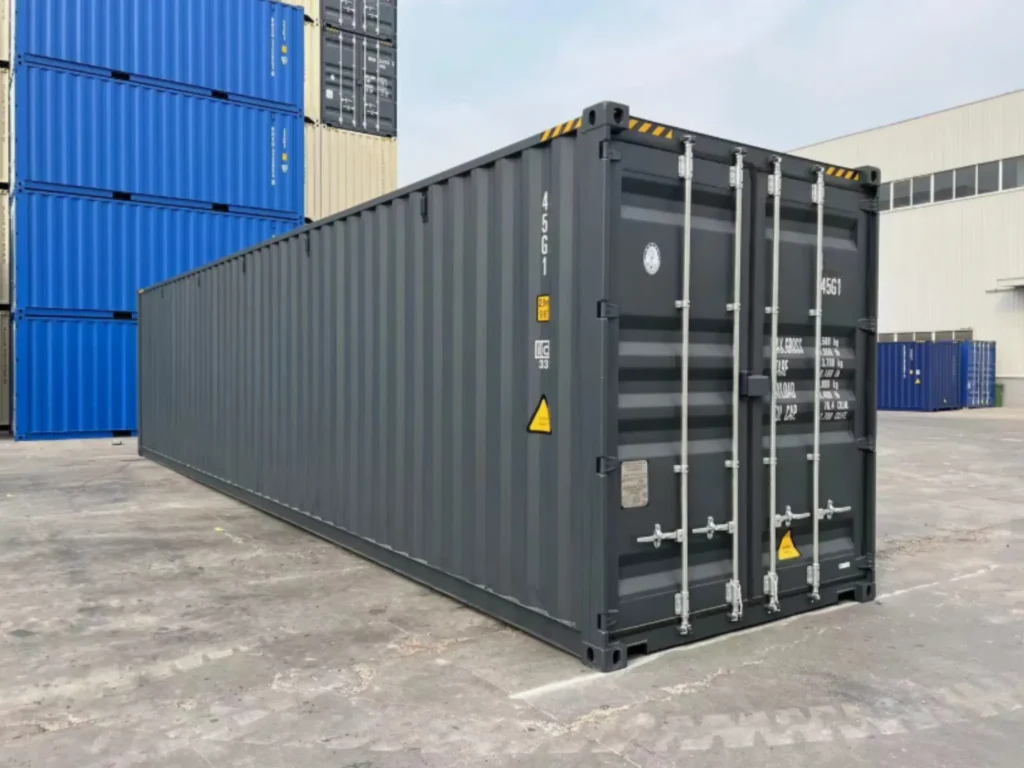
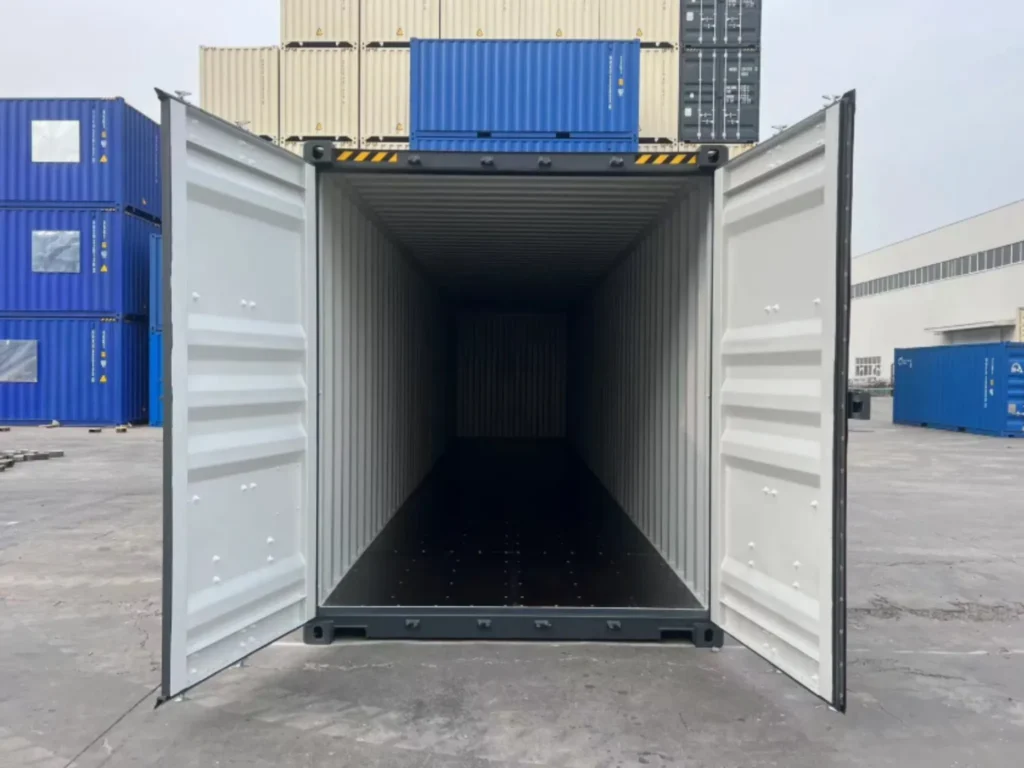
40ft shipping containers provide double the internal length of a 20ft unit and are often the most cost-effective per cubic metre.
They are commonly used for:
- Warehouse overflow
- Bulk stock storage
- Industrial operations
- Large container conversions
However, delivery is the main consideration.
40ft containers require arctic HIAB vehicles, side loaders or skeletal trailers. These vehicles are approximately 67–68ft long, so turning radius and access must be carefully checked.
| Size | External Dimensions (L × W × H) | Internal Dimensions (L × W × H) | Approx. Capacity | Weight |
|---|---|---|---|---|
| 40ft | 40ft × 8ft × 8ft 6in (12192 × 2438 × 2590mm) | 39ft 6in × 7ft 8in × 7ft 10in (12032 × 2330 × 2390mm) | 67.6m³ | 3,800kg |
| 40ft High Cube | 40ft × 8ft × 9ft 6in (12192 × 2438 × 2896mm) | 39ft 6in × 7ft 8in × 8ft 10in (12032 × 2330 × 2690mm) | 76.3m³ | 3,900kg |
If site access allows, a 40ft container can significantly reduce cost per square metre compared to multiple smaller units.
Quick Size Comparison Table
This table summarises the main differences between 10ft, 20ft and 40ft shipping containers, helping UK buyers compare storage volume, ISO certification and delivery requirements at a glance.
| Container Size | Best For | ISO-Certified | Typical Delivery Vehicle | Capacity |
|---|---|---|---|---|
| 10ft | Small sites, domestic storage | No (usually) | Rigid HIAB | 15.9m³ |
| 20ft | General storage, conversions | Yes | Rigid HIAB | 33.2m³ |
| 40ft | Bulk storage, warehouse overflow | Yes | Arctic HIAB / Sidelifter | 67.6m³ |
This table highlights the main decision factors: access, certification and volume.
Key Things to Consider Before Choosing
1. Site Access
Access is often more important than storage volume.
- 40ft containers require significant turning space
- 20ft containers are easier to deliver on UK roads
- 10ft containers suit restricted access sites
Failed deliveries increase cost and delay projects.
2. What You Are Storing
- Bulky or palletised goods often require 20ft or 40ft containers.
- Tools, garden equipment and household items often fit comfortably in a 10ft container.
- If racking is planned, consider internal height and airflow.
3. Budget
- Larger containers are generally more cost-effective per cubic metre.
- 10ft containers usually cost more per square metre due to modification work.
- Used containers are more affordable. New one-trip units offer improved condition and longer lifespan.
All reputable suppliers should guarantee containers are wind and watertight before sale.
What Container Size Is Best for Your Industry?
Construction Sites
20ft containers are most common due to ISO strength and easy HIAB delivery.
10ft units suit restricted residential sites.
Agriculture
20ft and 40ft containers are ideal for machinery parts and feed storage.
High cube units improve airflow and vertical storage.
Retail & E-commerce
20ft containers suit stock storage and overflow.
40ft containers are more cost-effective for bulk goods.
Events & Temporary Sites
10ft units suit compact secure storage.
20ft units provide space for equipment and staging.
Domestic Storage
10ft containers are ideal for tools and furniture.
20ft containers suit full house moves or renovations.
Frequently Asked Questions
Can I ship a 10ft container internationally?
Yes… But only if that container is build to ISO specification, most 10ft containers are cut-down units and are not ISO-certified for international shipping.
How much space do I need for delivery?
40ft containers require arctic access and turning space. (Vehicle length approx. 67ft) 20ft and 10ft containers need far less room. (Vehicle length approx. 36 ft).
Is a high cube container worth it?
Yes, if you need extra internal height for bulky items, spacious headroom or improved airflow.
Bottom Line
The right shipping container size depends on three factors: storage volume, delivery access and whether ISO certification is required.
10ft containers suit restricted sites.
20ft containers offer the best balance for most UK buyers.
40ft containers maximise storage where access allows.
If you are unsure which size is suitable, Bosh Boxes can assess your site access and recommend the most practical solution.
For a fast quote and delivery date, contact Bosh Boxes today — your trusted UK shipping container supplier.