Choosing the right shipping container means matching the unit to its intended use before you think about price. Most buyers who end up with the wrong container made one of three mistakes: they went too small, chose used when the goods needed new, or underestimated site access. This guide walks through every decision point so you get the right container first time.
Whether you need secure on-site storage, a temperature-controlled unit for perishables, a container for international export, or the base for a conversion project, the decision process is the same. Work through use case, size, condition, type, and delivery requirements in order. By the end, the right choice is usually obvious.
Step 1 – Define Your Use Case Before Anything Else
The single most important factor when choosing a shipping container is what you plan to do with it. Different uses demand different specifications, and no amount of price negotiation compensates for a container that does not meet your operational requirements.
The Four Main Use Cases
Most UK buyers fall into one of four categories. Identifying which one you are simplifies every decision that follows.
| Use Case | What You Need | Container Type |
|---|---|---|
| Secure on-site storage | Wind and watertight, lockable, accessible by HIAB | Standard 20ft or 40ft (used or new) |
| Temperature-controlled storage | Active cooling/heating, insulation, power supply | Refrigerated container (reefer) |
| International export / cargo shipping | Valid CSC plate, ISO 668 certified, structurally sound | Standard or high cube (new or used with valid CSC) |
| Conversion / modification project | Sound frame and floor, no major corrosion, accessible for fabricators | New one-trip (preferred) or good-grade used |
Once you know your use case, size and condition decisions become much more straightforward. Buyers who skip this step often end up with a used unit that needs costly remediation, a container that is too short for their conversion plan, or a standard dry unit where they needed refrigeration.
Step 2 – Choose the Right Container Size
Container size is determined by two things: how much internal space you actually need, and what can physically be delivered to your site. Getting both of these wrong costs money.
Standard UK Sizes Compared
| Size | External Length | Internal Floor Area | Internal Volume | Best For |
|---|---|---|---|---|
| 10ft | 3.0 m | ~7.0 m² | ~14 m³ | Small sites, workshops, tight access |
| 20ft | 6.06 m | ~14.0 m² | ~33 m³ | General storage, most site types, export |
| 40ft | 12.19 m | ~28.5 m² | ~67 m³ | Large storage, palletised goods, conversions |
| 40ft High Cube | 12.19 m | ~28.5 m² | ~76 m³ | Tall cargo, mezzanine conversions, racking |
When 20ft Is the Better Choice
A 20ft container suits most storage applications and is easier to deliver. The delivery lorry needs around 15 metres of clear road access ahead of the drop point. For most UK domestic driveways, industrial units, and farm sites, 20ft works without specialist access planning. It is also easier to relocate if your plans change.
Choose 20ft when: space is limited, you want the lowest cost entry point, you need the container moved periodically, or your site has restricted access.
When 40ft Makes More Sense
A 40ft container offers roughly double the floor area and is proportionally better value per square metre than two 20ft units. The delivery lorry needs approximately 25 to 30 metres of clear access, so tighter sites can present a problem. A 40ft unit is the better choice for palletised goods, workshop space, stock rooms, or conversion projects where internal length matters.
Choose 40ft when: you need continuous floor space, you are storing or handling long items, you want maximum volume for the price, or you are planning a conversion into a workspace or building unit. For a detailed comparison, see our guide on 20ft vs 40ft Shipping Container: Which Size Should You Choose?
What About High Cube?
High cube containers are 9ft 6in tall externally (vs 8ft 6in for standard) giving an extra 300mm of internal height. This matters for mezzanine installations, taller racking, or any conversion where headroom is needed. High cube units are slightly heavier and marginally more expensive but are often the only sensible choice for workshop conversions where adults need to work comfortably. For a full breakdown, see High Cube vs Standard Containers: What’s the Difference?
Step 3 – New or Used: Making the Right Condition Decision
New and used containers both have a legitimate place in the market. The choice comes down to what your goods need, how the container will look, and what budget you are working to.
New One-Trip Containers
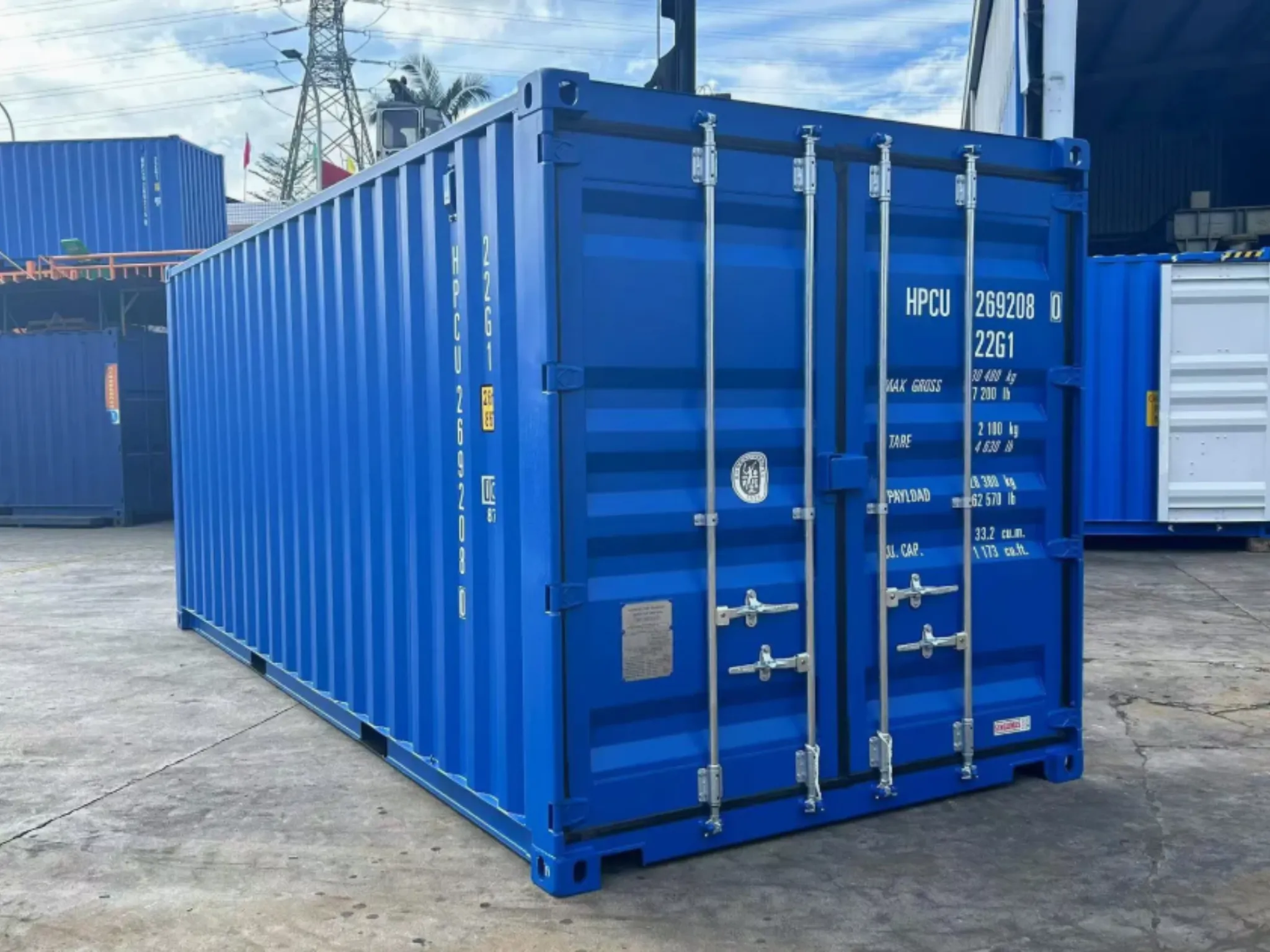
New containers have made one voyage from the manufacturer (usually in China) carrying goods to the UK. They arrive in near-perfect condition with minimal wear. Key advantages include a 5-year valid CSC plate, 10 ventilation points (reducing condensation risk), minimal corrosion, and the cleanest possible interior for sensitive goods. New units cost roughly twice a grade B used container but last significantly longer before requiring any maintenance. They are the right choice for customer-facing sites, conversion projects, and anyone storing moisture-sensitive goods such as documents, textiles, or electronics.
Used Containers
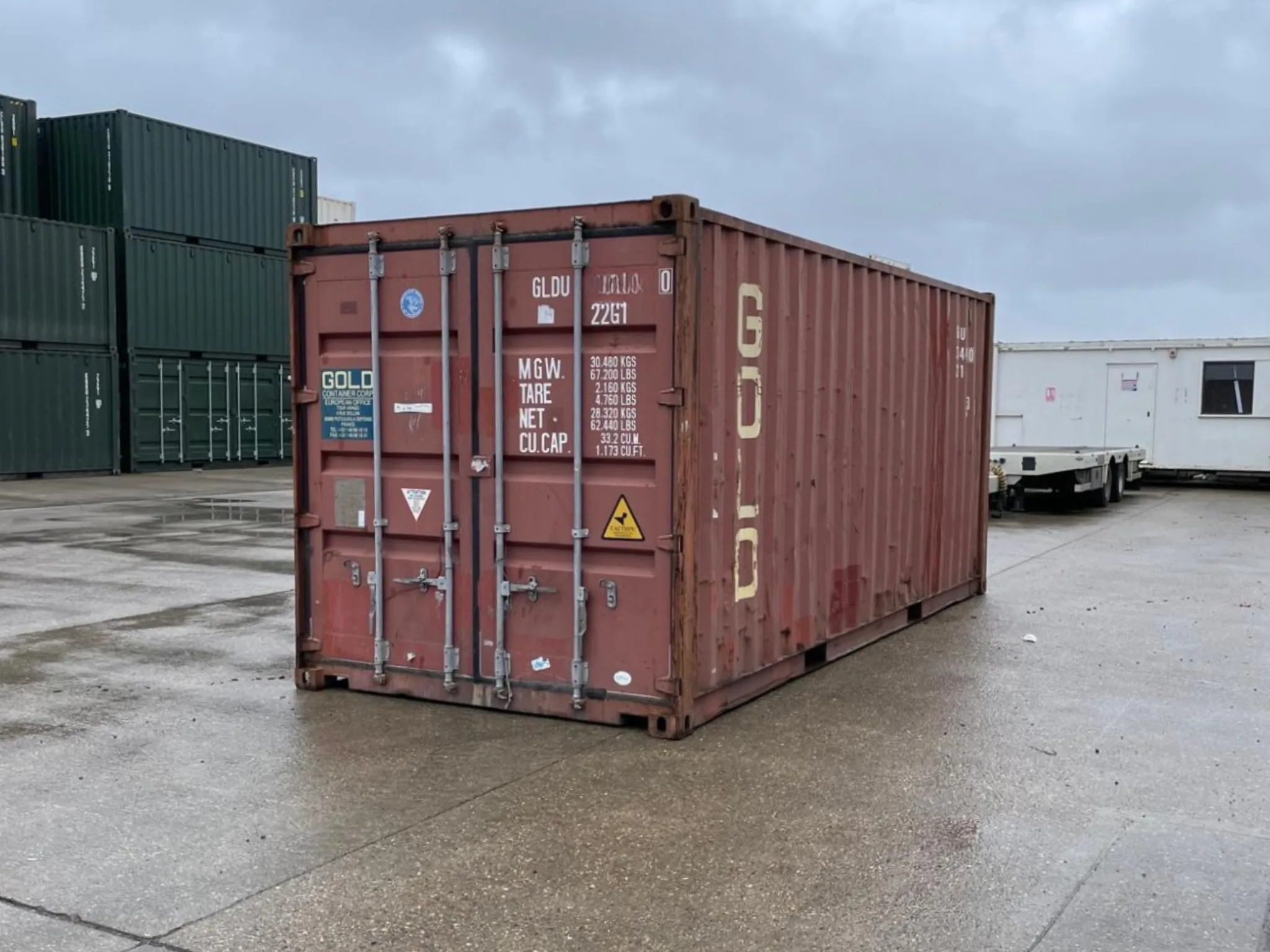
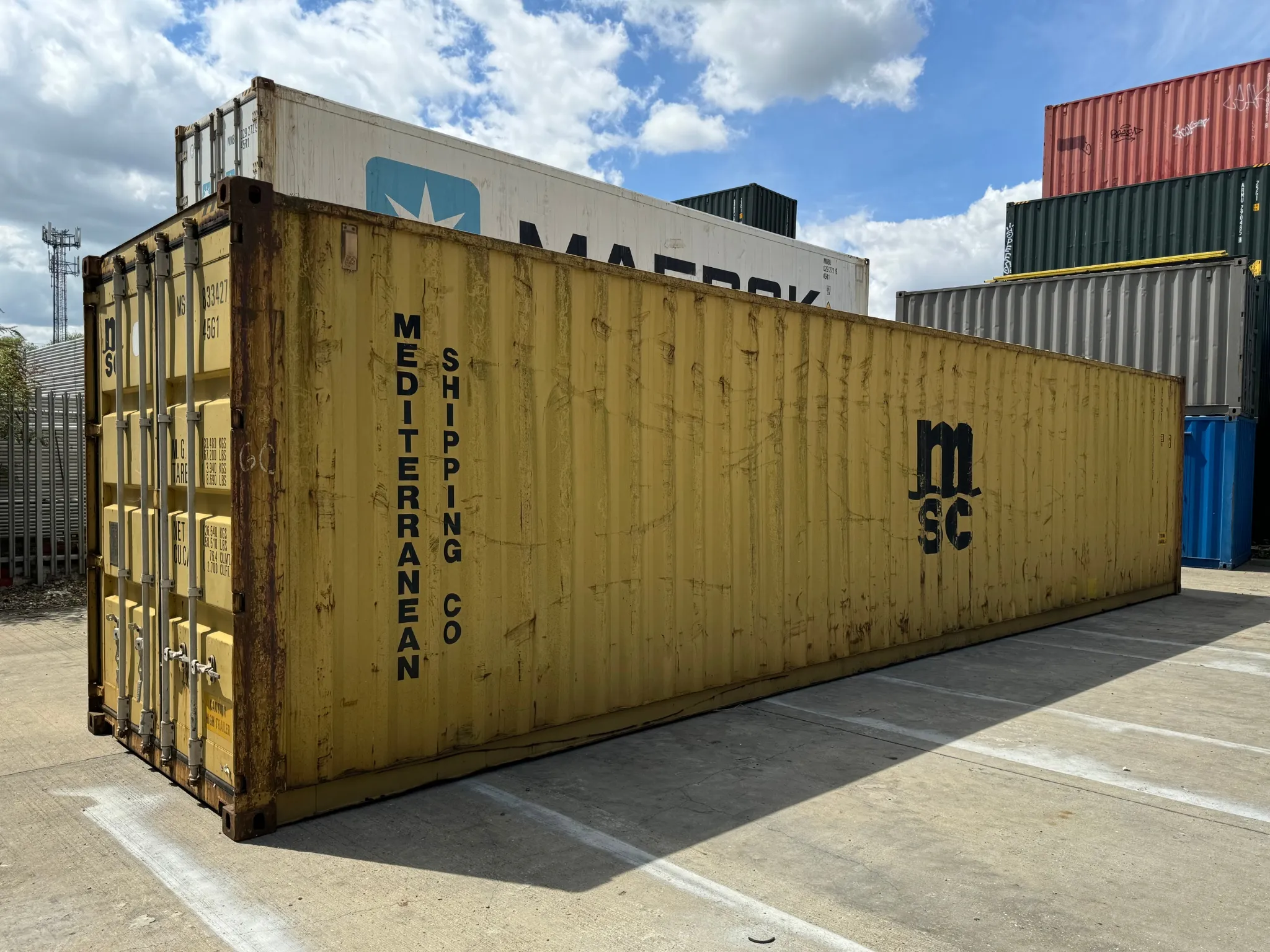
Used containers are ex-shipping line units that have completed multiple voyages. They arrive with cosmetic wear: surface rust, paint scuffs, minor dents. Reputable UK suppliers sell them as wind and watertight, which means the roof, floor, walls, and doors all keep water out under normal conditions. Used containers with a valid 12-month CSC plate can still be used for export. For general storage of tools, equipment, building materials, or non-sensitive goods, a used container at 40 to 60% of the price of new is excellent value.
| Factor | New One-Trip | Used (Grade B) |
|---|---|---|
| Condition | Near perfect, minimal wear | Surface rust, dents, cosmetic wear |
| CSC plate validity | 5 years | 12 months (renewable) |
| Ventilation points | 10 | 2 to 4 |
| Interior cleanliness | Clean, minimal odour | Variable – check before buying |
| Best for | Conversions, sensitive goods, customer sites | General storage, tools, materials |
| Relative cost (20ft) | From ~£1,895 + VAT | From ~£850 + VAT |
For a detailed breakdown of the pros, cons, and cost difference, read our guide on New vs Used Shipping Containers: Which Should You Buy?
Step 4 – Choose the Right Container Type
Beyond size and condition, the physical type of container determines what it can do. Standard dry containers are not always the right answer.
Standard Dry Van Containers
The most common container type. Sealed steel box with double swing doors at one end. Suitable for almost all general storage and cargo applications. Available in 10ft, 20ft, 40ft, and 40ft high cube. The correct default choice unless your use case specifically requires something else.
Refrigerated Containers (Reefers)
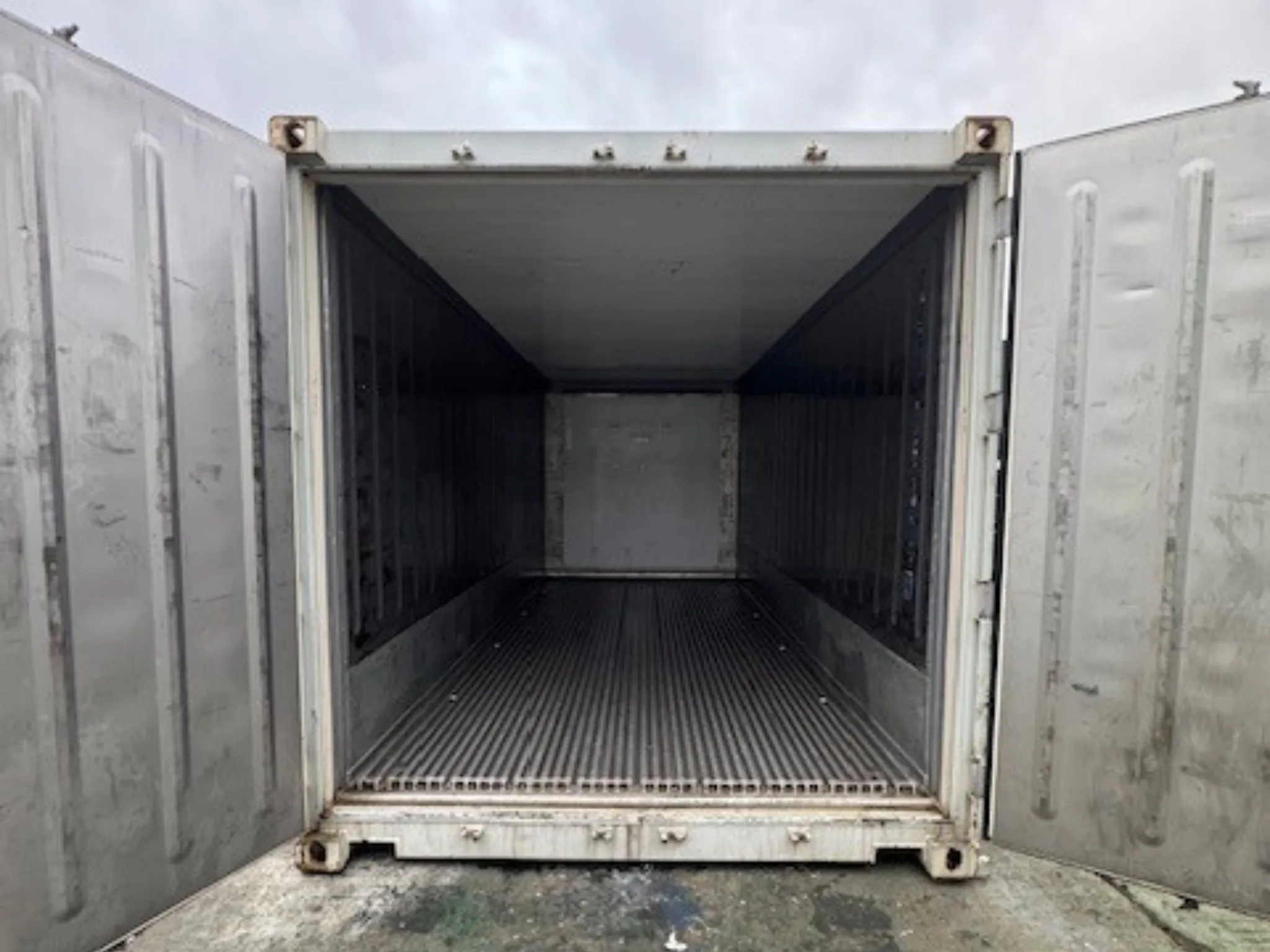
Reefers maintain controlled temperatures from approximately –25°C to +25°C using an integrated refrigeration unit. They require a dedicated three-phase 32A / 400V power supply. Necessary for food storage, pharmaceutical cold chain, drinks, cut flowers, and any goods where temperature variation risks spoilage or compliance breach. Significantly more expensive to purchase and run than standard units, but irreplaceable when the application demands it. See our refrigerated containers page for full specs and current pricing.
Side Opening Containers
Side opening containers have doors along the full length of one or both sides rather than just at the end. This allows forklift access from the side and makes loading wide or heavy items much easier. Popular for retail display, market traders, and site welfare setups where front-end access is not practical. Available as modified standard units or purpose-built.
Open Top and Flat Rack Containers
Open top containers have no roof, allowing overhead crane loading of tall or heavy cargo. Flat rack containers have no sides or roof, suitable for oversized machinery, vehicles, and structural sections. Both types are specialist shipping configurations rather than storage solutions. UK buyers needing these types are usually sourcing for specific freight applications.
Cut-Down and Modified Containers
Standard 20ft or 40ft containers cut to a custom length (6ft, 8ft, 10ft, 12ft, 14ft) to fit specific sites. Fully wind and watertight with lockbox security fittings. Important caveat: cut-down containers are not ISO-certified and should not be used for export or lifted when loaded. Ideal for domestic storage where a standard unit will not physically fit. Our container conversions team handles all bespoke sizing and modification work.
Step 5 – ISO Certification and the CSC Plate
If your container will ever be used for international cargo transport, ISO certification is non-negotiable. For domestic storage only, it is irrelevant. Understanding which category you fall into saves you paying for certification you do not need.
What Is the CSC Plate?
The CSC plate (Convention for Safe Containers) is a metal certification plate fixed near the container doors on every ISO-certified unit. It confirms the container has been tested and approved for stacking, lifting, and international freight transport to ISO 668 standards. The plate shows: the maximum gross weight, the date of manufacture, the date of the next inspection, and the approval authority.
When You Need It
Any container used for international cargo shipping must have a valid CSC plate at the time of loading. Used containers supplied with a 12-month CSC plate are fully legal for export use during that validity window. New one-trip containers carry a 5-year CSC plate. Once the plate expires, the container must be inspected and re-certified before it can be used for international freight again.
For domestic storage: a container with an expired CSC plate is perfectly legal to use. It simply cannot be loaded onto a ship for international transport. Most buyers using containers for on-site storage, workshops, or conversion projects have no use for CSC certification at all.
Step 6 – Assess Your Site and Delivery Requirements
A container that cannot be delivered to your site is worthless. Site access assessment is one of the most commonly overlooked steps, and getting it wrong results in a failed delivery, wasted call-out charges, and a container stranded at a depot.
Road and Access Requirements
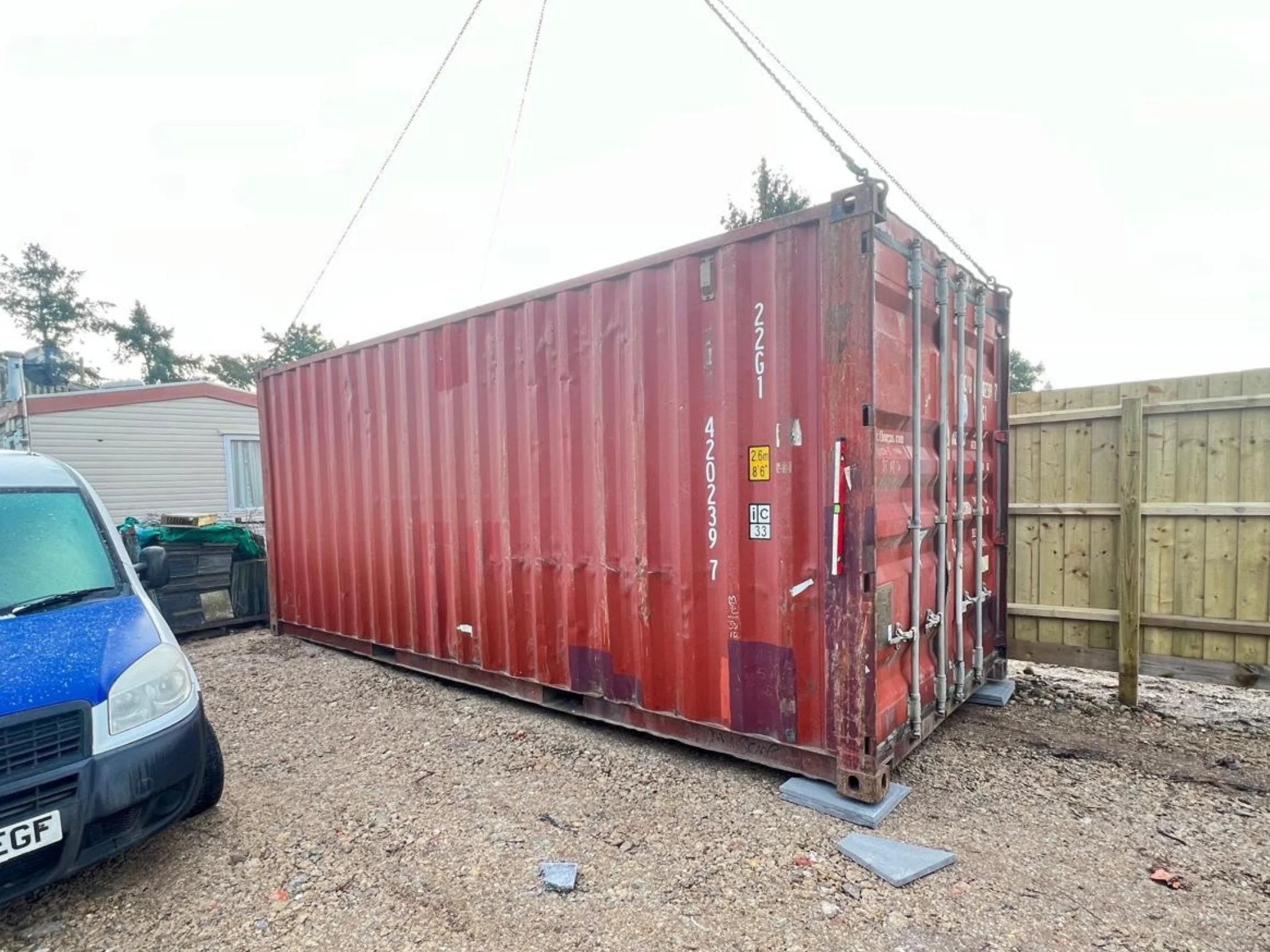
Container delivery in the UK uses either a HIAB crane lorry (which lifts the container into position) or a tilt-bed flatbed trailer (which slides it off the back). Each has different access requirements.
| Delivery Method | Vehicle Size | Clear Road Needed | Best For |
|---|---|---|---|
| HIAB crane lorry | 7.5 to 26 tonne | 15–25 m (depending on reach) | Tight spaces, garden delivery, over walls |
| Tilt-bed flatbed | 26 tonne artic | 25–30 m clear ahead | Open sites, industrial estates, farms |
What to Check Before Booking Delivery
- Road width approaching your site (minimum 3 metres clearance for the vehicle)
- Overhead obstacles: cables, branches, bridges (minimum 4.5 metres height clearance)
- Distance from the road to the final position (HIAB reach is typically 5 to 12 metres)
- Ground conditions at the drop point (concrete, hardstanding, or compacted ground is ideal; soft ground may require timber bearers)
- Turning circle for the delivery vehicle at or near your site
- Any access restrictions: weight limits on local roads or private bridges
If in doubt, photograph your access route and site and send it to your supplier before booking. Most problems are solvable with the right vehicle choice. For a full walkthrough of what to expect, read our guide on What Happens on Shipping Container Delivery Day?
Step 7 – Inspect Before You Buy (Used Containers)
For used containers, inspection before purchase or at point of delivery is essential. Even containers supplied as wind and watertight vary significantly in cosmetic condition and internal cleanliness. Knowing what to look for protects you from expensive surprises.
Key Inspection Points
- Roof: no holes, dents that pond water, or patch repairs over corrosion
- Floor: no soft spots, rotten sections, or areas where the ply has collapsed
- Corner posts: no major bends, cracks, or welded repairs that compromise stacking strength
- Door seals: rubber in good condition, doors close squarely without forcing
- Interior: no light visible through walls or roof, no strong chemical or fuel odour
- CSC plate: present and legible (check inspection date if export use is planned)
For a full checklist with photos and guidance on what is acceptable versus what to reject, read our guide on How to Inspect a Used Shipping Container Before Buying.
Step 8 – Container Conversions and Modifications
If you are buying a container to convert into a workspace, office, welfare unit, or specialist installation, the choice of base container matters significantly more than it does for simple storage.
Why New One-Trip Units Are Usually Better for Conversions
A conversion project involves cutting into the steel structure to fit windows, doors, electrics, and insulation. Starting with a structurally sound, corrosion-free unit reduces labour time and ensures the finished structure has maximum longevity. The extra upfront cost of a new one-trip unit over a good-grade used container is usually small relative to the total conversion budget, and the result is substantially better.
What Can Be Done to a Container
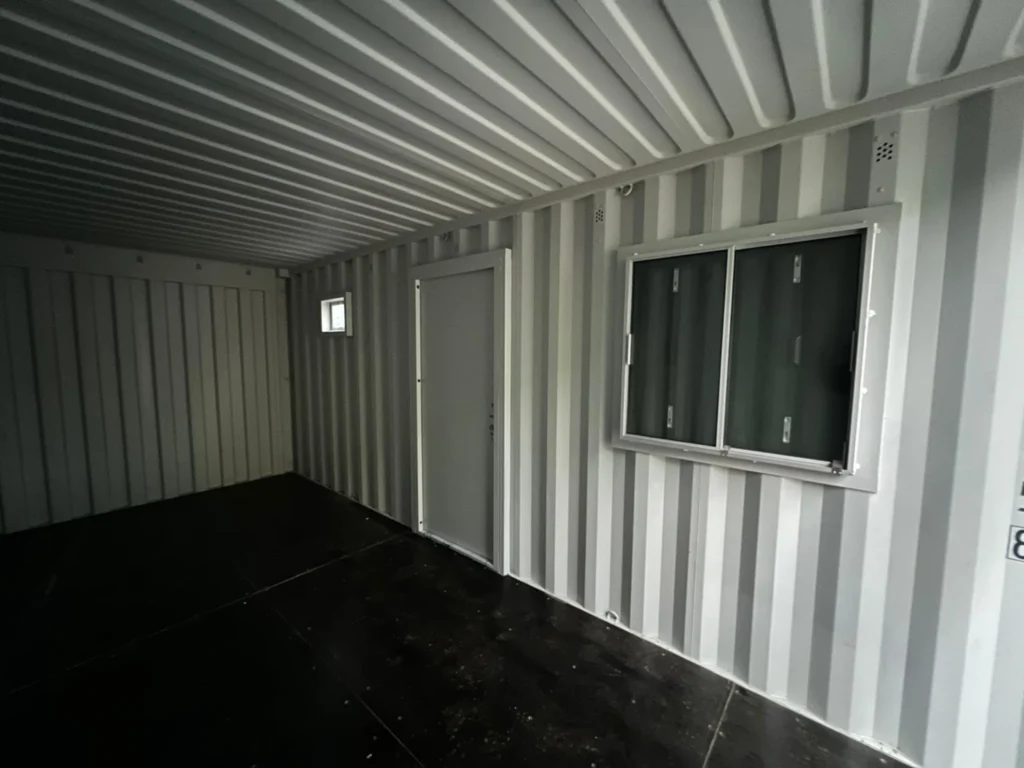
Standard modifications include: personnel doors and roller shutters, windows (steel-framed, double-glazed or polycarbonate), spray foam or rigid board insulation, internal plywood or steel cladding, electrical supply and lighting, ventilation and HVAC, partition walls and mezzanine floors, anti-condensation coatings, and custom paint in any RAL colour. For a full overview of what UK container conversions involve and cost, see our guide on Shipping Container Conversions UK: Ideas, Types and Planning.
Step 9 – Ventilation and Condensation
Condensation inside a steel container is one of the most common complaints from first-time buyers who chose without understanding ventilation. Steel is a thermal bridge: when the temperature inside the container drops below the dew point of the humid air inside, moisture condenses on the walls, roof, and contents. This is particularly common in autumn and winter in the UK.
How to Manage Condensation Risk
- Choose new one-trip containers for sensitive goods: 10 vents vs 2–4 on used units means significantly better air exchange and lower condensation risk
- Use desiccant packs inside the container to absorb moisture during low-use periods
- Raise goods off the floor on pallets or racking to allow air circulation
- Leave gaps between stored items and walls wherever possible
- Add an anti-condensation lining to the roof and walls if the container is used for high-value or moisture-sensitive goods
- Install spray foam insulation if converting: this eliminates the steel thermal bridge entirely and solves condensation permanently
For general tools, building materials, and equipment, condensation is manageable with basic precautions. For documents, electronics, fabrics, and food products, a new one-trip container or an insulated unit is the correct specification.
Step 10 – Understand the Full Cost
The purchase price is only one element of the total cost of acquiring and placing a container. UK buyers often underestimate the full picture.
Typical Costs for UK Buyers (2026)
| Cost Element | Typical Range | Notes |
|---|---|---|
| 20ft used container | From £850 + VAT | Wind and watertight grade |
| 20ft new one-trip | From £1,895 + VAT | Near-perfect condition, 5-yr CSC |
| 40ft used container | From £1,350 + VAT | High cube or standard |
| Delivery | £150 – £500+ | Varies by distance and access difficulty |
| Timber bearers / groundworks | £50 – £300 | Required on soft or uneven ground |
| Lockbox or padlock bar | £50 – £150 | Often included by quality suppliers |
Always ask your supplier whether delivery is included in the quoted price, and confirm the delivery method. Some suppliers quote ex-depot prices that look competitive until delivery cost is added.
Step 11 – Choosing a Reliable UK Container Supplier
The container market in the UK has a wide variation in quality between suppliers. Price comparison sites list containers from depot traders, brokers, and direct stock holders, and the difference in service quality is significant.
What to Look for in a UK Container Supplier
- Wind and watertight guarantee in writing, not just implied
- Own stock rather than brokering from other depots (faster delivery, more accurate condition information)
- Transparent pricing with delivery costs stated upfront
- Condition photos of the actual unit before purchase
- Clear delivery process including access requirements and arrival window
- After-sales contact if an issue arises on delivery day
Bosh Boxes holds its own stock across multiple UK depots, provides condition information and photos on request, guarantees all units wind and watertight, and offers delivery across the UK including challenging access sites. View available units on our 20ft containers and 40ft containers pages.
Frequently Asked Questions
What is the most important factor when choosing a shipping container?
Use case. Before size, condition, or price, you need to know exactly what the container will be used for. Storage, export, temperature control, and conversion all require different specifications, and starting with the wrong type wastes money regardless of how good the price was.
Is a 20ft or 40ft container better for on-site storage?
For most businesses and domestic buyers, a 20ft container offers the best balance of space and site flexibility. It is easier to deliver, fits more sites, and is easier to relocate. A 40ft container makes more sense when you need double the floor space continuously, or when you are planning a conversion where internal length is a requirement.
Do I need ISO certification for a storage container?
No. ISO certification (the CSC plate) is only required for containers being used in international cargo transport. For domestic storage, the certification status of the container makes no practical difference to its suitability.
How do I know if a used container is wind and watertight?
A reputable supplier guarantees this in writing before sale. On delivery, inspect the interior for light coming through walls, roof, or door seals. Check the floor for soft spots or rot. If any doubt exists, ask the supplier for a condition report or photos of the specific unit prior to dispatch.
Can a shipping container be delivered to a residential address?
Yes, in most cases. The key requirement is road access for the delivery lorry – typically 3 metres of clear width and 4.5 metres of overhead clearance. A HIAB crane lorry can place a container over walls and fences if direct access is limited. Contact your supplier with site photos and they can confirm the most suitable delivery method.
What container is best for a conversion project?
New one-trip containers are strongly preferred for conversions. The frame and floor are in the best possible condition, there is no existing corrosion to work around, and the finished structure will have maximum longevity. The difference in upfront cost between a new and a grade B used container is small relative to a typical conversion budget.
How long does a shipping container last?
A well-maintained standard steel container has a working lifespan of 25 to 30 years in marine service and longer in land-based storage use. In a static UK storage application, a used container in good condition at time of purchase will typically last 15 to 20 or more years before any structural maintenance is needed.
What is the difference between a storage container and a shipping container?
In the UK market, the terms are used interchangeably. Both refer to ISO-standard steel boxes. The distinction that sometimes matters is whether the unit has a valid CSC plate (required for shipping) or is sold purely for storage (where plate validity is irrelevant). Structurally and functionally, they are the same unit.
Can I buy a container without delivery?
Yes. Buyers with their own transport, a forklift, and appropriate lifting equipment can collect from the supplier’s depot. However, most UK buyers find that supplier-arranged delivery using a HIAB lorry is the most practical and cost-effective option, as specialist equipment is already available and the supplier understands exactly how to place the unit safely.
Bottom Line: How to Choose the Right Shipping Container
Choosing the right shipping container comes down to five decisions made in order: define your use case, choose the right size, decide on new or used condition, confirm the container type, and verify your site can accept delivery. Work through these in sequence and the correct container usually selects itself.
For most UK storage applications, a 20ft used container in wind and watertight condition is the right starting point. For conversions and sensitive goods, new one-trip units are worth the additional cost. For temperature-sensitive applications, a reefer with the correct power supply is the only option that works.
Bosh Boxes supplies new and used containers across all sizes, including reefers and custom units, with delivery available UK-wide. For a fast, no-obligation quote, contact us today and experience The Bosh Boxes Way.