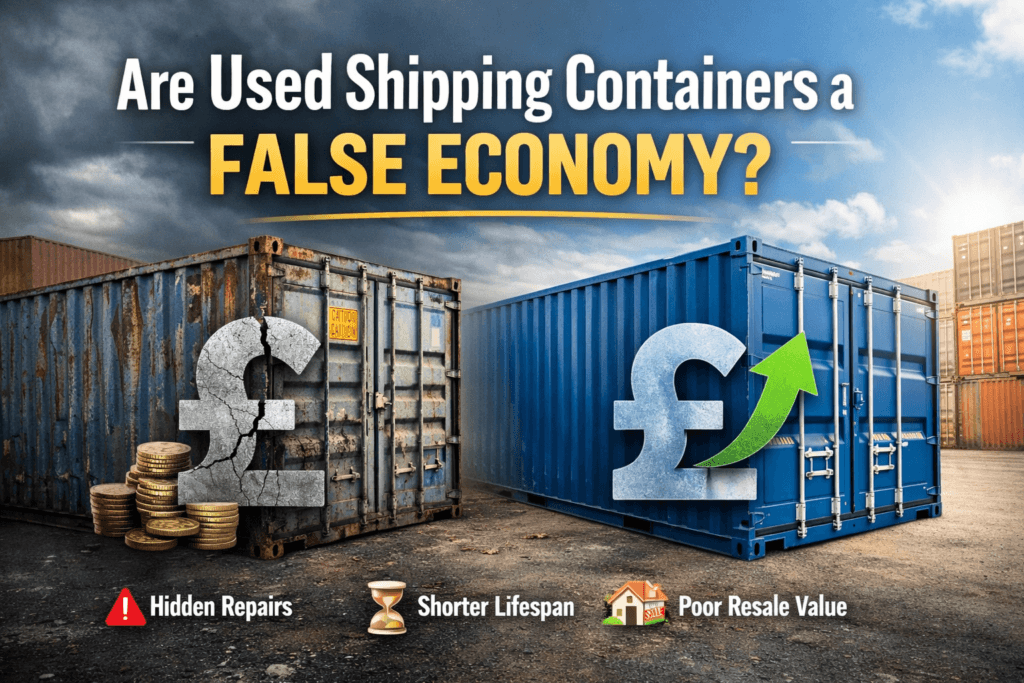
Used shipping containers are not automatically a false economy, but buying purely on price can lead to higher long-term costs. Repairs, reduced lifespan, structural wear, and resale limitations can outweigh the initial saving. The key is comparing total cost over time rather than upfront price alone.
Introduction
Used shipping containers are one of the most common purchases in the UK storage market. They are widely used for secure storage, workshops, container offices, and conversions. The appeal is obvious — lower upfront cost compared to new units.
But are used shipping containers actually cheaper in the long run?
For some buyers, they represent excellent value. For others, especially where lifespan and reliability matter, they can become a false economy.
This guide breaks down when used containers make financial sense — and when they don’t.
Why Used Shipping Containers Are Cheaper
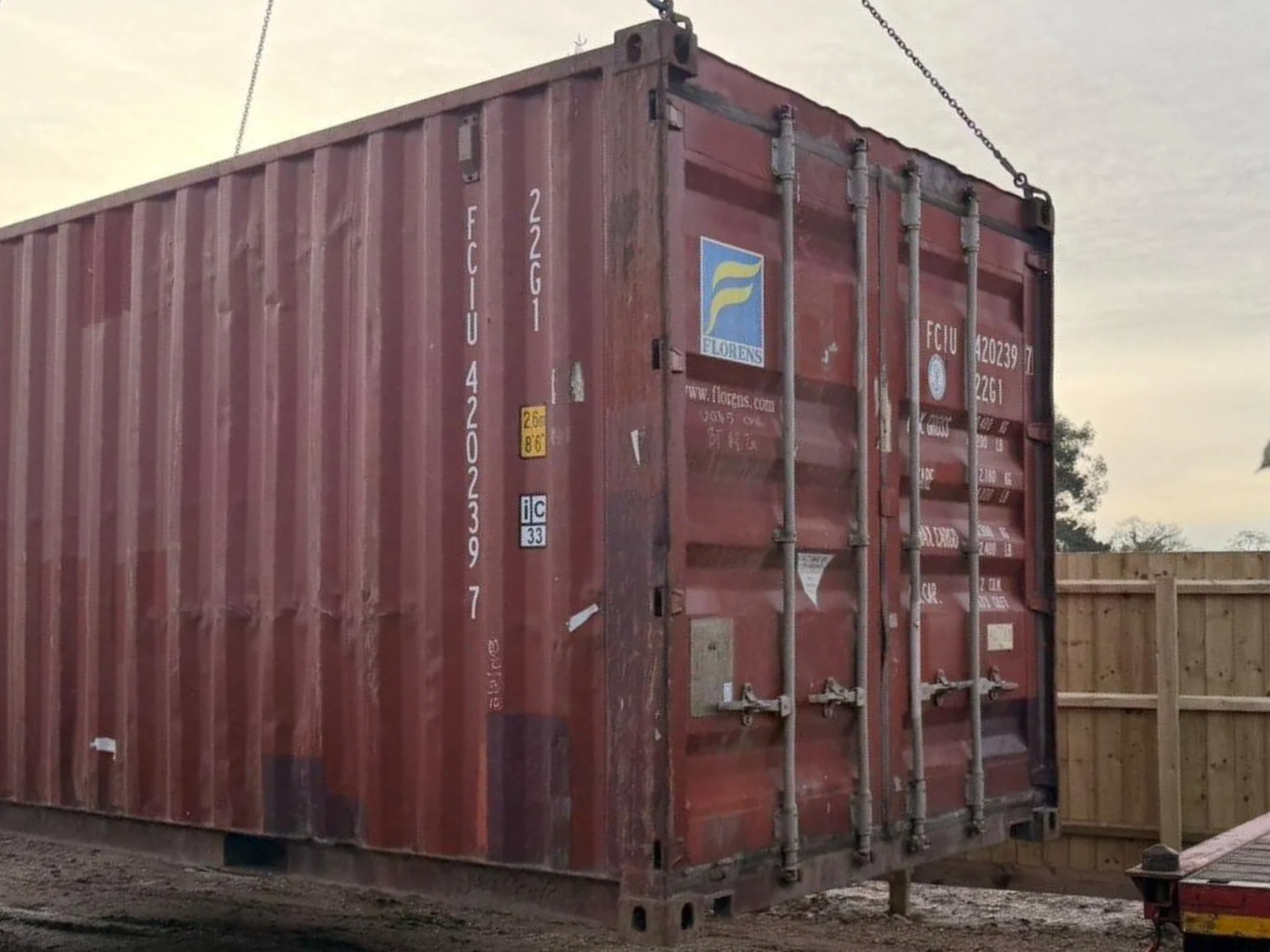
Used containers are typically 10 to 18 years old and have already completed multiple shipping cycles. Their price reflects:
- Age and prior usage
- Cosmetic wear
- Reduced remaining lifespan
- Possible minor repairs
Most used units sold in the UK are marketed as wind and watertight, meaning they are structurally sound for storage but not in new condition.
The lower purchase price is the main attraction — but it should not be the only consideration.

When Used Shipping Containers Offer Genuine Value
Used shipping containers are not automatically a bad decision. They often work well when:
- Storage is temporary
- Contents are not high value
- Appearance is not important
- Budget is limited
- Minor cosmetic wear is acceptable
For tool storage, farm use, or site equipment, a used container can provide secure storage at a competitive price.
In these cases, they are not a false economy.
When Used Shipping Containers Become a False Economy
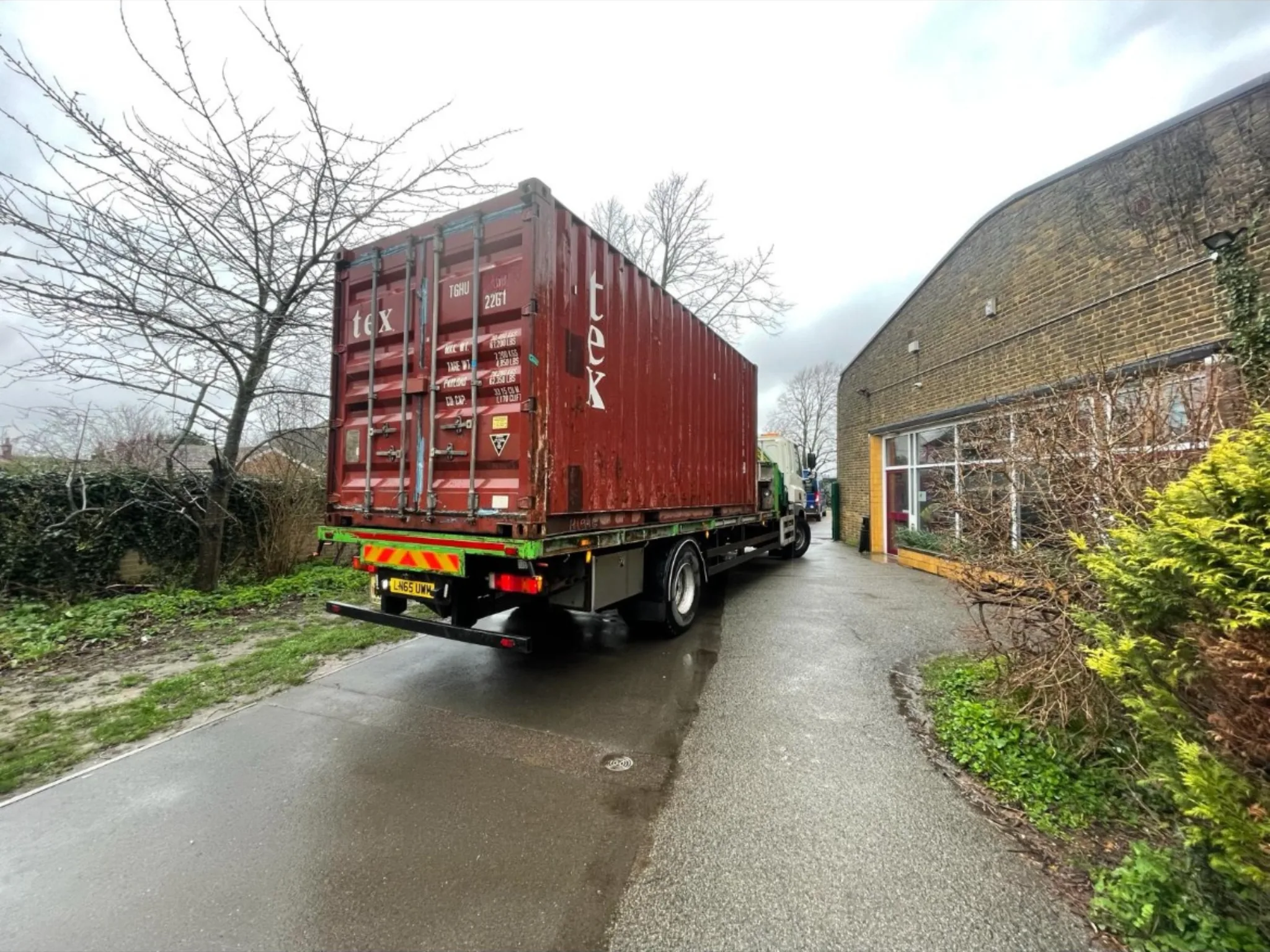
The problem arises when buyers choose used containers for applications that demand long-term durability or presentation.
Shorter Remaining Lifespan
A used container has already lived a significant portion of its service life. While many remain structurally sound for years, corrosion will naturally progress over time.
If you plan to use the container for 15 to 20 years, the lifespan gap between new and used becomes significant.
Replacing a cheaper unit after 7 to 10 years may cost more than buying new once.
Repair and Maintenance Costs
Used containers may require:
- Roof patch repairs
- Floor replacement
- Door realignment
- Rust treatment and repainting
Stiff doors are common even on mid-grade used containers, not just low-end stock. However, excessive force, warped frames, or locking issues can signal structural stress.
Small repair costs add up. If welding or major rust treatment is needed, savings disappear quickly.
For example, if a used container requires £800–£1,500 in roof repairs, floor replacement, and rust treatment within the first five years, the original saving over a new container may be eliminated entirely.
Conversion Limitations
If you intend to create:
- A container office
- A workshop
- A garden room
- A retail unit
Starting with a heavily worn used container may increase conversion costs.
Cutting into panels with corrosion weakens structure further. A one-trip container often provides a better base for modifications and can reduce fabrication complications.
Presentation and Resale Value
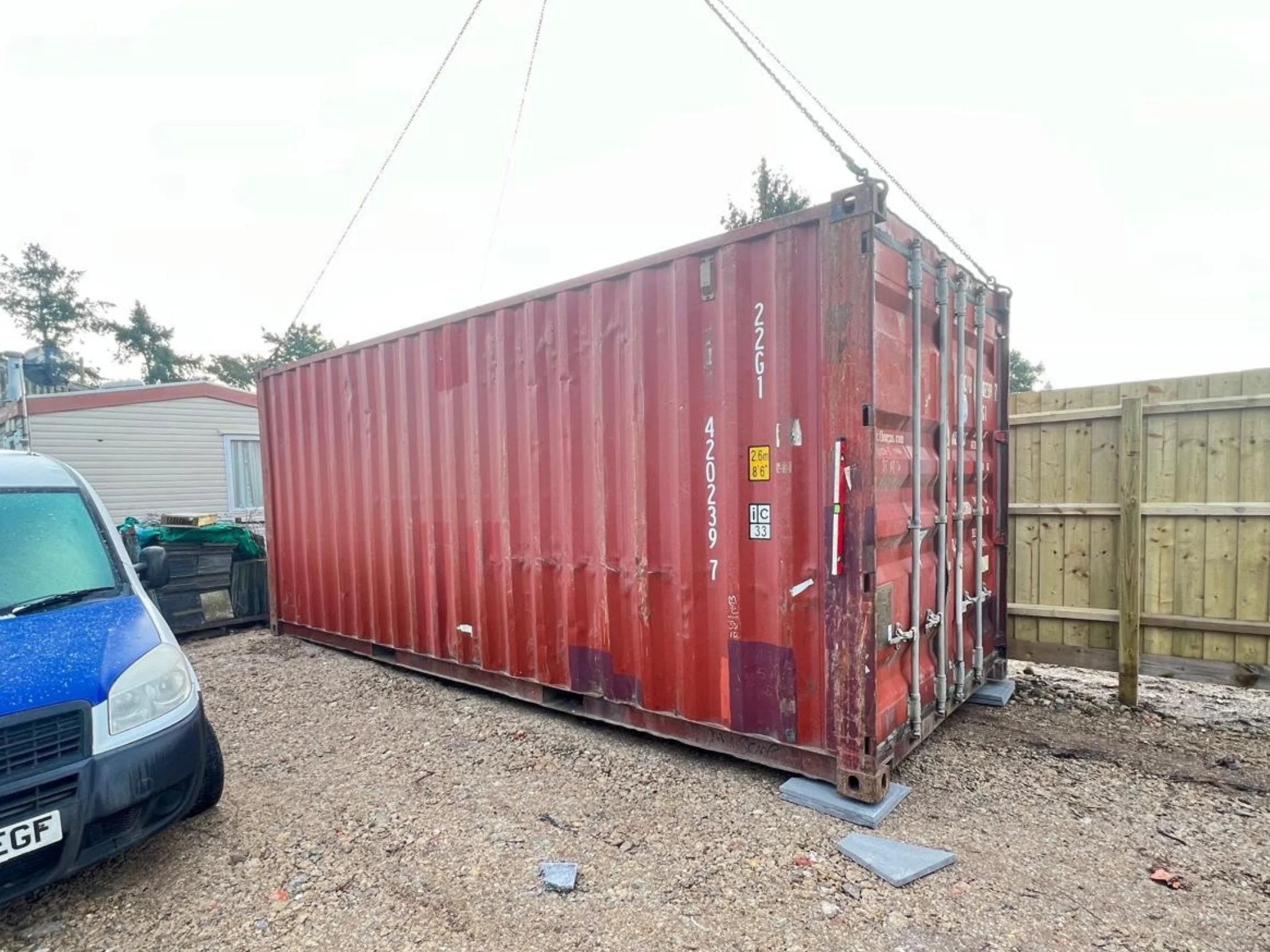
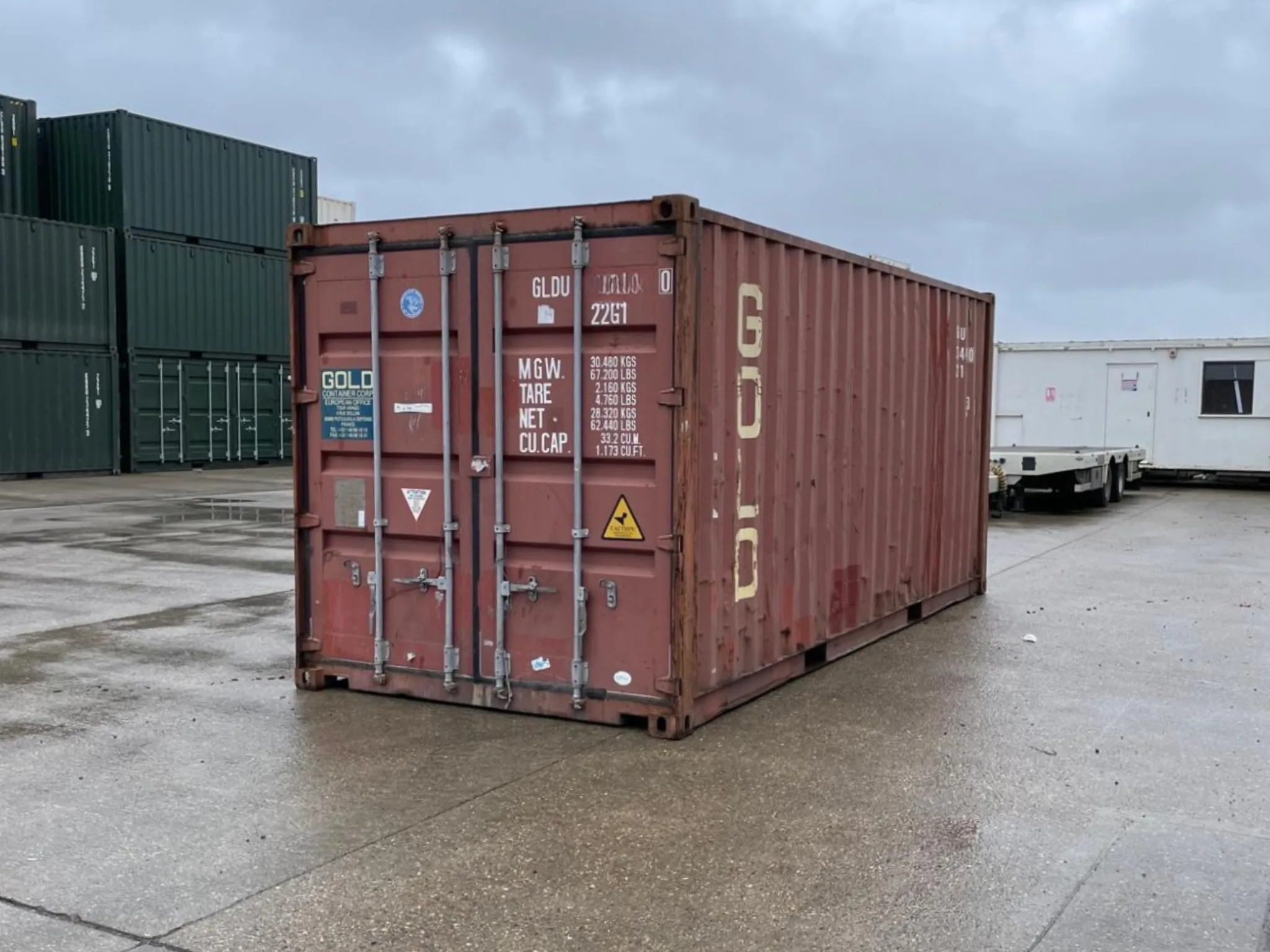
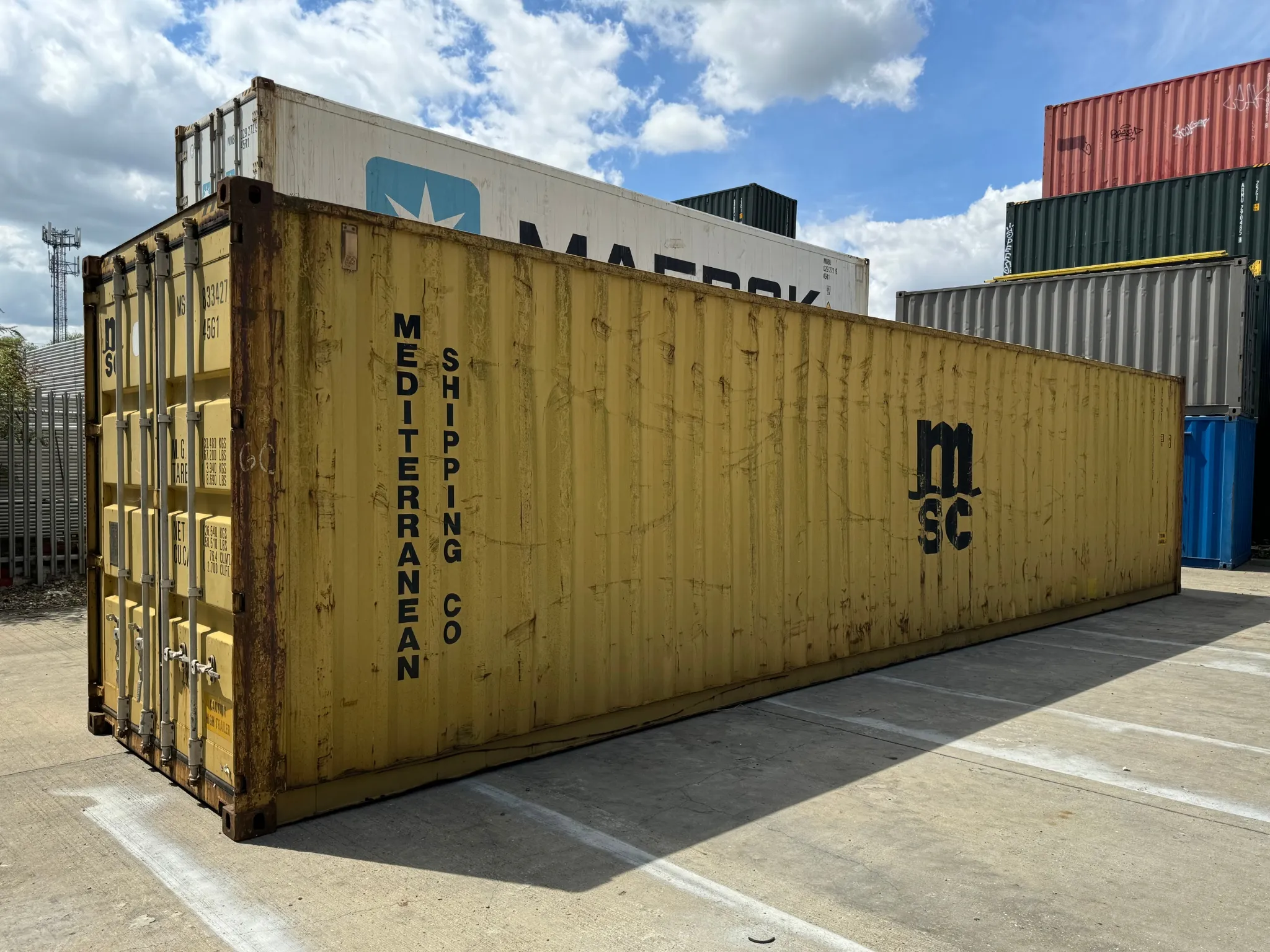
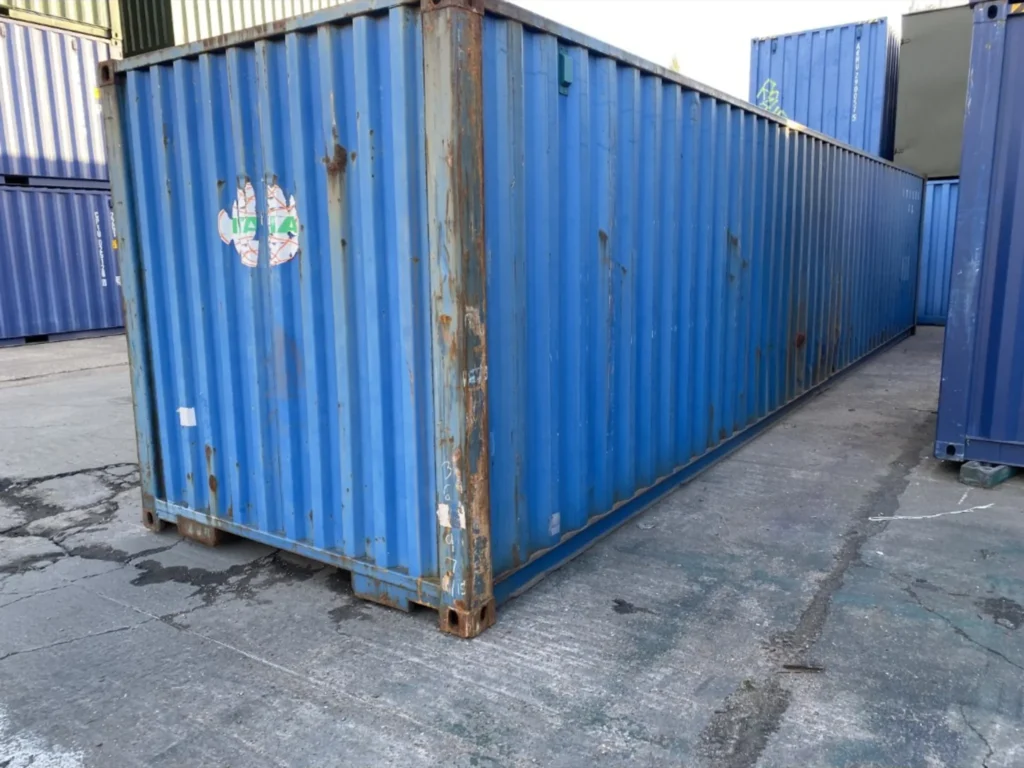
Used containers usually have dents, faded paint, and visible wear.
For commercial premises or public-facing sites, appearance matters.
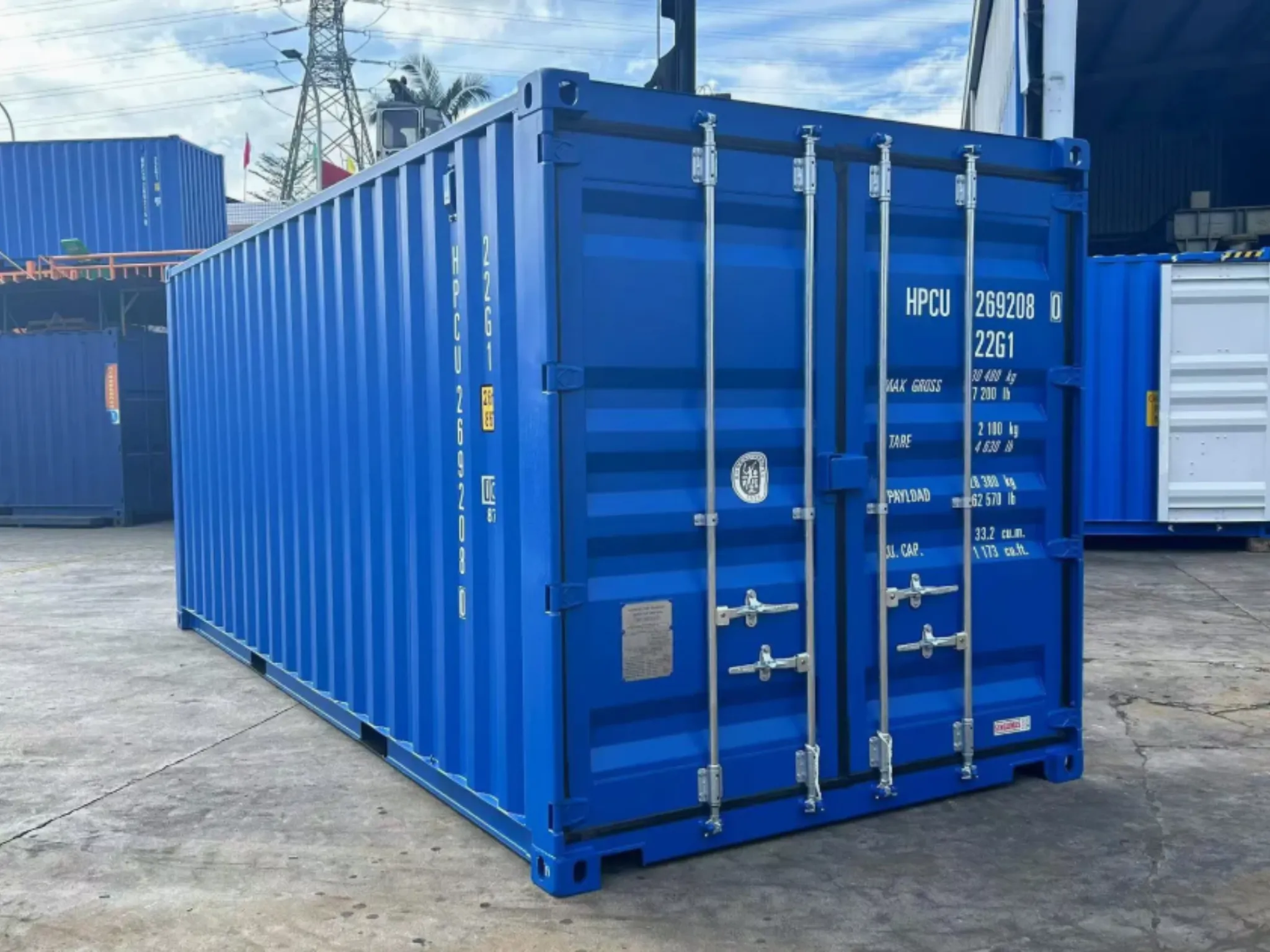
New or one-trip containers retain:
- Stronger resale value
- Cleaner external finish
- Better door operation
- Longer lifespan
The difference becomes clear when reselling after several years.
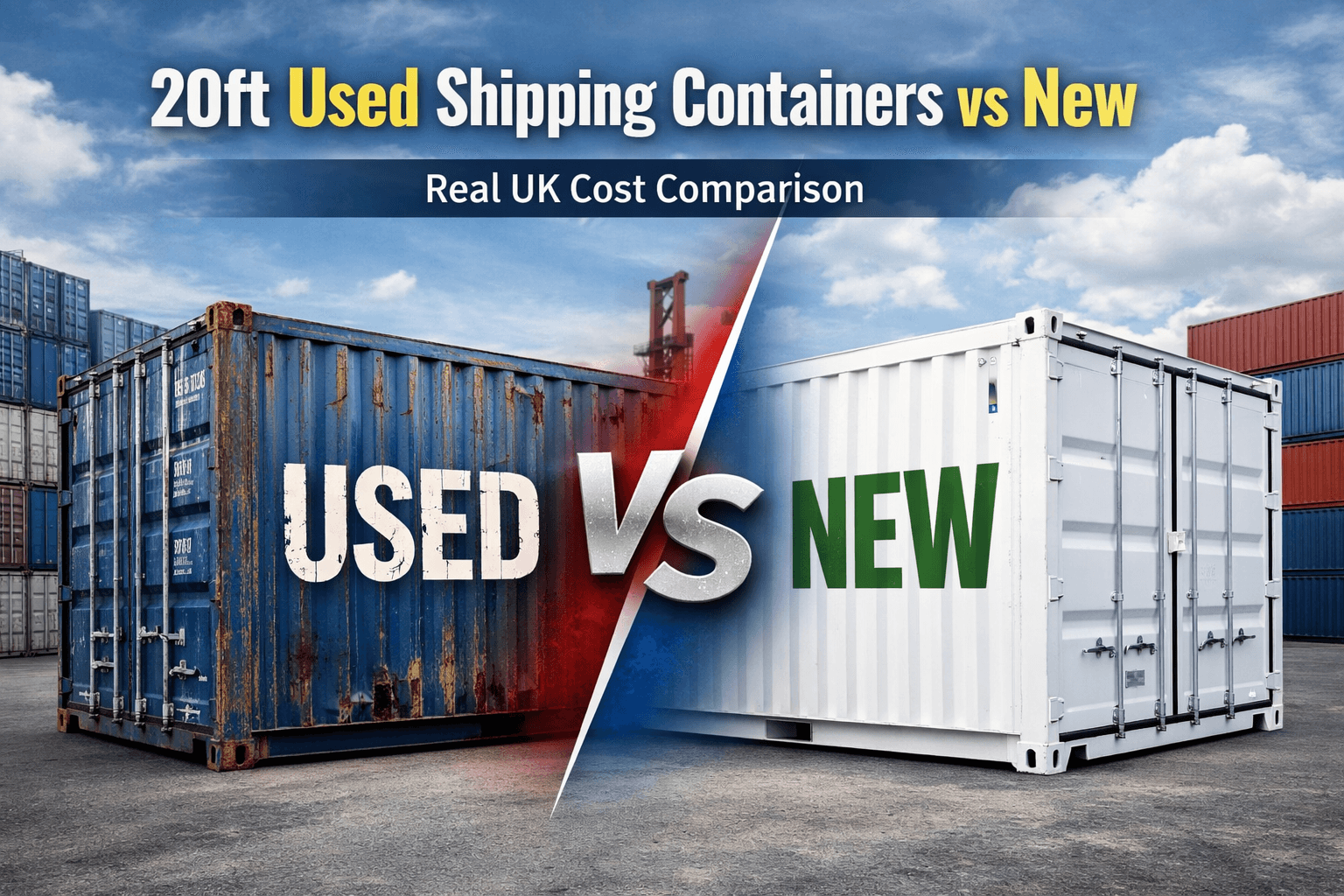
Used vs New Shipping Containers UK
The table below compares used shipping containers with new or one trip containers in the UK market, focusing on upfront cost, lifespan, maintenance requirements, resale value, and long-term financial impact.
| Factor | Used Container | New / One Trip Container |
|---|---|---|
| Upfront Cost | Lower | Higher |
| Lifespan | Moderate | Long |
| Maintenance | Higher | Minimal |
| Appearance | Worn | Clean |
| Resale Value | Lower | Higher |
For buyers comparing used vs new shipping containers in the UK, the decision usually comes down to projected lifespan and long-term reliability rather than upfront cost alone.
The true question is not “Which is cheaper?”
It is “Which costs less over the period I intend to use it?”
Market Conditions and Price Fluctuations
Shipping container prices in the UK are influenced by:
- Global shipping demand
- Port stock levels
- Fuel and haulage costs
- Seasonal buying patterns
When market supply is high, prices may temporarily fall across both new and used stock.
However, extremely low prices often reflect condition issues rather than market movement. A significant gap between a seller and the average UK price should always be questioned.
Situations Where Used Shipping Containers Make Sense
Used containers are typically good value when:
- Budget is tight
- Storage need is short-term
- Contents are non-sensitive
- Cosmetic damage is irrelevant
- You are prepared for light maintenance
In these cases, they are cost-effective and practical.
Situations Where New Shipping Containers Offer Better Long-Term Value
New or one-trip containers are usually better when:
- Storing valuable stock
- Long-term use is planned
- Conversion work is required
- Appearance matters
- You want minimal maintenance
Although more expensive upfront, they often provide lower total cost over time.
Total Cost vs Purchase Price
The real comparison is not purchase price alone. It is total cost over the period you plan to use the container. When lifespan, maintenance, resale value, and conversion suitability are factored in, the cheapest option is not always the most economical.
FAQs
How long does a used shipping container last in the UK?
A well-maintained used shipping container can last 7 to 15 years depending on condition, environment, and maintenance. Coastal exposure and heavy use can shorten lifespan.
Are used shipping containers cheaper in the long run?
Used containers are cheaper upfront, but repair costs, shorter lifespan, and lower resale value can reduce long-term savings. Buyers should calculate total cost over time.
So, Are Used Shipping Containers a False Economy?
Not always.
Used shipping containers can be excellent value for the right application. But buying purely on price without considering lifespan, repairs, and future plans can turn a cheap purchase into an expensive mistake.
The key is understanding your intended use and calculating total cost, not just purchase price.