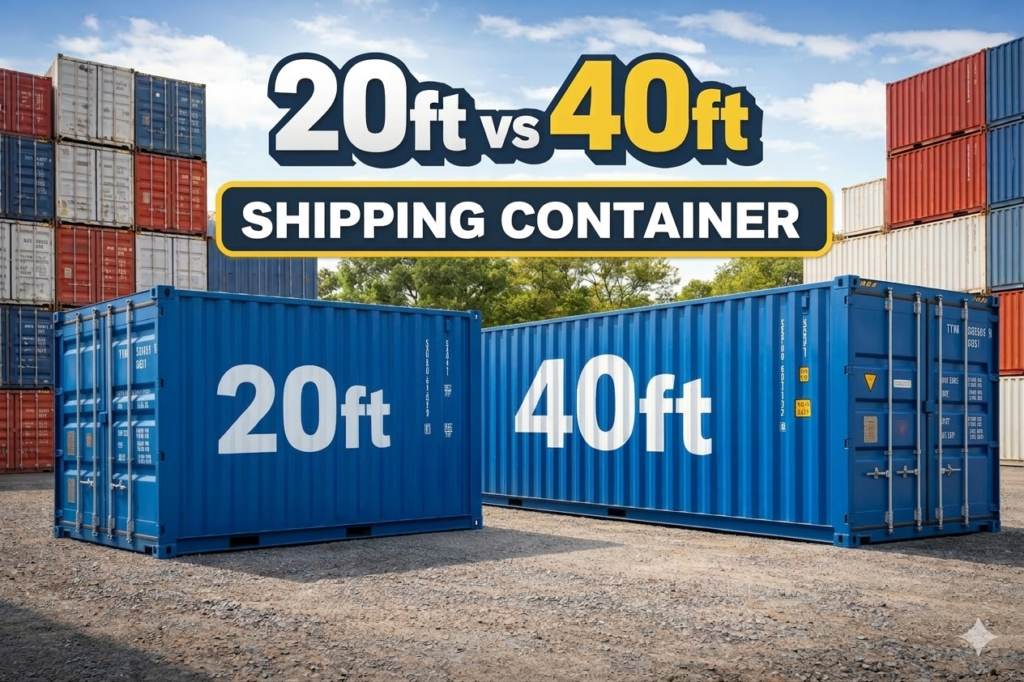
A 20ft vs 40ft shipping container comparison helps buyers decide which container size suits their storage needs, site space, and budget. A 20ft shipping container offers compact, flexible storage for most projects, while a 40ft shipping container provides double the capacity for commercial stock or bulk storage.
Businesses comparing container sizes often look at both 20ft shipping containers and 40ft shipping containers to determine which option provides the best balance of storage capacity and site access.
Choosing the right container size avoids wasted space, delivery issues, and unnecessary costs.
Quick Comparison: 20ft vs 40ft Shipping Container
The table below provides a simple side-by-side comparison of the most important differences between a 20ft shipping container and a 40ft shipping container, including size, capacity, and typical use cases. This quick overview helps buyers understand which container size is more suitable before looking at detailed specifications.
| Feature | 20ft Container | 40ft Container |
|---|---|---|
| Length | 20ft | 40ft |
| Internal Volume | ~33m³ | ~67m³ |
| Pallet Capacity | 9–10 standard pallets | 20–21 standard pallets |
| Best For | Small to medium storage | Bulk commercial storage |
| Delivery Access | Easier to deliver on smaller sites | Requires more placement space |
A 40ft container provides roughly double the internal storage capacity, but the additional length means site access and delivery space should be considered before choosing.
What Is the Difference Between a 20ft and 40ft Shipping Container?
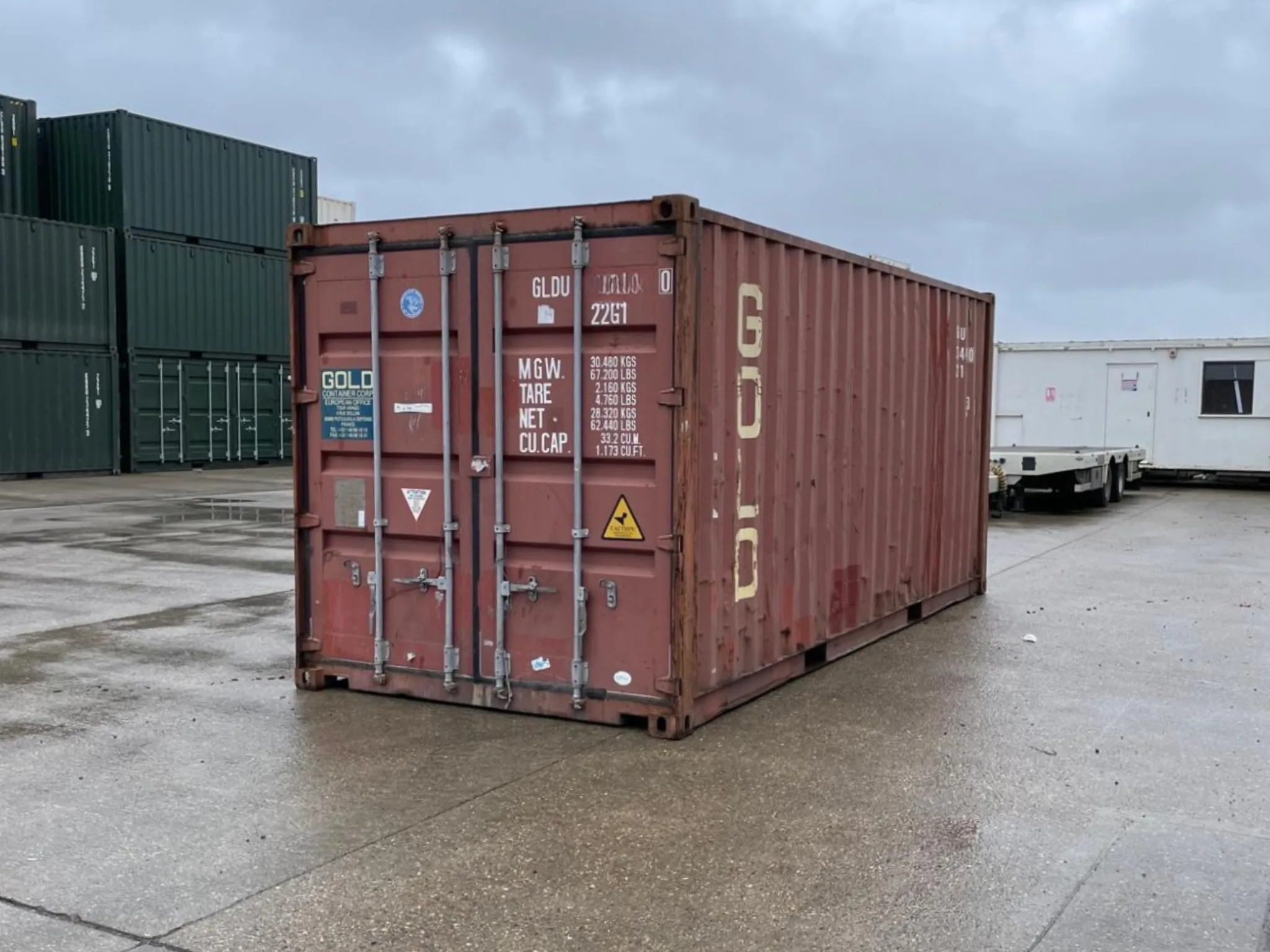
The main difference between a 20ft and 40ft shipping container is internal capacity and physical footprint.
Both containers follow ISO shipping standards, meaning they share the same width and construction but differ in length and overall storage volume.
Standard ISO container dimensions ensure 20ft shipping containers and 40ft shipping containers can be transported, stacked, and handled using the same global logistics equipment.
External Dimensions
| Container Size | Length | Width | Height |
|---|---|---|---|
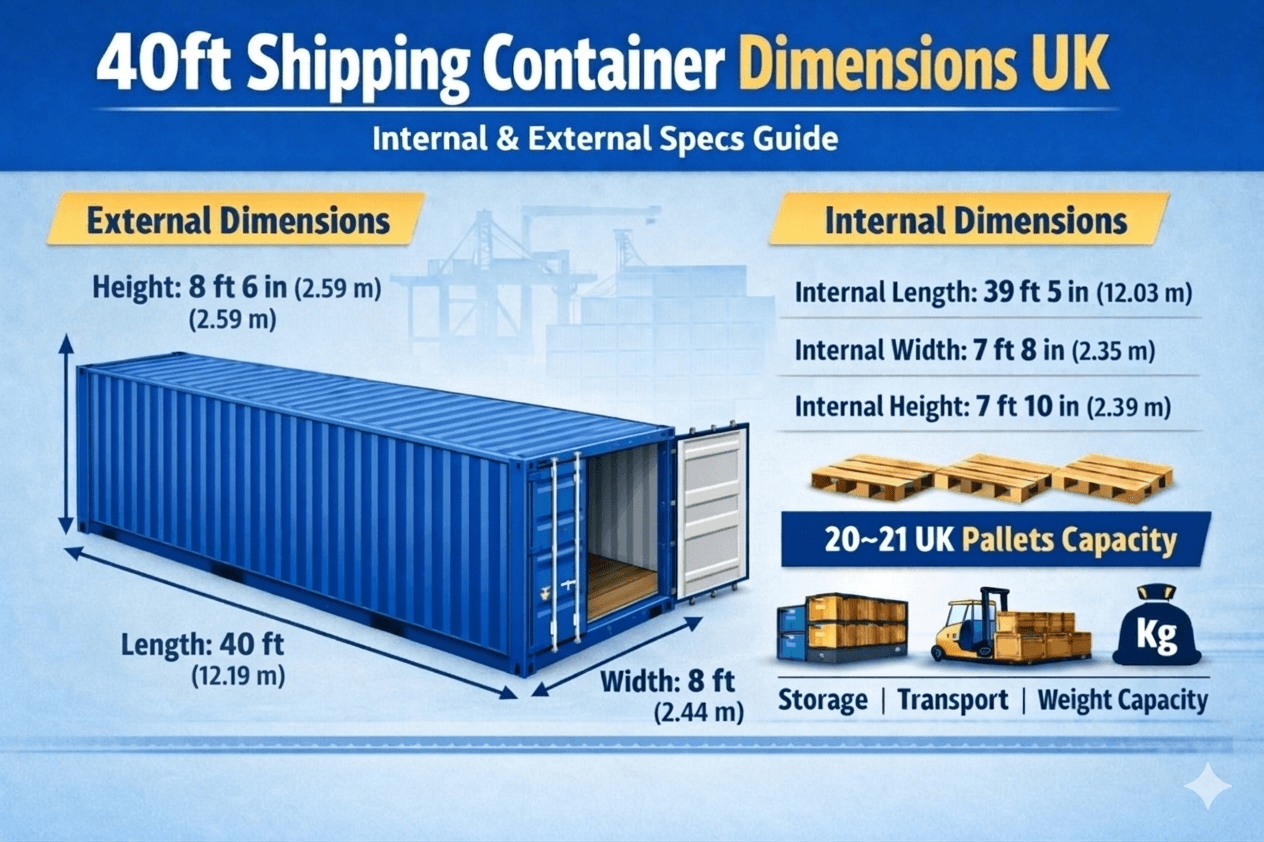
| 20ft Container | 20ft (6.06m) | 8ft (2.44m) | 8ft 6in (2.59m) |
| 40ft Container | 40ft (12.19m) | 8ft (2.44m) | 8ft 6in (2.59m) |
Internal Dimensions
| Container Size | Internal Length | Internal Width | Internal Height |
|---|---|---|---|
| 20ft Container | 19ft 4in (5.90m) | 7ft 8in (2.35m) | 7ft 10in (2.39m) |
| 40ft Container | 39ft 5in (12.03m) | 7ft 8in (2.35m) | 7ft 10in (2.39m) |
A 40ft container simply doubles the length of a 20ft unit, which significantly increases storage capacity.
For a full specification breakdown, see our detailed guides on 20ft shipping container dimensions and 40ft shipping container dimensions.
These guides explain the exact internal measurements, door openings, and usable space inside each unit.
Shipping Container Sizes Explained
Shipping containers are manufactured in several standard ISO sizes, but the most commonly used units in the UK are 20ft shipping containers and 40ft shipping containers.
These containers share the same width and height but differ in length and total storage capacity. Because they follow international ISO standards, both sizes can be transported by container ships, road haulage, rail freight, and lifted using standard container handling equipment.
For most buyers, choosing between a 20ft container and a 40ft container is simply a matter of selecting the storage capacity that best suits the available space and intended use.
Why Container Size Matters
Choosing the wrong container size can create practical problems during both delivery and daily use.
The correct container size helps solve several key issues:
• Avoids paying for unused storage space
• Prevents site access problems during delivery
• Ensures goods fit without stacking or damage
• Improves organisation for tools, equipment, or stock
• Allows efficient pallet storage for commercial users
Many UK buyers initially assume bigger is always better. In reality, the best choice depends on how the container will be used and where it will be placed.
Storage Capacity: How Much Space Do You Actually Need?
A 20ft shipping container typically provides around 33 cubic metres of internal storage, while a 40ft shipping container offers approximately 67 cubic metres.
This means a 40ft unit provides roughly double the internal volume.
Typical capacity comparison:
| Container Size | Approx Internal Volume | Typical Pallet Capacity |
|---|---|---|
| 20ft Container | ~33m³ | 9–10 standard pallets |
| 40ft Container | ~67m³ | 20–21 standard pallets |
If the container will hold machinery, stock, or palletised goods, the additional length of a 40ft container can significantly improve storage efficiency.
For buyers storing palletised goods, pallet layout is often the easiest way to estimate container capacity. A typical 20ft container fits around 10 UK pallets, while a 40ft container fits around 20 pallets depending on pallet size and loading arrangement. For a full explanation of pallet layouts and container storage capacity, see our guide How Many Pallets Fit in a Shipping Container.
Weight limits also differ between sizes. If heavy equipment or bulk goods are involved, it is worth reviewing the full specifications in 20ft Shipping Container Weights and 40ft shipping container weights.
These explain payload capacity and safe loading limits.
How Much Space Does Each Container Actually Provide?
Understanding container size becomes easier when comparing real storage scenarios rather than just measurements.
A 20ft shipping container typically holds:
• 9–10 standard pallets
• the contents of a 3-bedroom house
• tools and materials for a small construction site
A 40ft shipping container typically holds:
• 20–21 standard pallets
• bulk retail or warehouse stock
• large machinery or agricultural equipment
For businesses storing palletised goods, the additional length of a 40ft shipping container can significantly improve storage efficiency while keeping goods organised and accessible.
Cost Comparison: 20ft vs 40ft Containers
Price is often a deciding factor when buyers compare container sizes.
In the UK, a 20ft shipping container usually costs less overall, but the price difference is not always as large as expected.
Typical market ranges:
| Container Size | Used Container Price | New One-Trip Price |
|---|---|---|
| 20ft Container | £875 – £1,100 + VAT | £1,900 – £2,100 + VAT |
| 40ft Container | £1,300 – £1,500 + VAT | £2,800 – £3,500 + VAT |
While a 40ft container costs more overall, it often provides better value per cubic metre of storage space.
For a full breakdown of pricing factors, see:
• How Much Does a 20ft Shipping Container Cost in the UK?
• How Much Does a 40ft Shipping Container Cost in the UK?
Condition also affects price. If you are comparing new and used units, these guides explain the key differences:
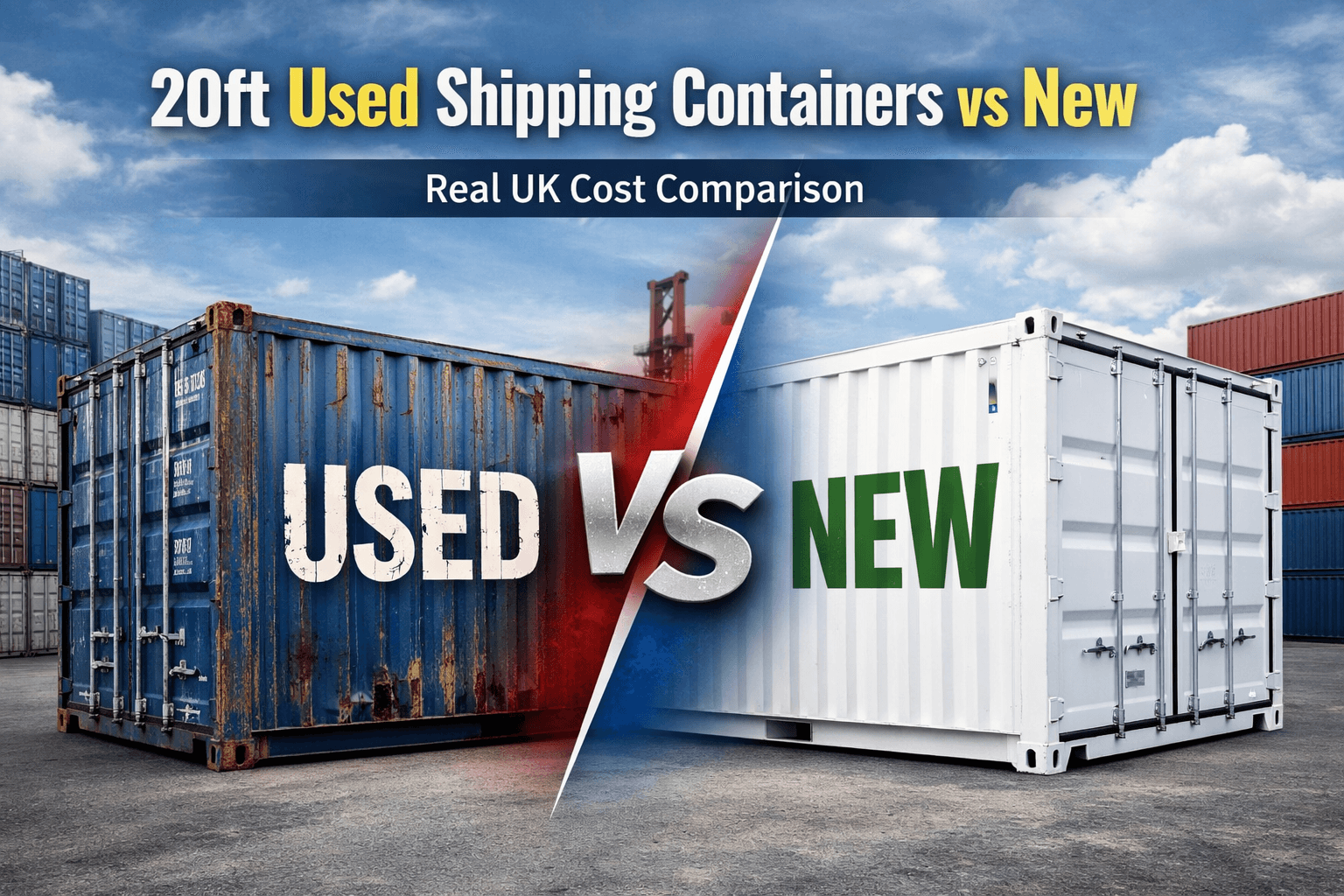
• 20ft Used Shipping Containers vs New: Real UK Cost Comparison
• New vs Used 40ft Shipping Containers: Price, Lifespan & Which Is Better
When a 20ft Shipping Container Is the Best Choice
A 20ft shipping container is the most common size purchased in the UK.
The shorter length makes it easier to deliver and position on smaller sites.
Typical uses include:
• construction site tool storage
• garden or residential storage
• small business stock storage
• workshops or container conversions
• farm equipment storage
A 20ft container is also easier to place in tight locations such as driveways, yards, and small commercial premises.
If you are considering buying one, this guide explains the full process: How to Buy a 20ft Shipping Container?.
You can also view available options on our 20ft Used Shipping Containers and our 20ft New One Trip Shipping Containers.
When a 40ft Shipping Container Makes More Sense
A 40ft shipping container is typically chosen where maximum storage capacity is required.
The longer footprint allows significantly more goods to be stored without stacking or overcrowding.
Common use cases include:
• commercial stock storage
• warehouse overflow
• large construction projects
• palletised goods storage
• agricultural equipment storage
Businesses storing bulk materials often choose 40ft containers because they provide the lowest storage cost per cubic metre.
If you are planning to purchase one, our guide explains the full process in How to Buy a 40ft Shipping Container?.
You can also explore current stock on our 40ft Used High Cube Shipping Containers and our 40ft New One Trip High Cube Shipping Containers.
Delivery and Site Access Considerations
Delivery access is often overlooked when choosing container size.
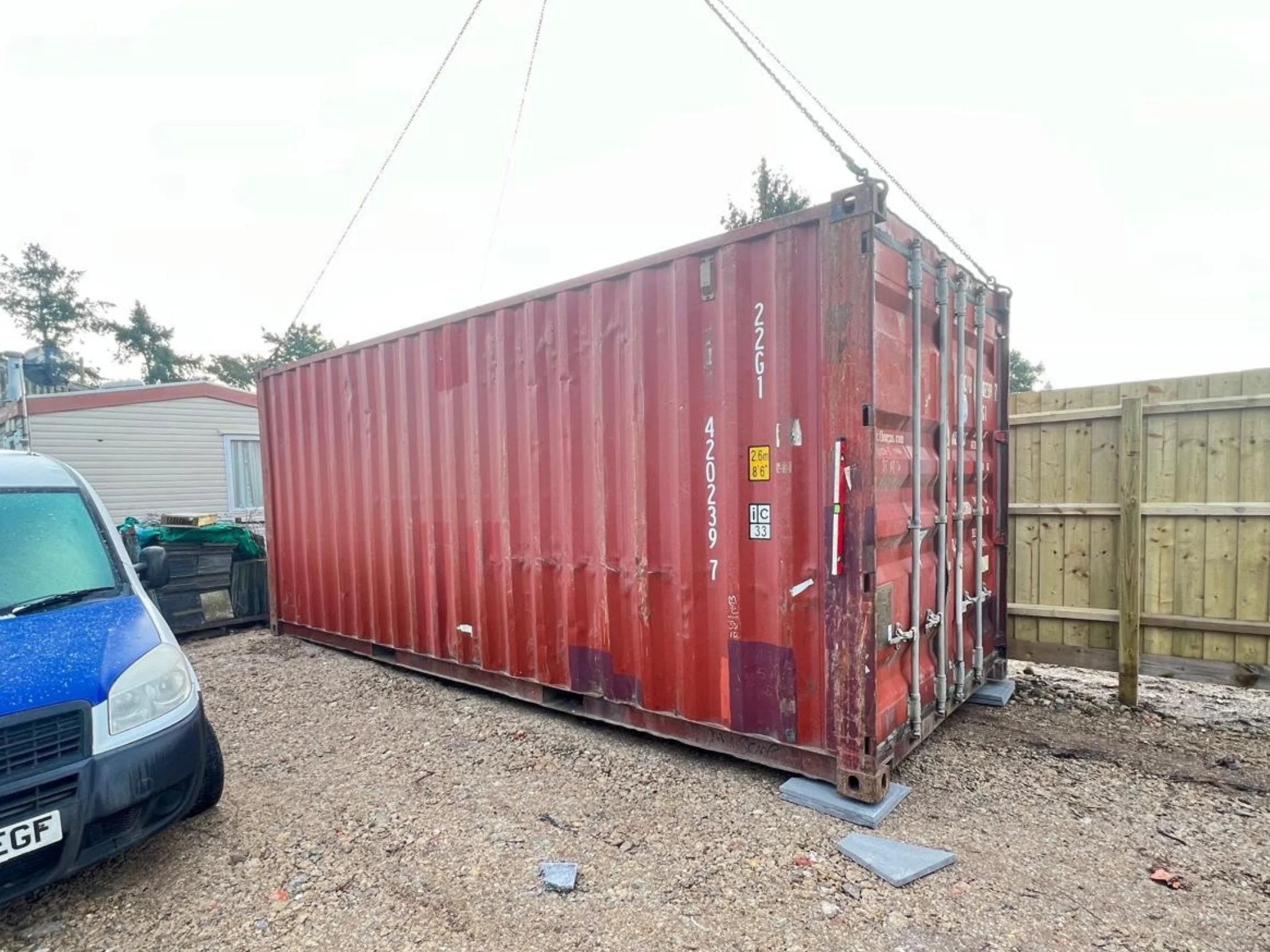
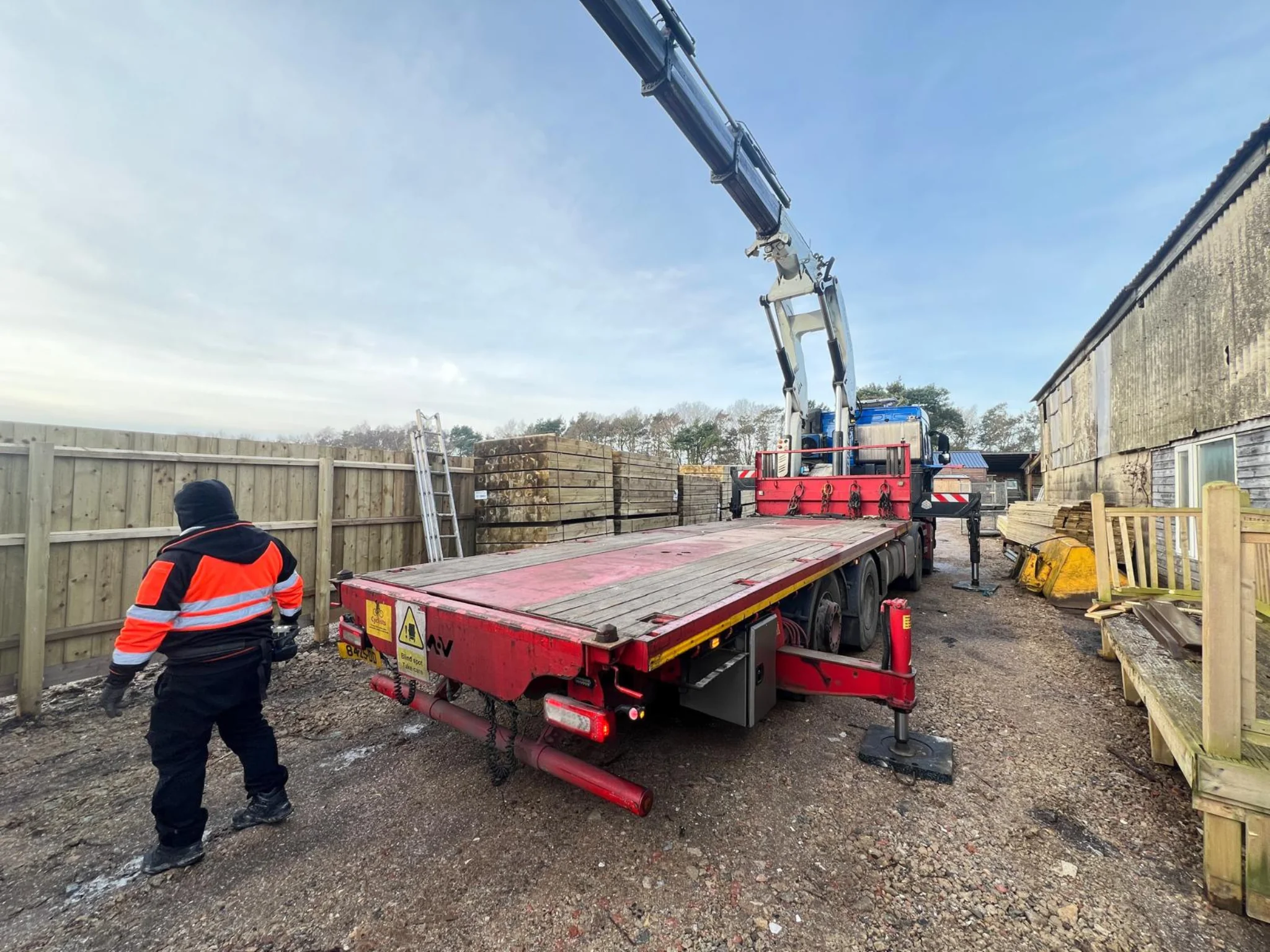
A 20ft shipping container is generally easier to deliver because the lorry and crane require less manoeuvring space. Most 20ft containers are delivered on a rigid HIAB crane vehicle, which typically measures around 38ft in total length including the cab.
A 40ft shipping container is usually delivered using an articulated (arctic) crane vehicle, which is significantly longer and typically measures around 68ft in total length including the cab. Because of this additional length, placing a 40ft container requires more space for access, positioning, and crane operation.
Things to consider before choosing container size:
• driveway width or yard space
• overhead obstacles such as cables or trees
• turning space for delivery vehicles
• ground strength for heavier containers
Where access is restricted or turning space is limited, a 20ft shipping container is often the safer and easier option to deliver.
How to Choose the Right Container Size
Ask these questions before deciding:
- How much storage space do you actually need?
- Will the container hold pallets, machinery, or loose goods?
- Is there enough space on site for delivery?
- Do you expect storage needs to increase over time?
If space allows, many businesses choose a 40ft container to avoid running out of storage later.
Frequently Asked Questions
Is a 40ft container cheaper per square metre?
Yes. Although a 40ft container costs more upfront, it usually provides the lowest storage cost per cubic metre because it offers double the internal volume.
Are 20ft containers easier to deliver?
Yes. A 20ft shipping container requires less space for delivery and positioning, making it suitable for smaller sites, driveways, and restricted access locations.
Which container size is most popular in the UK?
The 20ft shipping container is the most commonly purchased size in the UK because it balances storage capacity with easy delivery and placement.
Why Bosh Boxes Is the Best Choice
Choosing the right container size is easier when working with an experienced supplier.
Bosh Boxes provides:
• Nationwide container delivery across the UK
• Quality inspected new and used shipping containers
• One year wind and watertight guarantee on used units
• Transparent pricing with no hidden fees
• Fast delivery from multiple UK depots
• Advice on site access and placement before delivery
• Support with container conversions and modifications
Every container supplied follows The Bosh Boxes Way, focusing on straightforward advice and reliable service.
20ft vs 40ft Shipping Container: Bottom Line
Choosing between a 20ft and 40ft shipping container depends on storage needs, available site space, and delivery access. For most small to medium storage requirements, a 20ft shipping container provides the best balance of size and flexibility. Businesses storing larger volumes or palletised goods often benefit from the additional capacity of a 40ft shipping container.
A 20ft shipping container is typically the best option where space is limited or moderate storage is required.
A 40ft shipping container makes more sense for commercial storage, bulk goods, or palletised inventory where maximum capacity is important.
Understanding storage needs, site access, and budget will quickly determine which container size is right.
For advice, pricing, and delivery availability, contact Bosh Boxes today to discuss your project and receive a fast quote from a trusted UK shipping container supplier.