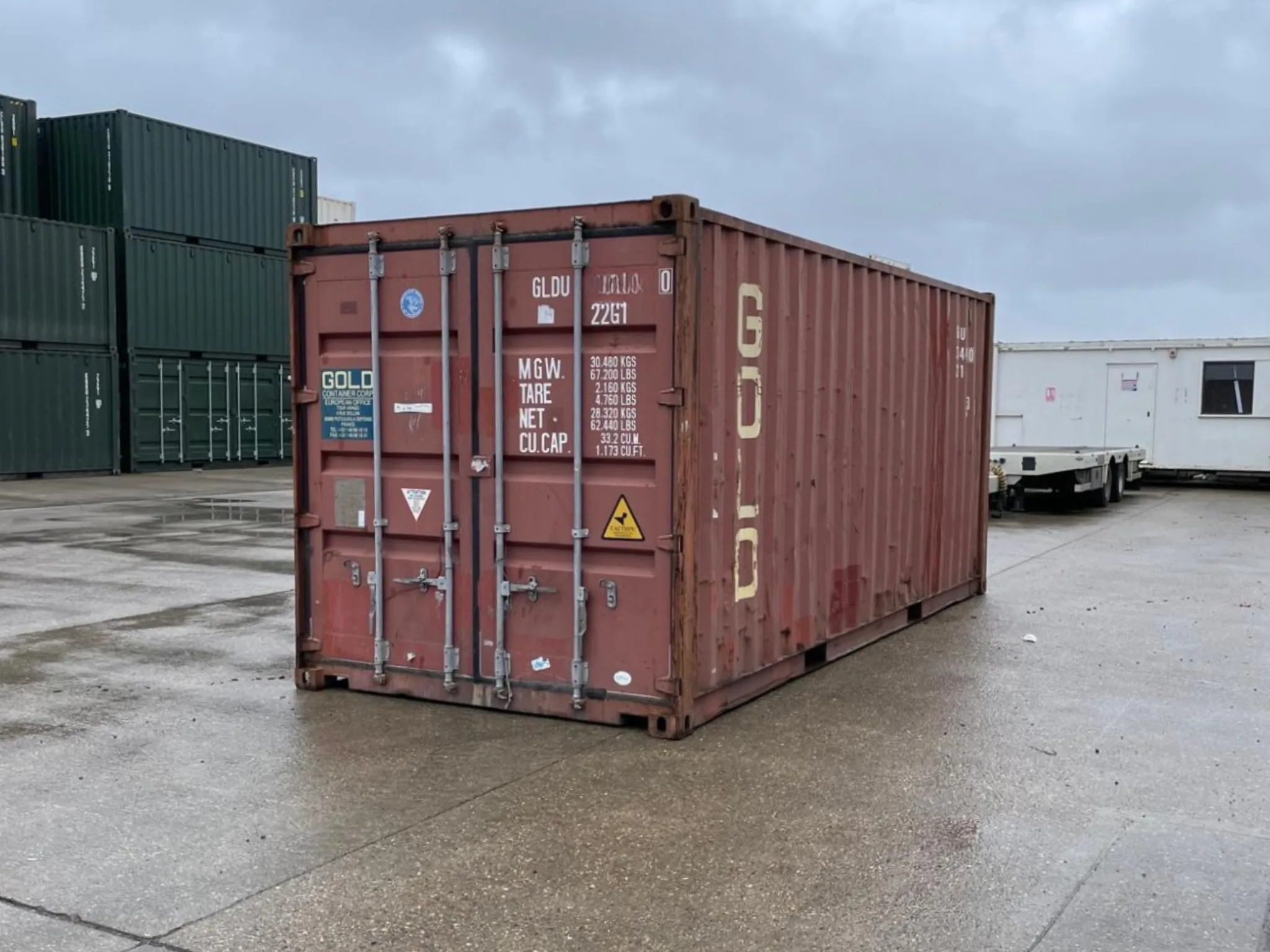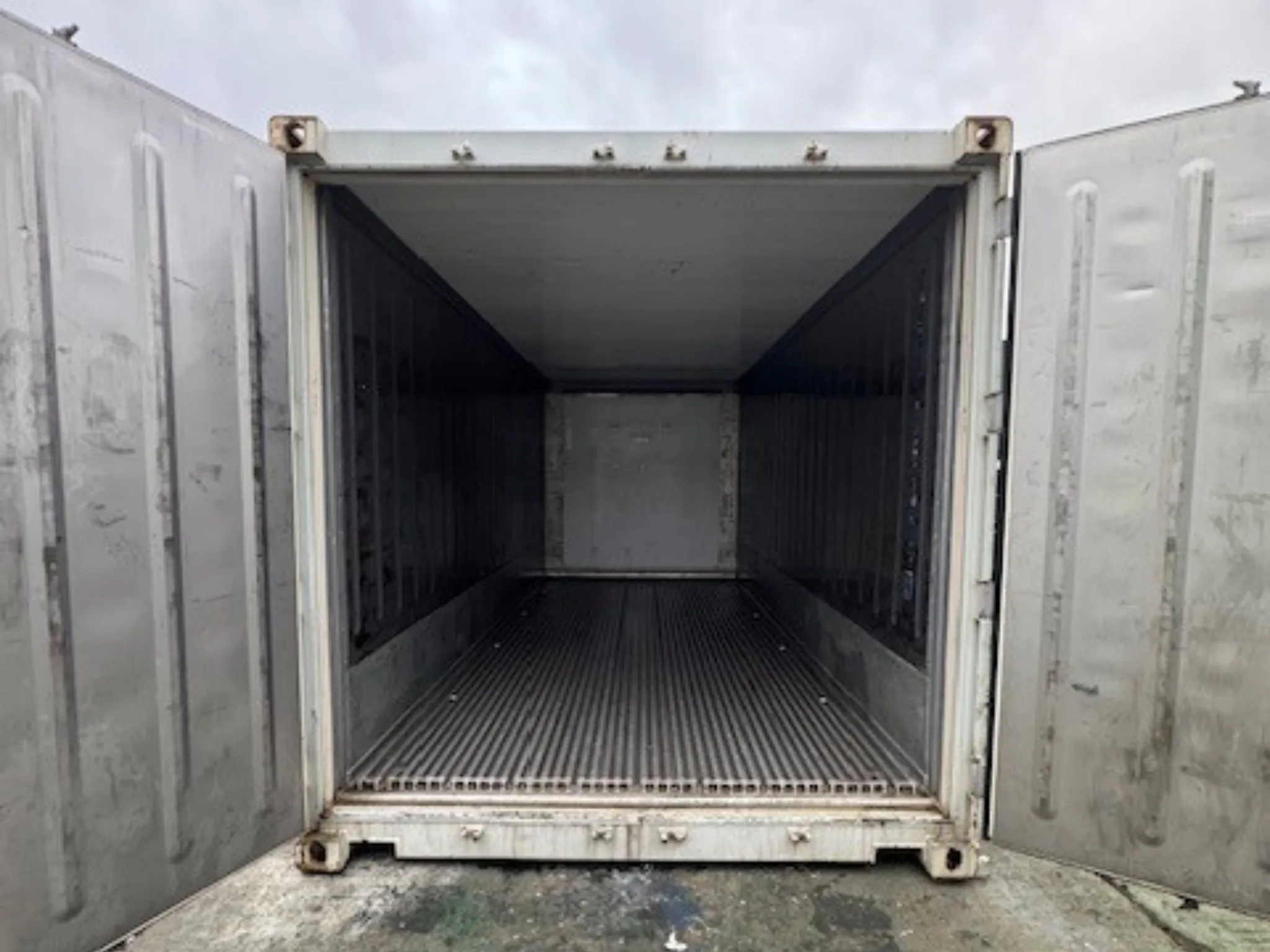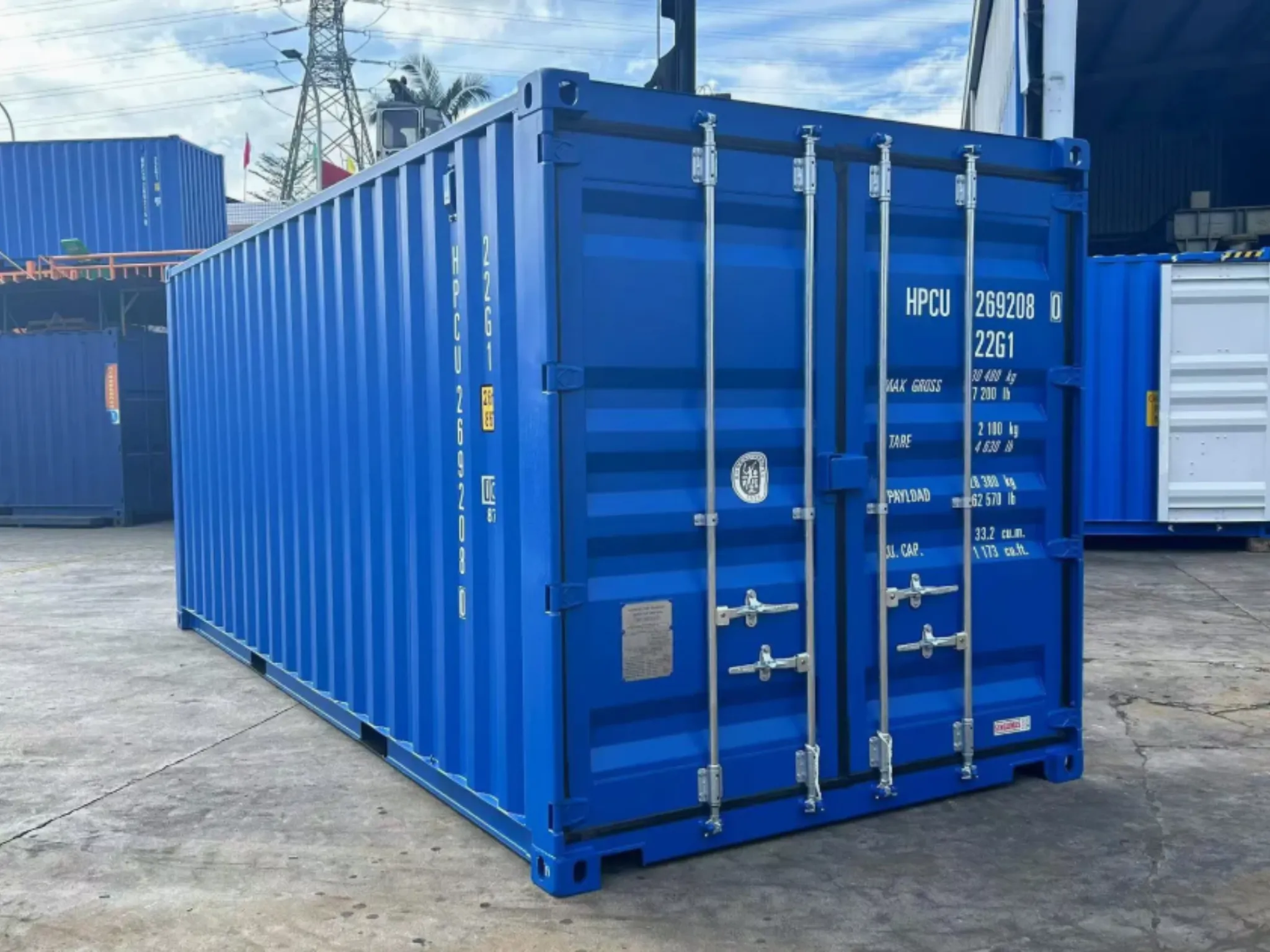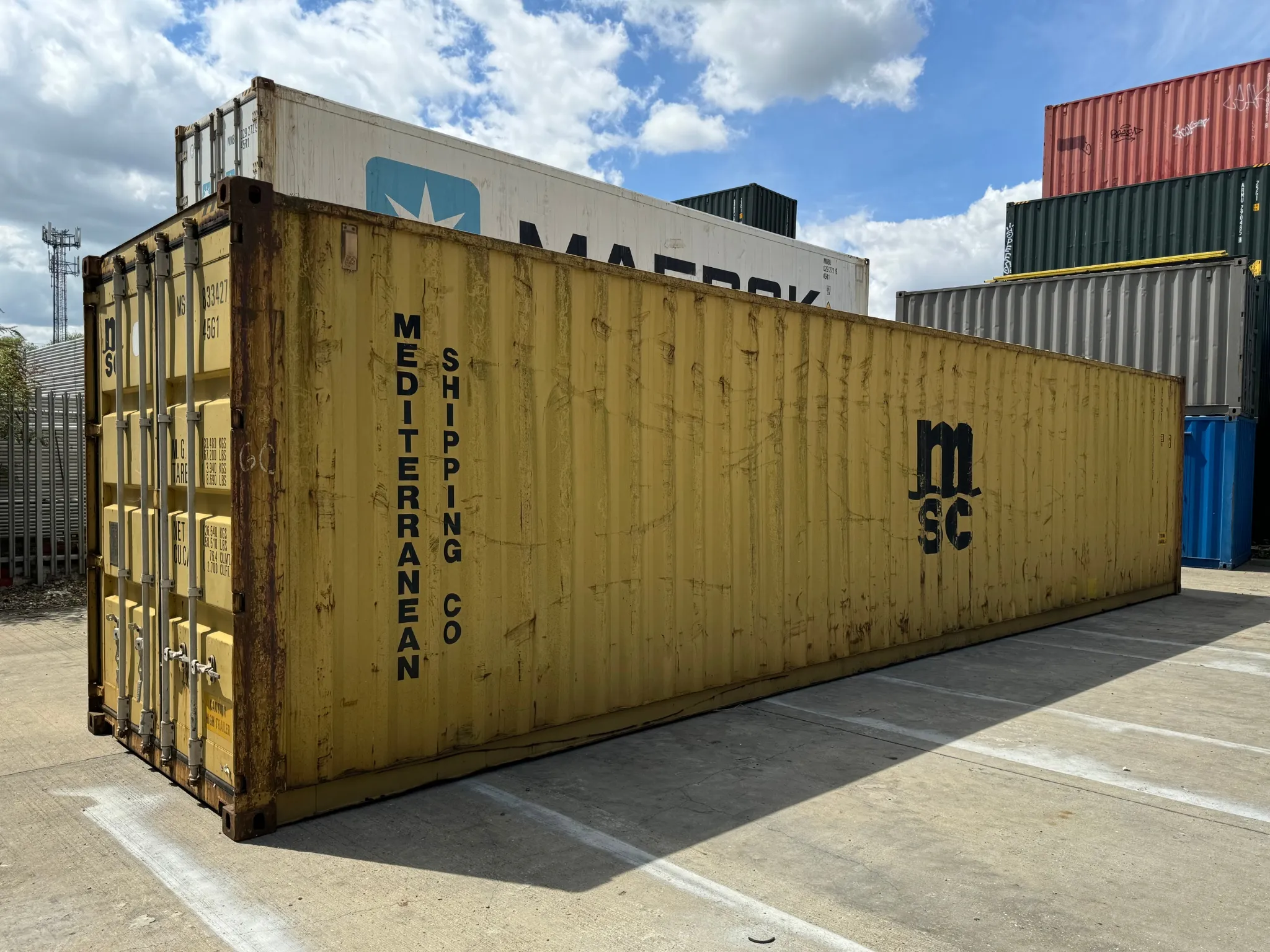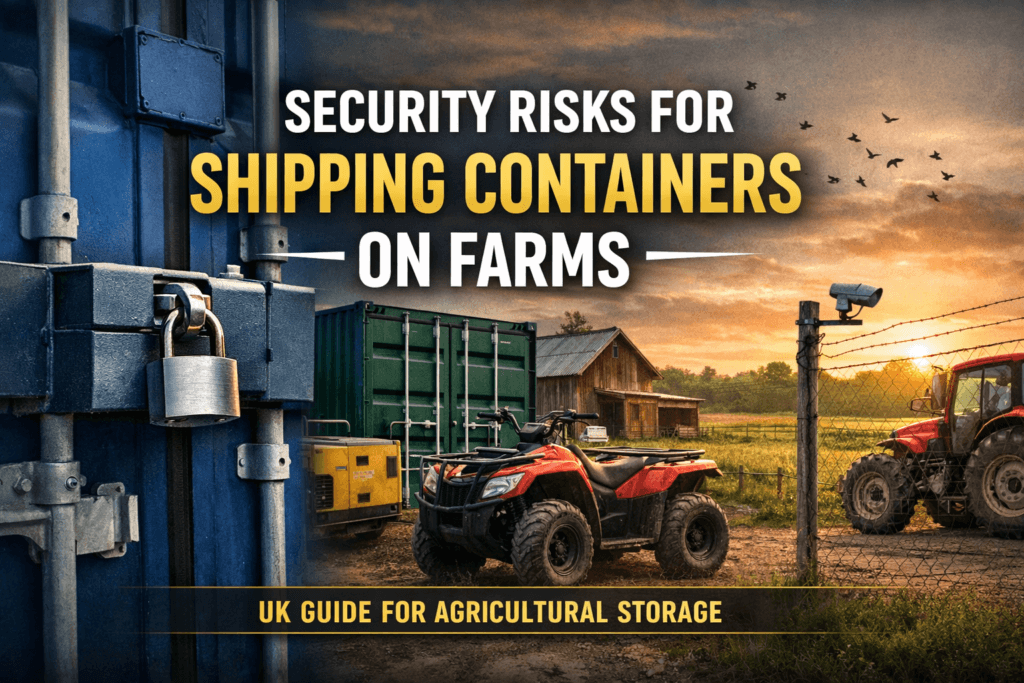
Security risks for shipping containers on farms affect theft exposure, insurance premiums, and operational continuity for UK agricultural businesses. Farmers buying shipping containers for sale UK wide must consider locking systems, placement, and perimeter control before purchase. Choosing the right steel storage container significantly reduces risk when correctly installed.
According to NFU Mutual rural crime reporting, agricultural equipment and fuel theft remain consistent issues across UK counties. Agricultural theft remains a concern across counties including Essex, Norfolk, and Lincolnshire.
Shipping containers for sale UK farmers choose are widely used for secure storage, but security depends on more than steel walls alone. For farms actively looking to buy shipping containers, understanding these risks before choosing a unit prevents costly mistakes later.
What Are the Main Security Risks for Shipping Containers on Farms?
Security risks for shipping containers on farms stem from location, visibility, access control, and the value of stored contents.
Rural environments create different risks compared to urban yards, which is why farm buyers often review broader considerations covered in Shipping Containers for Rural and Farm Storage.
Common risks include:
- Break-ins using angle grinders or bolt cutters
- Theft of quad bikes, chainsaws, generators, and tools
- Targeted fuel theft from stored diesel
- Unauthorised access by trespassers
- Opportunistic theft from poorly positioned containers
- Internal theft where keys or codes are shared
A container is structurally strong. Weakness usually sits at the doors, locks, or site layout.
Many farms position containers at yard perimeters for convenience, increasing exposure to road-facing access.
Farms commonly use containers to store high-value machinery and seasonal equipment, which is explained in more detail in our guide on How Farmers Use Shipping Containers for Machinery Storage.
Why Security Matters on UK Farms
Farm locations are typically rural and less monitored than commercial estates.
This creates practical challenges:
- Longer police response times
- Reduced natural surveillance
- Easy vehicle access via farm tracks
- Seasonal staffing changes
Steel storage containers provide stronger physical protection than timber sheds or lightweight barns. However, without upgraded locking systems and correct siting, they can still be targeted. Insurers increasingly assess container locking systems and site security when calculating agricultural storage risk.
Secure storage on farms protects operational continuity as well as assets. A stolen generator during harvest season can disrupt entire workflows.
Most Common Weak Points
Poor Lock Choice
Standard padlocks are the most common failure point.
A container should use:
- Closed shackle padlocks
- Hardened steel construction
- Insurance-rated security grades
Lockboxes welded over door bars significantly reduce attack points.
Isolated Placement
- Containers hidden behind barns or hedgerows reduce visibility.
- Concealment without surveillance can increase vulnerability.
- Visibility combined with CCTV and lighting is more effective.
Easy Vehicle Access
- If a trailer can reverse directly to the doors, theft risk increases.
- Containers should be positioned to restrict vehicle alignment.
No Lighting
- Dark yards make forced entry less visible.
- Motion lighting reduces opportunistic attempts.
Additional Farm-Specific Risks
Farms often store mixed-use items inside 20ft shipping containers or 40ft shipping containers.
These may include:
- Agrochemicals
- Livestock equipment
- Spare tractor parts
- Feed stock
- Small plant machinery
Some items carry regulatory obligations. Theft of chemicals can create environmental and legal consequences.
Fuel, diesel tanks, and fertiliser are common targets due to resale value and low traceability.
Container security protects both assets and compliance.
Why Shipping Containers Improve Farm Storage Security
For farms comparing new and used shipping containers, structural strength and locking design should be key purchase criteria.
Despite the risks, shipping containers increase farm storage security when properly installed and managed.
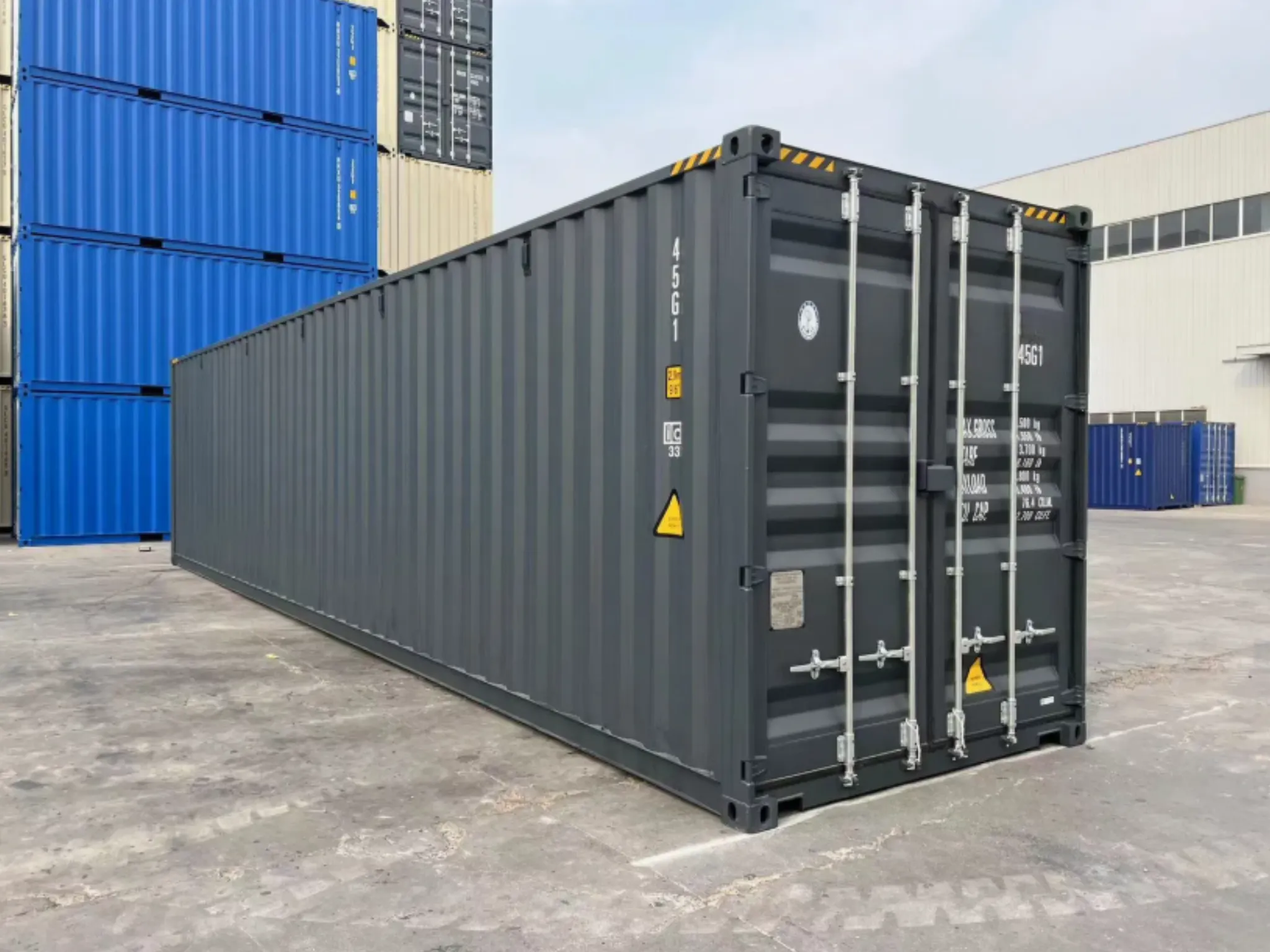
Steel storage containers are built from heavy-gauge Corten steel designed for international transport. This makes them significantly more resistant to forced entry than timber sheds or lightweight agricultural buildings.
Key security advantages include:
- Solid steel walls with no windows
- Reinforced double doors with vertical locking bars
- Fewer access points than traditional barns
- Factory-fitted lockbox options
- Wind and watertight construction protecting contents
- Portable but structurally rigid design
A steel shipping container provides stronger physical resistance to forced entry than most traditional farm outbuildings.
When combined with correct siting and upgraded locks, containers act as a high-strength secure storage solution rather than a weak point.
What to Check Before Buying a Shipping Container for Farm Storage
For farms actively comparing suppliers, these checks should form part of the purchase decision:
- Lockbox fitted or not
- Condition grading
- Door alignment
- Delivery access planning
How to Improve Container Security on Farms
Practical improvements include:
- Fit factory-installed lockboxes
- Use insurance-approved padlocks
- Install solar-powered CCTV covering doors
- Add motion sensor lighting
- Position containers in visible but controlled areas
- Restrict vehicle access routes
- Maintain an inventory log
New and used shipping containers can both be upgraded with security features.
ISO-certified construction provides structural strength, but security is layered through equipment and planning.
Restricting perimeter access with gates, barriers, or monitored entry points significantly reduces opportunistic farm theft.
For a deeper breakdown of locking systems, door mechanisms, and structural strength, see What Makes a Shipping Container Secure for Storage? (UK Guide).

Why Bosh Boxes Is a Trusted UK Supplier for Farm Storage
When farms buy shipping container UK wide, inspection standards, security preparation, and delivery guidance directly affect long-term risk.
Bosh Boxes supports farm customers by providing:
- Quality-checked wind and watertight containers
- Factory-fitted lockbox options
- Fast container delivery UK wide
- Clear access and placement guidance
- Honest condition grading on used units
- New one-trip containers for long-term durability
- Practical security advice based on UK farm environments
Fast delivery is often important during harvest or livestock season. Availability can tighten for 20ft shipping containers in peak periods.
The Bosh Boxes Way focuses on practical risk reduction, not just supplying units.
Comparison: Farm Container Security Support
The table below compares Bosh Boxes with generic UK container sellers based on security support, delivery guidance, and after-sales service for farm storage buyers.
| Feature | Bosh Boxes | Generic Seller A | Generic Seller B | Marketplace Seller |
|---|---|---|---|---|
| Condition grading | Clear and documented | Vague | Basic | None |
| Lockbox option | Available | Extra cost | Not offered | No |
| Delivery guidance | Yes | Limited | No | No |
| UK-wide delivery | Yes | Regional | Regional | Collection only |
| Farm security advice | Practical guidance | None | None | None |
| After-sales support | Yes | Limited | Limited | None |
Many sellers focus purely on price. Few discuss rural placement, vehicle alignment, or theft patterns.
Operational guidance often determines whether a container becomes secure storage or a target.
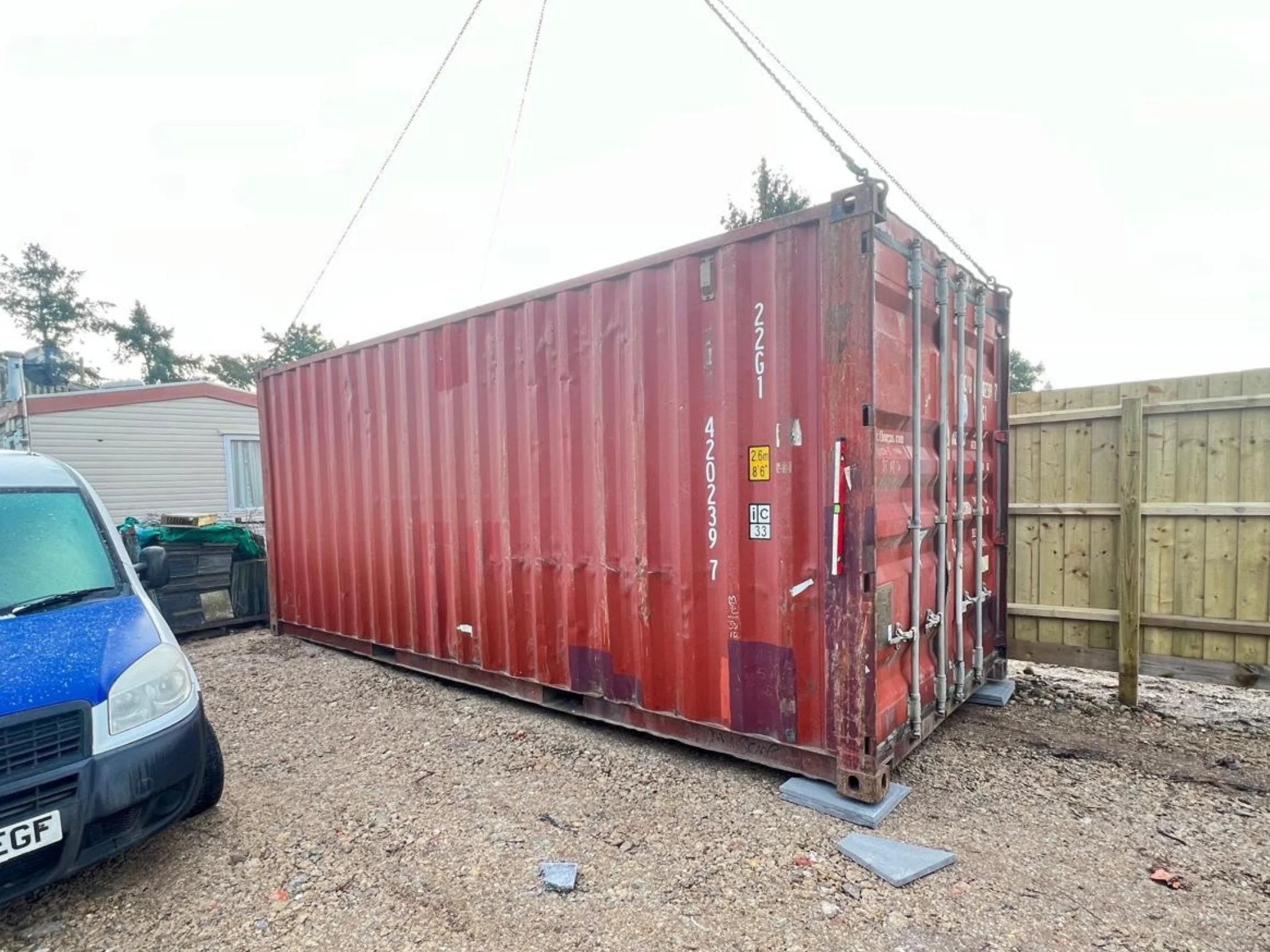
Bottom Line
Security risks for shipping containers on farms are manageable when addressed at the purchase stage.
Choosing quality steel storage containers, specifying proper locking systems, and planning site placement before delivery significantly reduces exposure to theft.
For a fast quote and delivery date, contact Bosh Boxes today — your trusted UK shipping container supplier.