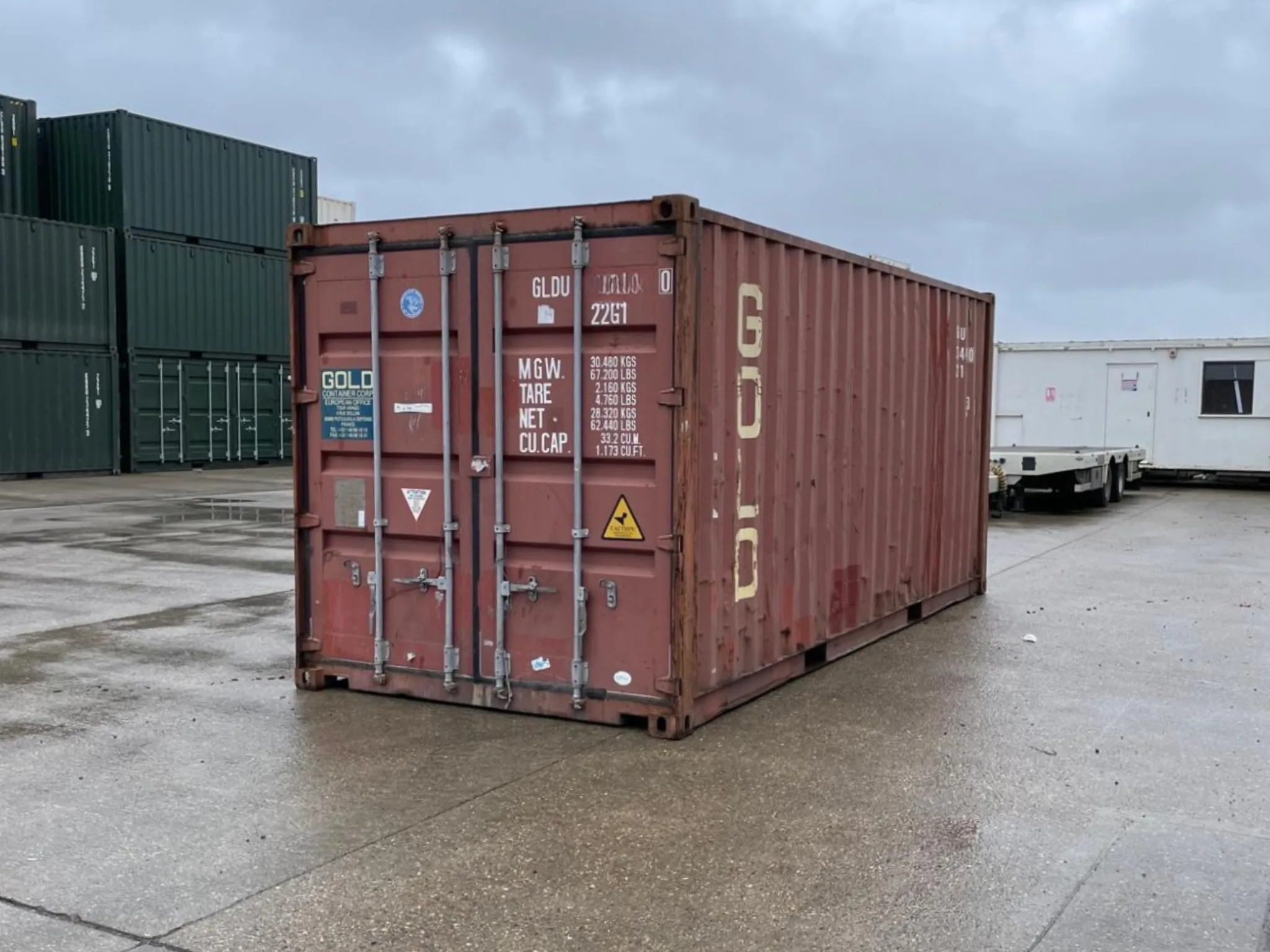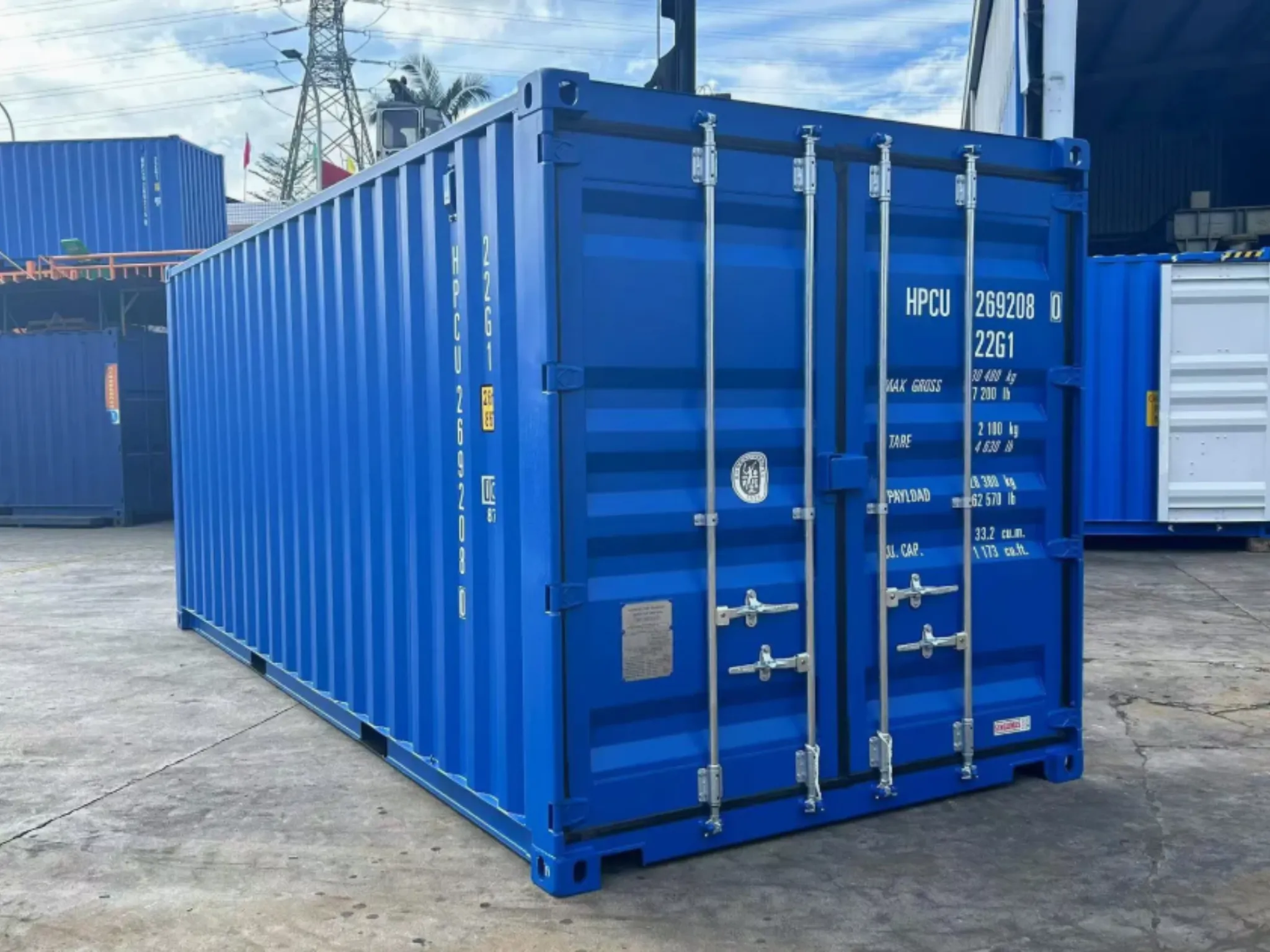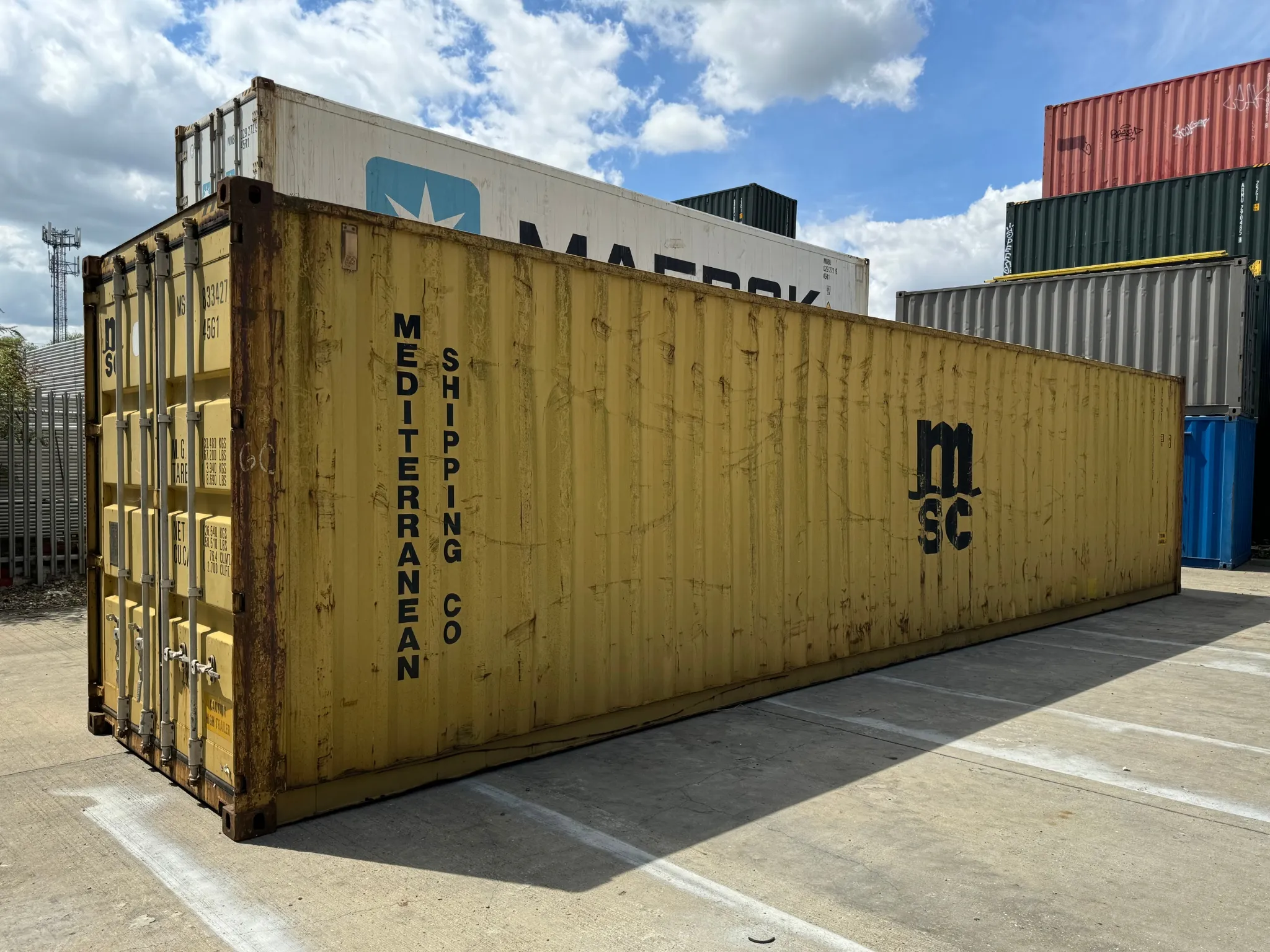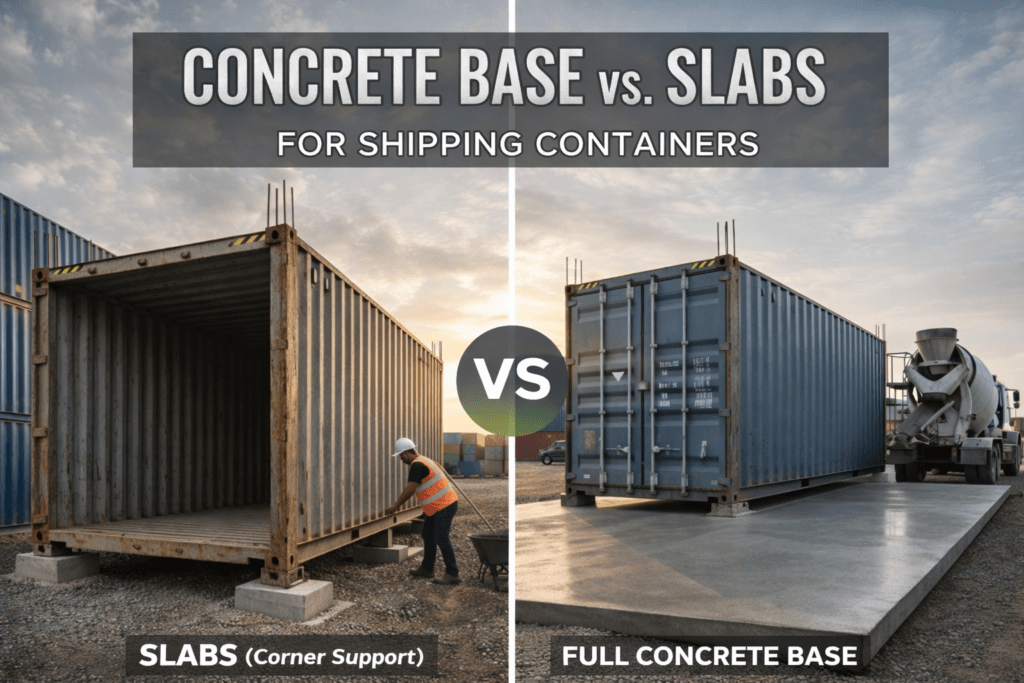
Concrete base vs slabs for shipping containers is a common question for buyers planning long term storage, workshops, or container offices in the UK. Both options provide solid support, but they differ significantly in strength, cost, longevity, and suitability depending on container size and ground conditions.
Choosing the wrong option can lead to door misalignment, structural stress, settlement, and long term repair costs. This guide explains the difference between a full concrete base and individual concrete slabs, when each is appropriate, and how to choose correctly.
What Is a Concrete Base?
A concrete base typically refers to a full poured slab that supports the entire footprint of the container.
This involves:
• Excavation
• Compacted hardcore sub-base
• Reinforcement mesh
• Poured concrete, typically 100mm to 150mm thick
• Level finishing
A concrete base distributes weight evenly across the entire underside of the container and provides maximum long term stability.
What Are Concrete Slabs?
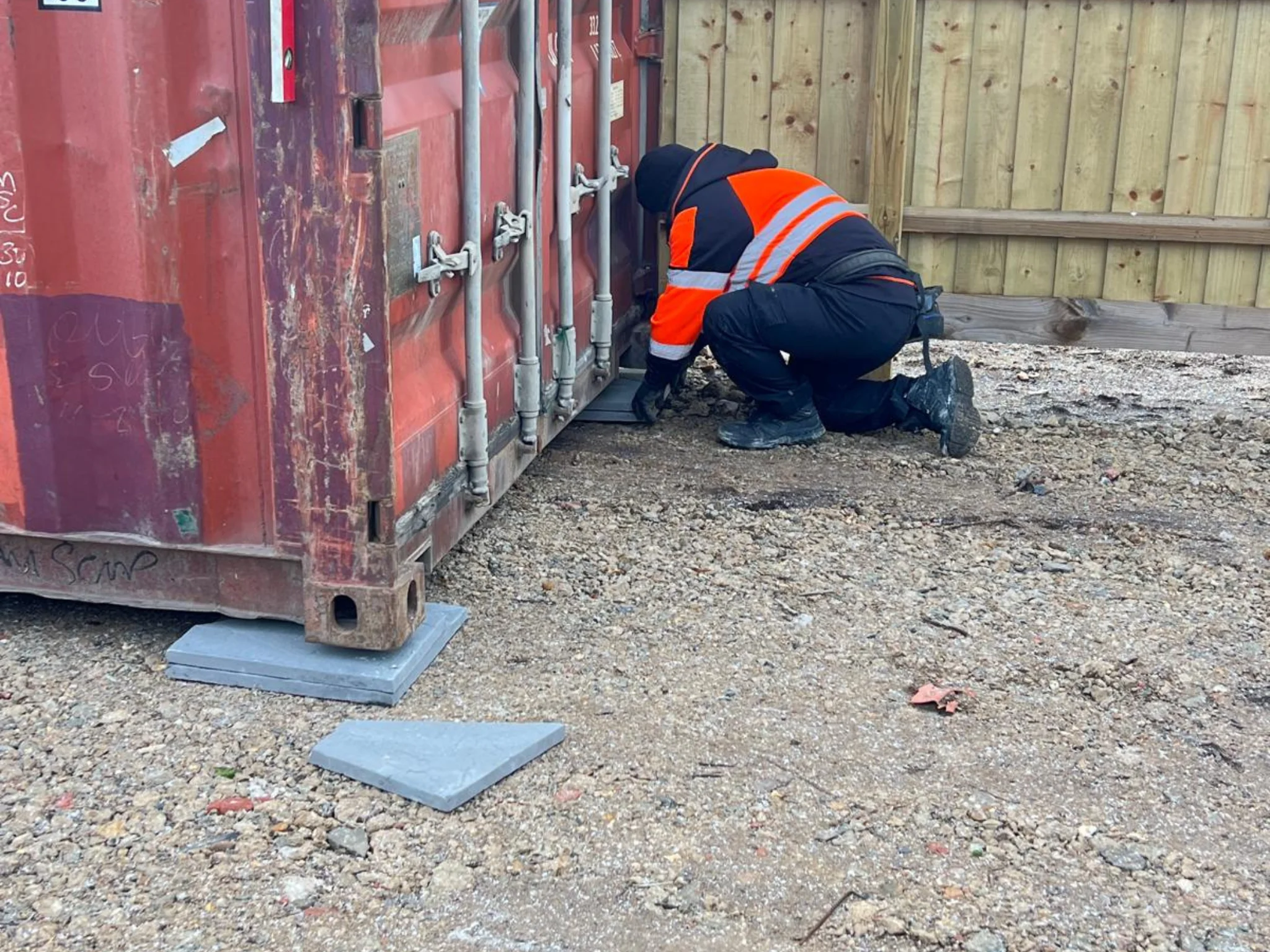
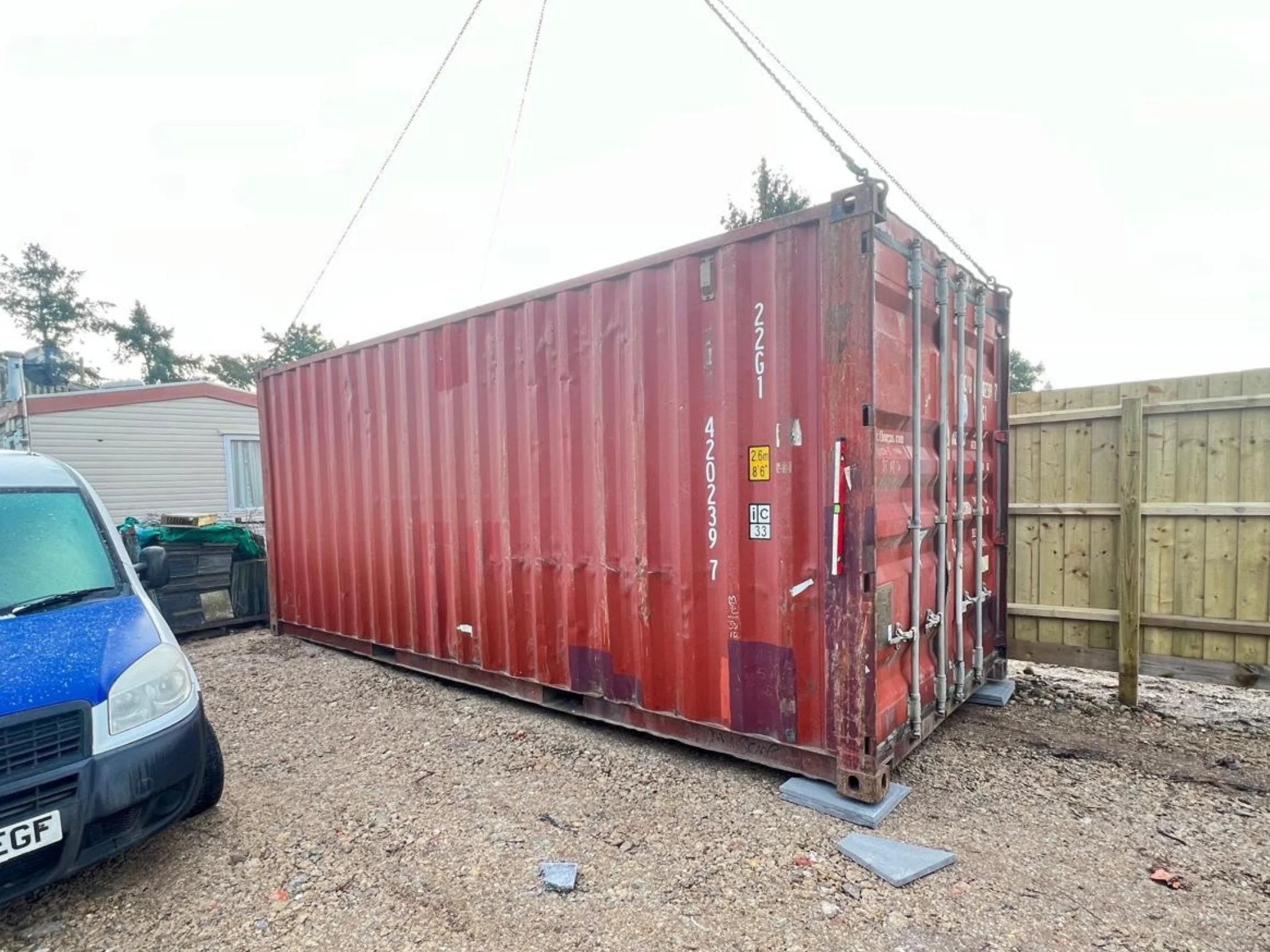
Concrete slabs in this context usually refer to individual pads placed beneath the container’s corner castings.
Because shipping containers are structurally strongest at the four corners, slabs placed under each corner can provide sufficient support for many storage applications.
Instead of a full footprint slab, this method supports the load at key structural points.
Structural Differences Between a Base and Slabs
The key difference is load distribution.
Concrete Base
• Supports entire container footprint
• Spreads weight evenly
• Minimises ground pressure
• Reduces settlement risk
Concrete Slabs
• Support only at corner castings
• Concentrate load at four points
• Require stable ground beneath each slab
• Allow airflow under container
For reference, a 20ft shipping container weighs approximately 1.8 to 2.2 tonnes empty. A 40ft container weighs over 3.7 tonnes empty. Once loaded, weight increases significantly. Concentrated loads on slabs can therefore exceed 1 tonne per corner depending on contents.
When a Full Concrete Base Is Better
A full concrete base is generally the better choice when:
• Installing a container office
• Converting to a workshop
• Planning long term static use
• Stacking containers
• Installing high cube units
• Ground conditions are soft or clay heavy
A full slab reduces twisting stress and helps prevent door alignment problems caused by settlement.
It is also ideal where internal flooring or insulation has been added, as it provides a stable long term platform.
If you are reviewing all possible base options, our guide on Best Foundations for Shipping Containers in the UK explains how slabs, pads, hardcore, and engineered systems compare.
When Concrete Slabs Are Sufficient
Concrete slabs beneath each corner can be perfectly suitable for:
• Standard storage containers
• Short to medium term use
• Stable ground conditions
• Budget conscious installations
• Rural or agricultural sites
However, they must be:
• Properly level
• Large enough to exceed corner casting footprint
• Placed on compacted ground
• Supported by stable subsoil
If the ground beneath shifts, even slightly, the container can rack out, causing door stiffness and misalignment.
Cost Comparison
Concrete Base
- Higher material and labour cost
- Ground preparation required
- More permanent solution
- Longer installation time
Concrete Slabs
- Lower upfront cost
- Quicker installation
- Minimal excavation
- Easier to adjust or relocate
While slabs are cheaper initially, a full base may offer better long term value for heavy or permanent installations.
Drainage and Moisture Considerations
Both options must account for drainage.
Poor drainage causes:
• Water pooling
• Accelerated corrosion
• Frost expansion issues
• Soil movement
Concrete slabs allow airflow underneath, which can reduce underside moisture buildup. Full slabs prevent soil contact but must include proper drainage planning around the perimeter.
In UK conditions with high rainfall and clay soil movement, drainage planning is essential regardless of foundation type.
Planning and Permanency Considerations
A full concrete base may trigger planning considerations if:
• Installation is permanent
• It changes land use
• It supports a habitable container
Slabs are generally considered less permanent, but always confirm with your local authority.
Which Option Lasts Longer?
In stable conditions:
Concrete slabs can last many years for storage use.
In demanding conditions:
A full concrete base typically outperforms slabs long term due to even load distribution and reduced structural stress.
For containers intended to last 20 years or more in static use, a reinforced slab is often the safer long term investment.
Quick Comparison Table
The table below compares a full concrete base and individual concrete slabs for shipping containers across key decision factors including cost, installation time, load distribution, settlement risk, and suitability for different uses. It highlights how a reinforced slab spreads weight evenly across the entire footprint, making it more suitable for permanent offices and workshops, while concrete slabs support the container at the four corner castings and are typically sufficient for standard storage applications on stable ground. This comparison helps buyers evaluate long term performance, structural stability, and overall value rather than focusing only on upfront cost.
| Factor | Concrete Base | Concrete Slabs |
|---|---|---|
| Cost | Higher | Lower |
| Installation time | Longer | Faster |
| Load distribution | Full footprint | Corner support only |
| Settlement risk | Low | Moderate if ground shifts |
| Best for | Offices, workshops, long term use | Storage, temporary use |
| Airflow underneath | Limited | Good |
Other Foundation Options (Beyond Concrete Bases and Slabs)
Shipping containers can also be supported using alternative foundation methods depending on site conditions, budget, and intended use.
Other options include:
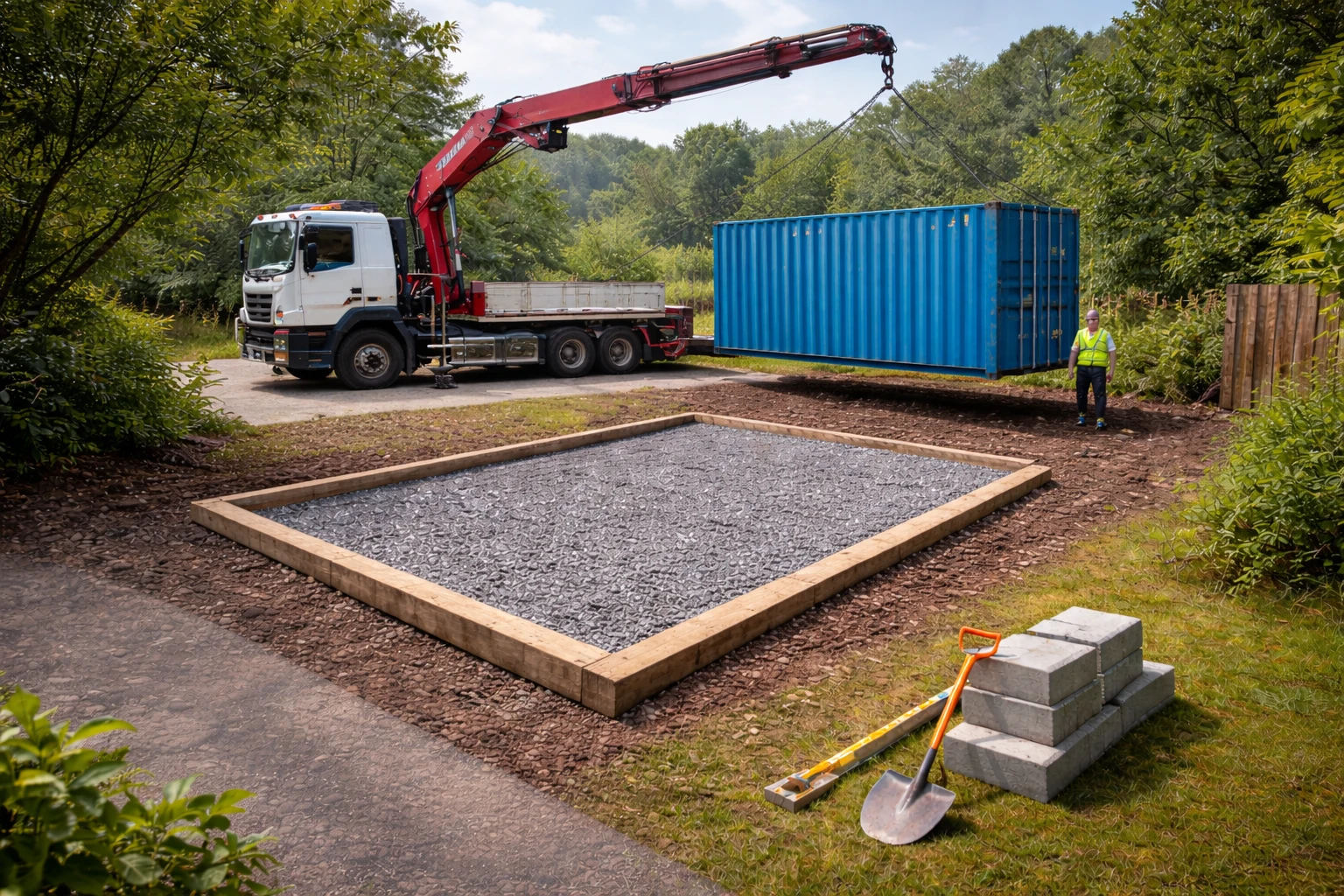
• Compacted hardcore with membrane – Suitable for temporary or agricultural use when properly levelled and compacted.
• Railway sleepers – Used for raising containers off damp ground, but best suited for short-term installations.
• Helical screw piles – Ideal for soft or unstable soil where deeper load transfer is required.
• Pier or pad foundations – Targeted corner support where full slab installation is not necessary.
While these methods can be effective in the right conditions, concrete bases and slabs remain the most stable long-term solutions for permanent installations.
Quick Answer: Concrete Base or Slabs?
For long-term use, offices, workshops, or heavy loads, a reinforced concrete base is usually the better option due to even load distribution and reduced settlement risk. For standard storage on stable ground, properly levelled concrete slabs under each corner are often sufficient and more cost effective.
Frequently Asked Questions
Do I need a concrete base for a 20ft shipping container?
Not always. For storage on stable ground, slabs can be sufficient. For long-term use or modifications, a full slab is safer.
How thick should a concrete base be for a shipping container?
Typically 100mm to 150mm reinforced concrete is recommended, depending on ground conditions and load weight.
Final Thoughts
Concrete base vs slabs for shipping containers is not about which is universally better. It depends on ground conditions, container size, intended use, and long term plans.
If the container will be permanent, modified, or heavily loaded, a reinforced concrete base offers superior long term performance.
If the container is used for standard storage on stable ground, properly installed concrete slabs can be cost effective and reliable.
The most important factor is correct ground preparation and levelling before delivery. Even the strongest foundation cannot compensate for poor installation.
If you are still unsure which base suits your project, review our full guide on Best Foundations for Shipping Containers in the UK before committing to installation.