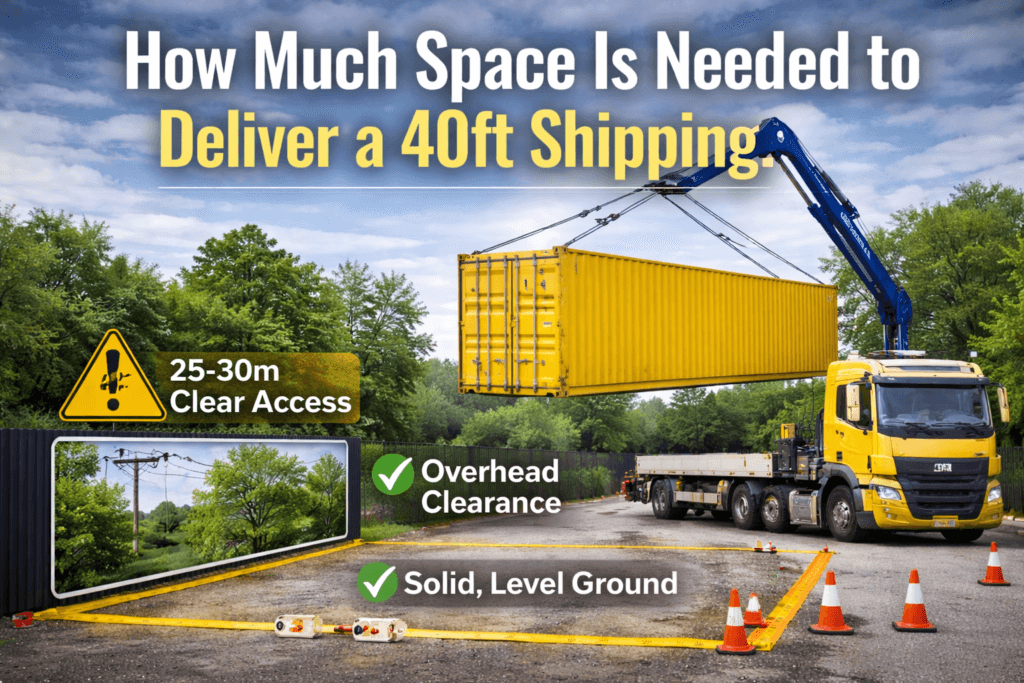
How Much Space Is Needed to Deliver a 40ft Shipping Container. To deliver a 40ft shipping container, a delivery vehicle typically requires clear access of around 25 to 30 metres in length, sufficient turning space, and firm level ground for offloading. Space requirements vary depending on whether a Hiab crane lorry or an articulated vehicle is used, as well as site layout and overhead clearance.
Introduction
Buying a 40ft shipping container is straightforward. Getting it delivered is where most problems occur.
Delivery issues are one of the most common causes of failed or delayed container drops in the UK. In most cases, the container itself is not the issue. Access and space are.
This guide explains how much space is needed to deliver a 40ft shipping container and what buyers should check before booking delivery.
What Type of Vehicle Delivers a 40ft Container?
The space required depends on the delivery method.
Hiab crane lorry delivery
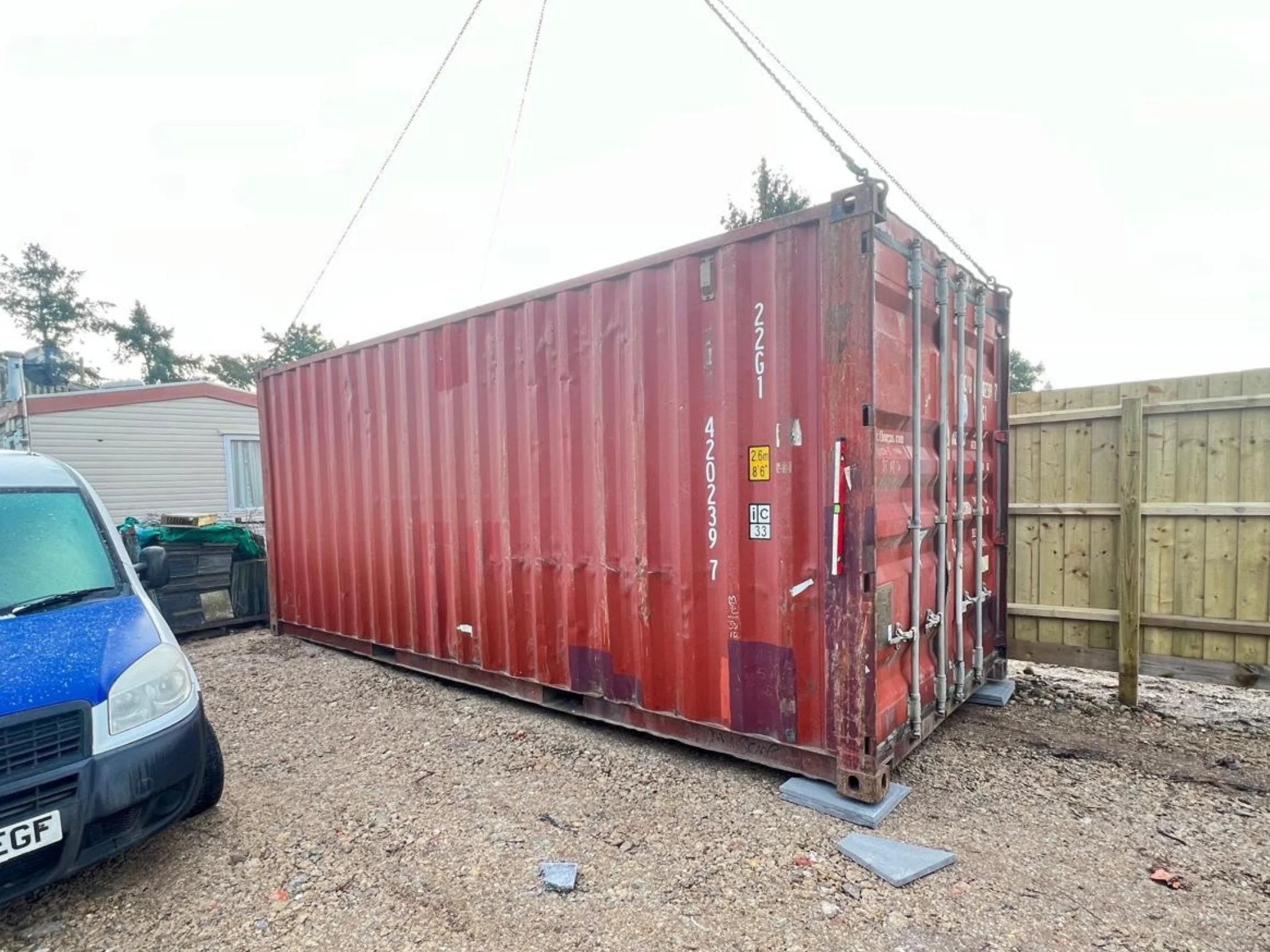
A Hiab lorry is the most common method for delivering 40ft containers to UK sites.
It carries the container and offloads it using a hydraulic crane mounted on the vehicle.
This method requires more space than a standard drop trailer.
Articulated or skeletal trailer delivery
Some large commercial sites use articulated vehicles where the container is slid off rather than lifted.
These deliveries require more room to manoeuvre but less side clearance for lifting.
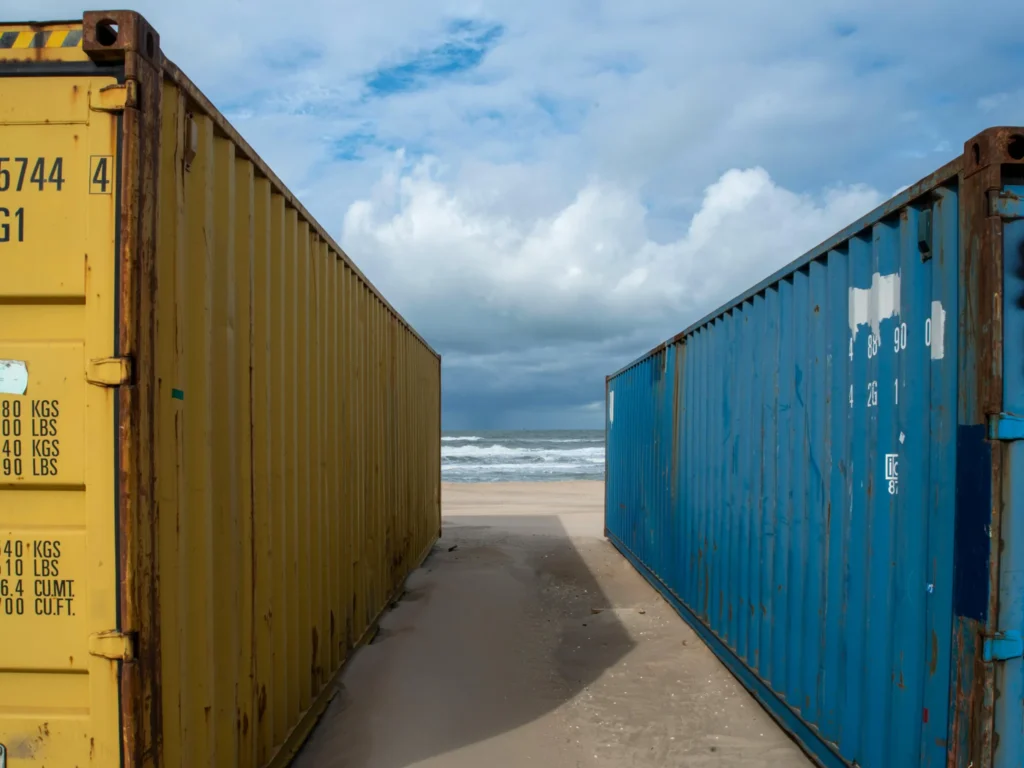
Minimum Space Required for 40ft Container Delivery
The figures below reflect typical UK delivery requirements. Actual needs can vary depending on site layout.
Straight-line access
A clear straight-line run of 25 to 30 metres is usually required for a Hiab lorry to position safely.
This allows the vehicle to stop, stabilise, and lift the container.
Access width
Access roads or entrances should allow for a vehicle width of at least 3 metres, ideally more.
Narrow gates, tight alleyways, or street furniture can prevent access.
Turning space
Hiab lorries are long and have limited steering angles.
Adequate turning space is needed to enter and exit the site without reversing long distances.
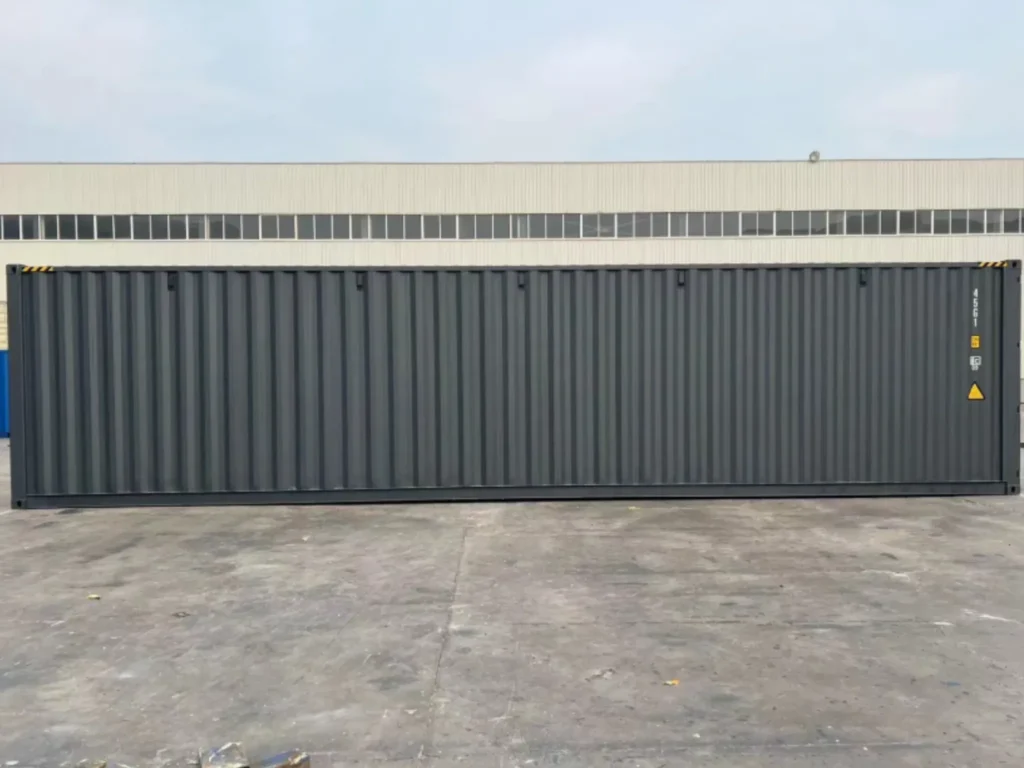
Space Needed to Offload a 40ft Container
Crane reach and side clearance
When lifting a 40ft container, the Hiab crane requires side clearance.
As a general guide:
- Allow at least 6 to 8 metres of clear space alongside the vehicle
- More space may be needed if lifting over obstacles
Containers cannot be lifted over buildings.
Placement area
The final placement area must be:
- Level
- Clear of obstructions
- Capable of supporting the container weight
Uneven ground can cause doors to twist or become difficult to open.
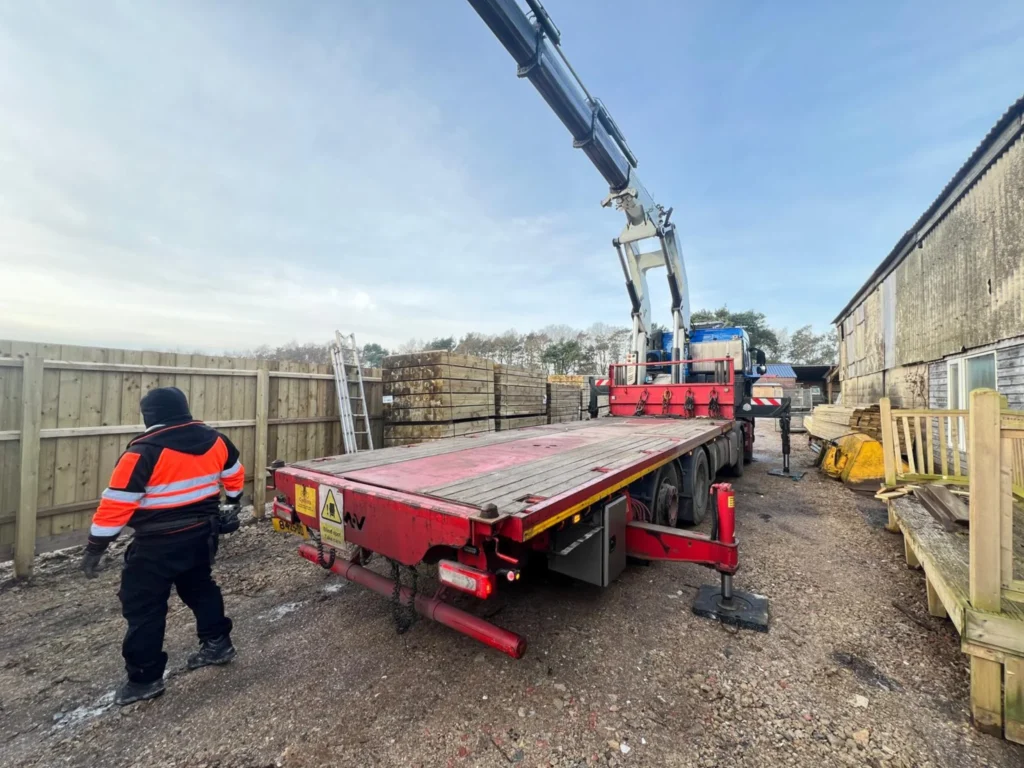
Ground Conditions and Load Bearing
A 40ft container is heavy, even when empty.
What the ground must support
The ground must support:
- The delivery vehicle
- The crane stabilisers
- The container itself
Soft ground, grass, or recently filled areas may require preparation.
Common solutions
- Concrete pads
- Hardcore bases
- Railway sleepers
Proper ground preparation prevents sinking, tilting, and long-term door issues.
Overhead Clearance Requirements
Overhead clearance is often overlooked.
Common overhead obstructions
- Power lines
- Tree branches
- Building overhangs
- Street lighting
A Hiab crane lifts upward before lowering the container.
Clear vertical space is essential to avoid aborted deliveries.
Residential vs Commercial Site Delivery
Residential sites
Residential deliveries often present challenges such as:
- Narrow roads
- Parked vehicles
- Limited turning space
- Overhead cables
Not all residential locations can accommodate a 40ft container safely.
Read our full breakdown, Can I Get a Shipping Container Delivered to My Garden?
Commercial and industrial sites
Yards, farms, depots, and business parks are usually suitable.
They typically offer:
- Fewer overhead obstructions
- Wider access
- Stronger ground
Common Delivery Problems and How to Avoid Them
Inadequate access checks
Assuming access is suitable without measuring is the most common mistake.
Photos and dimensions should always be provided before delivery.
Last-minute obstructions
Parked cars, skips, or temporary fencing can block access on delivery day.
The delivery route must be kept clear.
Sloping or uneven ground
Slopes can prevent accurate placement and affect container operation.
Ground should be levelled before delivery.
Questions to Ask Before Ordering a 40ft Shipping Container
Before ordering a 40ft shipping container, customers should confirm their site can safely accept delivery. Asking the questions below helps avoid failed deliveries, delays, and unexpected costs.
Before arranging delivery, buyers should also understand the full process of purchasing a container, including choosing the right condition, confirming site access, and comparing supplier options. Our guide How to Buy a 40ft Shipping Container (Step-by-Step Guide) explains the complete process UK buyers typically follow before ordering a container.
Understanding Cost Before Confirming Delivery
Before booking delivery, buyers should also understand the full cost of a 40ft shipping container, including condition, height specification, and transport charges. Buyers wanting to understand why container prices vary between suppliers, depot locations, and delivery requirements can also review What Affects the Price of a 40ft Shipping Container?
Pricing varies depending on whether the container is used or new, standard height or high cube, and how far it needs to travel from the nearest depot.
For a detailed breakdown of pricing, see our guide: How Much Does a 40ft Shipping Container Cost in the UK?
Understanding realistic cost expectations before confirming delivery helps prevent budget issues and ensures the right specification is chosen first time.
Access and Approach
- Can a large delivery lorry access the site without tight turns or narrow roads?
- Is there a straight approach of at least 25 to 30 metres for the vehicle to position?
- Are there any tight gateways, walls, or street furniture restricting access?
- Will parked cars, skips, or temporary fencing block the delivery route on the day?
Clear access is essential for positioning and offloading a 40ft container safely.
Turning Space
- Is there enough space for a long vehicle to turn or exit without reversing long distances?
- Can the lorry enter and leave the site without needing complex manoeuvres?
- Are nearby junctions, entrances, or yards suitable for large vehicles?
Limited turning space is a common reason deliveries fail.
Overhead Clearance
- Are there overhead power lines, cables, or telephone wires near the delivery area?
- Are there tree branches, building overhangs, or lighting columns in the lift zone?
- Is there clear vertical space for a crane to lift and place the container?
Overhead obstructions often cause last-minute delivery cancellations.
Ground Conditions
- Is the ground firm, level, and capable of supporting a heavy vehicle and container?
- Will the container sit on concrete, hardcore, sleepers, or prepared ground?
- Is the ground free from soft soil, standing water, or recent backfill?
Poor ground conditions can cause containers to sink, twist, or develop door issues.
Placement Area
- Is the final placement area clear of obstacles on all sides?
- Is there enough space to open the container doors fully once installed?
- Will the container block access routes, walkways, or emergency exits?
The container must be placed where it can be used properly, not just delivered.
Site Type Considerations
- Is the site residential, commercial, agricultural, or industrial?
- Are there local restrictions that could affect delivery timing or vehicle size?
- Have neighbours, landlords, or site managers been informed if required?
Residential sites often have more restrictions than commercial yards.
Contingency Planning
- Is there a backup placement option if the original spot is unsuitable?
- Have accurate photos or measurements been provided to the supplier?
- Has delivery been planned for a time when the site is fully clear?
Good preparation reduces the risk of aborted deliveries and extra charges.
When a 40ft Container May Not Be Suitable
A 40ft shipping container may not be suitable if:
- Access roads are too narrow
- Turning space is limited
- Overhead clearance is restricted
- The site cannot be prepared
In these cases, a smaller container or alternative placement may be required.
Final Thoughts
Delivering a 40ft shipping container is not just about the container size. Access, space, and ground conditions matter just as much.
Checking delivery requirements in advance avoids delays, aborted deliveries, and unnecessary costs.
If you are unsure whether your site can accept a 40ft container, getting advice before ordering is always the safest approach.
How to Get Started
If you are looking at shipping containers for sale UK-wide, delivery planning should be part of the decision process.
Speak to Bosh Boxes for clear guidance on container delivery space, access checks, and UK-wide delivery options.