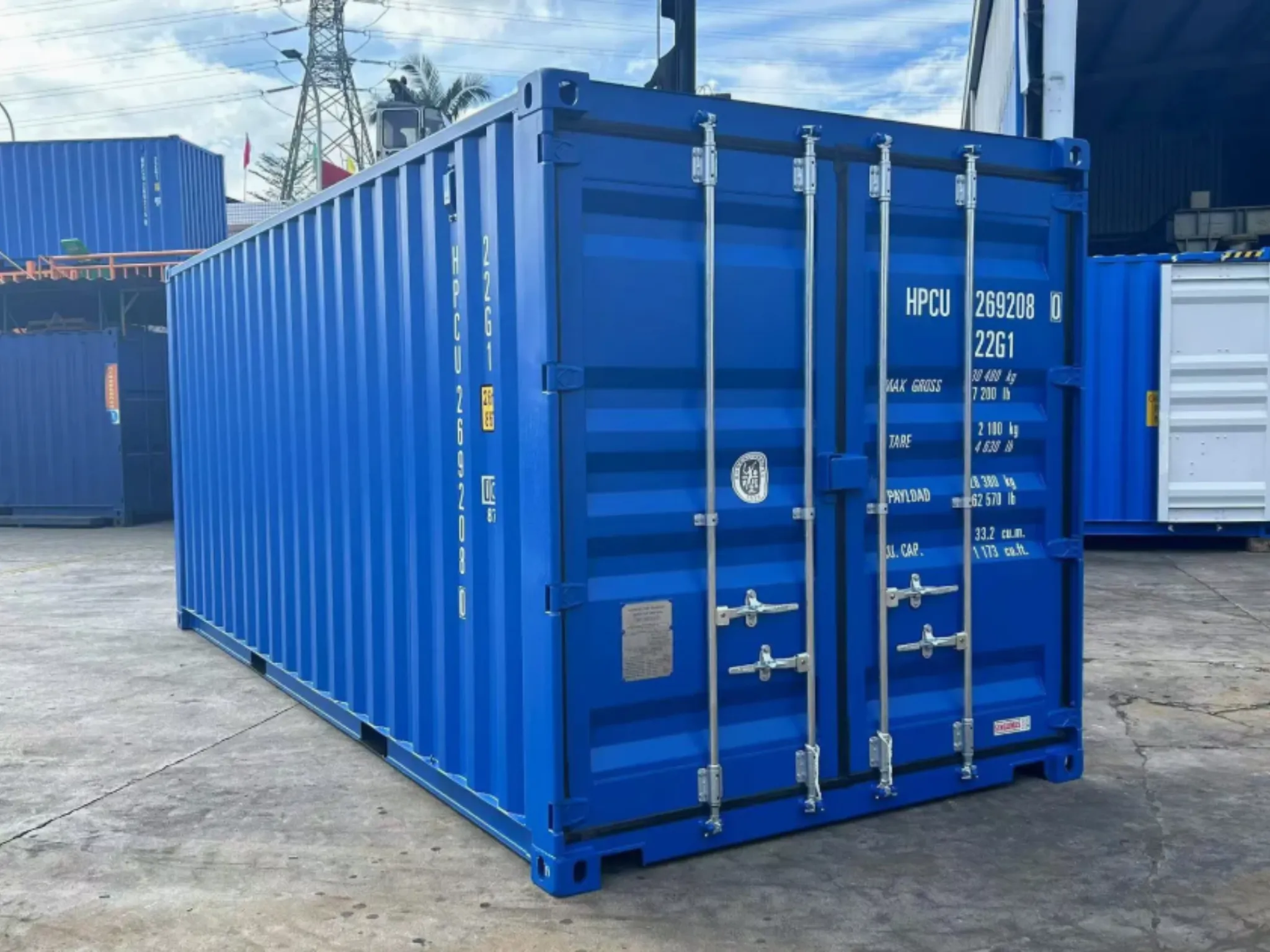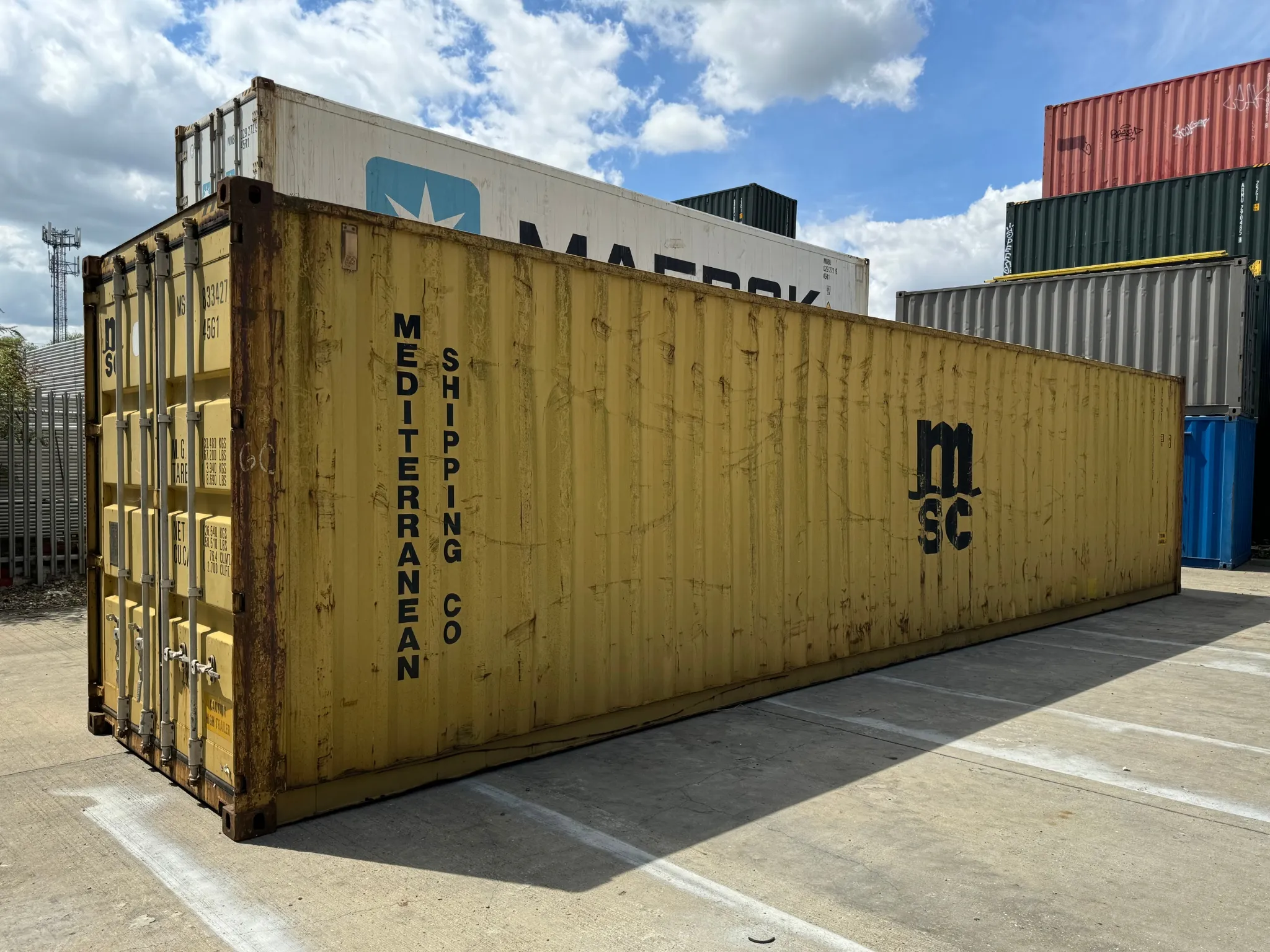
Shipping Container Delivery UK: How It Works and What to Expect
Shipping container delivery day is when your container arrives on site, access is checked, and the unit is safely placed using the agreed delivery method. In the UK, container delivery is straightforward when planned properly — but misunderstandings around access, lifting, and ground preparation are the most common causes of failed drops.
This guide explains exactly how shipping container delivery works, what happens on delivery day, and how to prepare your site so everything goes smoothly first time.

How is a shipping container delivered in the UK?
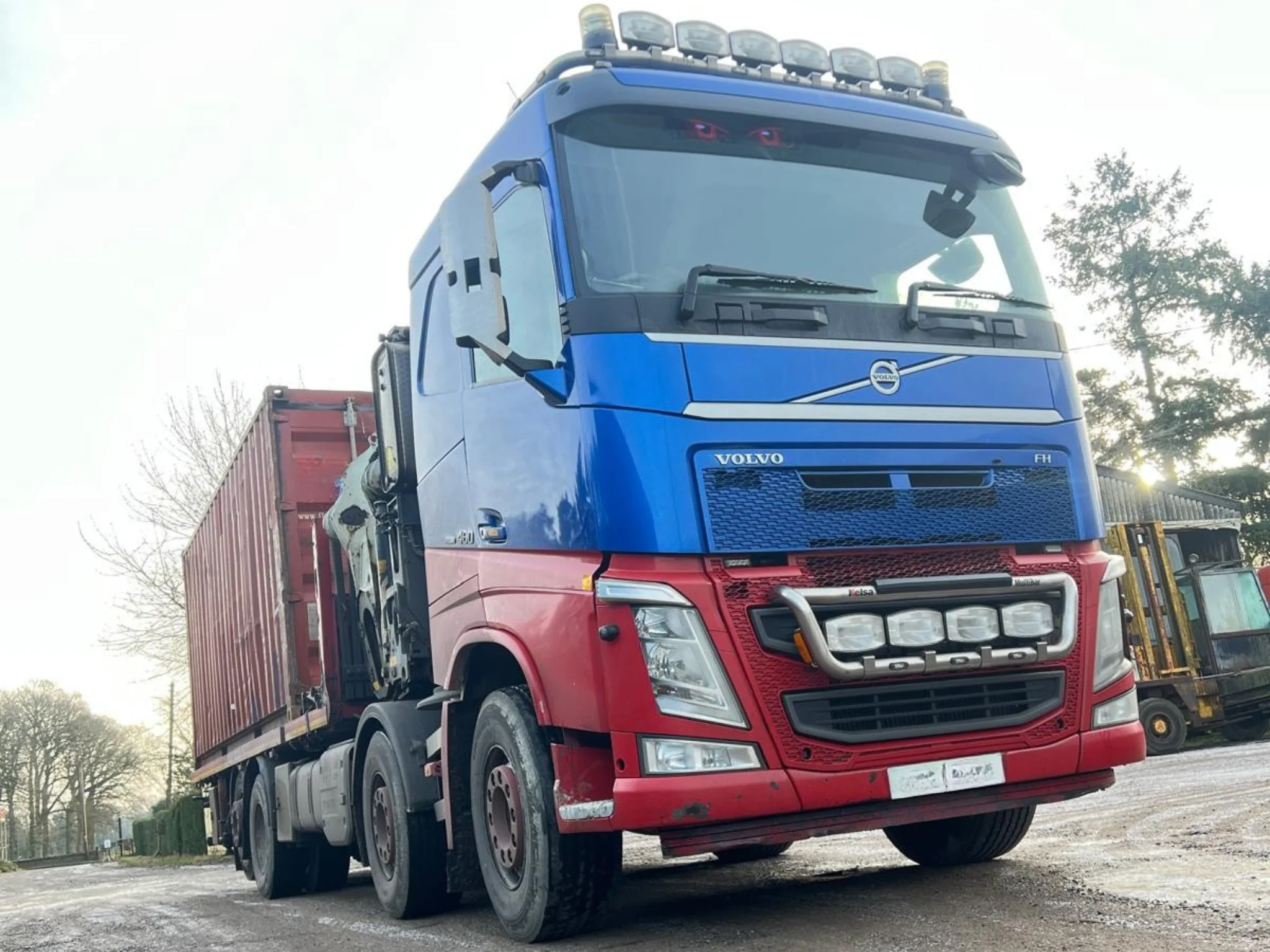
On delivery day, a shipping container is typically transported on a rigid lorry or articulated truck. The driver will Shipping containers are delivered using HIAB crane lorries or flatbed vehicles, depending on site access and whether the customer has their own lifting equipment.
At Bosh Boxes, we do not use tilt-bed or roll-off delivery.
All container deliveries fall into one of the following methods.
HIAB crane delivery (most common)
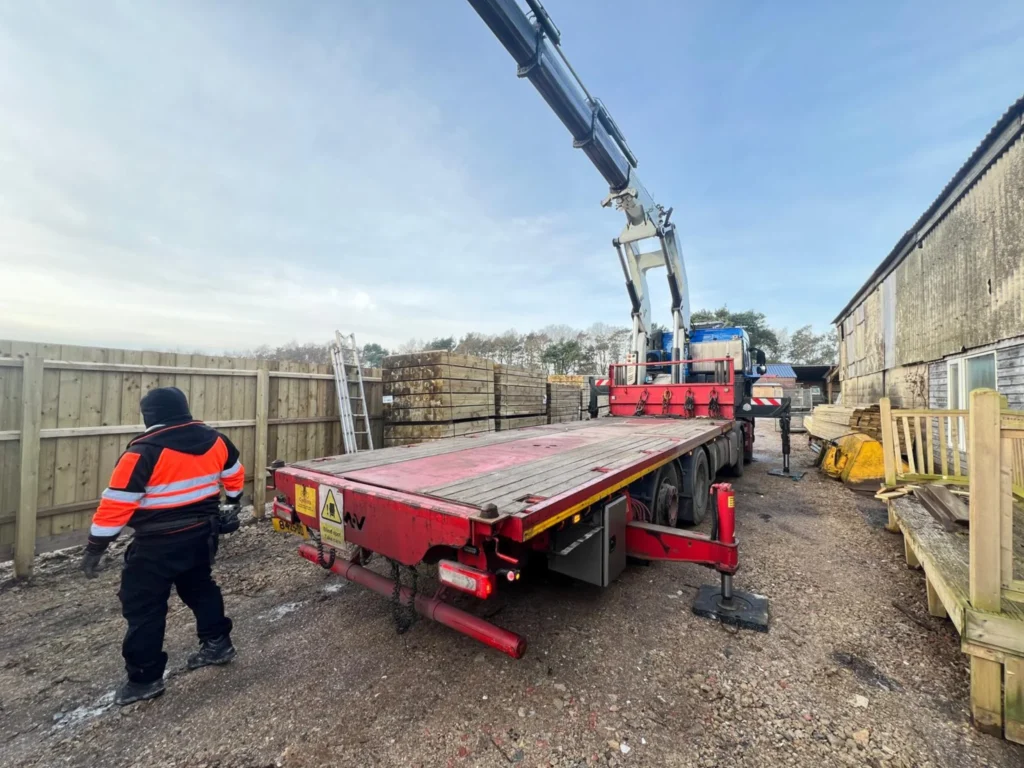
HIAB crane delivery is the most widely used and practical option for container delivery UK-wide.
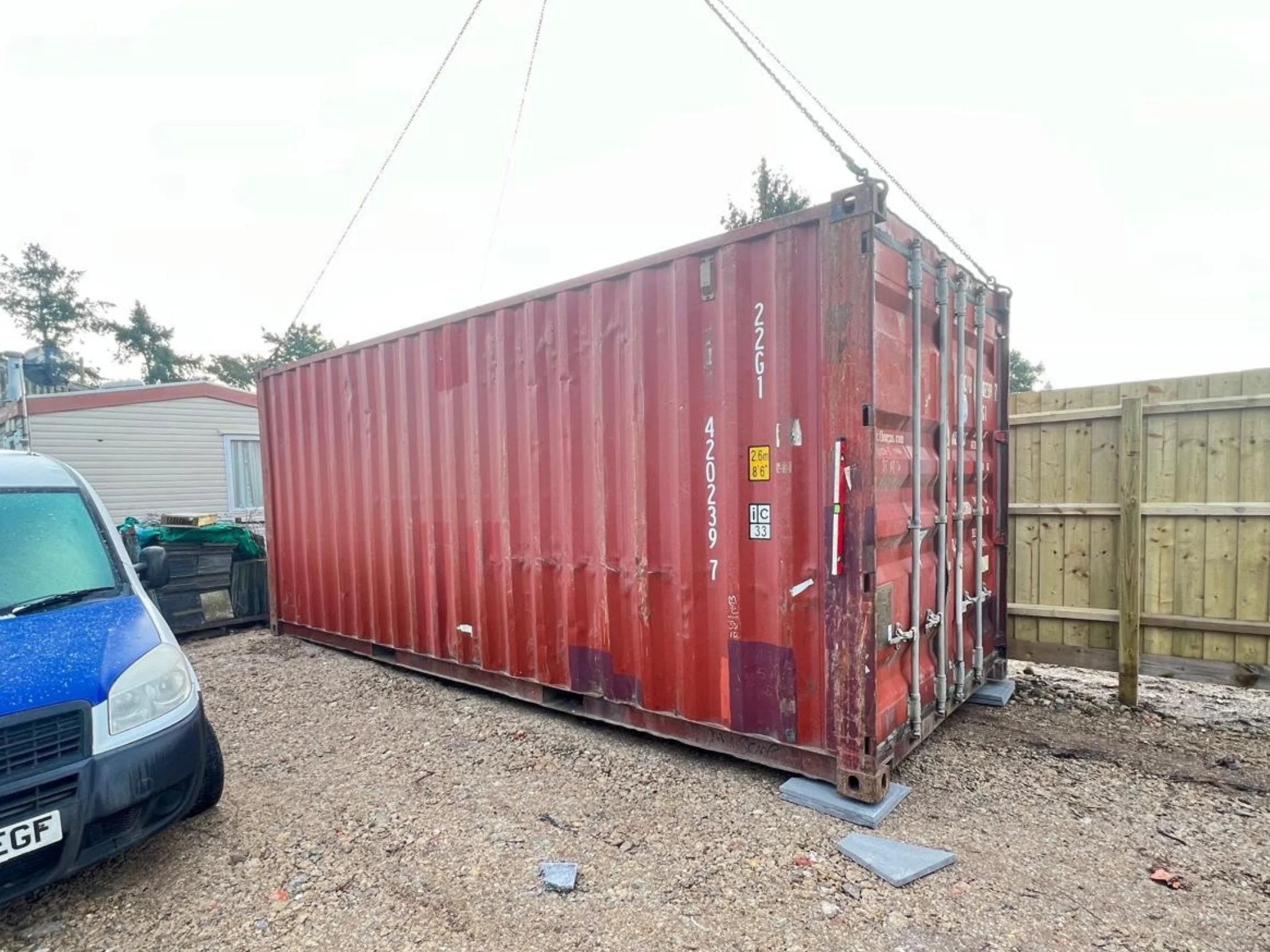
The container is transported on a lorry fitted with a hydraulic crane, which lifts the unit off the vehicle and places it directly onto the prepared ground or base. This allows for accurate positioning, even in tighter or more awkward locations.
HIAB delivery is ideal for:
- Residential properties
- Construction sites
- Farms and rural land
- Yards with limited access
- Sites without lifting equipment
Key points to know:
- The lorry must deploy stabilisers, so firm ground is essential
- Overhead obstructions (especially cables and trees) can prevent lifting
- The driver will refuse the lift if conditions are unsafe
For most buyers purchasing shipping containers for sale UK-wide, HIAB delivery is the safest and simplest option.
Flatbed delivery (customer offload only)
Flatbed delivery is available only where the customer has suitable equipment on site to unload the container themselves.
With this method, the container arrives on a flatbed lorry and remains on the vehicle until the customer offloads it.
Flatbed delivery is only suitable if:
- The container has forklift pockets
- You have a forklift or telehandler with sufficient lifting capacity
- The ground is firm, level, and safe for lifting operations
- A trained operator is available on delivery day
Typical users of flatbed delivery include:
- Farms with telehandlers
- Industrial sites with forklifts
- Trade yards and depots
⚠️ Important: Responsibility for unloading the container sits entirely with the customer.
If the unit cannot be safely offloaded on arrival, the driver may be forced to leave with the container, resulting in additional charges and delays.
What happens on shipping container delivery day?
Understanding the sequence of events helps avoid stress and unexpected issues.
1. Arrival and site check
On arrival, the driver will assess:
- Access width and turning space
- Ground conditions
- Overhead hazards
- The intended placement position
If conditions are unsafe, the driver may refuse to offload.
2. Vehicle positioning
- HIAB delivery: The lorry positions alongside the drop area
- Flatbed delivery: The vehicle parks in a safe unloading zone
Clear communication at this stage prevents incorrect placement.
3. Container offload and placement
- With HIAB delivery, the crane lifts and lowers the container into place
- With flatbed delivery, the customer unloads using their own equipment
Containers are positioned on their corner castings, not flat on the ground.
4. Final checks
Once placed, the driver ensures the container is stable and safe to leave.
5. Customer inspection
You should inspect the container immediately while the driver is present.
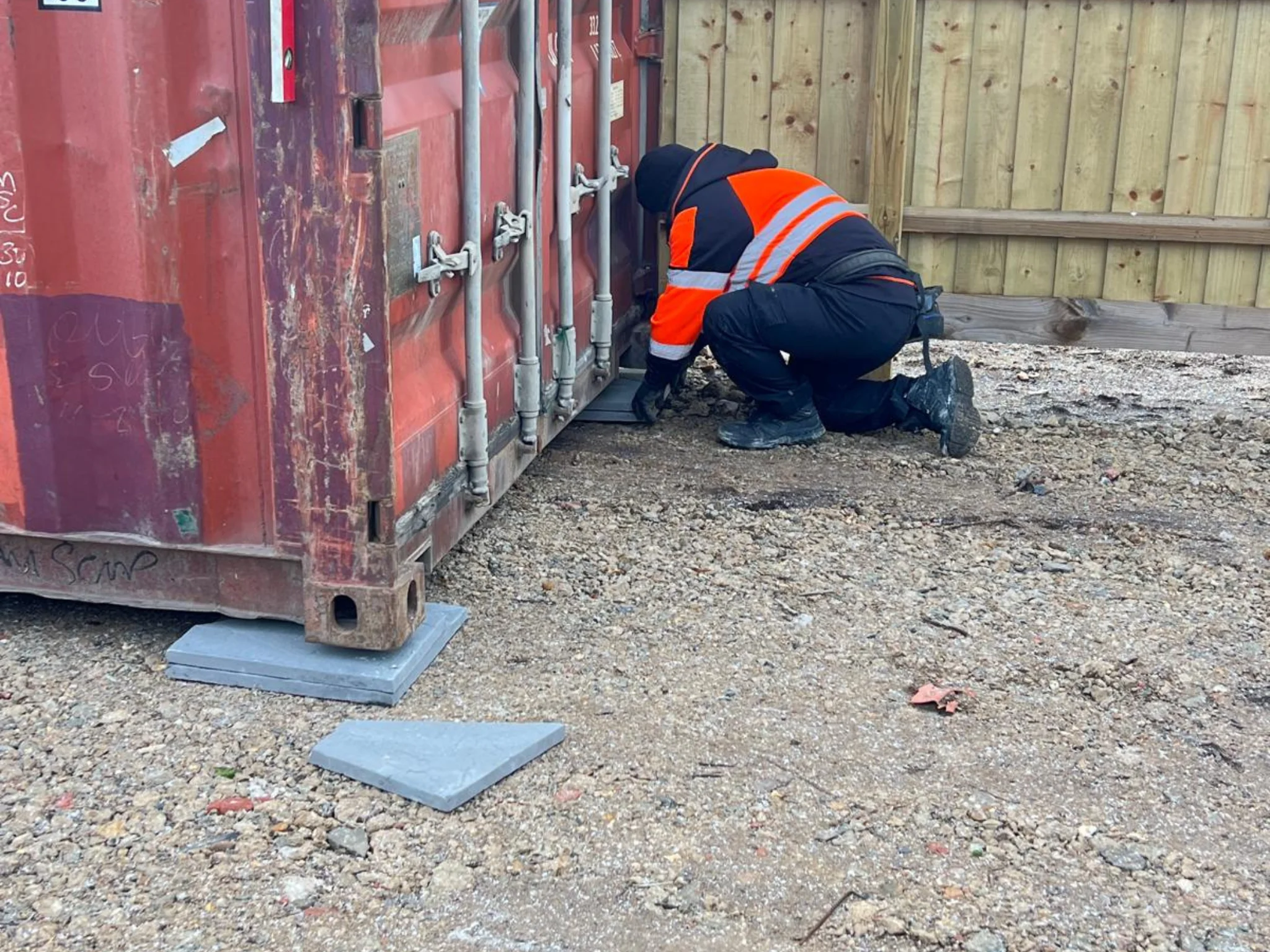
Inspecting your shipping container on delivery
Whether you buy new and used shipping containers, inspection is essential.
Quick inspection checklist:
- Doors open and close smoothly
- Locking bars and handles operate correctly
- No new dents, holes, or structural damage
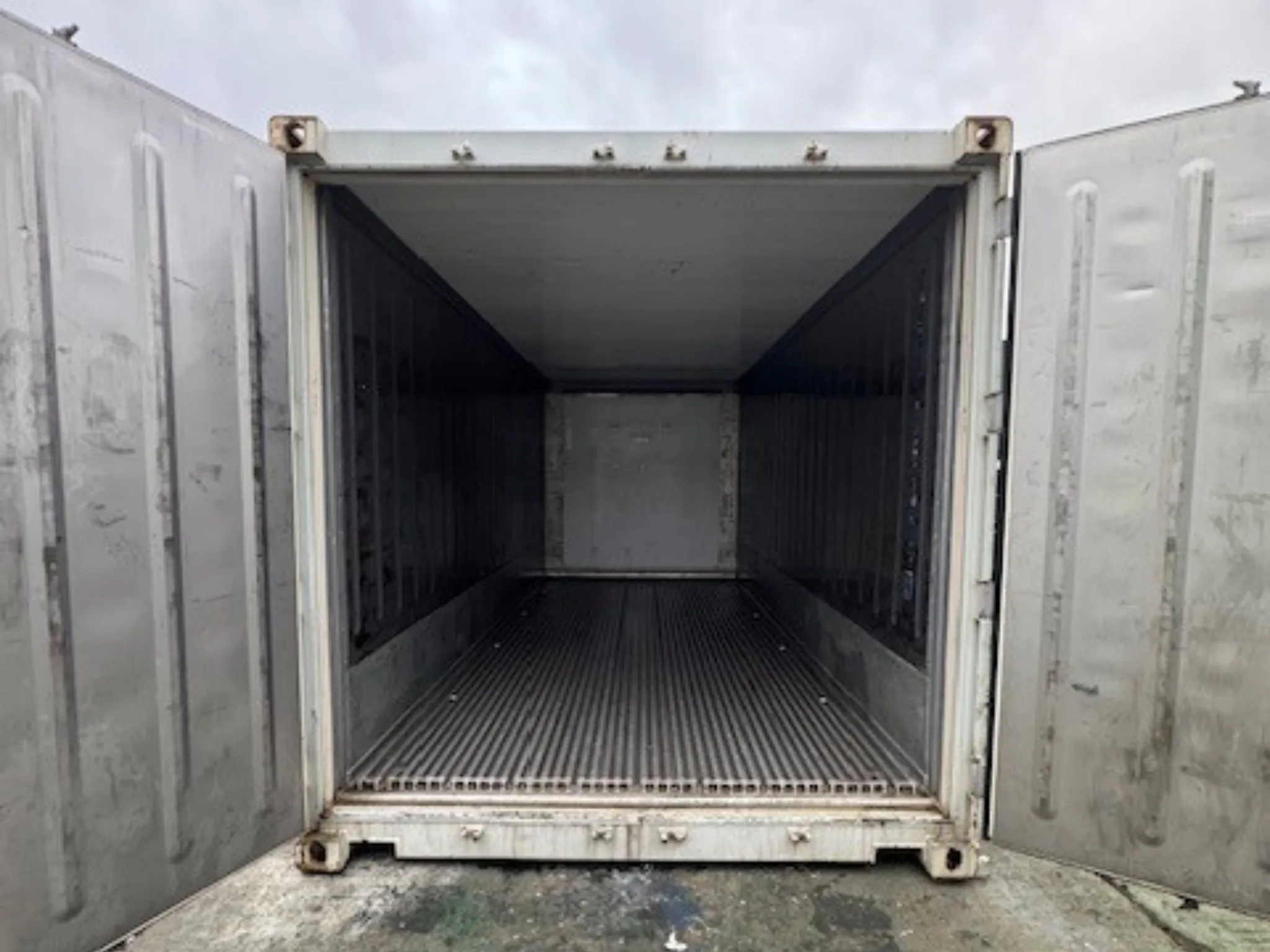
- Floor is solid with no soft spots
- Container remains wind and watertight
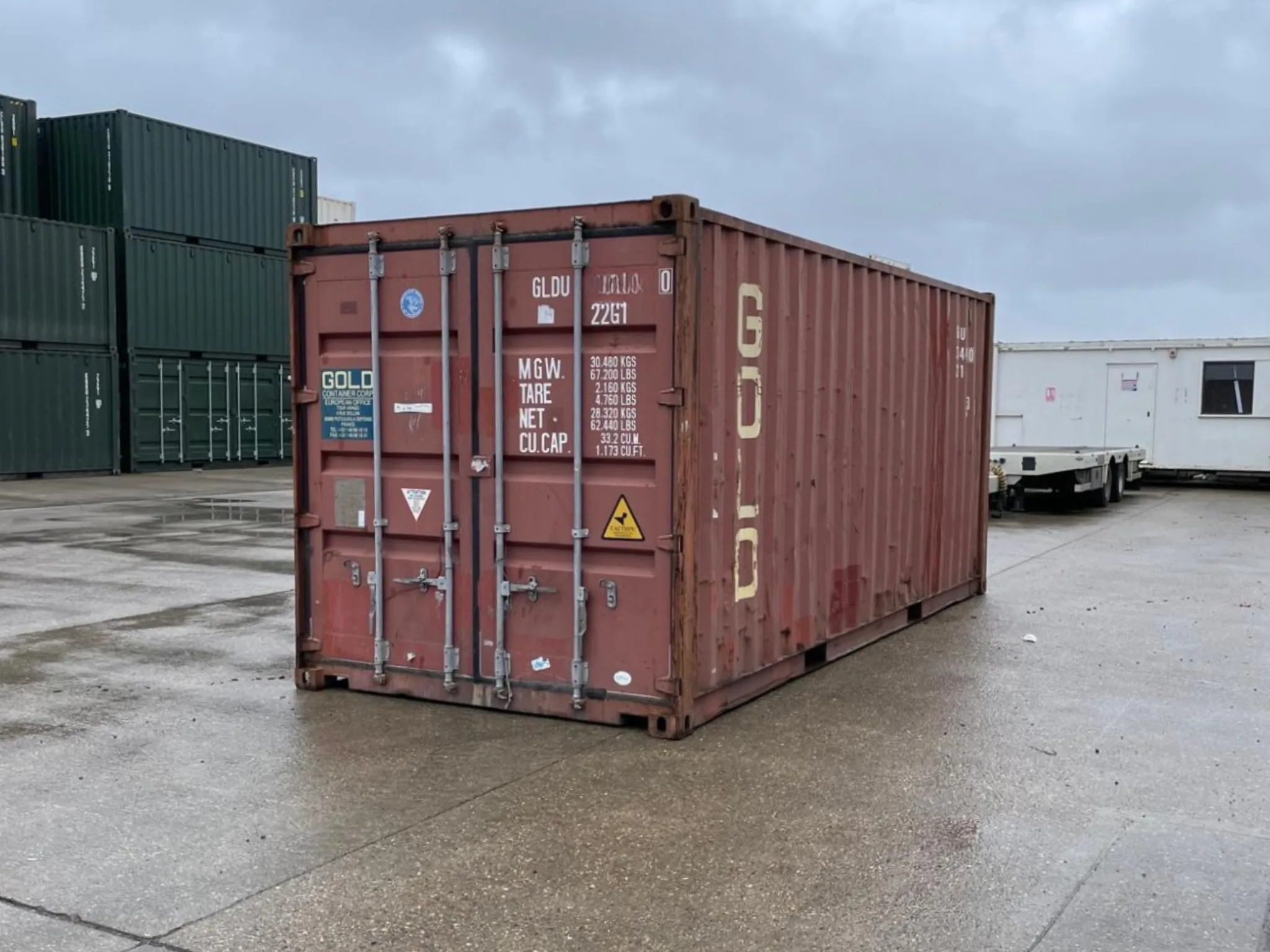
Used containers will show cosmetic wear — this is normal and does not affect secure storage.
Common container delivery problems (and how to avoid them)
Poor access
→ Measure gates, clear vehicles, and remove low branches in advance.
Soft or uneven ground
→ Install concrete pads, sleepers, or compacted hardcore beforehand.
Overhead cables
→ Check the entire lifting zone, not just the final position.
Incorrect placement instructions
→ Mark the container corners and confirm door orientation in advance.
Flatbed offload failure
→ Confirm lifting capacity and equipment suitability before booking.
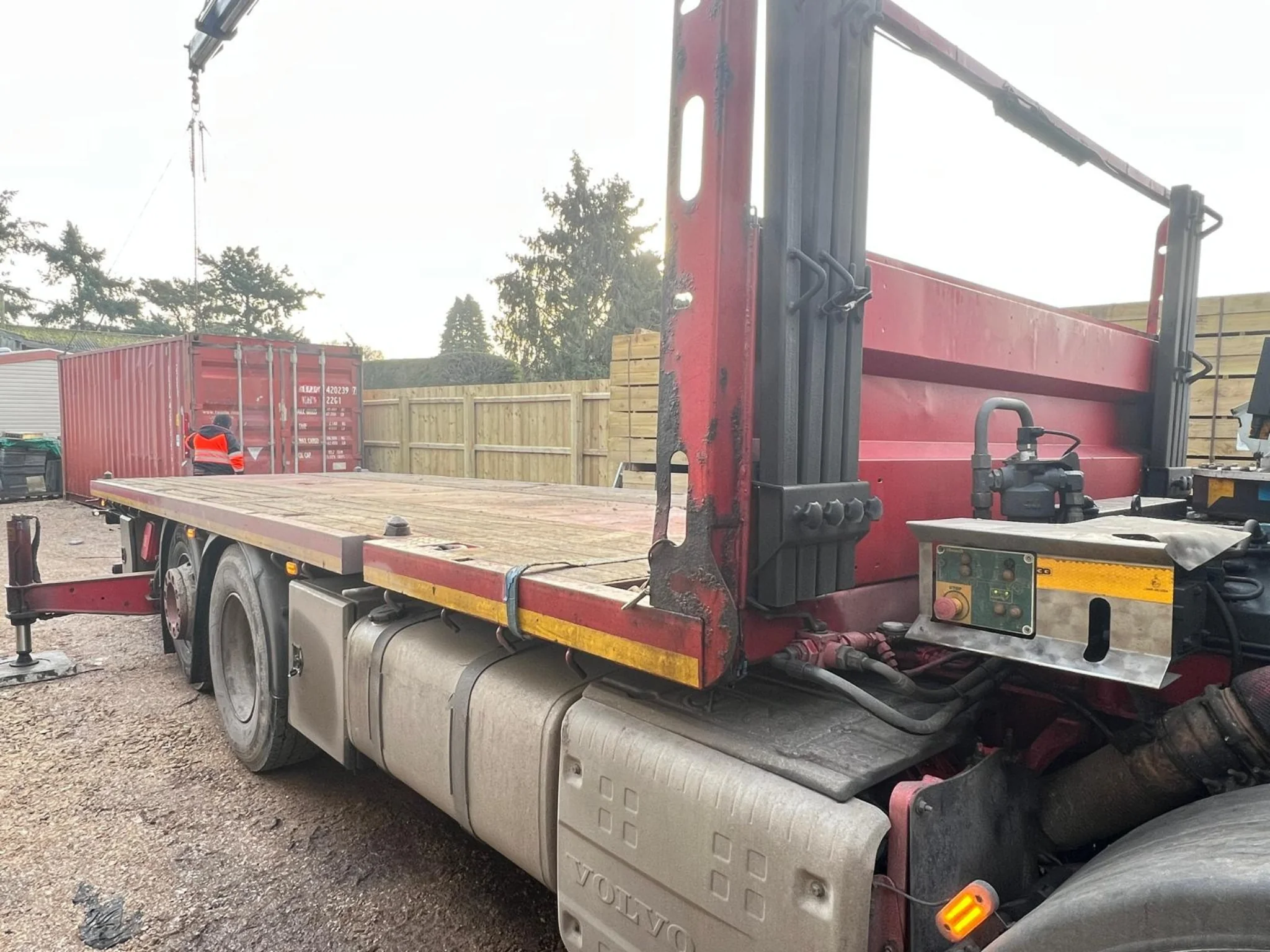
How to prepare for shipping container delivery
Check permits and permissions
Some locations require permission, particularly if delivery affects public access or highways.
Prepare a solid base
Containers should sit level on firm supports to prevent twisting and door alignment issues.
Common options include:
- Concrete pads or strips
- Railway sleepers
- Steel plates under corner castings
Clear access and space
As a guide:
- 20ft shipping containers: ~15 metres straight access
- 40ft shipping containers: ~30 metres straight access
Remove cars, skips, pallets, and debris before delivery.
Driver and customer responsibilities
The driver is responsible for:
- Transporting the container safely
- Assessing whether offloading is safe
- Placing the unit using the agreed method
The customer is responsible for:
- Site access and ground preparation
- Providing lifting equipment for flatbed deliveries
- Ensuring the site is safe on arrival
Clear communication between both parties is key to a successful delivery.

Why Bosh Boxes is the smart choice for container delivery UK-wide
- Fast, reliable container delivery UK-wide
- Clear advice before delivery day — no surprises
- Quality-checked containers for secure storage
- HIAB and flatbed options to suit real-world sites
- Experience with farms, construction sites, and residential deliveries
- Trusted supplier focused on doing things properly
How to get started
- Choose your container size (10ft, 20ft, or 40ft)
- Confirm access, ground conditions, and overhead clearance
- Decide on HIAB or flatbed delivery
- Book your delivery with confidence
Looking to buy a shipping container UK-wide with delivery done right the first time?
Get in touch with Bosh Boxes today — order your container the Bosh Boxes way.