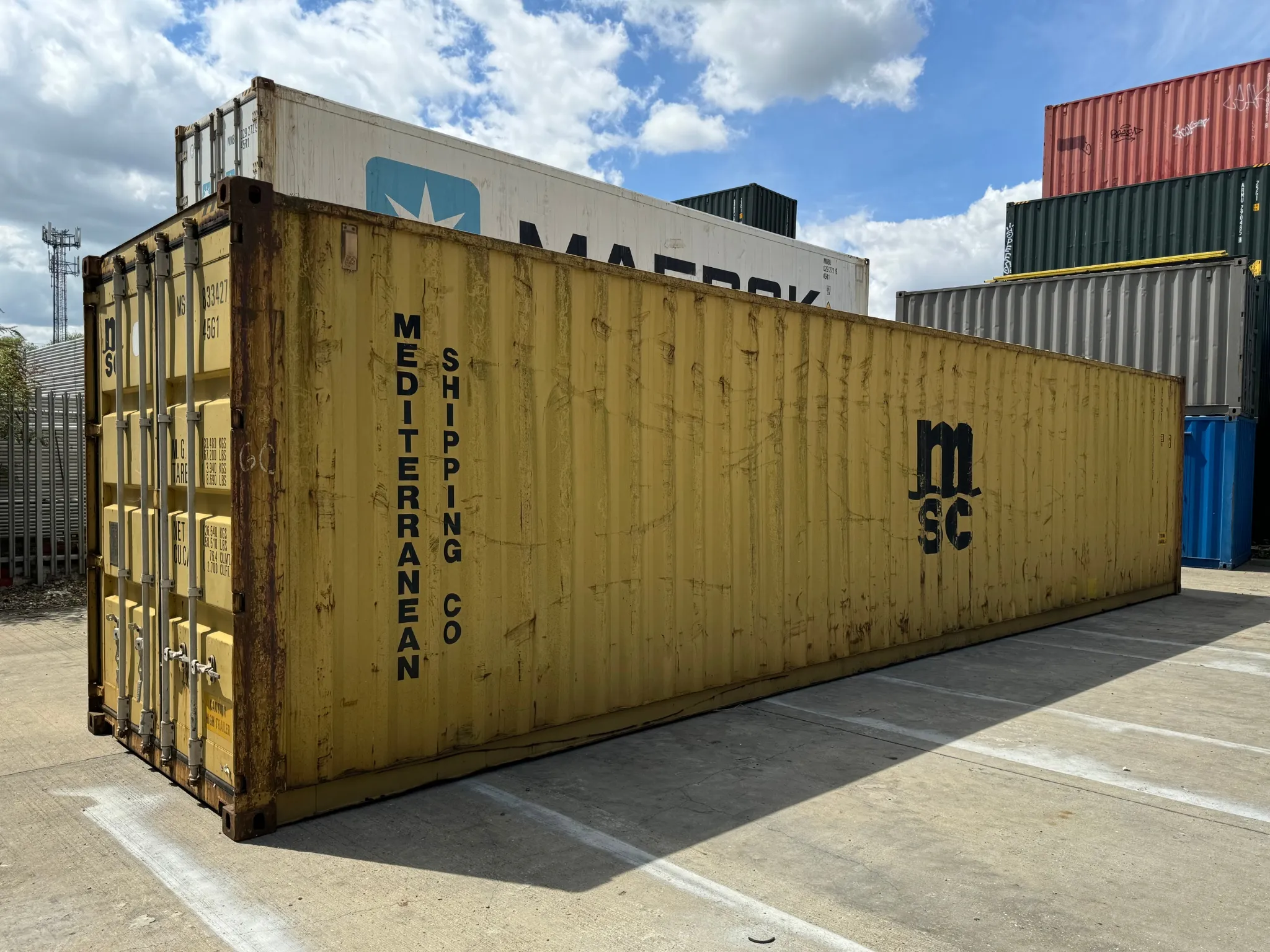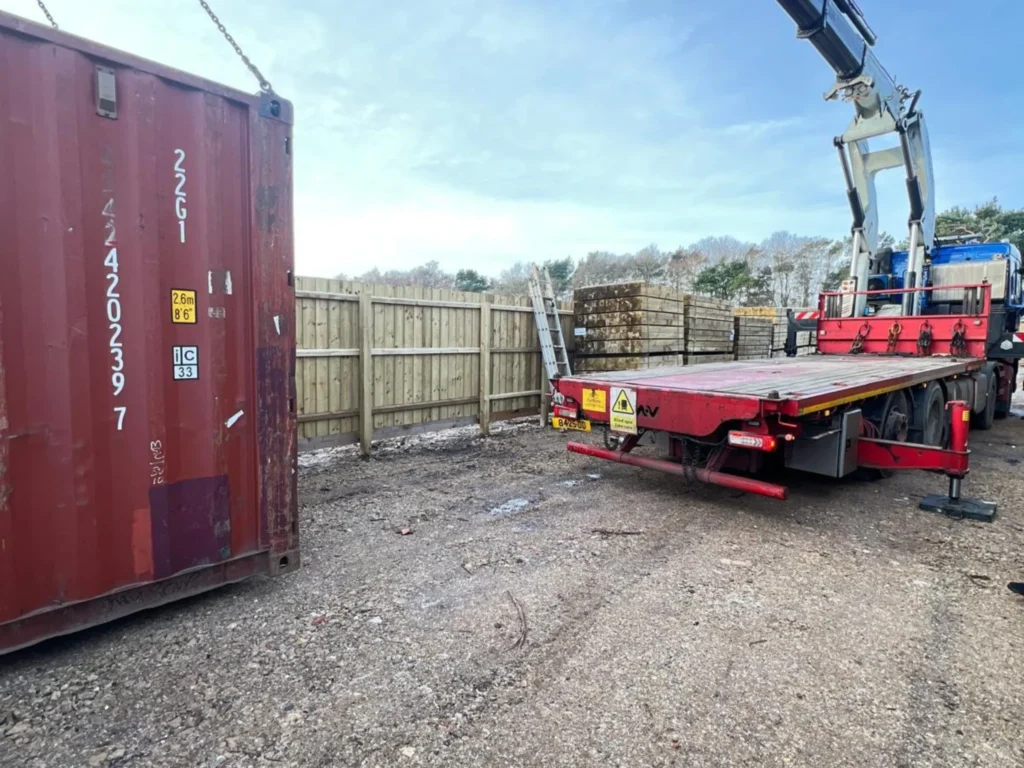
What can prevent a shipping container delivery?
The main things that prevent a shipping container delivery are poor vehicle access, soft or uneven ground, overhead obstructions (especially cables), insufficient space for stabiliser legs, and last-minute site changes. Most failed drops happen because the lorry can’t safely position next to the drop point or the crane can’t lift safely. A quick site check and clear communication usually prevents extra charges and delays.
Why this matters before you buy
A container is a big, heavy unit that isn’t easy to “shuffle” once it’s down. If delivery fails, you can end up paying for aborted transport, waiting for a re-book, and still needing to fix the same access problem. Getting the site ready first is the cheapest part of the whole process.
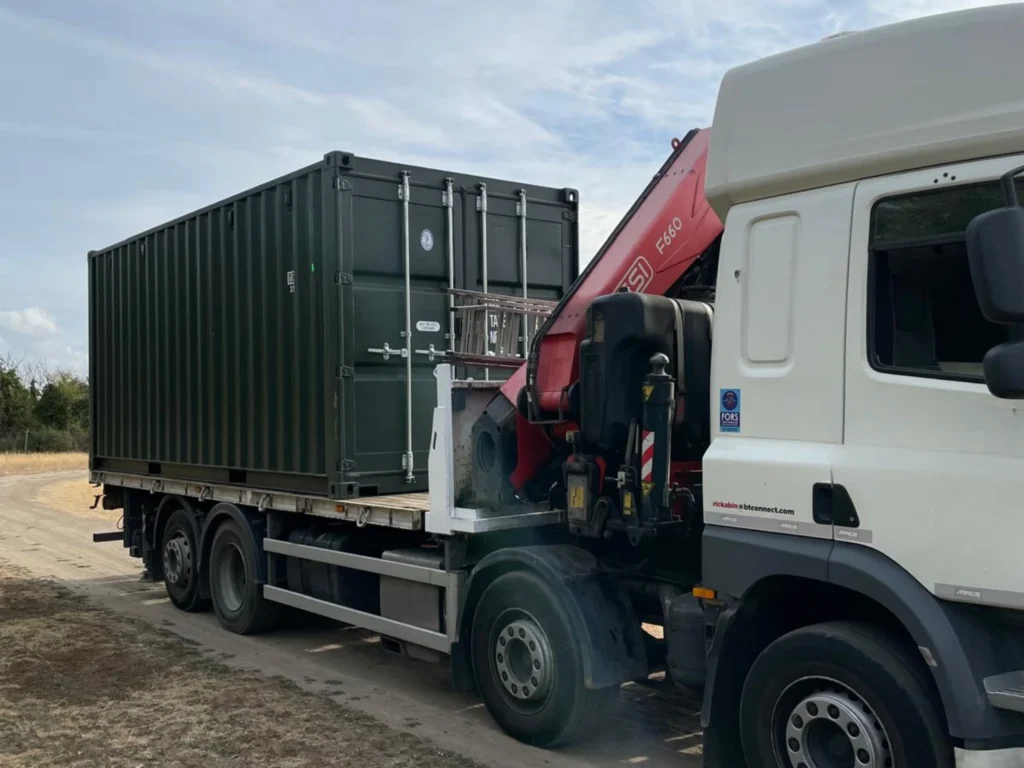
The 5 most common reasons container deliveries fail
1) Access is too tight for the delivery vehicle
Even if you’re only buying a 10ft container, the delivery vehicle can still be a full-size lorry. The biggest issues are usually on the final approach: narrow lanes, sharp turns, parked cars, tight gateways, or no room to straighten up.
Red flags to look for
- A pinch point narrower than the lorry plus mirrors
- Tight turns where the trailer would cut the corner
- Cul-de-sacs with no turning circle
- Narrow farm tracks with deep ruts or soft verges
If access is tight, it doesn’t always mean “no”. It means you need the right vehicle and a clear plan.
2) Soft ground or poor hard-standing
A Hiab lorry carries heavy weight at the front (engine and crane behind the cab). If the ground is soft, it can sink quickly, especially after rain. Drivers will refuse to proceed if they think they’ll get stuck or damage the vehicle.
Common problem areas
- Grass and field edges
- Muddy yards
- Freshly laid gravel that isn’t compacted
- Driveways not designed for heavy vehicles
A container can sit on compacted hardcore, sleepers, or slabs, but the delivery vehicle usually needs hard-standing to operate safely.
3) Overhead obstructions stop the lift
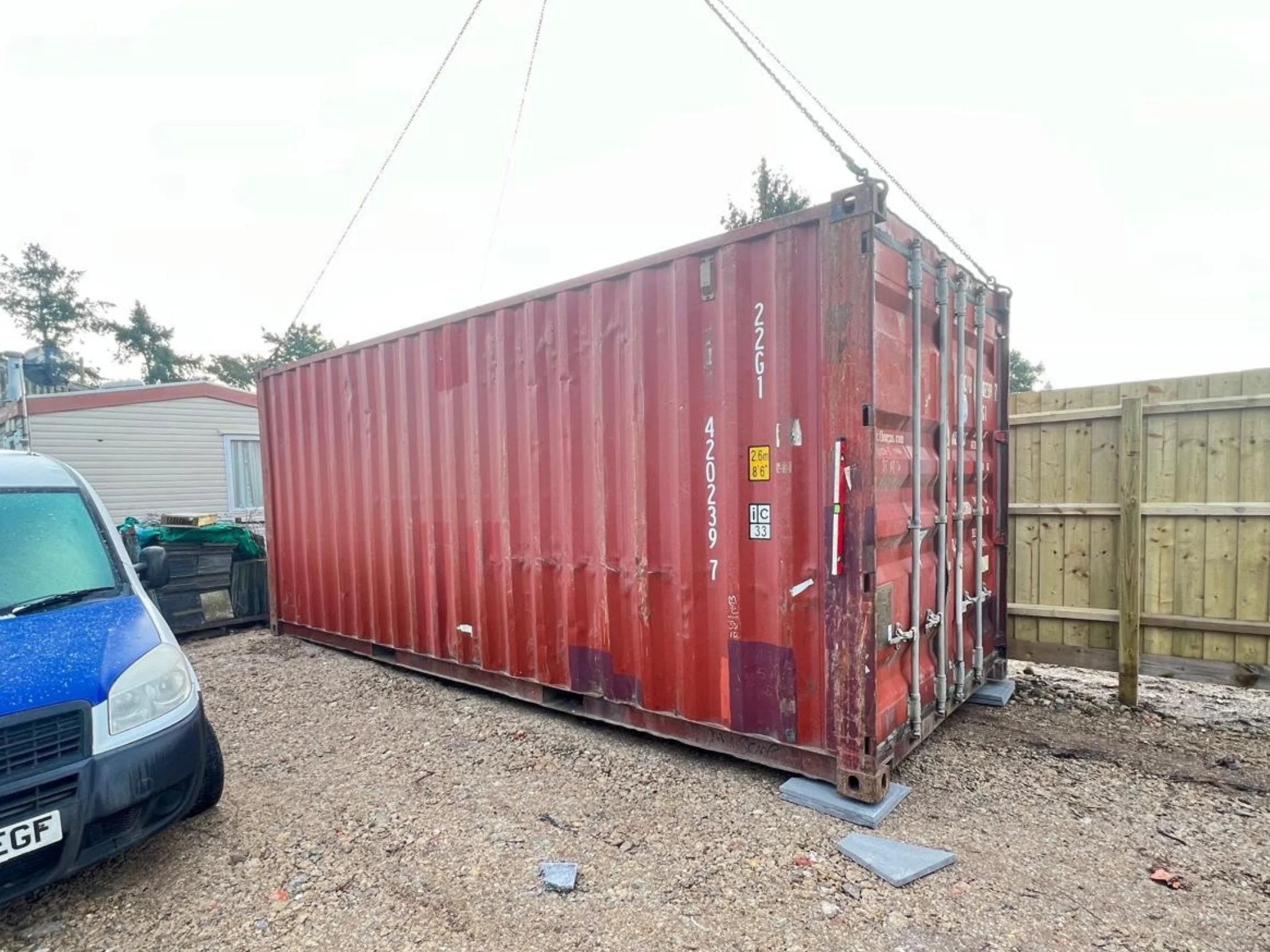
This is a big one. The crane lifts from the top corner castings and needs clear space above the container as it comes off the bed. Trees, roof overhangs, and especially overhead cables can prevent the lift even if the lorry can get on site.
What to check
- Overhanging branches near the drop zone
- Private power lines on farms and yards
- Telecom lines and low wires crossing entrances
- Low building eaves where the crane needs to swing
If there are cables nearby, you must flag it early. Safety rules can stop any lift if there’s risk.
4) Not enough room for stabiliser legs (outriggers)
A crane lorry needs stabilisers to lift safely. People often measure the container space and forget the extra width required for the truck to stabilise.
For exact access widths, vehicle lengths, and working space, our guide on how much space is needed to deliver a shipping container explains this in detail.
Typical issue
- The only place to offload is from a narrow road
- The outriggers would block the highway
- There’s a wall, parked car, or ditch stopping them deploying
If you’re delivering from a roadside, you may need traffic control or a different approach. This is exactly the sort of thing that is cheap to plan, expensive to discover on the day.
5) The site isn’t ready when the driver arrives
Even when access is fine, a delivery can fail because the drop point isn’t clear or the base isn’t prepared. Hauliers work to time slots. If the site needs digging out, clearing, or levelling on arrival, the clock is already running.
Examples
- The drop point is waterlogged after heavy rains.
- You planned to “move that car” when the lorry arrives
- The base materials aren’t laid yet
- The area is full of pallets, rubble, or scrap
If you want a deeper breakdown of these issues and how they’re typically resolved, see our guide on common container delivery problems and how to avoid them.
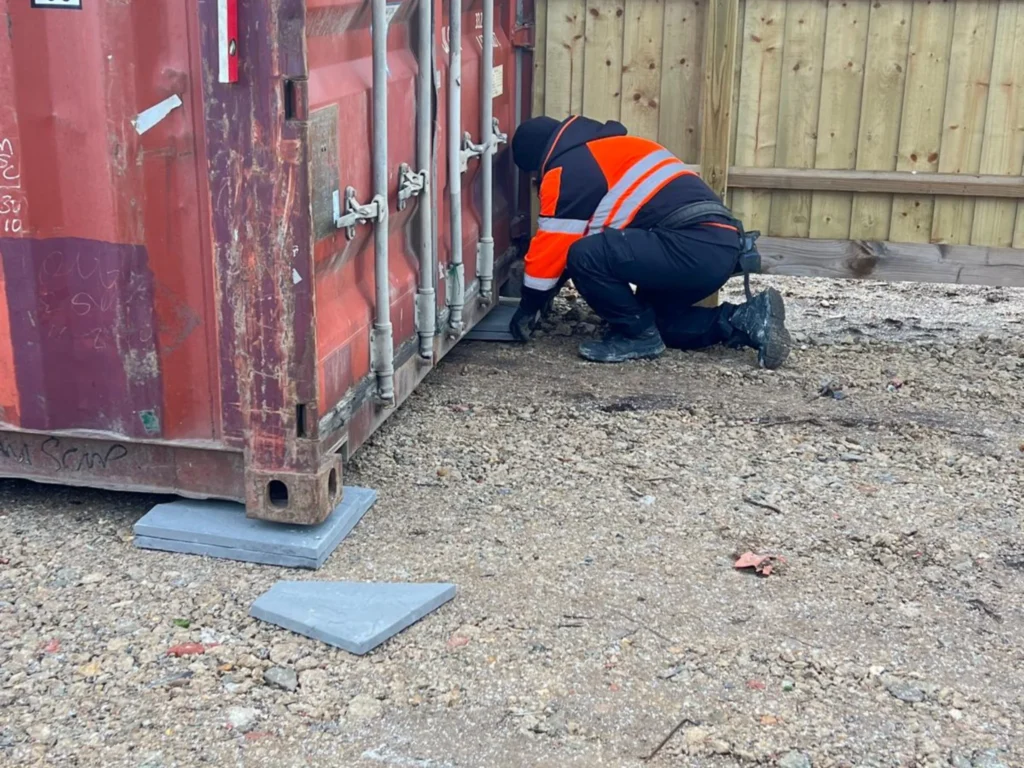
Top tips to guarantee a smooth container delivery
Do a simple “delivery walk-through” the day before
Walk the full route from the nearest main road to the drop point. You’re looking for pinch points and hazards, not measuring every mile of road.
Checklist
- Any low bridges or height barriers nearby
- Narrow lanes with passing places only
- Overhanging branches that scrape a tall vehicle
- Anything that forces the lorry to reverse long distances
If anything looks tight, take photos and share them before delivery day.
Prepare a level base that supports the corners
Containers are designed to be supported at the four corner castings. If a container sits twisted (even slightly), the frame can “rack”, making the doors stiff or impossible to open.
Good base options include:
- Concrete blocks or pads
- Railway sleepers
- Heavy paving slabs on compacted ground
Keep a few hard shims to hand so the driver can lift and you can level it properly.
Decide door orientation before the lorry turns up
This sounds basic, but it’s a common regret. Think about daily use, not just where it fits.
Ask yourself:
- Do the doors face where you’ll load from?
- Is there clearance to open both doors fully?
- Will prevailing wind slam doors open on exposed sites?
- Will you need access for a forklift or pallet truck?
A 2-minute decision now can save a costly re-position later.
Frequently Asked Delivery Questions
Can a delivery fail even if the container fits?
Yes. The container footprint is only part of the job. The lorry needs space to park and stabilise, and the crane needs safe overhead clearance to lift.
Can you deliver onto grass?
Usually no, because the vehicle needs hard-standing to operate safely. Some sites can be delivered to from hard ground nearby, with the container lifted into position.
What’s the biggest cause of failed deliveries?
Lack of access and overhead obstructions are the most common. If the lorry can’t position safely next to the drop point, the delivery can’t proceed.
Why do container doors stop working after delivery?
If the container isn’t level, the frame can twist slightly (racking). That can make doors stiff or unable to lock properly until the base is corrected.

Bottom line
What can prevent a shipping container delivery is rarely the container itself. It’s almost always access, ground, overhead clearance, stabiliser space, or the site not being ready. A quick site walk-through, a level base, and early photos to your supplier are usually enough to avoid a failed drop.
If you’re unsure about access, send a few photos and measurements before booking — it’s the easiest way to protect your budget and your delivery slot.
Once delivery access and site preparation are understood, choosing from the right shipping containers for sale becomes a far more straightforward decision.