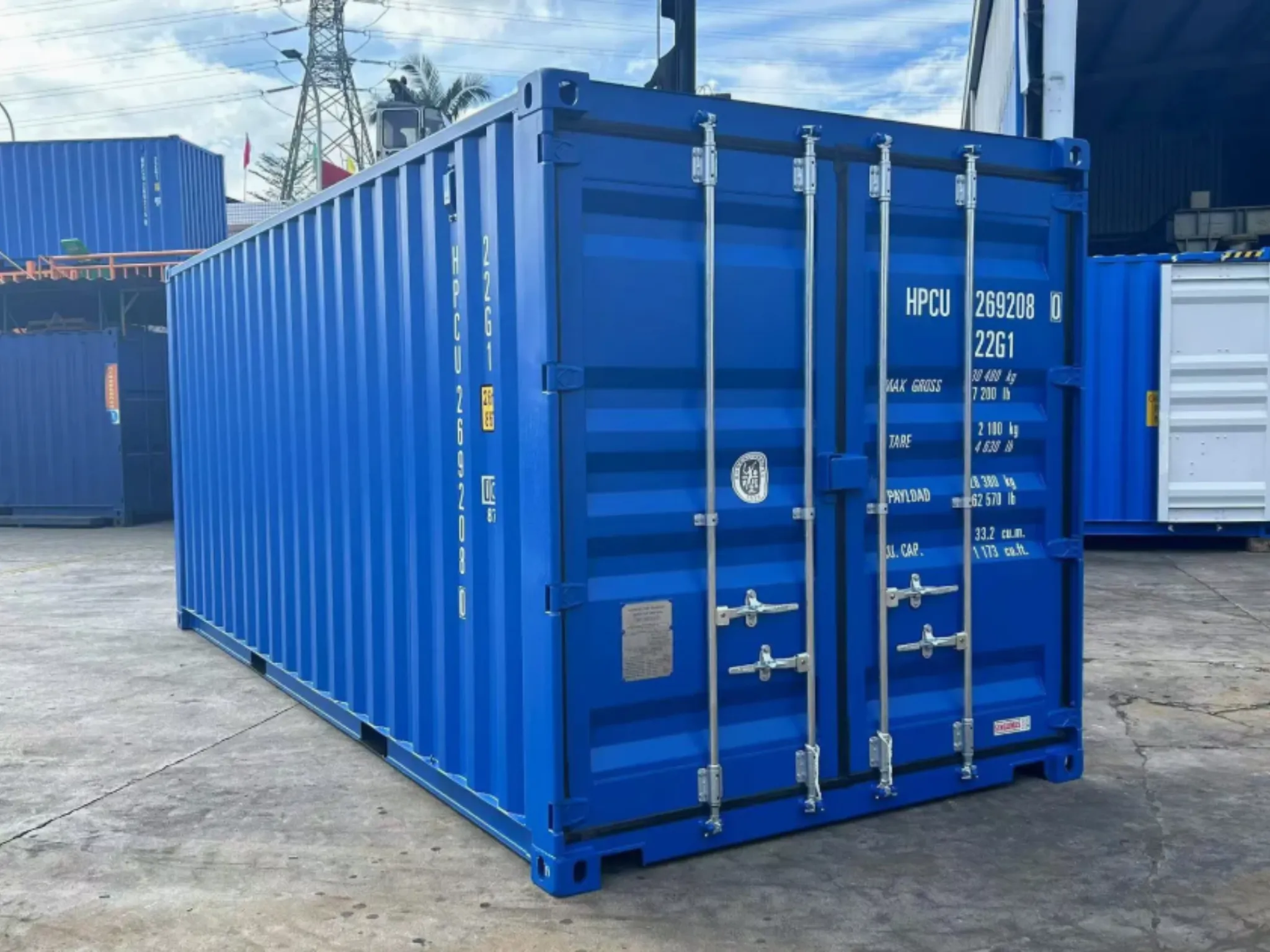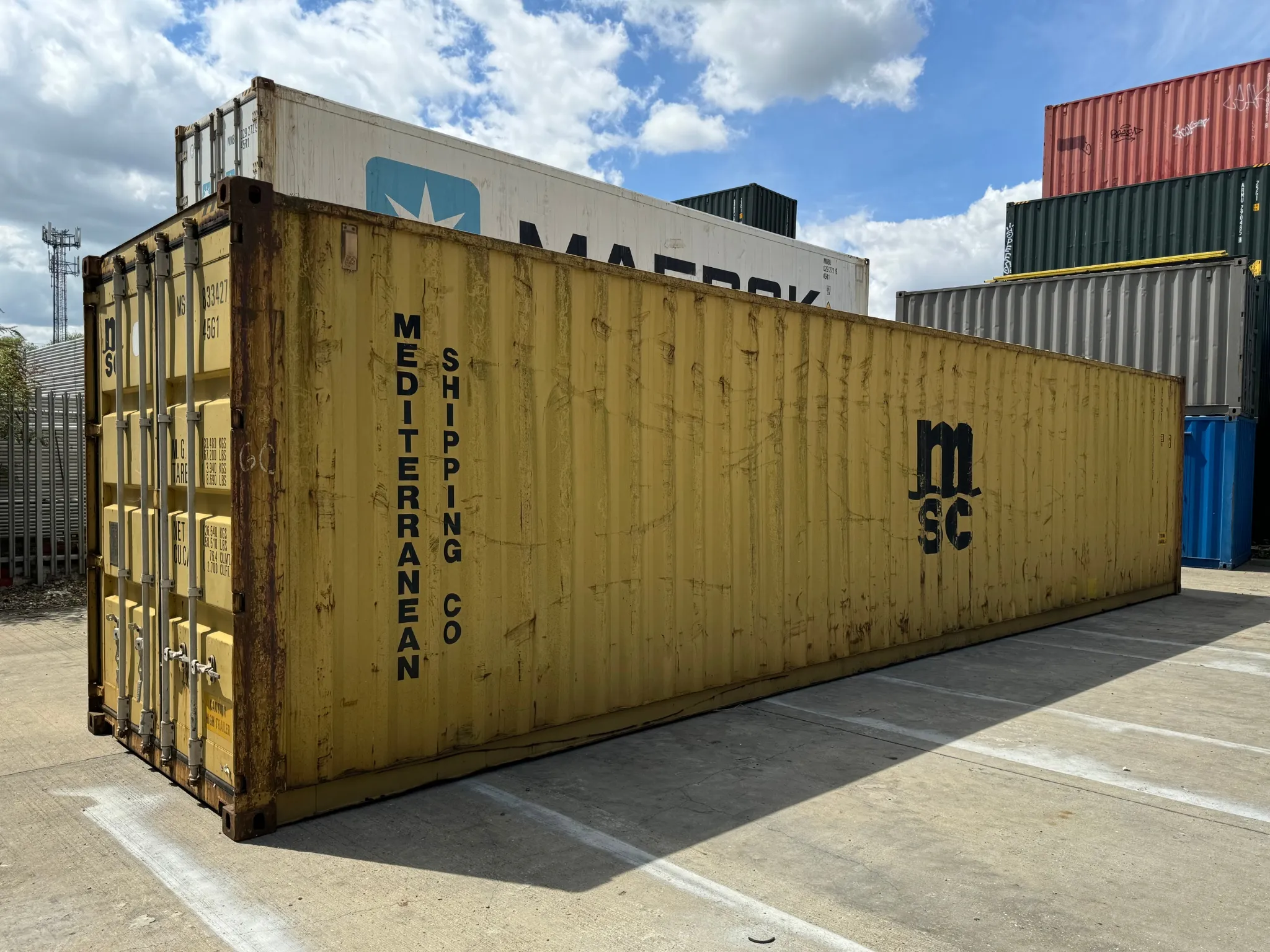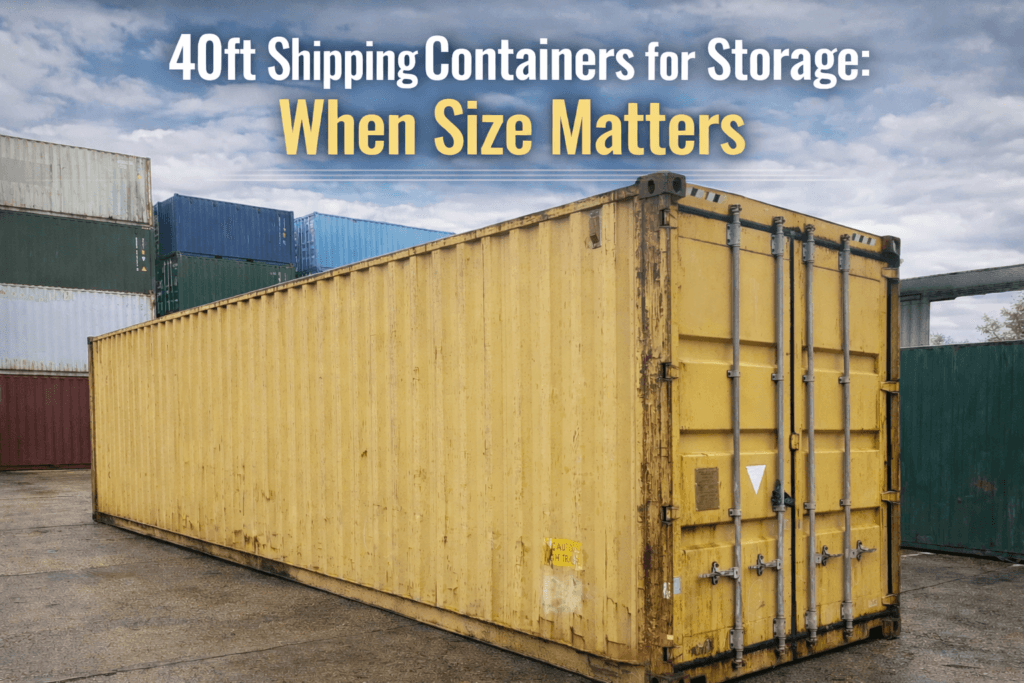
40ft shipping containers for storage are large-capacity steel units designed for businesses that require high-volume, long-term, secure storage. In the UK, they are commonly used for bulk stock, commercial equipment, construction materials, and agricultural storage where smaller containers would be inefficient.
When buyers choose a container that is too small, storage quickly becomes inefficient. A 40ft shipping container offers a practical solution where scale matters.
This guide explains when a 40ft container is the right choice for storage and when a smaller unit may be more suitable.
What Is a 40ft Shipping Container?
Standard size explained
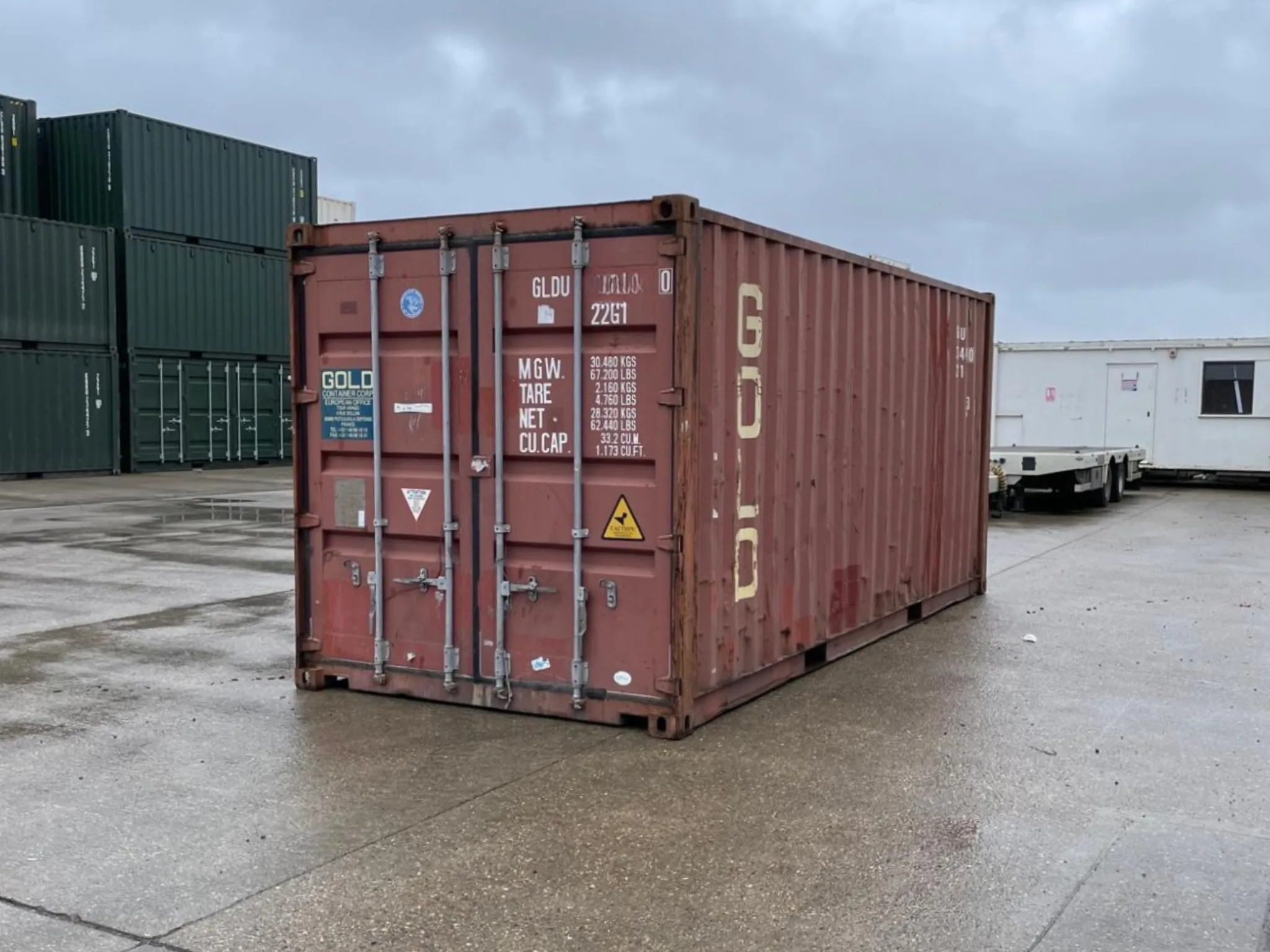
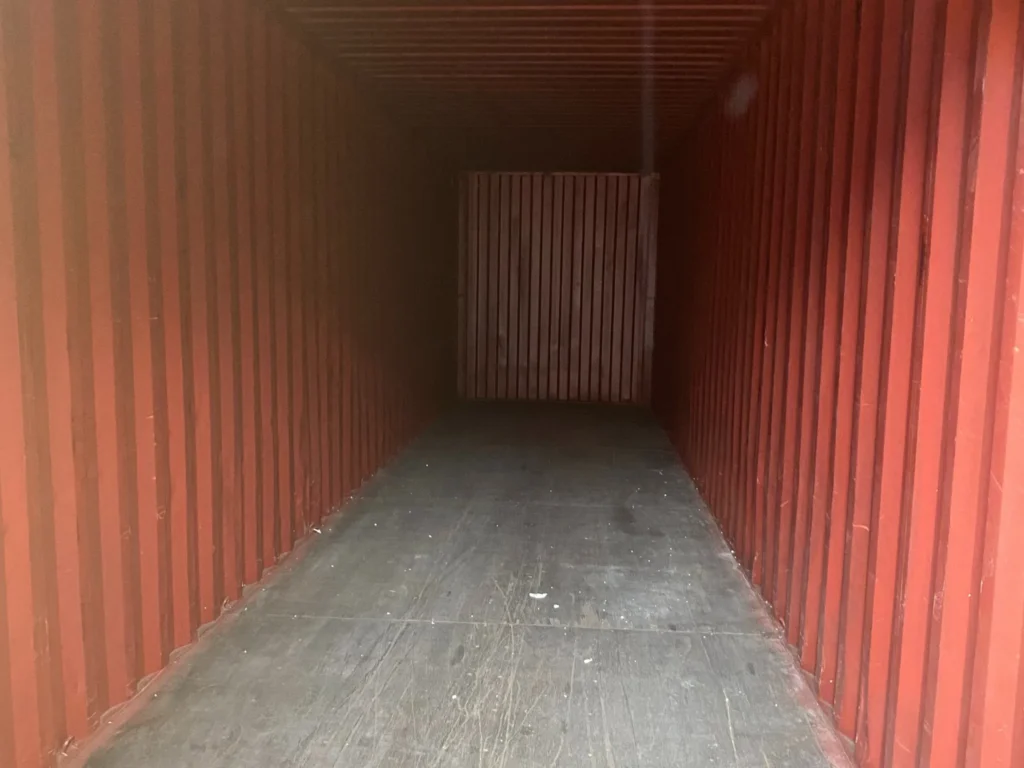
A standard 40ft shipping container measures approximately 12.2 metres long, 2.4 metres wide, and 2.6 metres high. Internally, a standard 40ft container offers roughly 12 metres of usable length, 2.35 metres of width, and around 2.4 metres of height. This provides over double the internal volume of a 20ft container while keeping the same width.
Most 40ft containers available in the UK are steel units designed for heavy-duty transport and long-term static use.
Storage capacity in real terms
A 40ft container can comfortably store:
- Multiple pallets stacked two high
- Large machinery or equipment
- Bulk stock or seasonal inventory
- Materials for construction or agriculture
For many buyers, one 40ft container replaces two smaller units.
A standard 40ft shipping container can typically accommodate around 20 to 22 standard pallets, depending on layout and stacking.
40ft Used High Cube Shipping Containers
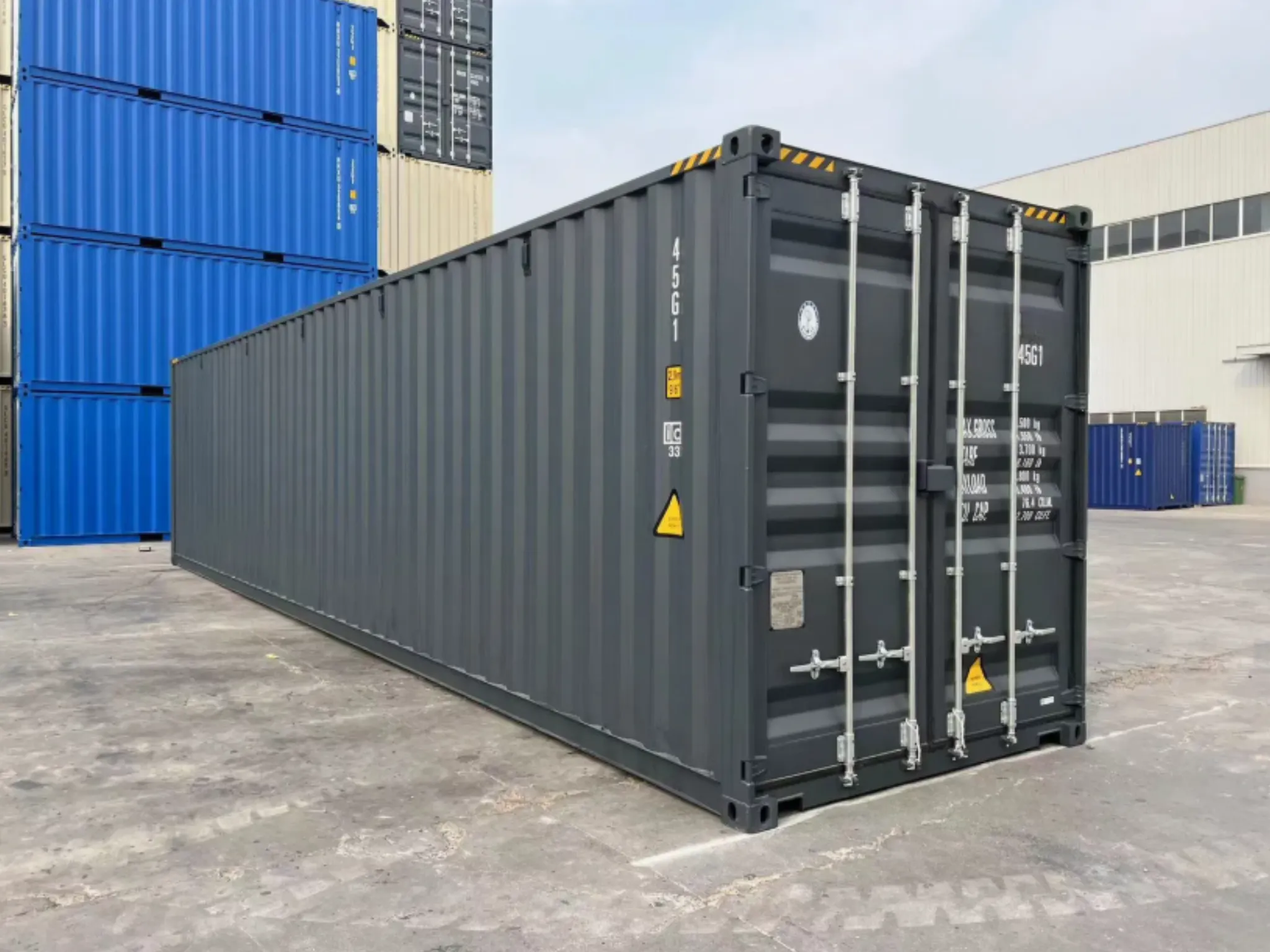
When Size Really Matters for Storage
Commercial and business storage
Businesses storing stock, tools, or equipment often outgrow smaller containers quickly. A 40ft container allows clear walkways, better organisation, and easier access without unloading half the unit.
Storage efficiency improves when items can be grouped and accessed without reshuffling.
Long-term storage needs
For long-term storage, extra space reduces pressure on flooring, improves airflow, and lowers the risk of damage to contents. Overfilled containers are harder to ventilate and manage.
A larger container supports better storage habits.

40ft vs 20ft Containers for Storage
The table below compares 20ft and 40ft shipping containers for storage, highlighting differences in internal volume, pallet capacity, access, and long-term suitability. This comparison helps UK buyers understand when a 40ft shipping container delivers better value and efficiency than a smaller unit.
| Factor | 20ft Container | 40ft Container |
|---|---|---|
| Internal volume | Moderate | Very high |
| Pallet capacity | Limited | Excellent |
| Access | Can become restricted | Easier organisation |
| Long-term storage | Suitable | More practical |
| Site footprint | Smaller | Larger |
Choosing size based on future needs prevents upgrades later.
High Cube vs Standard Height for Storage
Why height can matter
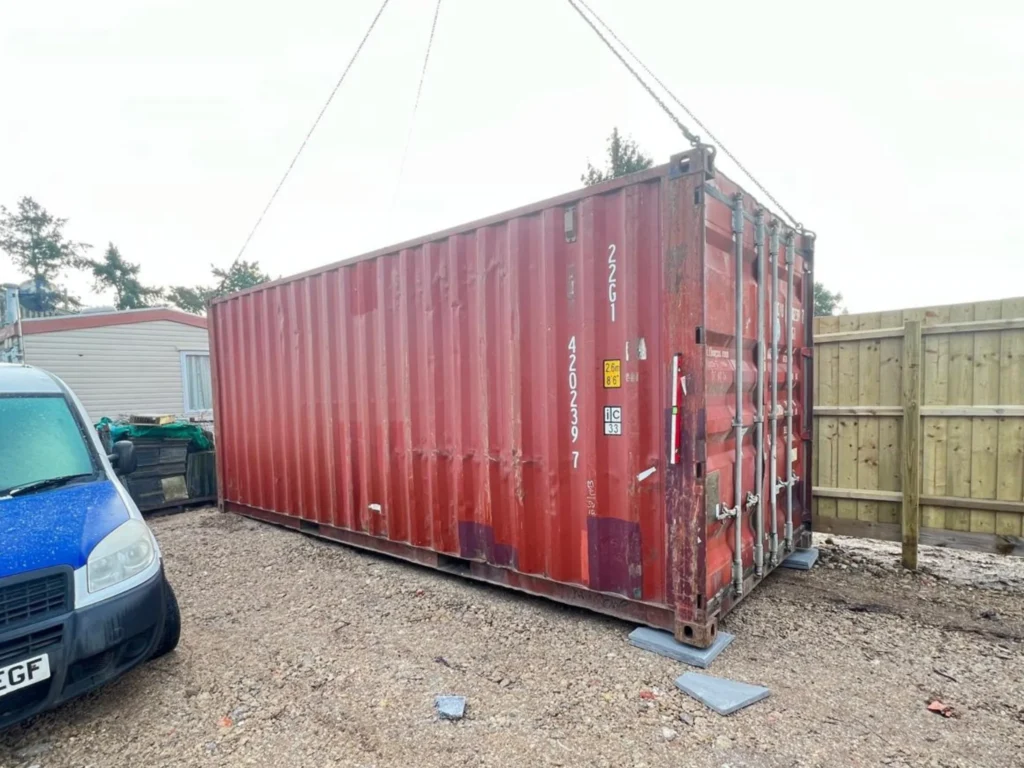
Many 40ft containers in the UK are high cube units, offering extra internal height. This additional headroom is useful for stacking, racking, or storing tall items.
High cube containers provide more usable vertical space without increasing ground footprint.
When standard height is enough
Standard height 40ft containers are still suitable for most storage uses where stacking is limited or where site restrictions apply.
Container height should match how items are stored.
Access and Organisation Inside a 40ft Container
Improved internal layout
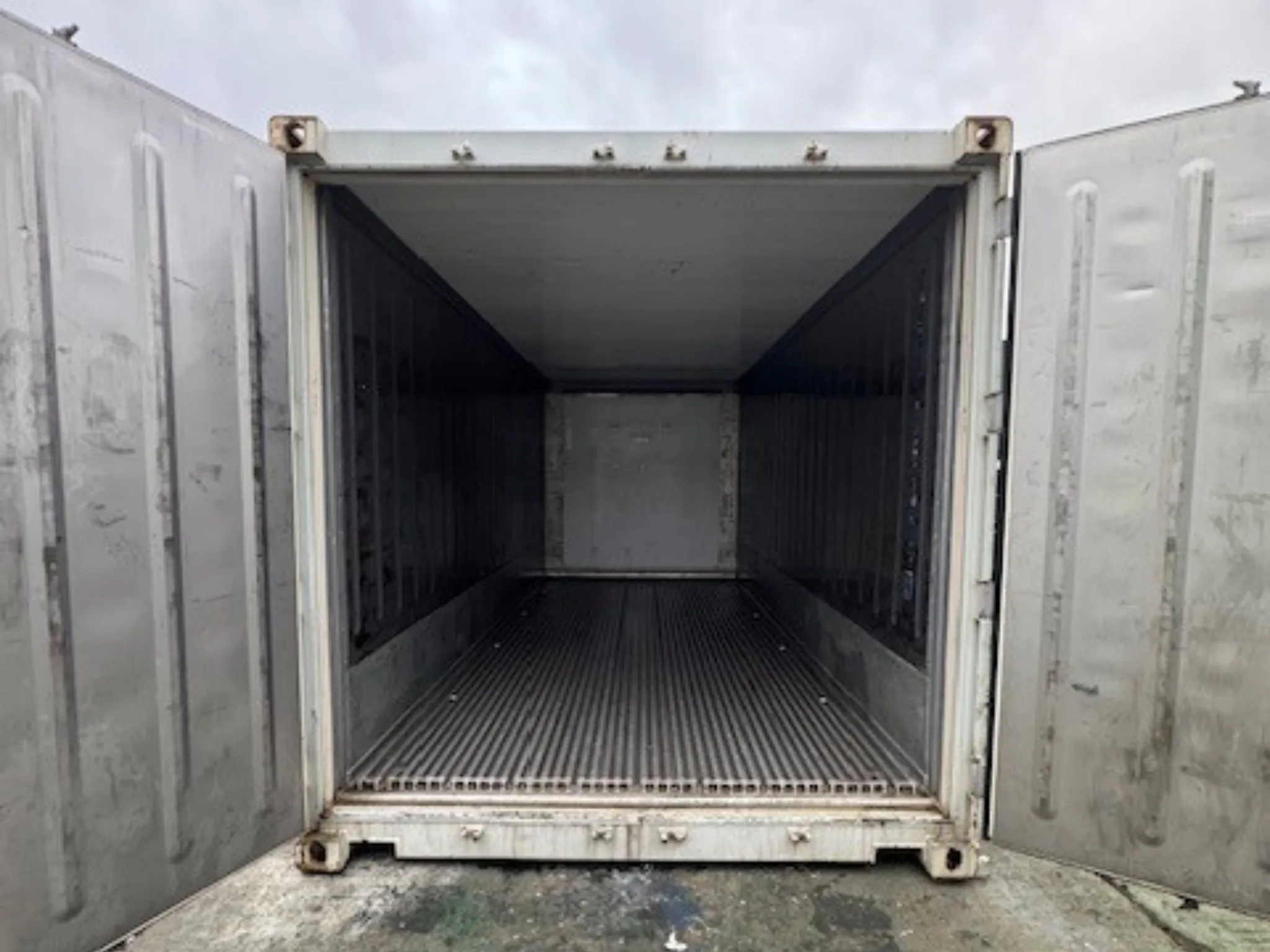
The length of a 40ft container allows better zoning of stored items. Stock can be grouped by type, usage, or season without blocking access.
This reduces time spent unloading and rearranging.
Reduced handling risk
With more internal space, items are less likely to be stacked too tightly. This lowers the risk of crushing, damage, or accidental spills.
Better access equals safer storage.
Delivery Space Requirements for 40ft Containers
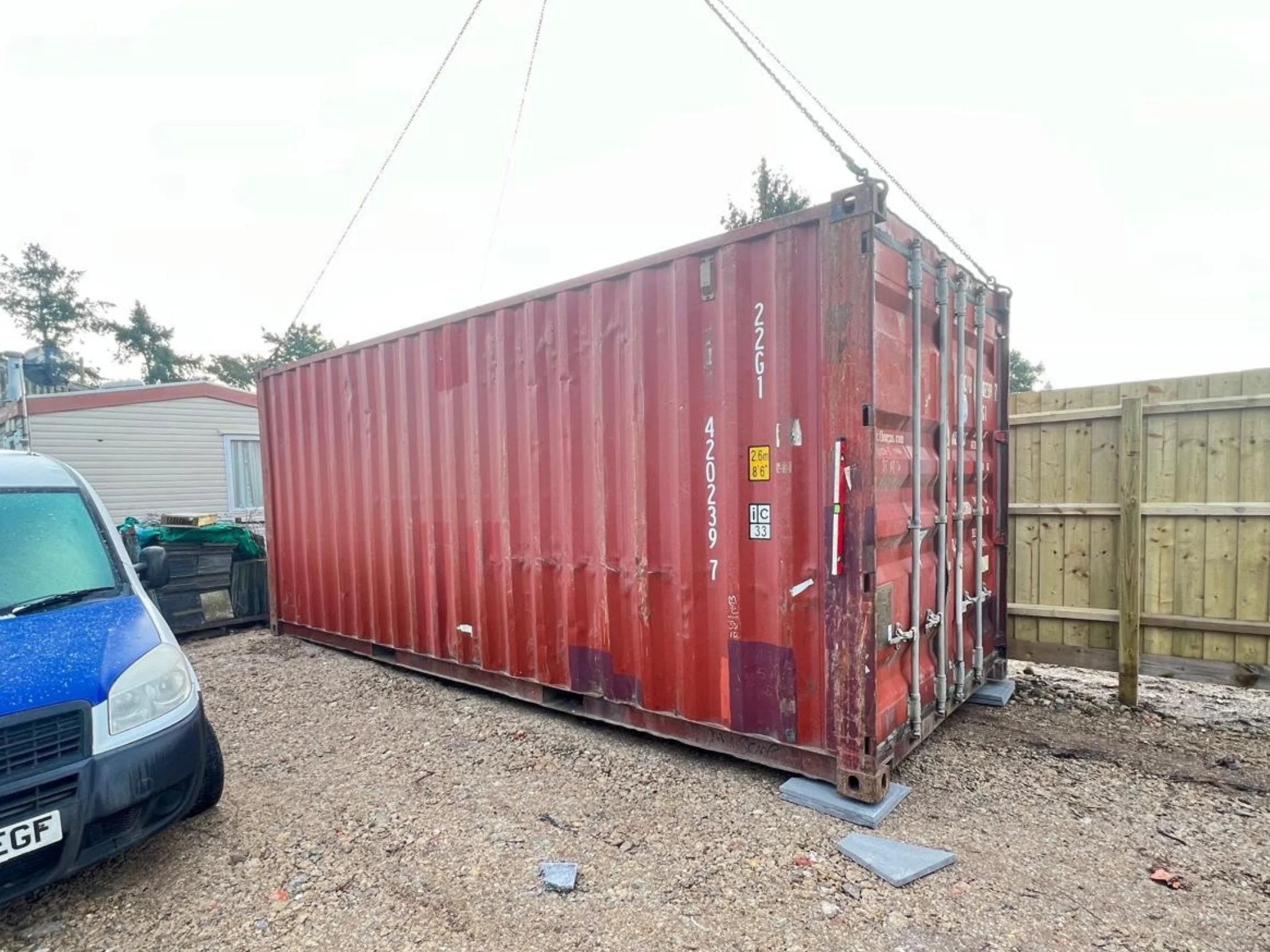
A 40ft shipping container requires proper delivery planning before ordering. These units are transported on large vehicles that need sufficient access width, turning space, and overhead clearance to position the container safely.
Before confirming your order, check:
- Minimum 3.5 to 4 metres access width
- Adequate turning radius for articulated lorries or HIAB vehicles
- Firm, level ground capable of supporting the container weight
- Clear overhead space free from cables or tree branches
For a detailed breakdown of delivery vehicle dimensions and site preparation guidance, read our guide on How Much Space Is Needed to Deliver a 40ft Shipping Container. Assessing access early prevents failed deliveries and unnecessary transport costs.
When to Consider a 40ft High Cube Container
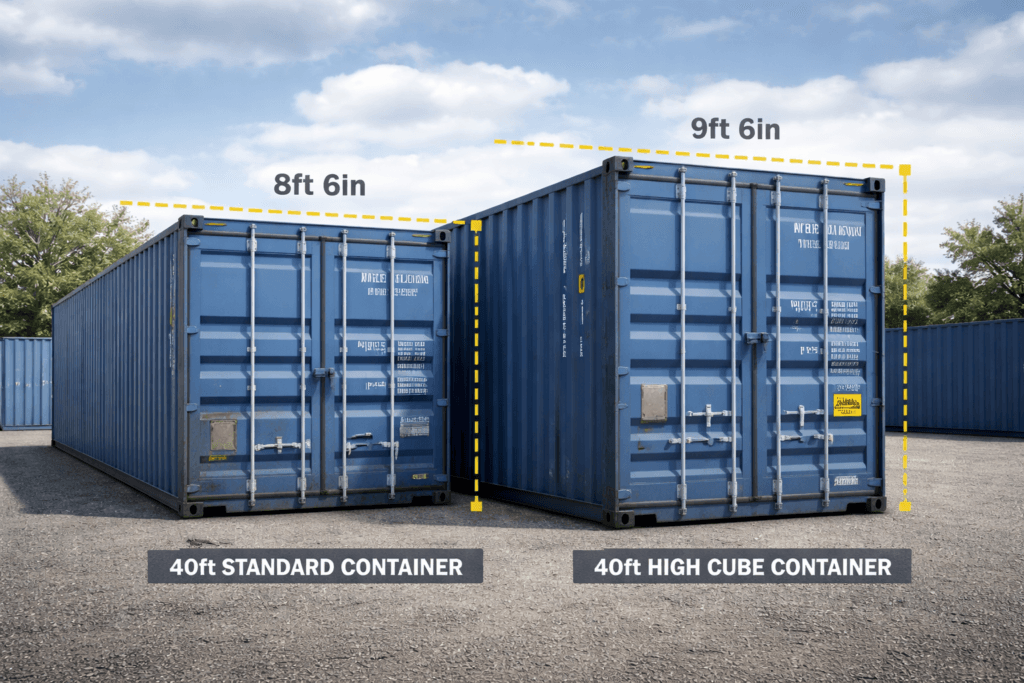
While a standard 40ft container suits most storage needs, additional internal height can significantly improve efficiency in certain situations.
A 40ft high cube container is often the better choice when:
- Pallets are stacked high
- Racking systems are planned
- Tall machinery or equipment is stored
- Internal working clearance is important
High cube units provide approximately 30cm of extra internal height without increasing ground footprint. For businesses where vertical space matters, this can improve usable volume and long-term practicality.
To understand whether upgrading in height is worthwhile, read 40ft High Cube Containers: Best Business Use Cases.
Common Buyer Concerns with 40ft Containers
Space and site access
A 40ft container requires more delivery space and clear access. Buyers must consider turning space for delivery vehicles and ground preparation.
A site check before ordering avoids delivery issues.
Condensation management
Larger containers still require ventilation and correct siting. Condensation risk is managed through airflow, elevation, and good storage practices.
Size alone does not eliminate moisture risk..
When a 40ft Container May Not Be the Right Choice
Limited site space
If yard space is tight, a 40ft container may restrict movement or access. In these cases, two smaller units placed strategically may work better.
Storage should not block operations.
Light or short-term use
For light storage or short-term projects, a 20ft container may be more cost-effective and easier to manage.
Bigger is not always better.
Typical Uses for 40ft Shipping Containers in the UK
- Commercial stock storage
- Construction and site storage
- Agricultural equipment and feed
- Retail overflow storage
- Archive or document storage
- Container conversions requiring space
A 40ft container suits buyers planning ahead.
Used vs New 40ft Containers for Storage
The table below outlines typical UK purchase price ranges for 40ft shipping containers for storage, comparing used units with new one-trip containers. It also highlights how delivery factors influence overall cost, helping buyers assess long-term value rather than focusing only on upfront price.
| Factor | Used 40ft Container | New One Trip 40ft Container |
|---|---|---|
| Cost | Lower | Higher |
| Appearance | Signs of wear | Clean finish |
| Lifespan | Reduced | Maximum |
| Maintenance | Some expected | Minimal |
| Storage suitability | Very good | Excellent |
Condition matters more than age.
What Do 40ft Shipping Containers for Storage Cost in the UK?
Cost is one of the first questions buyers ask when considering 40ft shipping containers for storage. Pricing varies depending on condition, location, and delivery requirements, but clear expectations help businesses budget properly.
While this section outlines typical storage pricing ranges, a detailed breakdown of used, new one-trip, high cube upgrades, and delivery cost variables is covered in our guide: How Much Does a 40ft Shipping Container Cost in the UK?
Reviewing full pricing context helps businesses understand how condition, height specification, and transport requirements influence total investment before committing to purchase.
Typical Purchase Prices in the UK
40ft used high cube Shipping Container
Typically range from £1,400 to £1,600 depending on condition and region. Cosmetic wear is common, but structurally sound wind and watertight units provide excellent value for storage use.
40ft New High Cube Shipping Container
Usually range from £3200 to £3800. These units have completed a single shipping journey and offer the longest lifespan with a clean internal condition.
High cube versions may sit slightly above these ranges due to increased demand and additional steel height.
Delivery Cost Variables
Delivery is influenced by several factors:
Distance from depot to site
Access restrictions requiring smaller vehicles
HIAB crane offload requirements
Ground conditions and positioning complexity
Straightforward commercial site deliveries are typically more cost-effective than restricted residential access.
Why Buying Can Be Cheaper Than Warehouse Rental
For many UK businesses, purchasing a 40ft container is more cost-effective than leasing additional warehouse space.
Warehouse rental involves:
Ongoing monthly costs
Long-term lease commitments
Business rates and service charges
Transport costs moving stock off-site
A purchased container is a one-off capital investment. It provides on-site access, removes recurring rental payments, and can often be resold later if no longer required.
Over a two to five year period, ownership frequently works out cheaper than extended warehouse rental for overflow or static stock.
Understanding total cost, not just upfront price, helps businesses make informed long-term storage decisions.
Why Bosh Boxes Is the Right Choice
- New and used 40ft shipping containers available
- Containers inspected before sale
- Wind and watertight guarantee
- UK-wide container delivery
- Honest advice on size and suitability
- Support for future container conversions
Buying the right size first saves money long term.
How to Decide if a 40ft Container Is Right for You
- Consider how much space is needed now and later
- Think about access inside the container
- Check site access and delivery space
- Plan for airflow and layout
- Choose condition based on lifespan needs
Storage works best when space is planned, not guessed.
How to Get Started
If you are considering shipping containers for sale UK-wide, choosing the correct size is just as important as choosing the correct condition.
For advice on 40ft shipping containers, delivery access, and storage suitability, speak to Bosh Boxes today.